
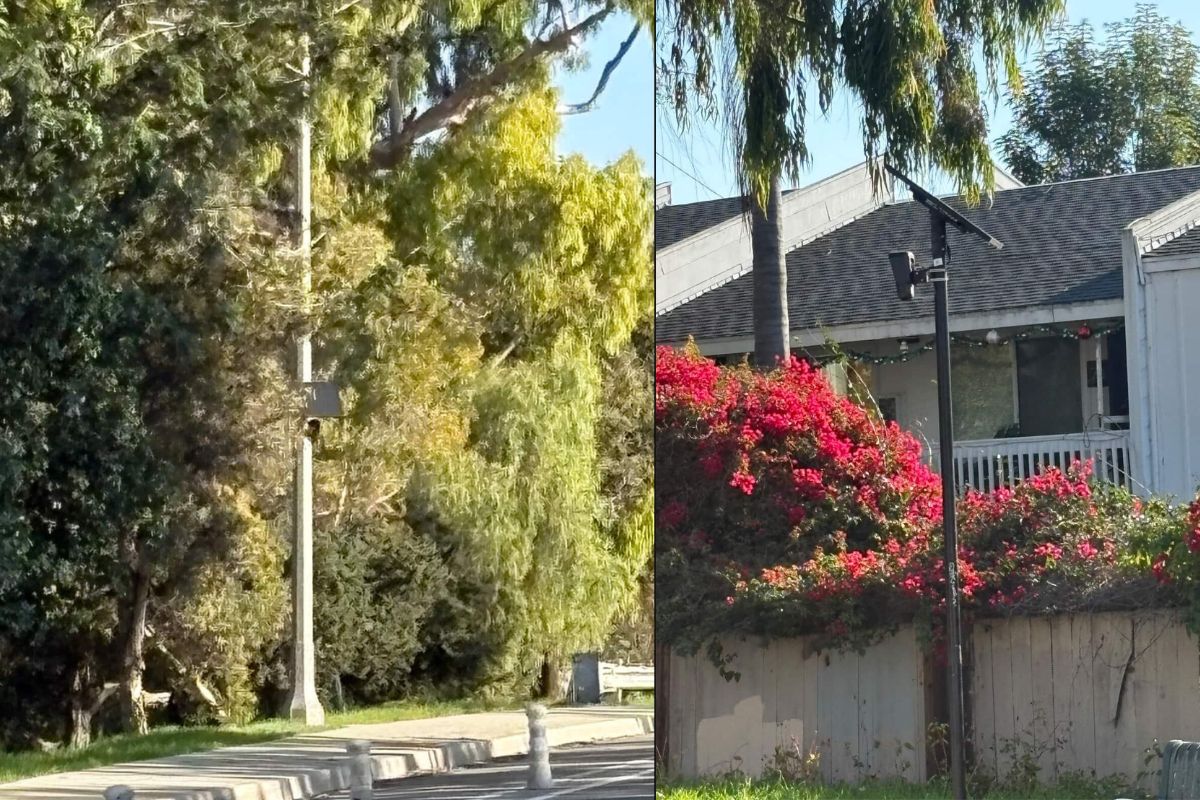
Community members raised concerns over the Santa Barbara Police Department’s use of automated license plate reading cameras across the city, following recent reports that Flock Safety, the surveillance company that operates the 12 cameras in Santa Barbara, has been accused of sharing data with federal agencies for immigration enforcement.
SBPD began its contract with Flock Safety in 2024, and over the past few months, the company has been under fire after several California cities discovered a flaw in the system’s architecture that allowed law enforcement agencies outside the state — including federal agencies — to access the data collected by the cameras. This led to multiple lawsuits and calls to end the contracts for the cameras in the cities of Santa Cruz, San Jose, and Oakland.
In recent weeks, Santa Barbara residents have called on the City of Santa Barbara to conduct a thorough public review of SBPD’s contract with Flock Safety to assure community members that data being collected is not being used to assist with immigration enforcement.
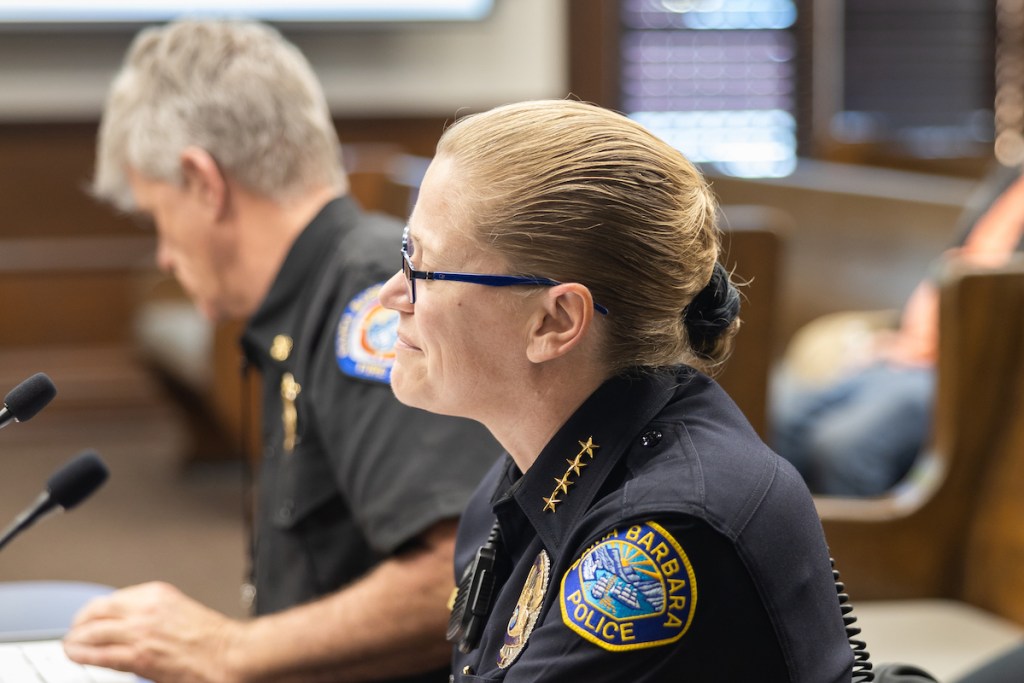
Police Chief Kelly Gordon addressed the controversial contract in an interview with the Independent, saying she wanted to make it clear that the cameras are only being used for local law enforcement, and the city has strict policies to prevent data from being accessed by any outside agencies.
“We are aware that there have been recent public concerns and media reports involving Flock Safety and the use of license plate reader data in other jurisdictions,” Chief Gordon said. “I want to be very clear that the Santa Barbara Police Department does not share license plate reader data with federal immigration enforcement agencies, and Flock Safety cannot share Santa Barbara’s data with any outside entity. The data collected by our cameras is owned and controlled by the city and SBPD, and access is governed by strict local and state laws, departmental policy, and contractual limitations.”
Nearly every detail of the city’s contract with Flock Safety is available through the SBPD’s Transparency Portal, which has a list of all legal uses, policies, and a downloadable public audit, which lists every search conducted in the past 30 days.
In the public search audit for the month leading up to December 15, there were 115 individual listings, with each including a reason ranging from “hit and run” to “burglary” to “stolen vehicle.” At least 10 of these included a designation of “HS Investigation” or “On-Going HS Investigation,” which some immigrant rights advocates worried was a reference to the Department of Homeland Security.
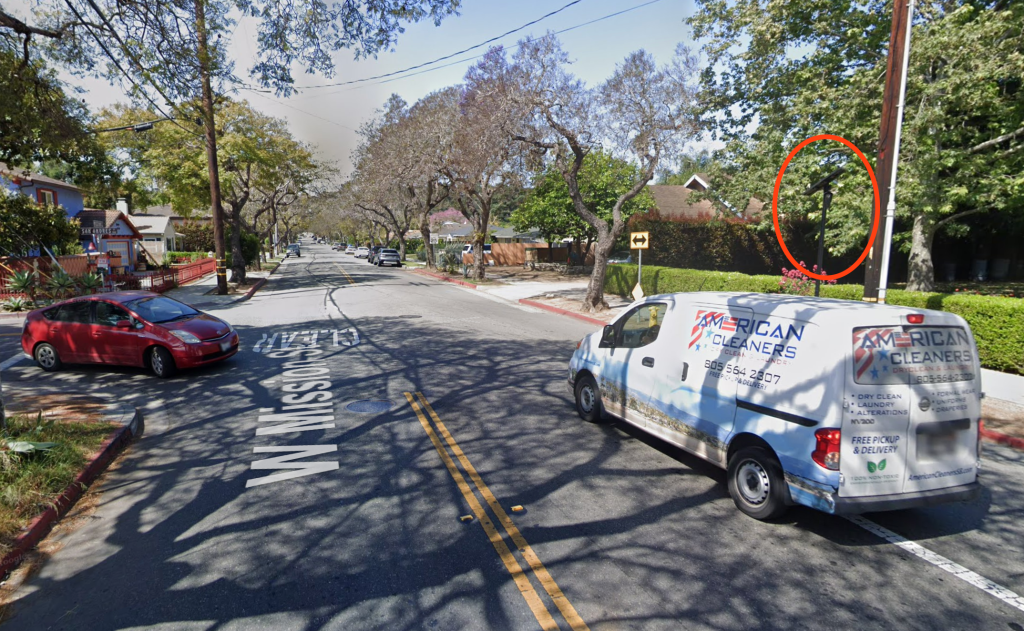
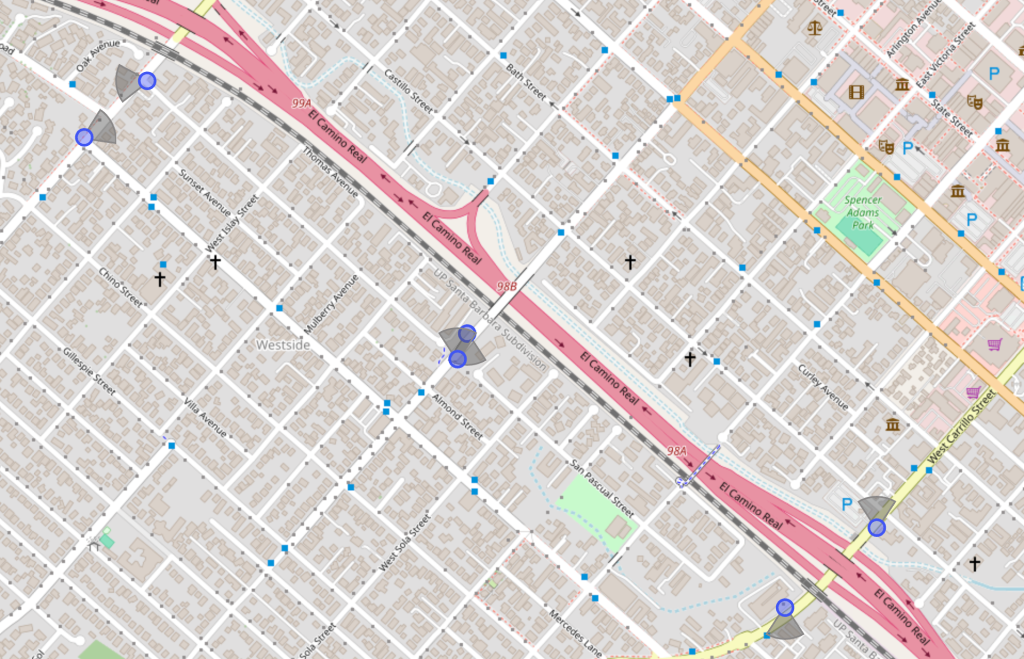
Several undocumented community members, who asked not to be identified out of fear of being targeted, told the Independent they were also concerned because of the locations of the automated cameras, five of which are located near high-traffic areas in the Westside neighborhood, such as near San Pascual, Micheltorena, and West Mission streets (a map of all Flock Safety cameras in Santa Barbara is available on DeFlock.me).
Chief Gordon addressed these concerns directly, saying that the designation of “HS Investigation” does not refer to Homeland Security, but rather an indication of an “internal shorthand used by SBPD to indicate Health and Safety–related narcotics investigations.”
“These entries are not associated with federal agencies, immigration enforcement, or Homeland Security investigations,” she said. “SBPD does not provide license plate reader data to ICE, DHS, or for immigration enforcement purposes.”
All of the data collected by automated cameras in Santa Barbara is strictly protected under SBPD’s contract, and Chief Gordon said Flock Safety doesn’t have any independent ability to “access, sell, or share SBPD data.” That access is limited to SBPD personnel, and any usage is monitored and subject to public audit. Even with a valid court order, SBPD is not obligated to share any data for civil immigration enforcement.
Chief Gordon said the department is aware of the blowback Flock Safety has received, though she said she was confident that Santa Barbara’s current contract does not allow for any of the data sharing alleged to have happened in other cities.
“While those concerns stem from policies and practices in other jurisdictions, they do not reflect how the system is used in Santa Barbara,” Chief Gordon said. “We understand the importance of public trust and transparency and are aware that Flock Safety has announced changes to its policies and platform to further strengthen transparency and address community concerns.”
Chief Gordon said data obtained through the automated cameras has been used to help identify known criminals or assist in timely investigative leads, all within “clearly defined legal and policy boundaries.”
Flock Safety CEO and Co-founder Garrett Langley addressed the concerns in a public statement issued on the company website over the summer, in which he said that any data shared with federal agencies was due to decisions made by local officials, not a company policy.
“In all of these cases, local law enforcement, who are customers of Flock, chose to work with federal authorities for the safety of their communities,” Langley said. “This was not a ‘back door’ into Flock, as some in the media have claimed — these cases and many others represent active choices, within the boundaries of the law, made by local police to protect the people they are sworn to serve … The point is: It is a local decision. Not my decision, and not Flock’s decision.”
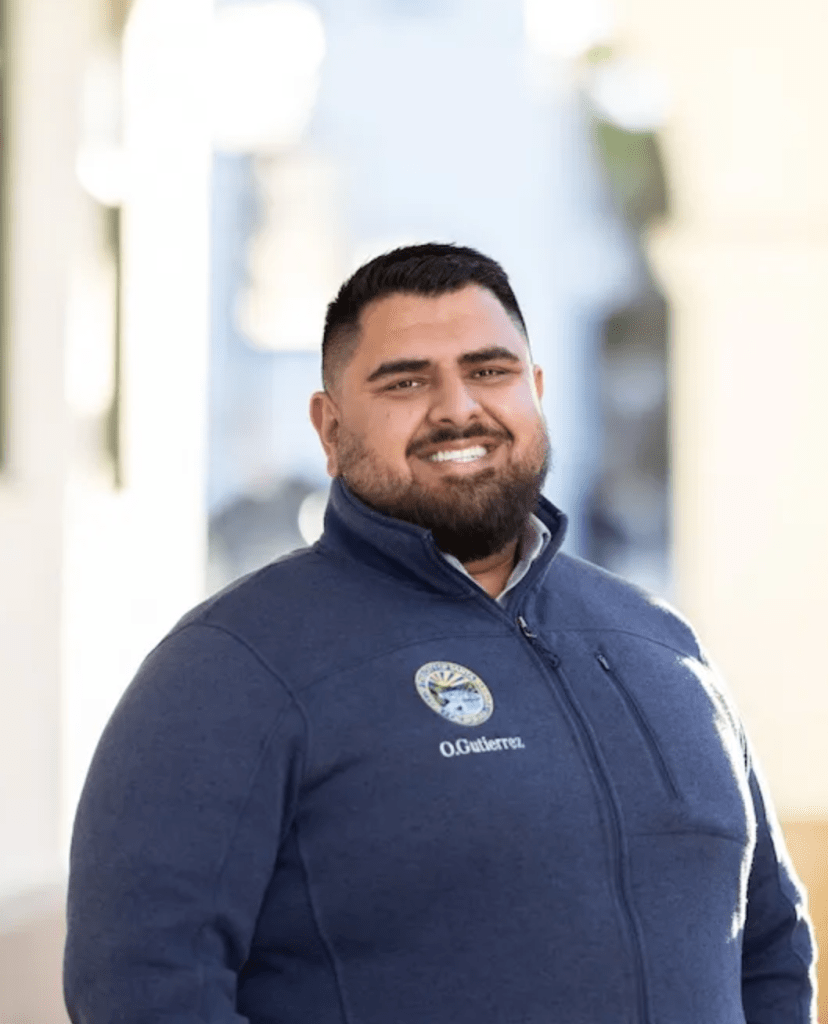
Santa Barbara City Councilmember Oscar Gutierrez, who represents the Westside district, said he was recently briefed about the Flock Safety contract after the city received multiple complaints from community members. He said the council is working toward drafting a memo to direct city staff to review the contract for the automated license plate reading cameras, to ensure that there is no possibility of the city sharing data in violation of state law.
“In this day and age we live in now, this technology is an ever-changing thing,” Councilmember Gutierrez said. “So we have to continue updating our policies and standards as well.”
Related Posts





Premier Events
Thu, Feb 26
11:00 AM
Montecito
La Casa de Maria – Lunch and Learn
Fri, Mar 06
2:00 PM
Santa Barbara
Music & Meditation SB – Concert March 6, 2026

Sun, Mar 08
6:30 PM
Santa Barbara
6th Eco Hero Award Brock Dolman & Kate Lundquist

Wed, Feb 25
4:00 PM
SANTA BARBARA
Career Exploration Fair: For Teens & Young Adults

Wed, Feb 25
5:00 PM
Isla Vista
Forward Ever Backward Never

Wed, Feb 25
6:30 PM
Santa Barbara
Creative Exploration
Wed, Feb 25
8:00 PM
Santa Barbara
Salvidoria, Orangepit!, & Magnetize at SOhO
Thu, Feb 26
1:00 PM
SANTA BARBARA
Shocking History of Electricity in Santa Barbara

Thu, Feb 26
7:00 PM
Santa Barbara
Anniversary Screening – Connectivity: “Chulas Fronteras”
Thu, Feb 26
7:00 PM
Santa Barbara
Beautiful Borders: Texas-Mexico Crossings in Film

Thu, Feb 26
7:30 PM
Santa Barbara
An Evening with The Mends & Redfish at SOhO

Fri, Feb 27
2:30 PM
Santa Barbara
Opera Santa Barbara presents “Caesar and Cleopatra

Fri, Feb 27
8:00 PM
Santa Ynez
Taylor Dayne at Chumash
Thu, Feb 26 11:00 AM
Montecito
La Casa de Maria – Lunch and Learn
Fri, Mar 06 2:00 PM
Santa Barbara
Music & Meditation SB – Concert March 6, 2026
Sun, Mar 08 6:30 PM
Santa Barbara
6th Eco Hero Award Brock Dolman & Kate Lundquist
Wed, Feb 25 4:00 PM
SANTA BARBARA
Career Exploration Fair: For Teens & Young Adults
Wed, Feb 25 5:00 PM
Isla Vista
Forward Ever Backward Never
Wed, Feb 25 6:30 PM
Santa Barbara
Creative Exploration
Wed, Feb 25 8:00 PM
Santa Barbara
Salvidoria, Orangepit!, & Magnetize at SOhO
Thu, Feb 26 1:00 PM
SANTA BARBARA
Shocking History of Electricity in Santa Barbara
Thu, Feb 26 7:00 PM
Santa Barbara
Anniversary Screening – Connectivity: “Chulas Fronteras”
Thu, Feb 26 7:00 PM
Santa Barbara
Beautiful Borders: Texas-Mexico Crossings in Film
Thu, Feb 26 7:30 PM
Santa Barbara
An Evening with The Mends & Redfish at SOhO
Fri, Feb 27 2:30 PM
Santa Barbara
Opera Santa Barbara presents “Caesar and Cleopatra
Fri, Feb 27 8:00 PM
Santa Ynez


You must be logged in to post a comment.