

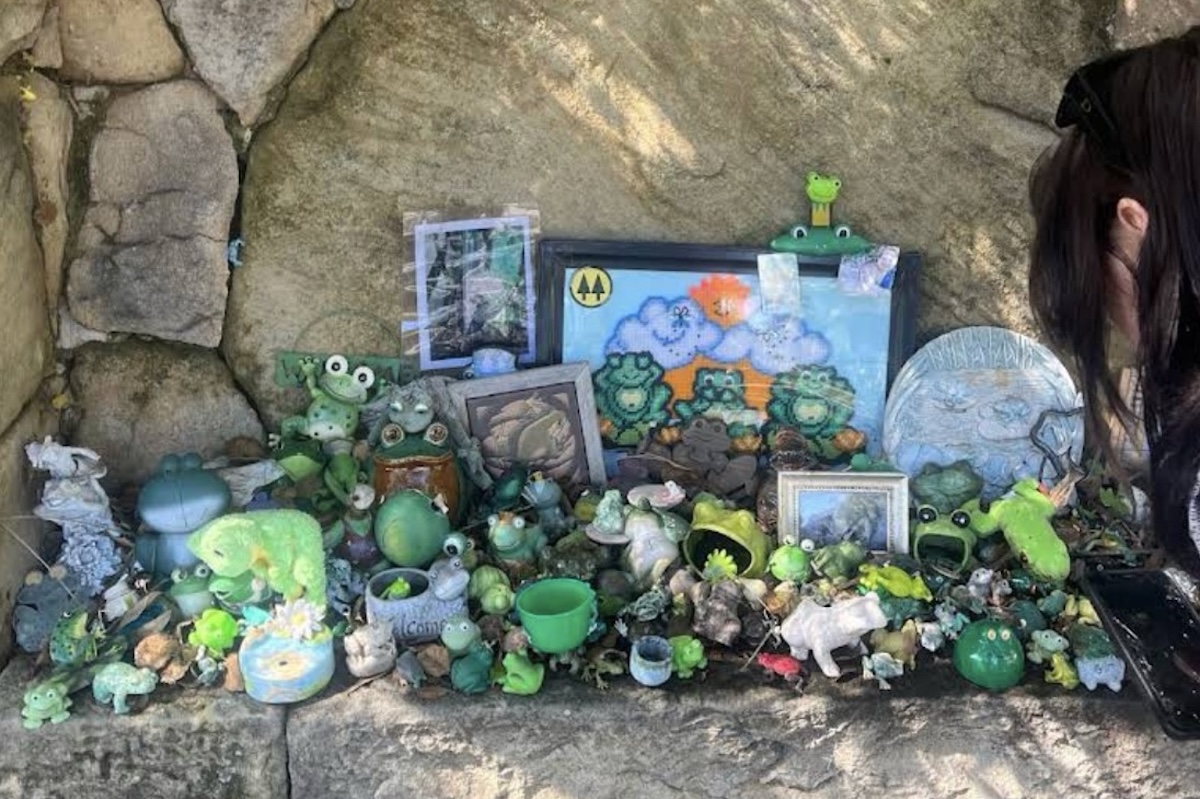
Some cities have love-lock bridges. Others have heart-shaped rock collections. Santa Barbara has frogs.
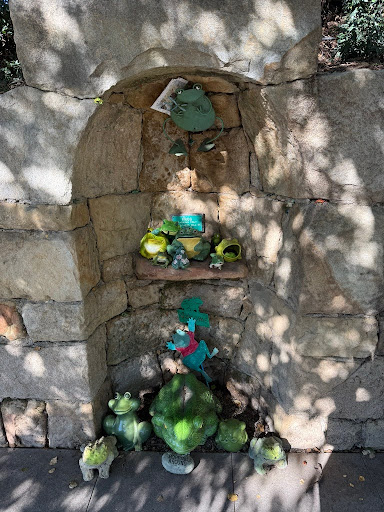
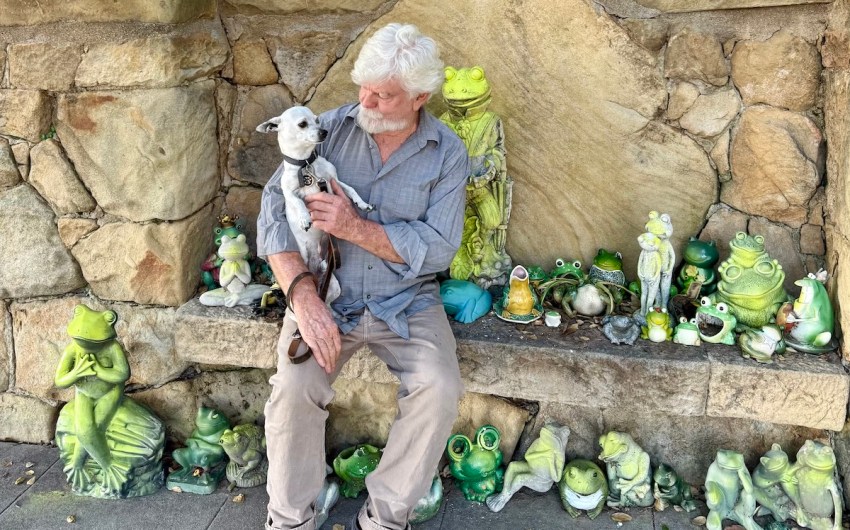
Dozens and dozens of them, nestled into niches, or lined up sentry style along a tan stone wall of the Riviera neighborhood — one of the oldest districts of Santa Barbara, known for its labyrinthine streets. The “Frog Wall,” as locals have affectionately called it for decades, became an accidental shrine to amphibians of all kinds — ceramic, rubber, plush, painted, plastic, even bottle-shaped.
But sometime in the past few weeks, the frogs thinned.
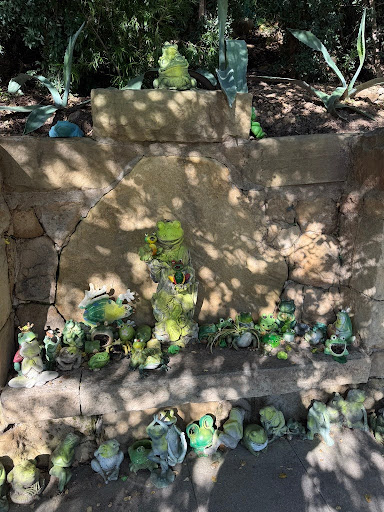
The iconic (if unofficial) installation along Paterna Road has been significantly cleaned up. Gone are the weather-worn plush toys, the sun-bleached rubber amphibians, the moss-covered figurines tucked into crevices and median strips. What remains now are mostly ceramic statues — neatly placed, a cleaner, sleeker version of the chaos it once was.
The clean-up sparked rumors of a “frog massacre” going through the grapevine. But upon closer inspection, the frogs aren’t gone. They’re just curated.
Which is fitting — because the property behind the Frog Wall was recently purchased by landscape designer Jay Griffith.
According to former owner Fal Oliver, who lived on the property from 1961 until he sold it in 2023, “The owner did a beautiful job of restoring the house and gardens. I’m really happy with what he did.”
Oliver confirmed that the frogs — or at least, the shrine’s origin — goes back far earlier than the internet thinks.
“There’s a little cutout in the wall — maybe where a Madonna statue or a small fountain would’ve been in the 1920s,” Oliver recalled. “My mom and I were walking down Paterna in September of 1961, just after we moved in, and we saw a little rubber frog stuck in there.”
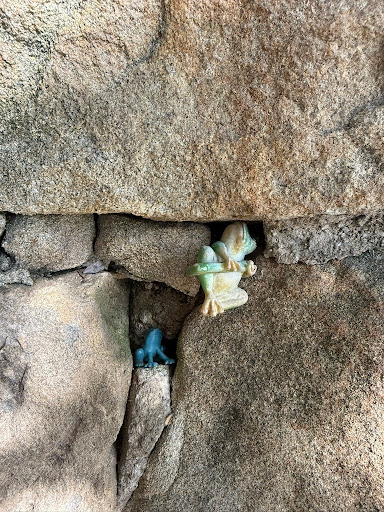
According to various online histories, the first frog didn’t appear until 1989. But Oliver says, “That’s way off. We noticed the first one in ’61.”
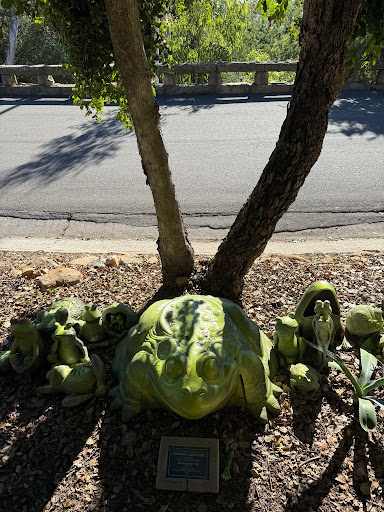
From that one small frog, the wall took on a life of its own. Over the years, visitors and neighbors added their own contributions, slowly stretching the collection across the stone ledge and eventually into the adjacent median strip.
“One time my gardener came up with a bunch of beer bottles and said, ‘Mr. Oliver, someone’s throwing trash down by the frog wall.’ But they weren’t trash — they were frog beer bottles. Craft brew with frogs on the label,” he laughed.
By the 2000s, the shrine had grown — and, sometimes, decayed. “People were putting down plush toys,” said Oliver. “They’d get soaked in the rain, start falling apart. So from time to time, I’d quietly clean a few of the worst ones out.”
When asked what he thought about the recent, more extensive clean-up, Oliver withheld judgment. Griffith, the new owner, did not respond to requests for comment.
But among neighbors, there is concern over the frogs. The little amphibians have become a piece of history — for a shrine like the Frog Wall seems both impossible and inevitable: absurd, endearing, weirdly meaningful.
For now, the remaining frogs sit silently — weather-worn but intact — guarding their little stone niche. Whether they multiply again, or fade into local lore, remains to be seen.
But in a city that sometimes takes itself too seriously, it’s good to remember: At least we have frogs.
Related Posts



Premier Events
Fri, Mar 06
2:00 PM
Santa Barbara
Music & Meditation SB – Concert March 6, 2026
Sat, Mar 07
9:00 AM
Carpinteria
El Carro Park Cannabis Career Fair – Carpinteria

Sun, Mar 08
6:30 PM
Santa Barbara
6th Eco Hero Award Brock Dolman & Kate Lundquist

Sun, Mar 01
7:00 PM
Goleta
Natalie MacMaster, Donnell Leahy, Celtic All Stars
Fri, Mar 06
7:30 PM
Santa Barbara
An Evening with Steep Canyon Rangers

Fri, Mar 06
8:00 PM
Santa Ynez
Funk Band Kool & The Gang at Chumash
Mon, Mar 09
6:30 PM
Santa Barbara
Science Pub: Cyborg Jellies Exploring Our Oceans
Sat, Mar 28
All day
Santa Barbara
Coffee Culture Fest
Fri, Mar 06 2:00 PM
Santa Barbara
Music & Meditation SB – Concert March 6, 2026
Sat, Mar 07 9:00 AM
Carpinteria
El Carro Park Cannabis Career Fair – Carpinteria
Sun, Mar 08 6:30 PM
Santa Barbara
6th Eco Hero Award Brock Dolman & Kate Lundquist
Sun, Mar 01 7:00 PM
Goleta
Natalie MacMaster, Donnell Leahy, Celtic All Stars
Fri, Mar 06 7:30 PM
Santa Barbara
An Evening with Steep Canyon Rangers
Fri, Mar 06 8:00 PM
Santa Ynez
Funk Band Kool & The Gang at Chumash
Mon, Mar 09 6:30 PM
Santa Barbara
Science Pub: Cyborg Jellies Exploring Our Oceans
Sat, Mar 28 All day
Santa Barbara


You must be logged in to post a comment.