


CRYING OVER SPILLED OIL: For 25 points, how many angels can dance on the head of a pin? For 250 points more, what’s the difference between an “interstate” pipeline and one that’s merely “intrastate”?
Give up? I’ve got a clue. Consider the difference between sexual “intercourse” and sexual “intra-course.” Admittedly, that second word doesn’t exist yet, not even in the universe of AI. If it did, it would refer to having a party by oneself. By contrast, to qualify as “intercourse,” a bare minimum of two is required.
With oil pipelines, it’s the same thing. An interstate pipeline, by definition, has to penetrate the boundaries of at least two states. An intrastate pipeline, by contrast, is content to stay within the borders of just one.
If I’m beating a dead horse here, my apologies. But confusion over these two (inter- versus intra-) has been expertly engineered and exploited in Santa Barbara by outside powers focused on the county’s vast oil wealth. This confusion explains how and why so much oil needlessly spilled along our coast back in May 2015. That same confusion — again deliberately and expertly engineered — also explains how Sable Offshore is now poised to restart the same corrosion-prone pipeline.
Naturally, none of this would have been possible were it not for the “Oil-über-alles” interventions of the Trump administration, whose true collective genius is to understand that reality is what they say it is, not the other way around. In a naked power grab, the federal agency charged with pipeline safety enforcement just proclaimed that the two pipelines implicated in the 2015 rupture were in fact “interstate pipelines” and not “intrastate,” which for the past 10 years had been the very clear understanding.
This proclamation gave that agency — the Pipeline and Hazardous Materials Safety Administration, or PHMSA for short — the legal pretext needed to snatch ultimate regulatory control over the pipeline away from regulators with the State of California’s Office of the State Fire Marshal.
Two days before Christmas, PHMSA exerted that newly seized authority to grant Sable its long-sought-after “restart permit.” This would allow the company to start pumping at the three platforms in federal waters it bought two years ago from Exxon and fire up the Santa Ynez Unit located onshore. Then it could begin shipping oil through the 124 miles of pipe that got so corroded during the criminally neglectful tenure of the prior owner that no fewer than 200 patch jobs were required.
Home run! Touchdown! A hole in one!
One day later, PHMSA issued Sable a restart permit. And one day after that, PHMSA granted the company an “emergency” restart permit, reflecting Trump’s the-sky-is-falling hallucination that the United States is in the throes of some imaginary emergency energy shortage. One of Trump’s first moves upon being sworn in a year ago was to issue an executive order declaring such an emergency. As a matter of objective fact, California does have serious issues with its refinery capacity, but the United States as a nation has been shattering historic oil production numbers on a yearly basis.
For Sable, Christmas came early. If not a godsend, PHMSA’s action qualified as a bailout. A lifeline. Up ’til then, Sable needed the approval of the Office of the State Fire Marshal to restart the pipeline and reactivate the massive industrial operation it purchased. But on October 22, the Fire Marshal put Sable on notice that the company had not met key corrosion control terms and conditions for the company’s extensive — if unpermitted — corrosion repair work. Until that work got done, Sable was told, a restart was out of the picture.
Sable cried foul. Late hit. Political sabotage. And for all I know, Sable is right. But where oil pipelines are concerned, a belts-and-suspenders, raincoats-and-umbrellas approach is still not enough. In Santa Barbara, we’ve lived through too many pipeline leaks sprung because too many corners got cut. Our spill of 1969 blew up only because federal regulators granted Union Oil a waiver on how many feet of protective drill casings the company had to install. FYI, the whole point of such casing is to prevent catastrophic blowouts just like the one we got.
Back in the 1990s, no less than 400,000 gallons of oil, diesel fuel, and gasoline squirted out of an underground pipeline in Avila Beach. The contamination was so widespread the entire town had to be totally razed and totally rebuilt.
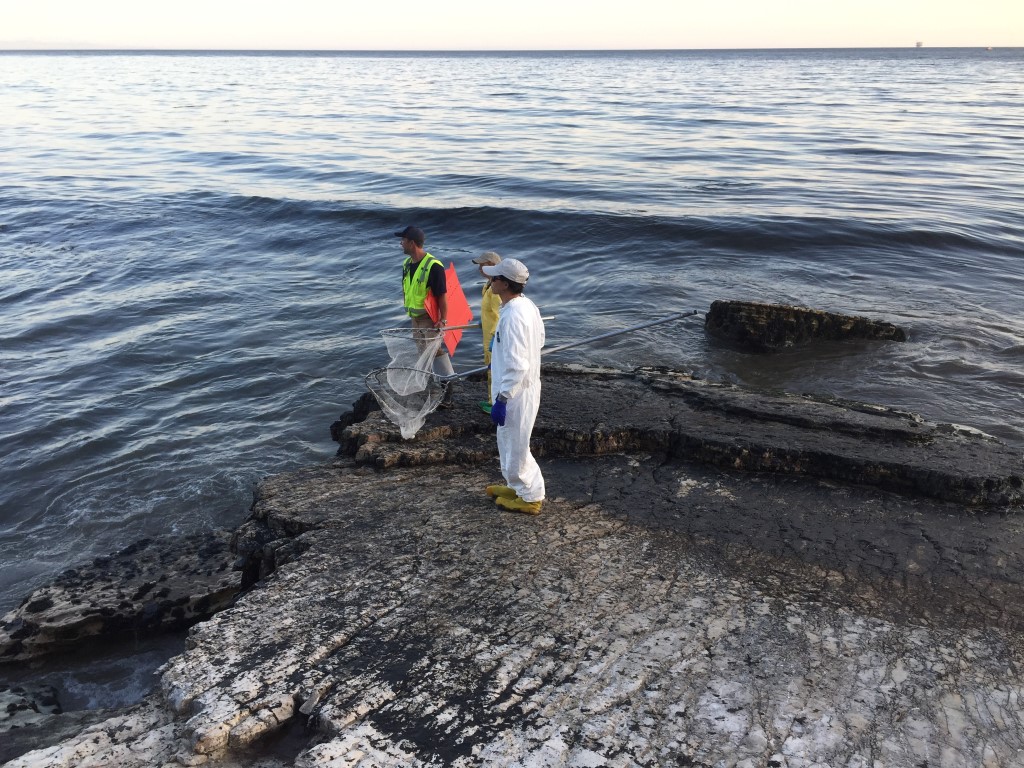
That ain’t nothing.
Up by the Guadalupe Dunes — between 1949 and 1990— leaky underground pipelines operated by Union Oil spilled no less than 20 million gallons of crude. Evidence culled by investigators determined that company employees were instructed to keep their mouths shut. It was a major cover-up. The company would plead no contest to three misdemeanor charges.
Twenty million gallons? That ain’t nothing. Trust but verify? With the feds having just seized oversight over our pipeline safety, trust is hard to come by and verification is all but impossible.
Many of the new people now calling the shots at PHMSA come straight from the executive ranks of the private pipeline industry. To a certain degree, that’s always been the case, but now — with eight longtime leaders walking the plank — the institutional culture is changing with whiplash rapidity.
ProPublica did a deep dive into what’s happened to PHMSA during the first year of Trump’s second term. What they found offers zero reassurance. In that time, the number of new enforcement actions initiated by PHMSA has plummeted, as have the number of cases seen to completion. This past March, for example, marked the first time in the agency’s 20-year history that it initiated not one new case.
Zero.
In the first three months of the year, only five cases were launched. In the past, there could be as many as 61 in just one month.
Over its history, the federal pipeline agency collected on average $475,000 a month in fines and penalties. Since Trump took over, that number has crashed by 98 percent. It’s now $8,000 a month.
In the past, the agency would promulgate a couple of new rules a year; under Trump, the new leaders have introduced 23 new rules, all of which were designed to cut costs, time constraints, and red tape. In the past, such rule changes were the subject of public notice and public hearings. Not anymore.
What you don’t see, you can’t count; what you don’t count, you can’t fix.
And that’s just the point.

Even now, we still don’t know how many PHMSA pipeline inspectors lost their jobs during Elon Musk’s federal workforce purge. But we do know that when Trump was sworn in last year, PHMSA had 666 employees. By May 2, that number was down to 570. Now it’s closer to 500.
To state the obvious, many of these changes were advocated for in the pre-Trump era by the very pipeline executives who are now running the show. As Bill Caram, a longtime watchdog with the Pipeline Safety Trust, put it, the proverbial fox has gone from guarding the henhouse to designing the henhouse. Or as U.S. Senator Maria Cantwell, a militantly moderate, suffer-no-fools Democrat from Washington State, put it when calling out the chief architect of these changes, “By all accounts, you are letting industry rewrite the rule books, while simultaneously choosing not to enforce the rules that remain.”
You want to sleep soundly at night? Better up your dose of cannabis gummies.
PHMSA’s assumption of regulatory power over Sable’s pipeline is legally possible only because the agency decreed the pipeline is, in fact, interstate. State agencies— like the Office of the State Fire Marshal— are not legally allowed to regulate pipelines that meander from state to state. That’s a federal prerogative.
But this finding rests on some really shaky ground. For starters, in 2016, PHMSA issued a document asserting the pipeline in question was intrastate and that the Fire Marshal was empowered to call the shots. And in 2020, Plains All American Pipeline — the company criminally responsible for the 2015 spill— signed a legal contract that explicitly empowered the Fire Marshal with the ultimate authority of granting any restart permits to any future operator.
Here’s the kicker. In its 40-year history, the two pipelines in question have never — not once — been operated as an interstate pipeline. No oil that’s ever
traveled in the pipeline ever went out of state. When it was first installed, the plan was to connect it to refineries in Texas. But that never happened.
Sable and PHMSA argue that because oil from federal waters five miles off the coast will be shipped by pipelines to the Santa Ynez Unit, that qualifies as “interstate.” It’s certainly a novel and creative argument. But the California Coastal Commission, for one, ain’t buying it. In a letter written December 23, Commission Executive Kate Huckelbridge stated the pipelines in question do not, in fact, start five miles off the coast but instead at Sable’s plant in Los Flores Canyon, located squarely on the mountain side of the freeway.
Who knows what will happen next? By the time you read this, everything will be different. But the battle over what kind of pipeline it is will go on. To steal a line from the song, “You say intrastate, I say interstate.” But me, I say, “Let’s call the whole thing off.”








You must be logged in to post a comment.