In the darkness of a frigid, early Friday morning, I left our loft in the Mill District of Minneapolis, driving to the northeast section of the city to pick up Miguel and take him to work in neighboring St. Paul. As I pulled into the parking lot behind the six-unit apartment building where he lives with his wife, Mercedes, I sent him a text saying that I had arrived. (Thank goodness for Google Translate which allows us to communicate back and forth in English and Spanish.)
Following the instructions I had been given, I waited next to my car until he came out, then I walked up to him, we shook hands, and I accompanied him to the passenger side door. We then drove the 20-minutes to his day job in St. Paul. There he asked if he could stay in the car until his boss arrived.
It was far too dangerous for Miguel to stand by himself outside his workplace. The fear of being seized by ICE without warning is the plight of every person of color who now lives now in Minneapolis. After about a 10-minute wait, his boss arrived.
As I watched the two men disappear into the building, I thought with initial relief, that Miguel would now be safe. But that is not true. For people of color, nowhere in Minneapolis is truly safe. Schools, churches, homes, businesses, and parking lots can be invaded by ICE at any time.
Miguel and I are unlikely comrades — a working class Hispanic man and yours truly, an affluent white guy — but on Friday our worlds came together for the first time courtesy of ICE. How we crossed paths came about because, one day when my wife, Susan, and I were at our local cafe, we were chatting, as we often did, with the manager. She told us how her workers were so afraid of ICE they wouldn’t drive to work, or God forbid, take public transportation. At her request, I volunteered to provide transportation if needed. It was needed. Could I drive Miguel to his day job on Friday? She then outlined the safety protocol for such a trip.
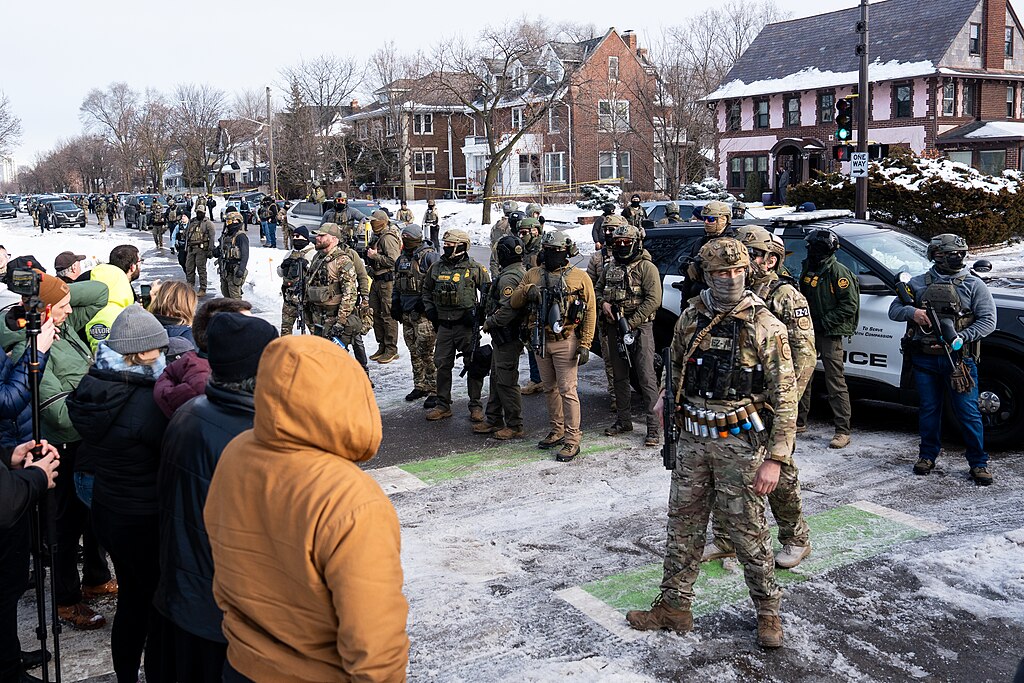
While the experience of this drive was unique to Miguel’s schedule, the reality of the situation is not unique in this city. Miguel and the citizens of Minneapolis are experiencing daily life in an occupied city patrolled by unhinged federal agents who deliver the fear that secret police must always bring with them when they invade a community. It has forced all of us, as we strive to live our “normal” lives, to face the truth of what is happening around us, and to acknowledge what often feels like an overwhelming sense of doom.
ICE agents roam our streets, masked and without identification, grabbing people randomly and attacking those who protest such actions. There are no guardrails. It is dystopian.
Fear is in the air we breath and the whole city is now experiencing the consequences of that fear. Anger underlies even the most casual conversation. Many stores are shut, restaurants are short of workers, schools have been invaded, students from families of color are now taking classes online rather than risk being separated from their parents. And for me — I feel sad all day.
How did my Friday end with Miguel? It was a cold, snowy afternoon when I arrived at his workplace at 4 p.m. When he came out, he quickly walked to the car and indicated that he wanted to sit in the back. I urged him to come up front where the passenger seat was warmer. He complied, but I was clueless to his reality.
As soon as he entered the car, he pulled down his hat and told me that ICE had been in the neighborhood. That afternoon he and his boss had witnessed ICE in front of the driveway to his workplace. He was scared.
As we drove out, he kept glancing behind him. I was so terrified he might get captured by ICE that we were almost hit by a truck when I rushed a right turn. But after about 15 minutes, he decided ICE was not following my car and told me we were safe.
But is he really safe? I received my answer when I pulled into his apartment parking lot and saw the face of his wife, Mercedes, standing at the backdoor of the building. Fear is in the air that his family breathes.
While the occupation of our city is taking place now, here, this is not a Minneapolis problem. It is an American reality. It is clear to me that ICE and the federal government hate liberals and people of color, wherever they call home, wherever they live. We, me, you, and Miguel are all in this together — what a shame if we fail each other.
Bob Pohl, a longtime Santa Barbara resident who served on the board of the S.B. Unified School District, is a nationally recognized leader in education. He now lives in Minneapolis with his wife, the author Susan Strong.