

James O’Neil is a UC Santa Barbara freshman who has done something unusual for someone so early in his academic career: He has built a sizable audience explaining how tariffs work. At a moment when trade policy has been slowly boiling the frog for millions of Americans, O’Neil has positioned himself as a translator, taking abstract economic decisions and showing where, exactly, they land — sometimes with the help of the unmistakable voice of Family Guy’s Peter Griffin.
Since this past fall, O’Neil has established a newsletter and podcast, called Borderline Economics, as well as a handle called Bottom Line Trade on social media platforms. The topic, analyzing tariffs, he describes as “an invisible tax” that disproportionately hits low- and middle-income households. His work has drawn roughly 35,000 social media followers, more than 10 million views, and a newsletter audience approaching 3,000 subscribers.
It’s an unusual project for a college freshman. It’s also a response to a moment that feels increasingly unsteady.
“I think what sparked starting the pages is just reading the news,” O’Neil said. “Everyone should care to some degree about what it’s costing them.”
O’Neil began plans to start publishing in earnest after the Trump administration announced sweeping new tariffs this spring, pushing the effective tariff rate to roughly 17 percent — the highest level since the 1930s.
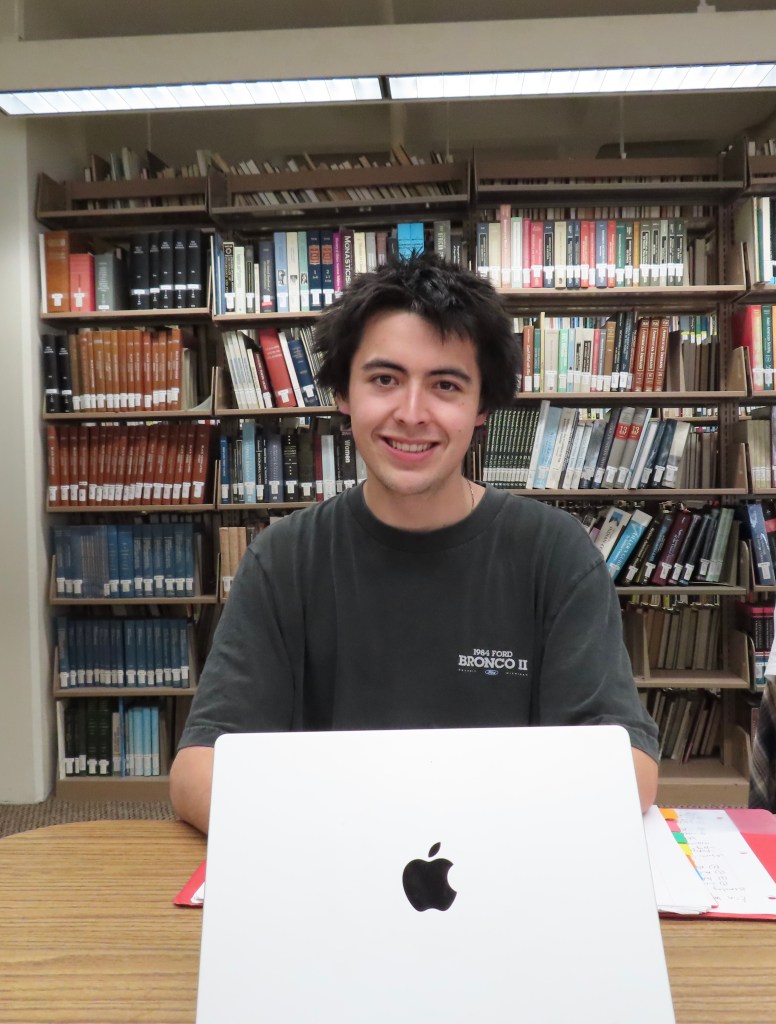
“That’s not abstract,” he said. “That shows up in people’s lives.”
Tariffs, he explained, function differently than income or payroll taxes. They are embedded in the price of goods — cars, housing materials, appliances — and paid equally at the register, regardless of income.
“Tariffs don’t discriminate in cost,” O’Neil said. “Because they’re regressive, low-income households bear the biggest burden.”
Based on research he’s reviewed and interviews he’s conducted with academic economists, O’Neil said lower-income households already spend between 83 and 90 percent of their income on nondiscretionary expenses like housing, transportation, and food, leaving little room to absorb higher prices.
“That margin is tiny,” he said. “They’re stretched very thin.”
He also pointed to early signs of job losses in manufacturing — a sector often invoked to justify tariffs — noting that unskilled workers, who are disproportionately young, lower-income, and from minority communities, are most exposed to those shifts.
“It’s easy to look at a percentage point and think it’s small,” he said. “But that’s millions of people.”
One question O’Neil is often asked is why prices haven’t already spiked more dramatically.
His answer: delay not denial.
Companies, he said, have temporarily absorbed costs, delayed passing them on, or stockpiled inventory before tariffs took effect. Those strategies buy time, but not immunity.
“You can’t front-load forever,” he said. “And you can’t absorb losses indefinitely.”
As those buffers wear off, economists expect a larger share of tariff costs to reach consumers — a shift O’Neil said will be especially hard on small businesses and households already living paycheck to paycheck.
“At a certain point,” he said, “it becomes a trade-off. Healthcare versus food. Rent versus transportation.”
Asked why people should listen to a freshman in college, O’Neil said he’s aware that his age invites skepticism.
“Building credibility as a young person is incredibly hard,” he said.
His response has been to lean heavily on preparation and primary sources. He bases his work on peer-reviewed economic research and data from institutions like the Bureau of Labor Statistics and the Yale Budget Lab.
“Everything has to be grounded in fact,” O’Neil said.
Beyond published research, he conducts long-form interviews with academic economists who specialize in trade and inequality. He said he often prepares for days ahead of each interview to build the background needed to ask substantive questions.
“If you write about something thoughtfully and thoroughly,” he said, “the work speaks for itself.”
Several economists he’s interviewed have since shared his work with their own audiences.

Outside of his podcast and newsletter, O’Neil’s social media presence has grown steadily, including roughly 16,000 followers on Instagram and nearly 20,000 on TikTok. The videos often use humor and familiar animated characters — a deliberate choice. Many of O’Neil’s short-form videos, for example, are narrated by Peter Griffin, the animated patriarch of Family Guy.
“People are more receptive to something familiar,” he said.
The familiar, exaggerated voice, O’Neil explained, helps keep people listening through dense economic material that might otherwise be ignored.
His profiles are sparse by design. He does not run ads. He is not sponsored. His bio directs viewers to a link tree connecting his newsletter, podcast, and Spotify interviews with academic economists.
“I’m not trying to sell anything,” he said. “I’m just trying to help people learn.”
Asked what keeps him going, O’Neil didn’t point to metrics or growth, but distance.
“These people being affected are so far away from policymaking,” he said. “They have no control over what’s happening.”
For a generation coming of age amid economic volatility, political divide, and rising costs, O’Neil sees his work as one small act of truthful translation — turning policy into something people can actually see.
“That’s why it needs to be talked about,” he said.
Related Posts



Premier Events
Fri, Oct 23
2:00 PM
Santa Barbara
Music & Meditation: Clarinetist Nancy Mathison & Pianist Antonio Artese

Thu, Oct 22
5:30 PM
Santa Barbara
Best Fest: A Celebration of the Best of Santa Barbara® Readers’ Poll 2026 – Rain or Shine
Thu, Oct 22
6:00 PM
Santa Barbara
Chaucer’s Books Author Talk & Signing- Daniel M. Jaffe “Russian Silhouette: A Memoir of Activism and Identity”
Fri, Oct 23
5:30 PM
Solvang
Solvang Haunted House and Street Fair

Fri, Oct 23
7:00 PM
Santa Barbara
Beth Amine’s 20th Anniversary Wildcat Dance Variety Show
Fri, Oct 23
7:00 PM
Santa Barbara
This & That Performs at Roy

Fri, Oct 23
9:00 PM
Santa Barbara
Casa de la Raza Fundraiser: Brasscals! with DJ Darla Bea
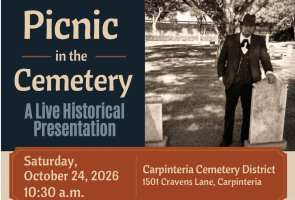
Sat, Oct 24
10:30 AM
Santa Barbara
Picnic in the Cemetery: A Live Historical Event
Sat, Oct 24
11:00 AM
Goleta
2nd Annual Charger Cup to Benefit DP High Golfers
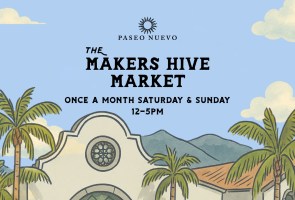
Sat, Oct 24
12:00 PM
Santa Barbara
Makers Hive Market

Sat, Oct 24
2:00 PM
Santa Barbara
Japanese Sacred Architecture: Shinto and Buddhism
Fri, Oct 23 2:00 PM
Santa Barbara
Music & Meditation: Clarinetist Nancy Mathison & Pianist Antonio Artese
Thu, Oct 22 5:30 PM
Santa Barbara
Best Fest: A Celebration of the Best of Santa Barbara® Readers’ Poll 2026 – Rain or Shine
Thu, Oct 22 6:00 PM
Santa Barbara
Chaucer’s Books Author Talk & Signing- Daniel M. Jaffe “Russian Silhouette: A Memoir of Activism and Identity”
Fri, Oct 23 5:30 PM
Solvang
Solvang Haunted House and Street Fair
Fri, Oct 23 7:00 PM
Santa Barbara
Beth Amine’s 20th Anniversary Wildcat Dance Variety Show
Fri, Oct 23 7:00 PM
Santa Barbara
This & That Performs at Roy
Fri, Oct 23 9:00 PM
Santa Barbara
Casa de la Raza Fundraiser: Brasscals! with DJ Darla Bea
Sat, Oct 24 10:30 AM
Santa Barbara
Picnic in the Cemetery: A Live Historical Event
Sat, Oct 24 11:00 AM
Goleta
2nd Annual Charger Cup to Benefit DP High Golfers
Sat, Oct 24 12:00 PM
Santa Barbara
Makers Hive Market
Sat, Oct 24 2:00 PM
Santa Barbara


You must be logged in to post a comment.