

Stay up-to-date with all things film fest by subscribing to our Dispatches from SBIFF newsletter featuring
daily reports of what happened last night, and previews of what’s next at the
Santa Barbara International Film Festival. Subscribe here.
Santa Barbara Independent is a proud sponsor of SBIFF’s Audience Choice Award.
Don’t forget to vote for your favorite films.
War and Warmth in Ukraine
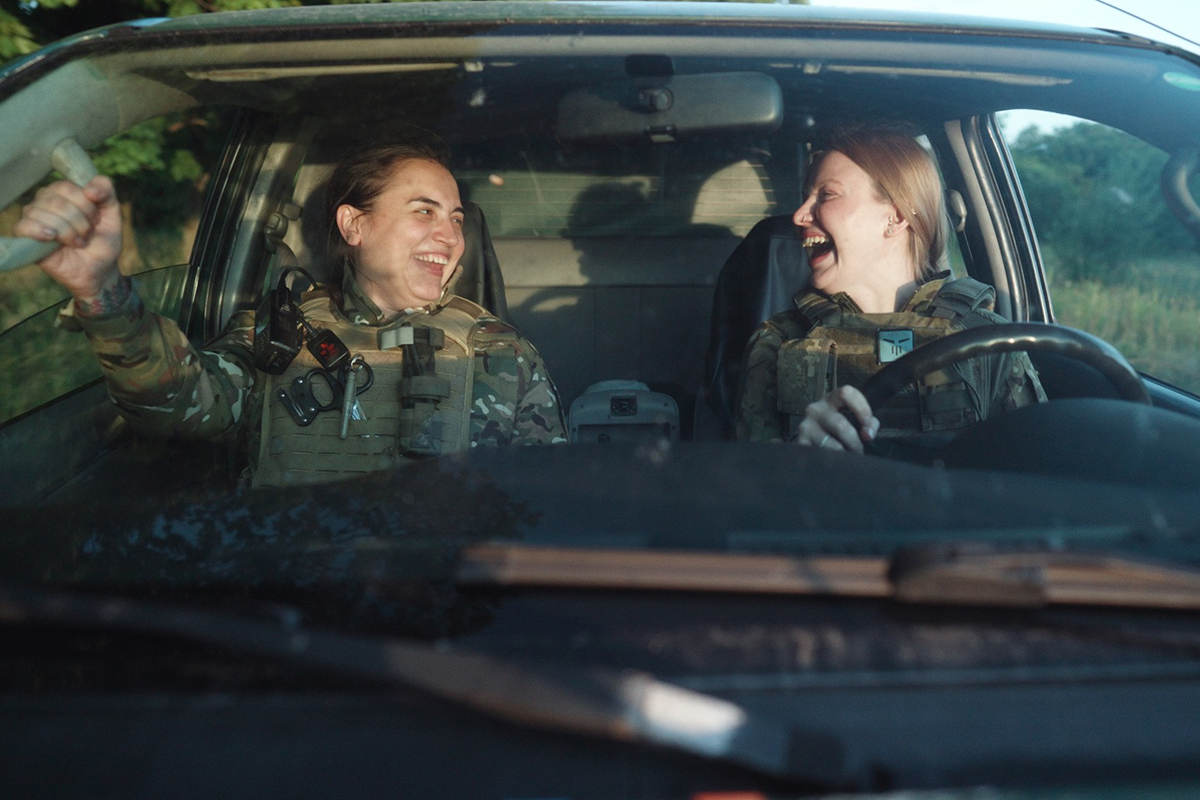
As “life during wartime” documentaries go, the Ukrainian film Cuba and Alaska works a minor miracle. It proposes a unique angle on the challenge of how best to convey the complex and vulnerable subject of Russia’s wanton aggression against Ukraine, starting with its central focus on the characters in the title. “Cuba” and “Alaska” are nicknames for a pair of friends, equipped with a leavening sense of humor and resignation in the face of chaos, in Kharkiv, who volunteer as medics for the unpredictable demands of Ukraine’s terror. We follow their own personal paths, through struggles and laughter-lined scenes on their “highway to hell” (as they call it, laughing all the way).
With his striking film, director Yegor Troyanovsky brilliantly interweaves clean documentary footage and cell phone video clips into a structure that follows a fictional narrative arc. It puts a human face on the monolithic and ongoing subject of Ukraine’s suffering.

A Pale View of Hills, which had its U.S. premiere yesterday at the Film Center, is a perplexing and seductive puzzler of a film. This fascinating adaptation of Kazuo Ishiguro’s 1982 novel, directed by Kei Ishikawa, and with the imprimatur of placement in the Cannes Festival’s Un Certain Regard selection, juggles painful world history and painful personal history with a subtle hand. The action moves between the post-war fog of Nagasaki in 1953 and England in 1982, where the daughter of a Japanese immigrant mother is writing an article about her days in Nagasaki. Venturing down memory lane becomes a slippery slope, lined with elements of an unreliable narrator. What ensues is a psychological drama that cross-cuts between hard facts and rubbery recollections and dreams, between the visually lovely Kodachromed world of post-traumatic Nagasaki and the lingering, curious gaze of history. It’s a slow-brewing, un-scrolling film that converges on the outskirts of melodrama and mysticism. Even given the flood of impressions supplied daily by the film festival, this one is hard to get out of one’s head.
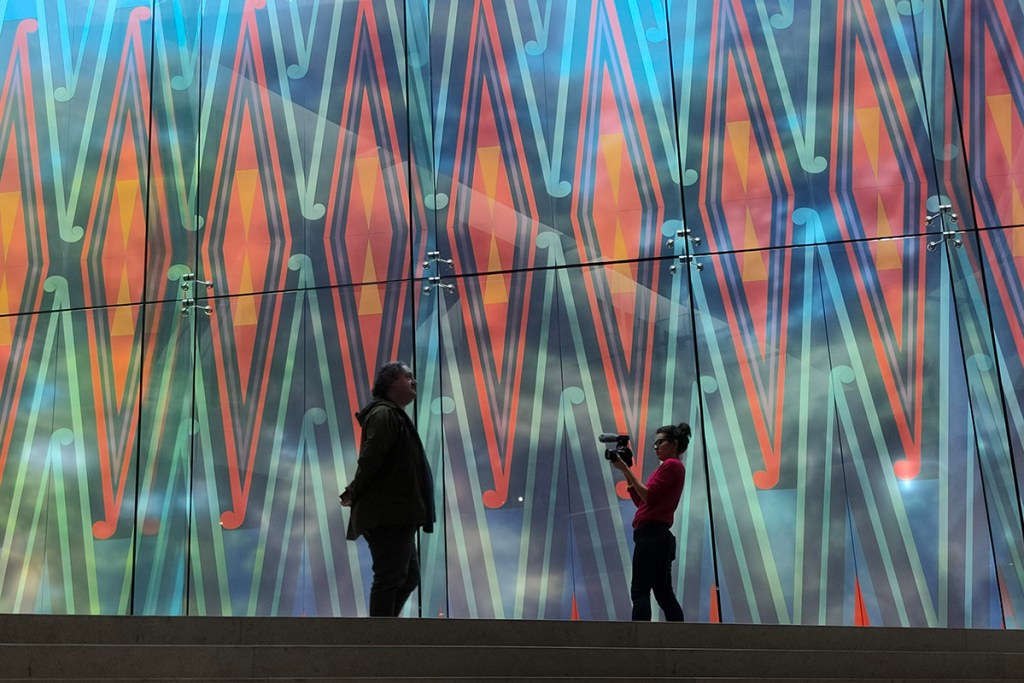
The New Zealand documentary Toitū: Visual Sovereignty may be guilty of the very common iniquity of the overlong doc: It’s an understandable problem when a filmmaker is blessed with an overabundance of footage and points to make. Even so, the film conveys a powerful story about the distinctive and deeply rooted art of the Māori people, weaving in and out of contact with the established, mainstream art world. The story in Chelsea Winstanley’s fine and visually rapturous film begins and ends at the prestigious Venice Biennale, where its 2024 theme, Foreigners Everywhere, logically embraced a number of well-known Māori artists. Biennale director Adriano Pedrosa observes that “indigenous people are often treated as foreigners in their own country.” The film’s purview then shifts back to the Auckland Art Gallery, where a significant exhibition of Māori art is being staged and prepared, a latter-day echo of another major show 30 years prior.
We check in with the work and thought processes of various artists and a curator; a conflict with the director creates a dramatically valuable point of conflict in the film. Along the way, the film affords us inherent commentaries on the deep stains of systemic racism and marginalization of the country’s original inhabitants, a tale all too relatable stateside. And, not incidentally, we are lavished with stunning, culturally enriched contemporary artistic expressions, true to both roots and modern impulses.
SBIFF Tidbits Dept.
A wonderful locavore musical vibration greeted us as we stepped out of the McHurley Film Center and heard Bruce Goldish’s serenade on his acoustic guitar from his perch in the reverberant overhead parking garage. It’s a comforting Santa Barbara ritual that has gone on for years, commemorated in director Michael Love’s short documentary State Street Serenade, which screened on closing night in 2020. Listen up and pay a visit between film screenings.
Recommended Fare Zone
Here is a short list of films screening soon, which I’ve seen and can vouch for as worth our time (IMHO):
Steal This Story, Please! (Tia Lessin, Carl Deal; U.S.)
A Life Illuminated (Tasha Van Zandt; U.S.)
A Cowboy in London (Jared L. Christopher)
Abril (Hernán Jiménez; Costa Rica)
You Had to Be There (Nick Davis; Canada)
Lost Land (Akio Fujimoto, moving film about young Rohingya refugees in flight)
Gaslit (Katie Camosy)
Dear Lara (Lara St. John)






You must be logged in to post a comment.