
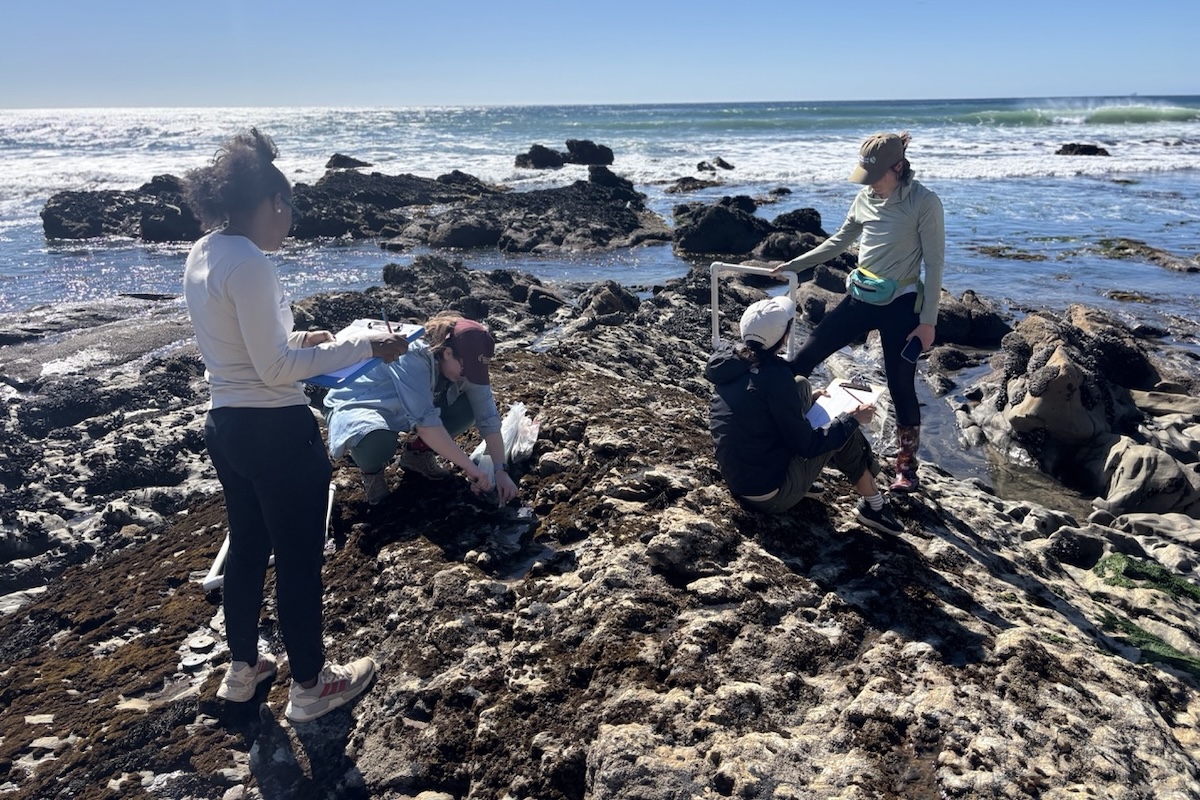
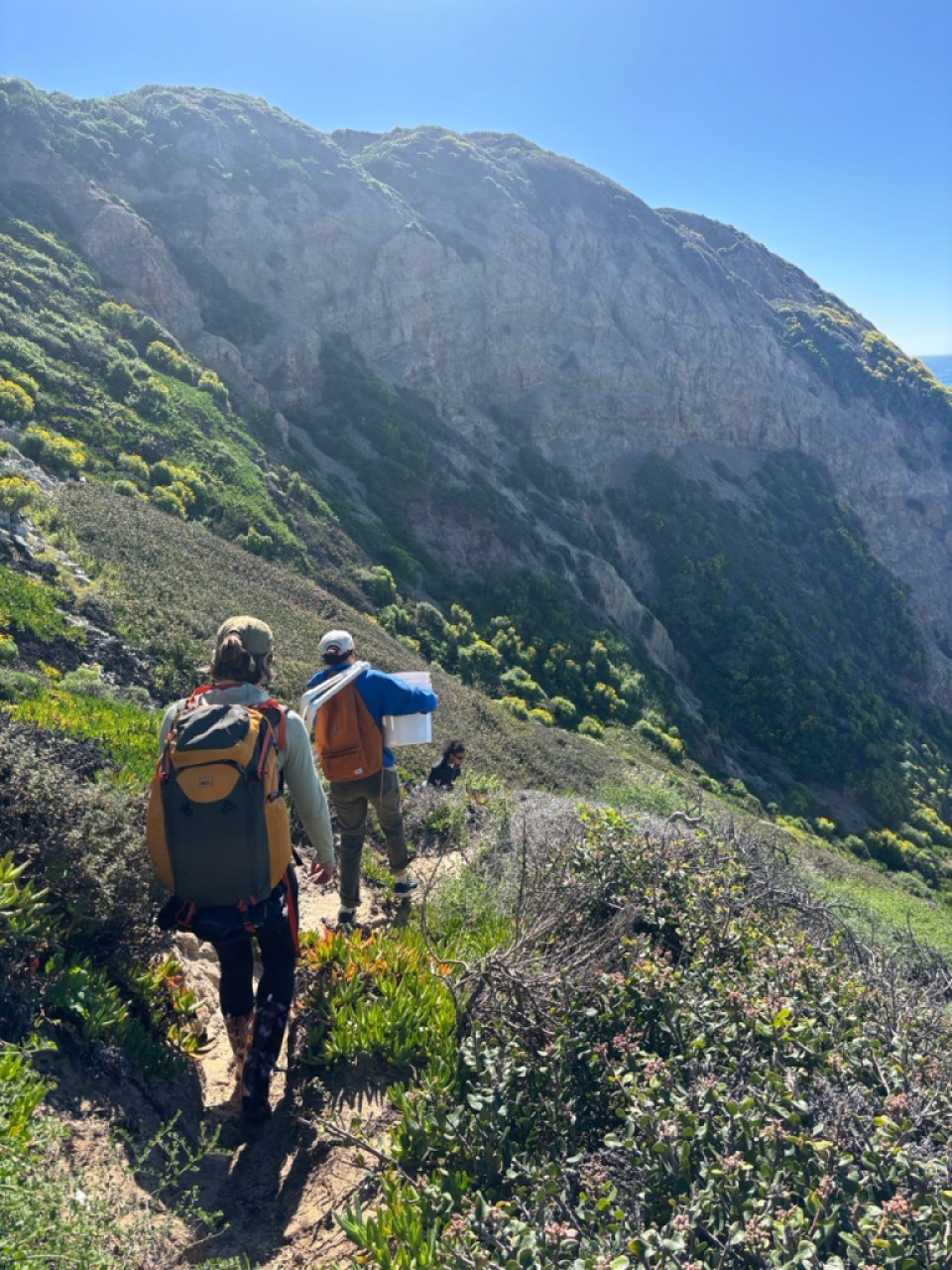
To reach their study site at Jalama Beach, researchers must scramble down a steep cliff, through poison oak, under barbed wire, and across slick, rocky sands. Meanwhile, they’re hauling buckets and tools, as they fight to keep their footing.
This risky trek leads to rockweed in seaside tide pools. It’s an unassuming, yet essential, brown algae that blankets the stone jutting out from the sand.
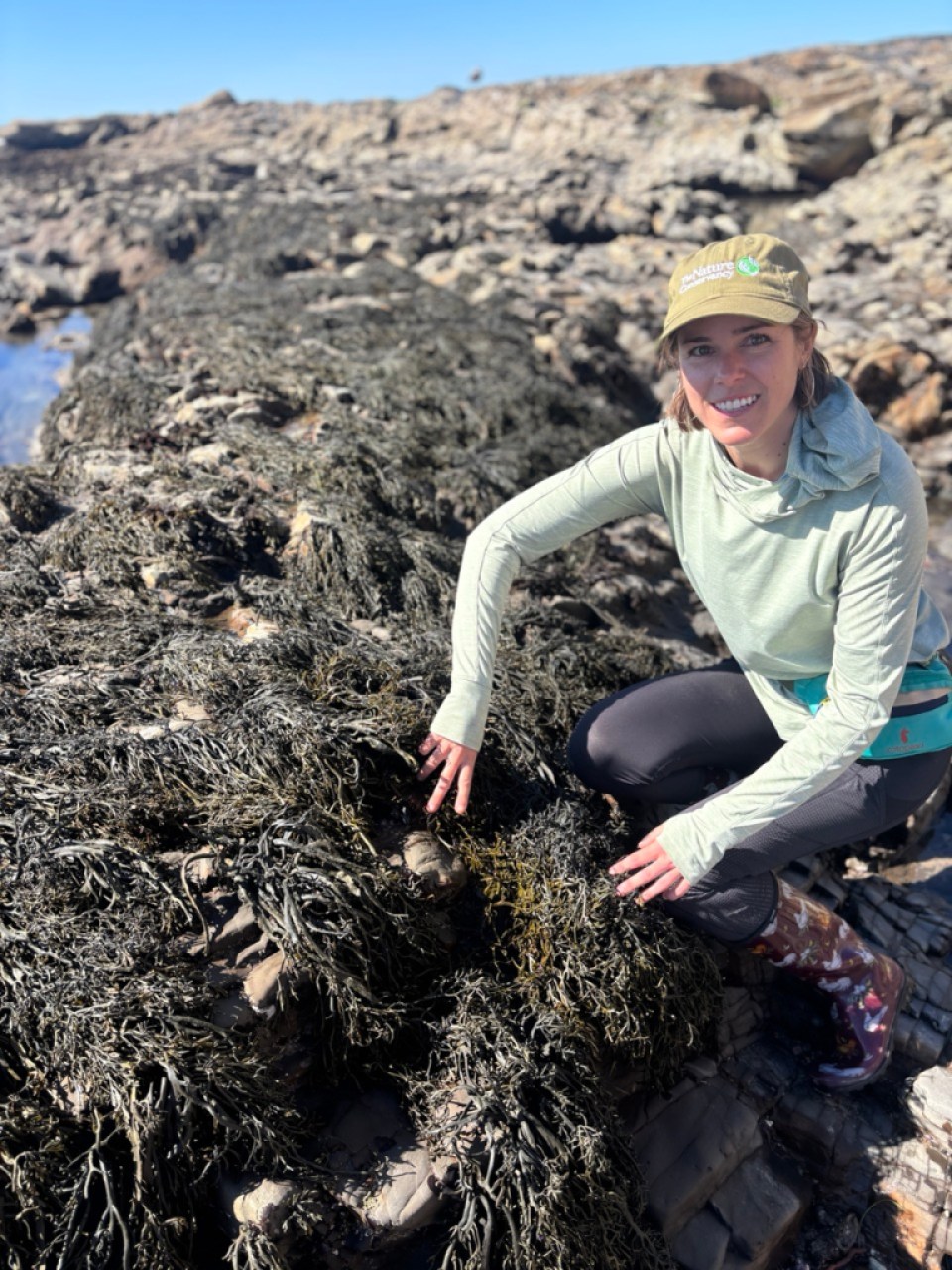
As a foundational species, rockweed provides food and shelter for hundreds of other species — such as snails and limpets — and stores carbon, much like coral and kelp.
But it’s disappearing across the coast due to climate change, pollution, and human trampling. If it died off, so would the critters in the tide pools, causing ripple effects up the food chain.
Imagine a forest without trees.
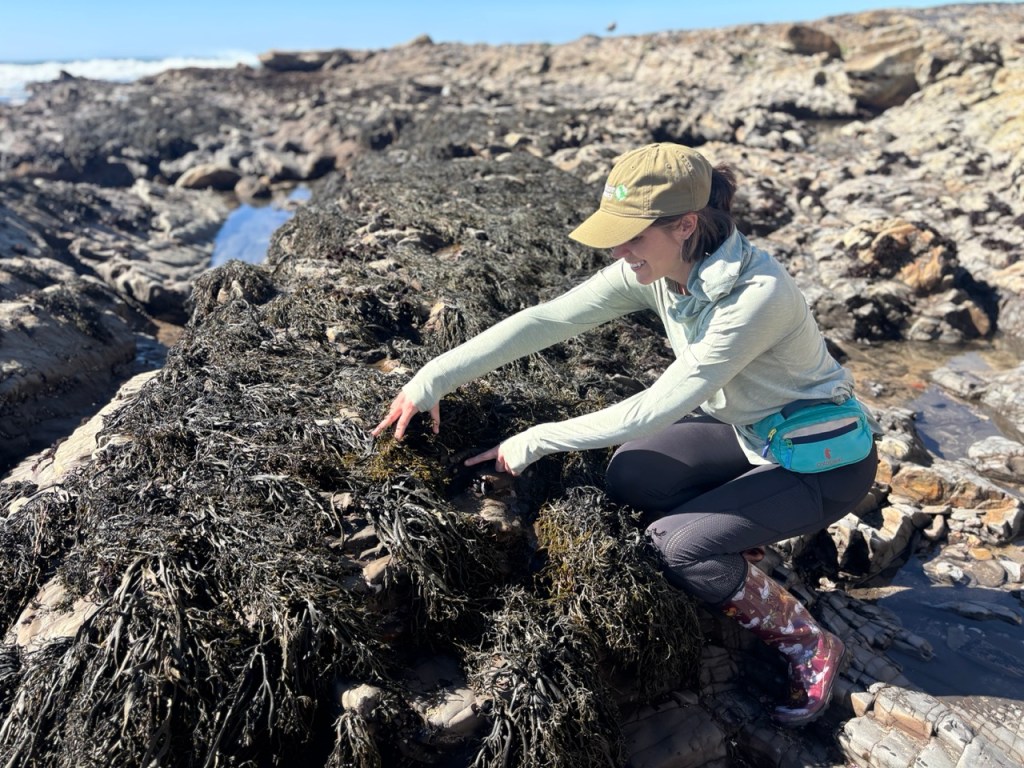
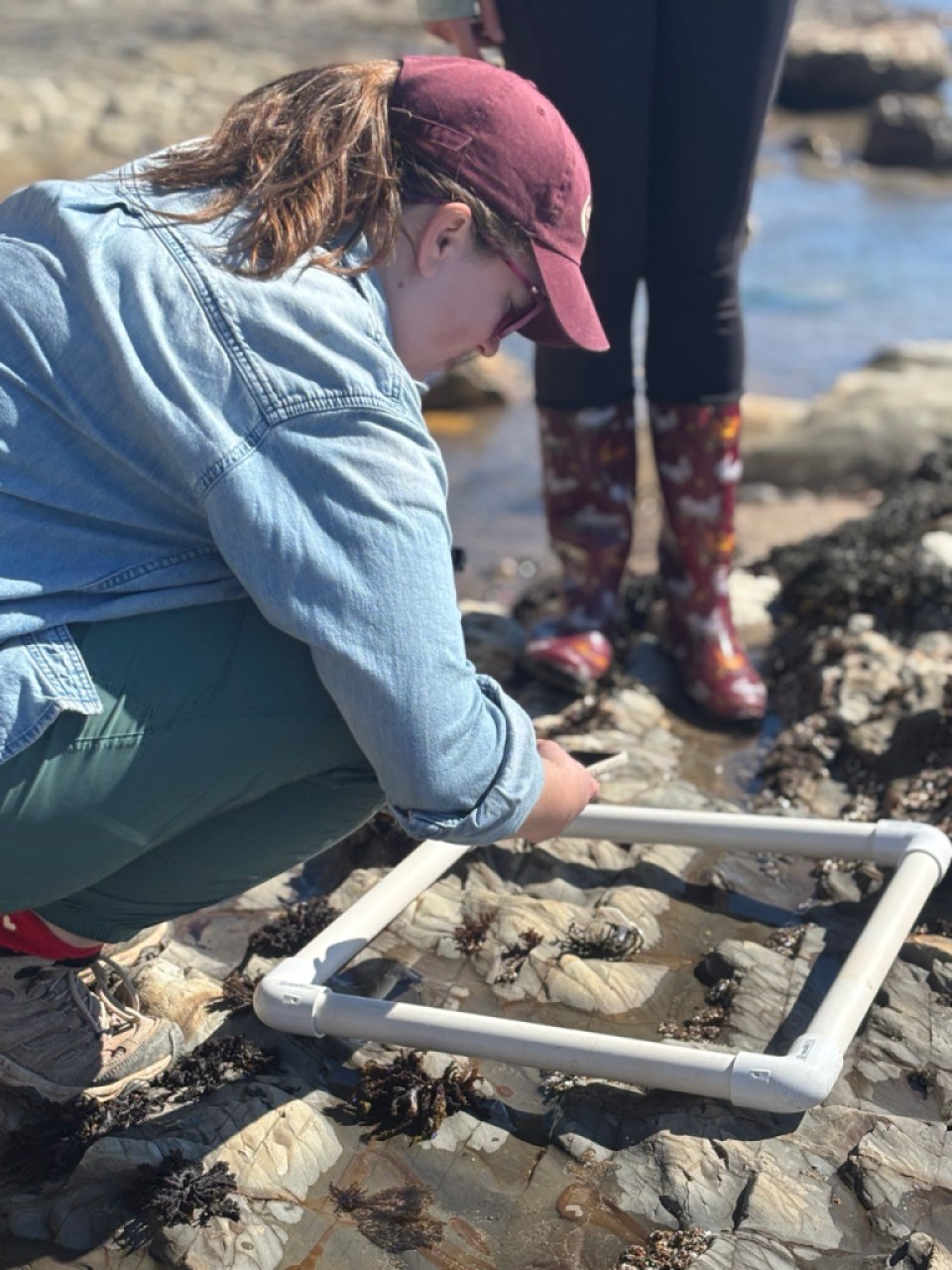
“It’s a hardy species,” said Lauren Smith, a researcher for the Nature Conservancy’s Point Conception Institute (PCI), at the Jack and Laura Dangermond Preserve. At 17, she took a marine ecology class and went home to tell her mom, “Seaweed is my life.” It’s stayed that way.
“You don’t want to lose a hardy species,” she added, crouching next to specimens on Jalama’s rocky shore on Friday, February 13. “It would be a bummer.”
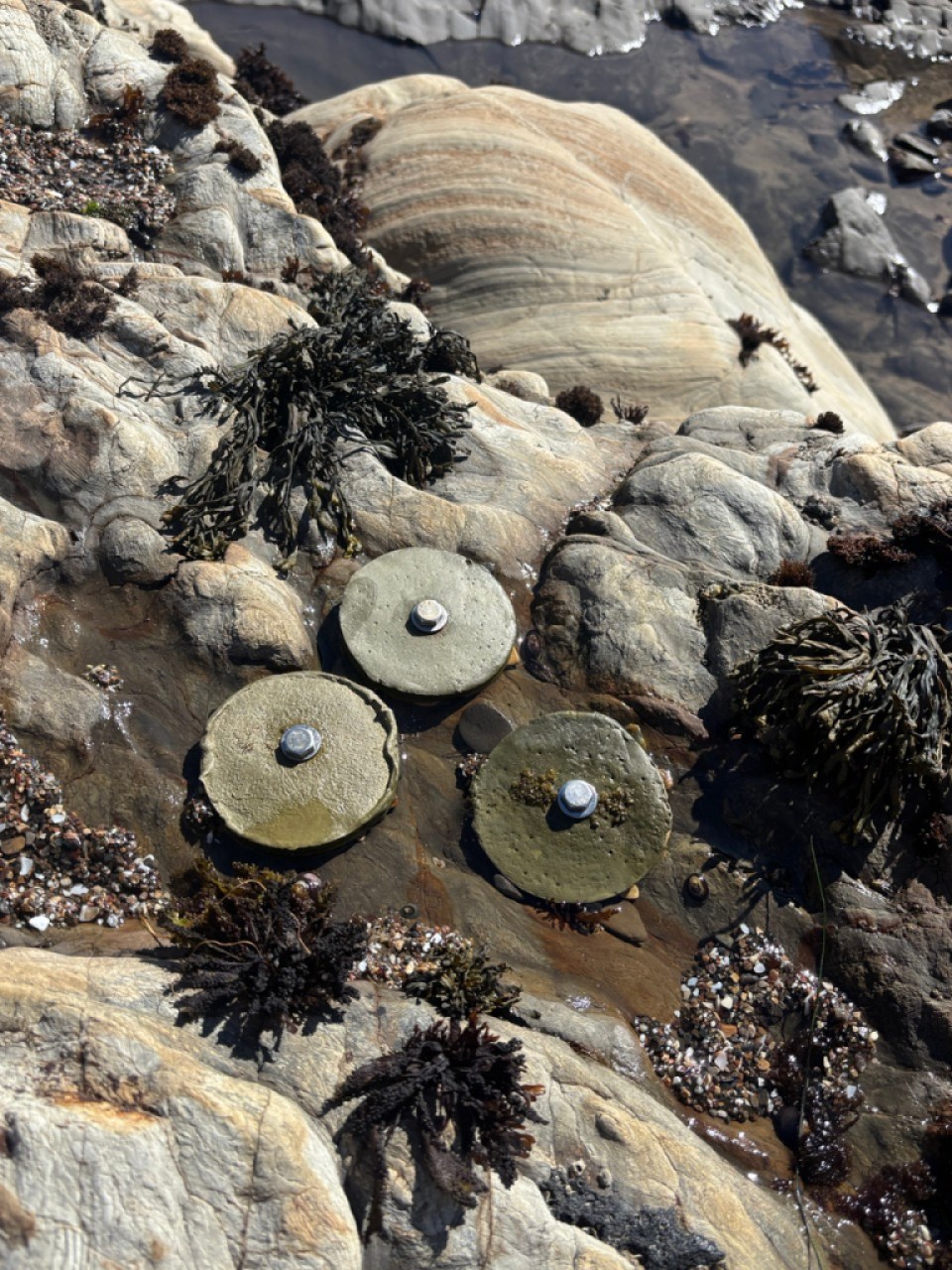
“Not 100 percent mortality, whoop whoop!” exclaimed Erica Nielsen, Anthony LaFetra Research Fellow, whose work focuses on coastal species and conservation. She was celebrating the living baby rockweed on one of her sample discs bolted to the rock.
Her main notes were simply “dead or alive.”
While many were dead, a few were alive — a good sign. They want them alive to inform rockweed restoration across the coast.
It’s one study in how coastal species are responding to climate change. In short: not great. But with understanding and intervention, the coastline has hope.
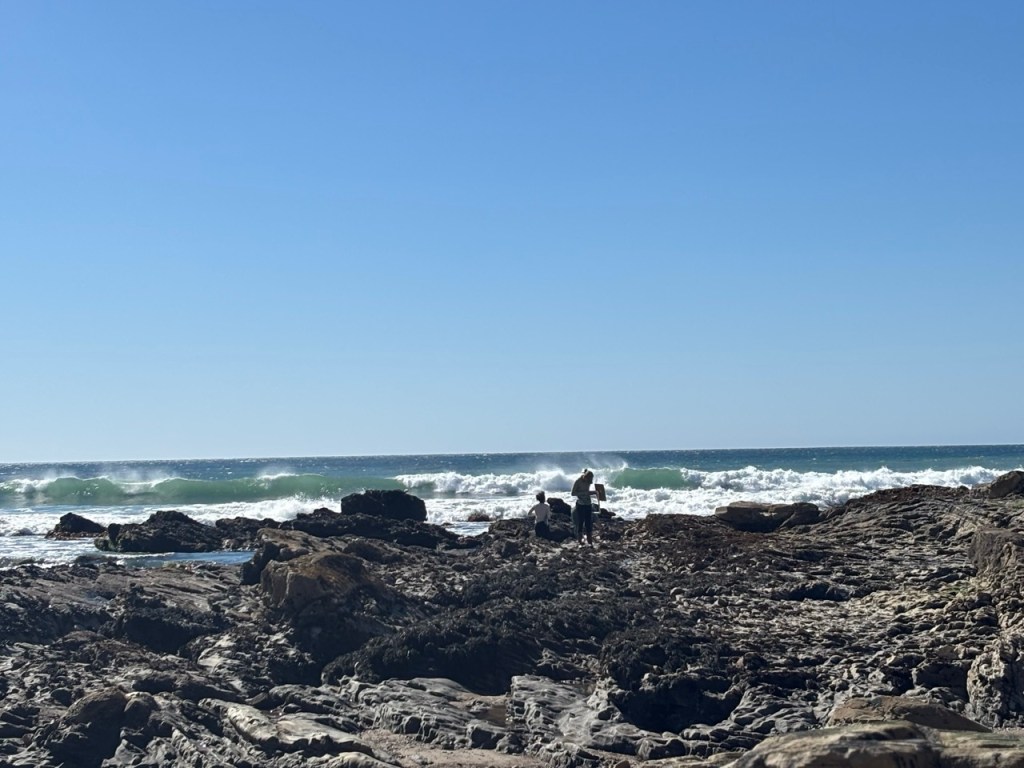
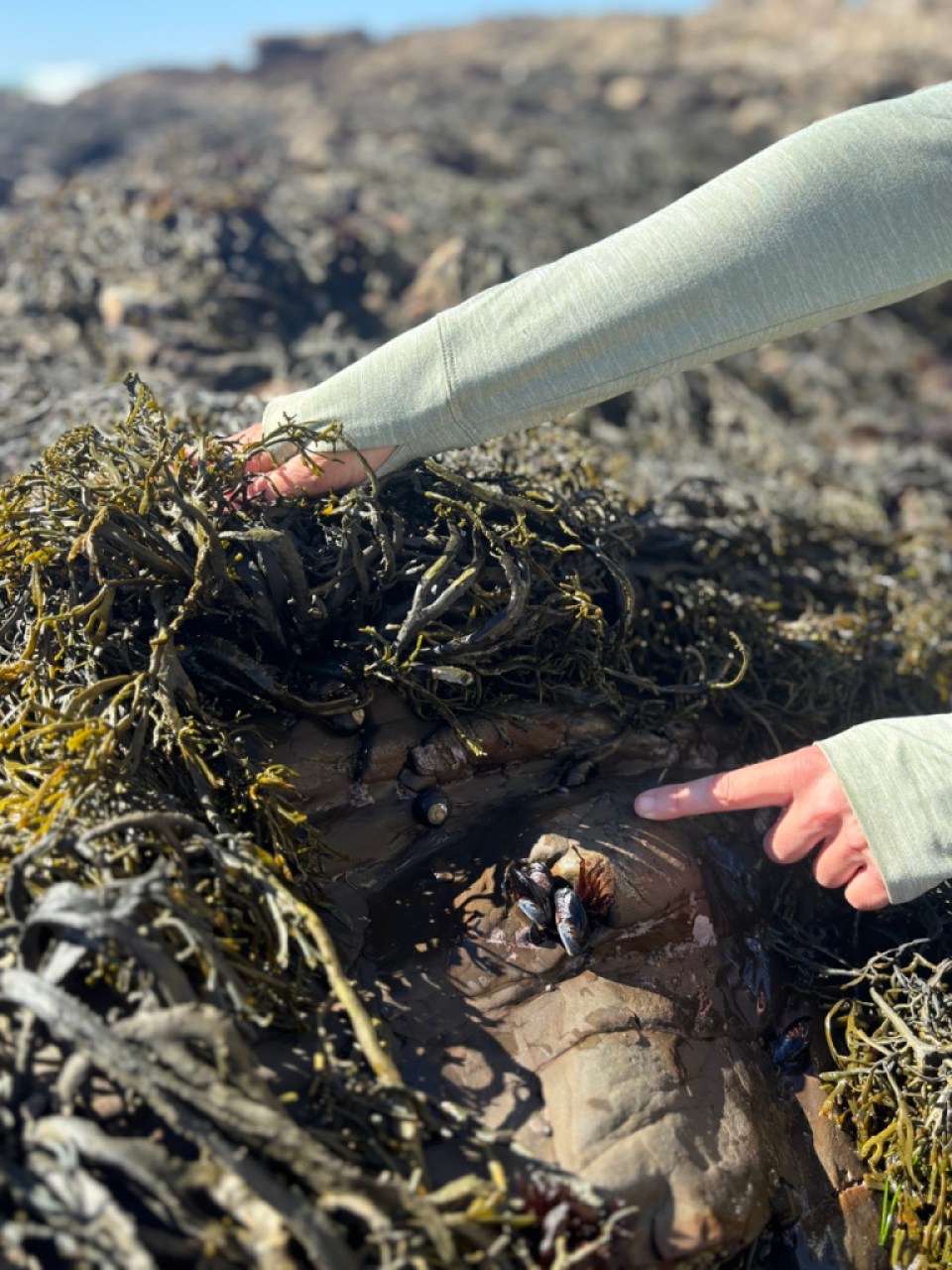
“Rockweeds are a lesser-known foundational species, but these are really important because they create these whole ecosystems,” Nielsen said.
It’s a buffer for other species against the hot sun, preventing them from drying out. “They basically provide a little forest along the rocky shore,” Nielsen said, adding that it can be up to 29 degrees cooler under rockweed branches than the surrounding environment.
Historical uses for rockweed also include agriculture, animal feed, and culinary applications.
But 70 percent of monitored rockweed sites across the globe have shown significant declines, including a 50 percent drop in populations at 20 different California sites over the last few decades. A majority have not bounced back.
The team at Dangermond is testing restoration methods, including transplanting branches from healthy adults and using lab-grown individuals — something never done before in California.
If they can find successful approaches, those can be scaled up to larger restoration projects. But it’s tough. It’s only the first month, and their baby rockweeds have already been exposed to heavy rains, record-breaking temperatures, and large swells. Their intertidal environment is particularly challenging due to its dynamic nature and exposure to various environmental stressors.
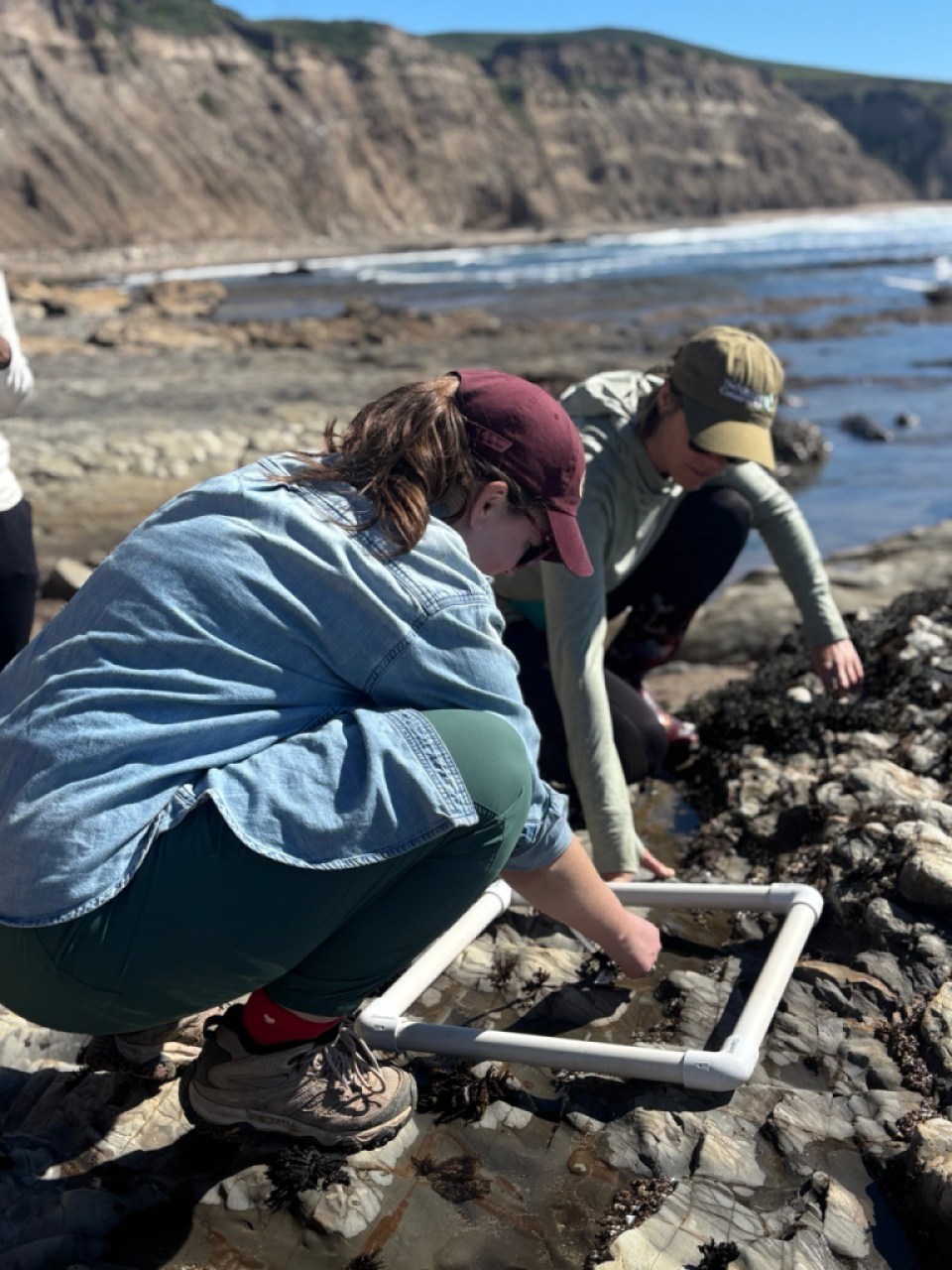
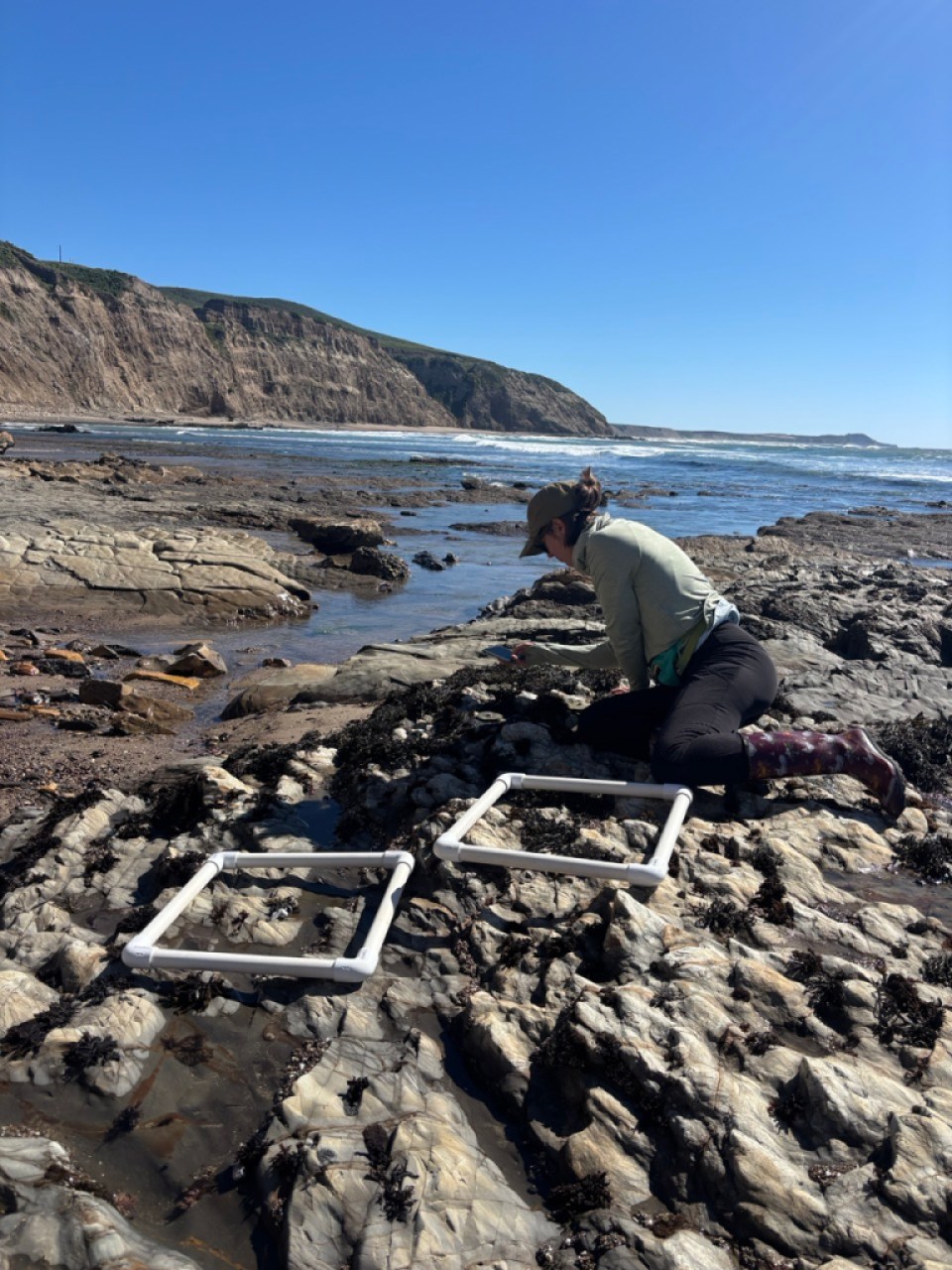
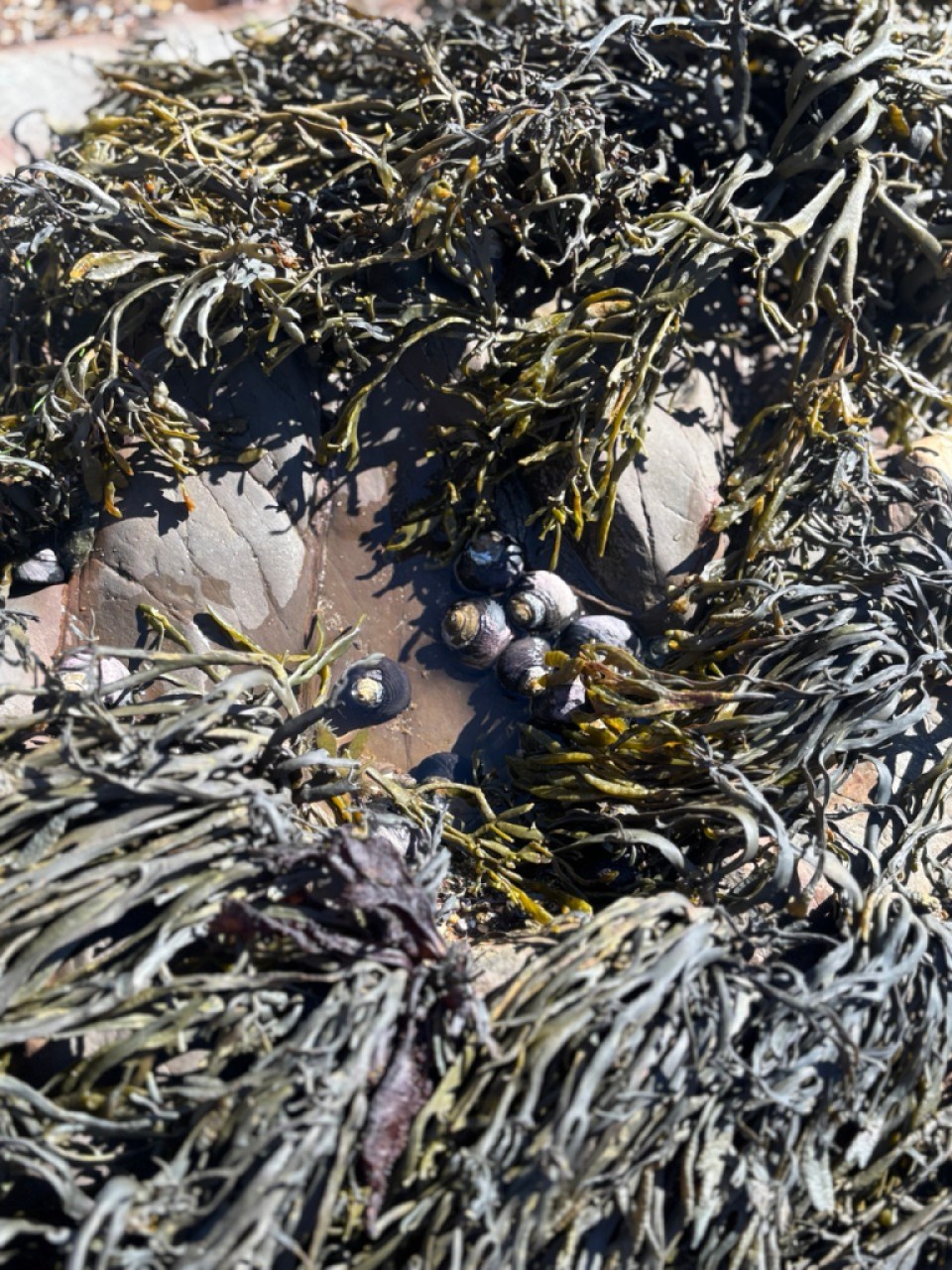
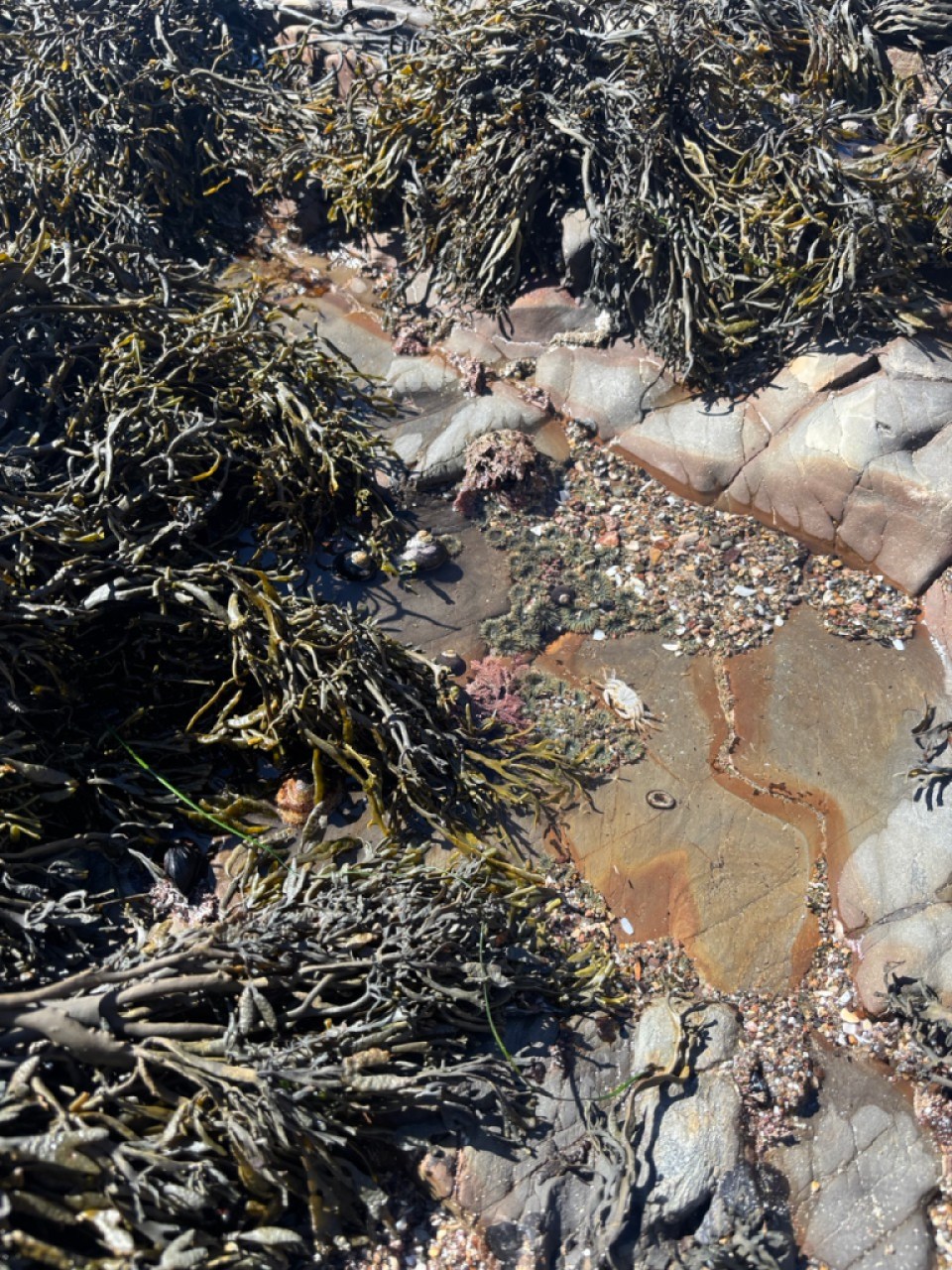
“It’s a lot thrown at them,” Nielsen said while out in the field.
“If we find any alive, we are throwing a party, because that will be the first time that this has happened for this species in California,” she said.
Expect a party, though, because they did find at least one healthy rockweed.
The project is still in its early stages, but they hope to find viable methods for conservation. By preserving and enhancing rockweed populations, they can increase the resilience of coastal communities, Nielsen said.
It’s important to test these methods in places where rock weed should thrive. It gives researchers a better idea of how successful their methods are, without the potential conflict of the site itself being unsuitable. And the preserve makes for a great testing ground.
The Jack and Laura Dangermond Preserve protects roughly 24,000 acres and eight miles of scenic coastline at the convergence of the Lompoc Hills and Central California’s Point Conception. The shoreline is surrounded by woodlands, grasslands, chaparral, and shrublands, making for a wild, diverse, and gorgeous landscape leading right down to the sandy beach.
“In terms of restoration, there’s a lot of examples on land and fresh water,” Nielsen said. “But for a place like the rocky shore, it’s still in its relative infancy. It’s a really exciting place to be working in this realm of trying these new restoration approaches, but it’s also a little harrowing when the odds are against you.”
It’s also harrowing to walk back up the cliff after a long day in the field. But these researchers are pros. And neither the trek, nor the intertidal challenges, can deter them.
Related Posts



Premier Events

Thu, Feb 26
11:00 AM
Montecito
La Casa de Maria – Lunch and Learn

Fri, Mar 06
2:00 PM
Santa Barbara
Music & Meditation SB – Concert March 6, 2026

Sun, Mar 08
6:30 PM
Santa Barbara
6th Eco Hero Award Brock Dolman & Kate Lundquist

Tue, Feb 24
7:00 PM
Santa Barbara
Banff Mountain Film Festival World Tour: 2 Nights!

Wed, Feb 25
4:00 PM
SANTA BARBARA
Career Exploration Fair: For Teens & Young Adults

Wed, Feb 25
5:00 PM
Isla Vista
Forward Ever Backward Never

Wed, Feb 25
6:30 PM
Santa Barbara
Creative Exploration
Wed, Feb 25
8:00 PM
Santa Barbara
Salvidoria, Orangepit!, & Magnetize at SOhO
Thu, Feb 26
1:00 PM
SANTA BARBARA
Shocking History of Electricity in Santa Barbara

Thu, Feb 26
7:00 PM
Santa Barbara
Anniversary Screening – Connectivity: “Chulas Fronteras”

Thu, Feb 26
7:00 PM
Santa Barbara
Beautiful Borders: Texas-Mexico Crossings in Film
Thu, Feb 26
7:30 PM
Santa Barbara
An Evening with The Mends & Redfish at SOhO

Fri, Feb 27
2:30 PM
Santa Barbara
Opera Santa Barbara presents “Caesar and Cleopatra
Thu, Feb 26 11:00 AM
Montecito
La Casa de Maria – Lunch and Learn
Fri, Mar 06 2:00 PM
Santa Barbara
Music & Meditation SB – Concert March 6, 2026
Sun, Mar 08 6:30 PM
Santa Barbara
6th Eco Hero Award Brock Dolman & Kate Lundquist
Tue, Feb 24 7:00 PM
Santa Barbara
Banff Mountain Film Festival World Tour: 2 Nights!
Wed, Feb 25 4:00 PM
SANTA BARBARA
Career Exploration Fair: For Teens & Young Adults
Wed, Feb 25 5:00 PM
Isla Vista
Forward Ever Backward Never
Wed, Feb 25 6:30 PM
Santa Barbara
Creative Exploration
Wed, Feb 25 8:00 PM
Santa Barbara
Salvidoria, Orangepit!, & Magnetize at SOhO
Thu, Feb 26 1:00 PM
SANTA BARBARA
Shocking History of Electricity in Santa Barbara
Thu, Feb 26 7:00 PM
Santa Barbara
Anniversary Screening – Connectivity: “Chulas Fronteras”
Thu, Feb 26 7:00 PM
Santa Barbara
Beautiful Borders: Texas-Mexico Crossings in Film
Thu, Feb 26 7:30 PM
Santa Barbara
An Evening with The Mends & Redfish at SOhO
Fri, Feb 27 2:30 PM
Santa Barbara


You must be logged in to post a comment.