

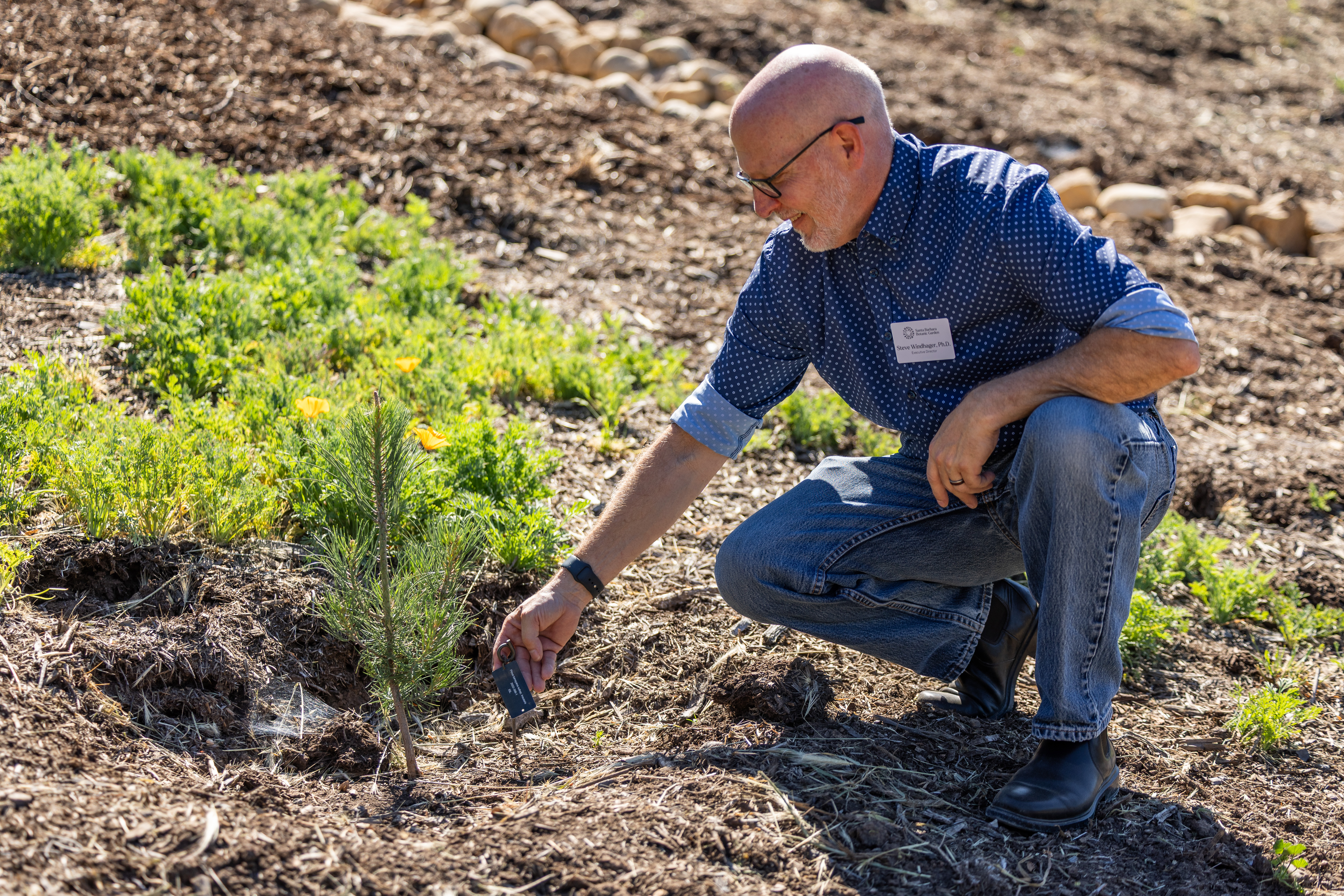
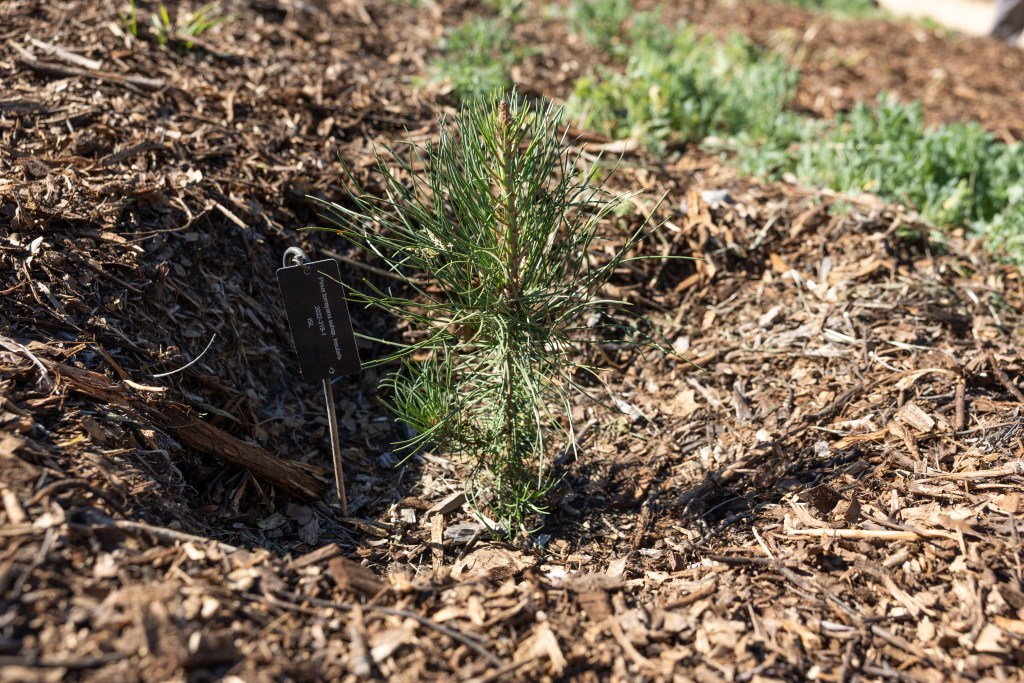
The Santa Barbara Botanic Garden welcomed its newest residents with a ribbon cutting on Friday — though the stars of the show were easy to miss. Guests peered past the bright red ribbon, searching for the tiny Torrey pine saplings just beginning to poke out of the mulch.
On that hot Friday morning, the trees didn’t provide much in the way of shade. Nevertheless, visitors looked on in awe, hands cupped across their brows, imagining the future.
In time, this budding grove will become a full-blown forest. Some trees could climb as high as 120 feet, like the famous Torrey pine in Carpinteria, planted in 1888 and now the largest in the world.
Mature Torrey pines look otherworldly. Their broad canopies reach across the sky, crowned with clusters of spiky needles.
They only grow naturally in two places: Santa Rosa Island and a nature preserve north of San Diego. They are among the rarest pine trees in the world.
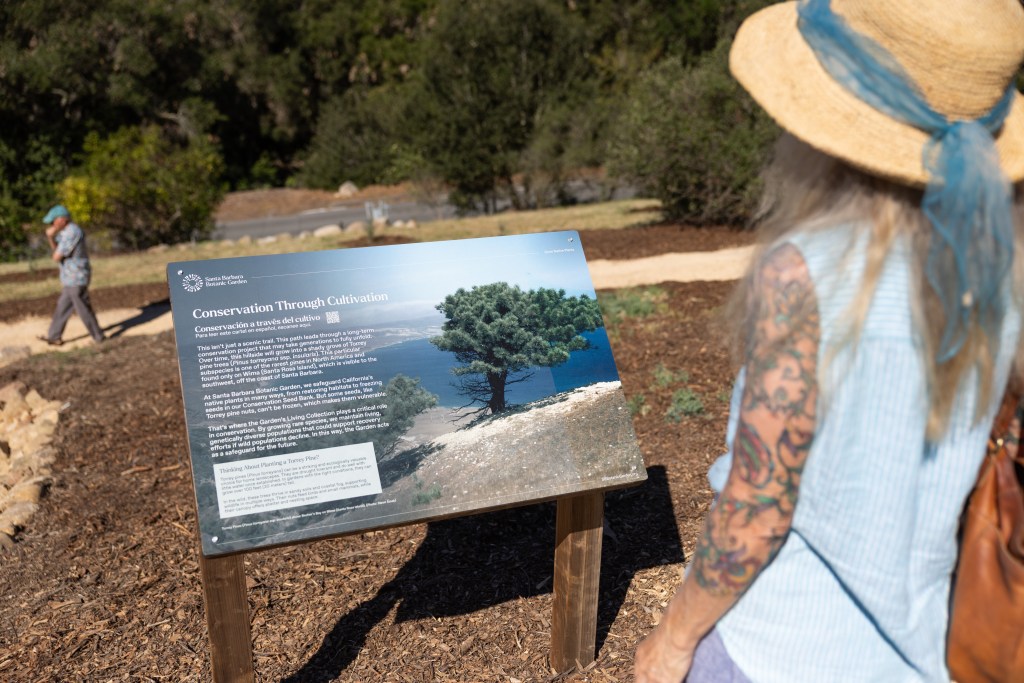
Now, the garden offers a new home away from home. It’s primed for tree-curious visitors to walk through an island grove without leaving the mainland.
The project has been years in the making. The saplings were grown from seeds collected from 45 maternal trees on Santa Rosa Island, then carefully transplanted on a sloped hillside next to the garden’s conservation center.
It was the perfect “blank canvas” for the Torrey Pine Conservation Grove, in the words of Keith Nevison, director of horticulture and operations at the Botanic Garden.
“They’re young,” Nevison said, but with some TLC, “this forest is going to be very impressive over time.”
This transformation won’t happen overnight. It may take 50 to 80 years for the grove to fully mature. But Torrey pines are relatively quick growers. Others around the garden, planted 10 years ago, already stand taller than the average person.
Director of Education Scot Pipkin pointed out that the immature grove resembles the early days of the garden’s redwood forest, planted in the 1920s and now towering hundreds of feet overhead.
The young pines are surrounded by other Channel Islands species, including island oaks, island ironwood, and California poppies — mimicking their native habitat.
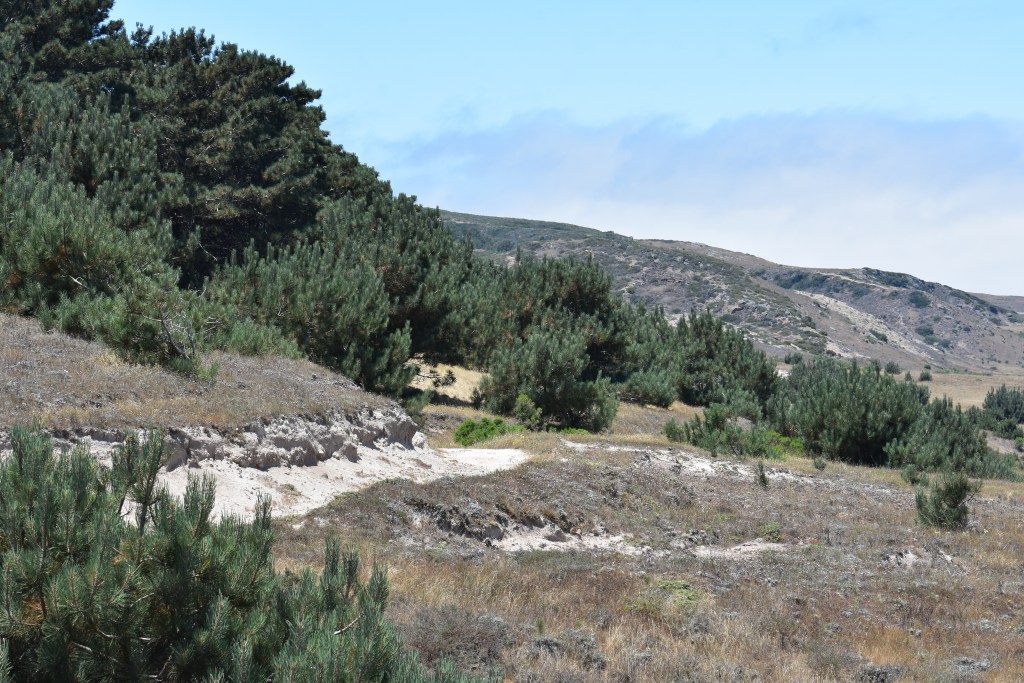
Both the Torrey pines and the Catalina Island ironwoods are endangered island-endemic species, explained Steve Windhager, the garden’s executive director. “If they have a problem out there, they’re going to disappear entirely,” he said. Establishing a mainland refuge helps safeguard their future against threats such as wildfire, disease, or climate change.
Torrey pine nuts cannot be frozen for conventional seed banking, making living collections such as this one essential for maintaining genetic diversity and supporting future restoration efforts, according to the garden.
Friday’s ribbon cutting also marked the kickoff of the garden’s centennial celebrations. For 100 years, the Mission Canyon institution has championed native plant conservation — becoming the first botanic garden in the United States devoted exclusively to native species.
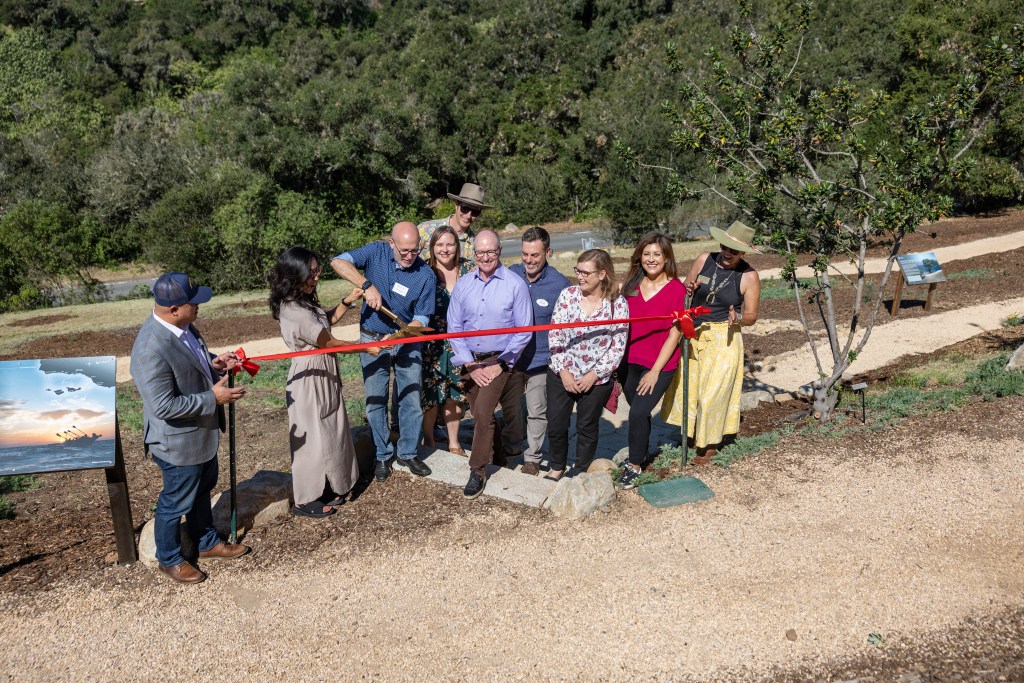
“We’re gonna be celebrating all year long,” Windhager said, “because with this big birthday, you get a birthday year.”
Assemblymember Gregg Hart, who also attended the opening of the conservation center — home to the garden’s native seed bank — returned for the grove’s debut. He likened the garden to a bridge between ecosystems.
The Botanic Garden’s scientific work “connects the mainland to the Channel Islands,” he said. “And really recognizes that we’re all one big ecosystem.”
“The research that scientists do here is critical to the whole planet and everything we hold dear,” he said.
Nevison encourages visitors to plan on coming back with their kids and grandkids to witness the slow rise of the forest, “as it gets higher than your head, and it soars toward the sky.” It will take generations to unfold, but one day, there will be a canopy to shade visitors from the sun.
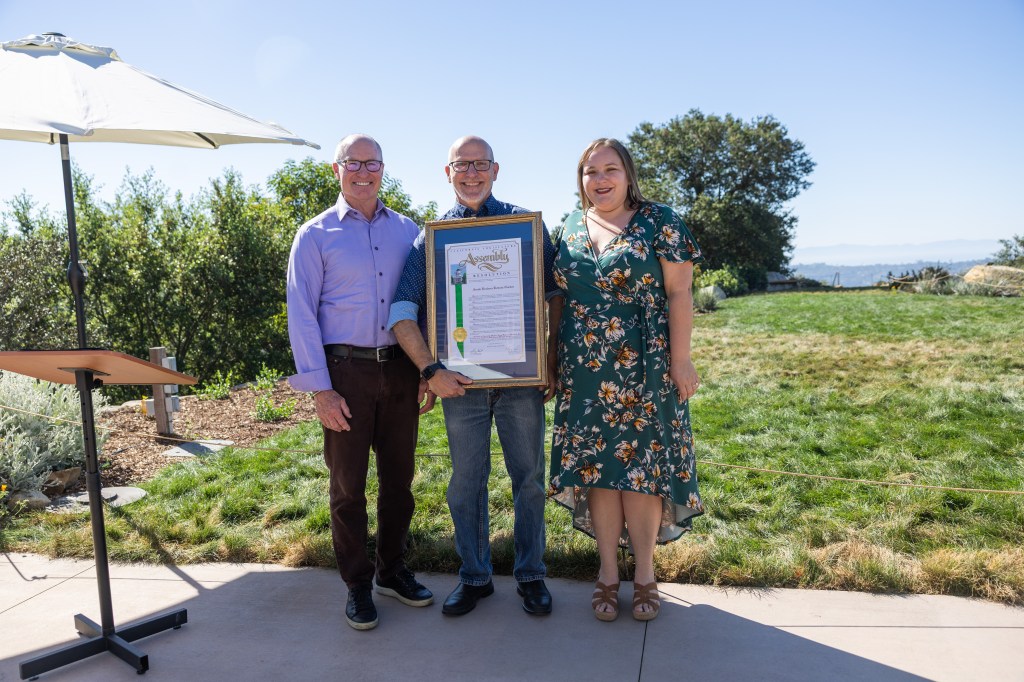
Assemblymember Gregg Hart (left) and policy consultant for State Senator Monique Limon’s office Geordie Scully (right) presented a resolution on behalf of the California Assembly recognizing the new Torrey Pine Conservation Grove at the Botanic Garden. | Credit: Jeff Clark, SB Botanic Garden. 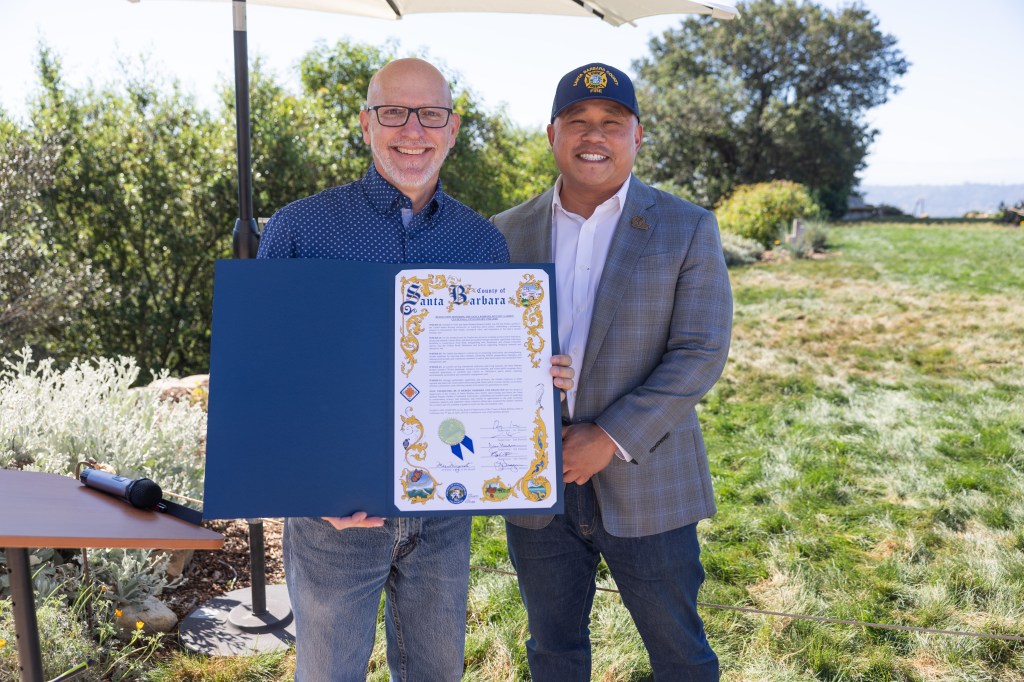
Santa Barbara Botanic Garden Executive Director Steve Windhager (left) with County Supervisor Roy Lee (right), who presented a resolution on behalf of the county recognizing the new Torrey pine grove at the garden. | Credit: Jeff Clark, SB Botanic Garden. 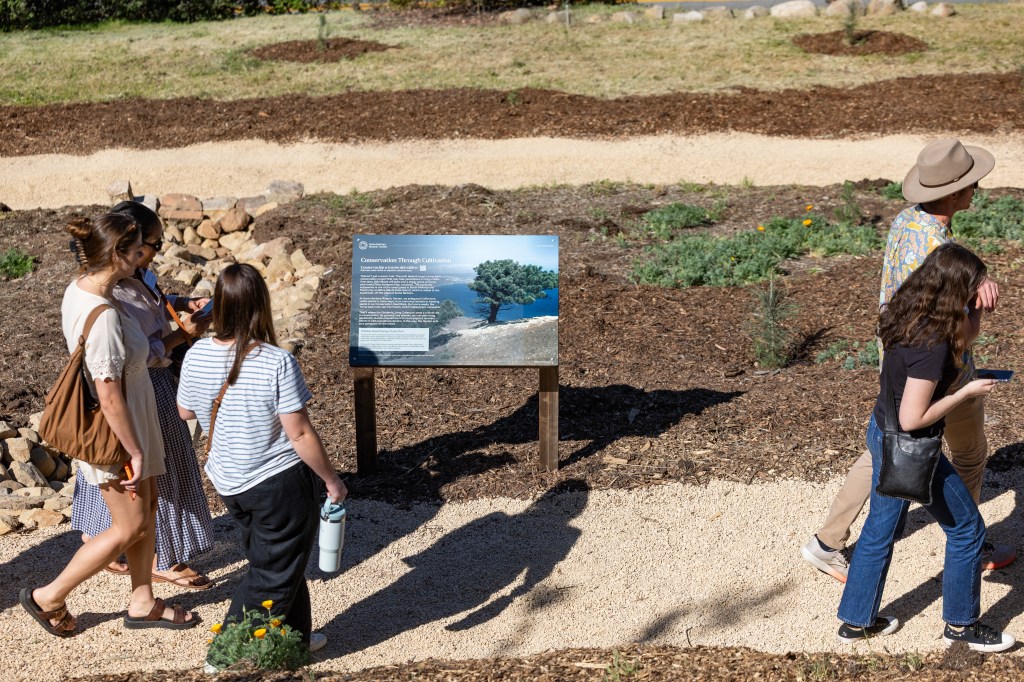
Visitors walk through the budding Torrey Pine Conservation Grove at the Botanic Garden. | Credit: Jeff Clark, SB Botanic Garden
Related Posts







Premier Events

Sat, Mar 28
12:00 PM
Santa Barbara
Spring Fragrance Release Party
Sat, Mar 28
7:15 PM
Santa Barbara
Santa Barbara Stargazing Tour
Sat, Apr 18
5:30 PM
Solvang
The Winemaker’s Table: An Evening of Rideau Reds

Thu, Mar 26
11:00 AM
Santa Barbara
Lunch and Learn at La Casa de Maria

Sat, Mar 28
All day
Santa Barbara
Coffee Culture Fest

Sat, Mar 28
11:00 AM
Santa Barbara
NO KINGS 3!

Mon, Mar 30
6:00 PM
Santa Barbara
Art4Grief Support Group 2nd 2-Week Session
Thu, Apr 02
2:00 PM
Santa Barbara
S.B. Rescue Mission Annual Easter Feast

Thu, Apr 02
5:00 PM
Santa Barbara
Exhibit Opening: The Santa Barbara Independent: ‘Covering 40 Years’
Sat, Apr 04
9:00 AM
Santa Barbara
Mesa Harmony Garden Spring Plant Sale

Sat, Apr 04
9:00 AM
Santa Barbara
Passport Fair, hosted by Congressman Salud Carbajal

Sun, Apr 05
10:00 AM
Santa Barbara
Easter Brunch at Brass Bear
Thu, Apr 09
6:00 PM
Santa Barbara
Chaucer’s Books – Poetry Night
Sat, Mar 28 12:00 PM
Santa Barbara
Spring Fragrance Release Party
Sat, Mar 28 7:15 PM
Santa Barbara
Santa Barbara Stargazing Tour
Sat, Apr 18 5:30 PM
Solvang
The Winemaker’s Table: An Evening of Rideau Reds
Thu, Mar 26 11:00 AM
Santa Barbara
Lunch and Learn at La Casa de Maria
Sat, Mar 28 All day
Santa Barbara
Coffee Culture Fest
Sat, Mar 28 11:00 AM
Santa Barbara
NO KINGS 3!
Mon, Mar 30 6:00 PM
Santa Barbara
Art4Grief Support Group 2nd 2-Week Session
Thu, Apr 02 2:00 PM
Santa Barbara
S.B. Rescue Mission Annual Easter Feast
Thu, Apr 02 5:00 PM
Santa Barbara
Exhibit Opening: The Santa Barbara Independent: ‘Covering 40 Years’
Sat, Apr 04 9:00 AM
Santa Barbara
Mesa Harmony Garden Spring Plant Sale
Sat, Apr 04 9:00 AM
Santa Barbara
Passport Fair, hosted by Congressman Salud Carbajal
Sun, Apr 05 10:00 AM
Santa Barbara
Easter Brunch at Brass Bear
Thu, Apr 09 6:00 PM
Santa Barbara


You must be logged in to post a comment.