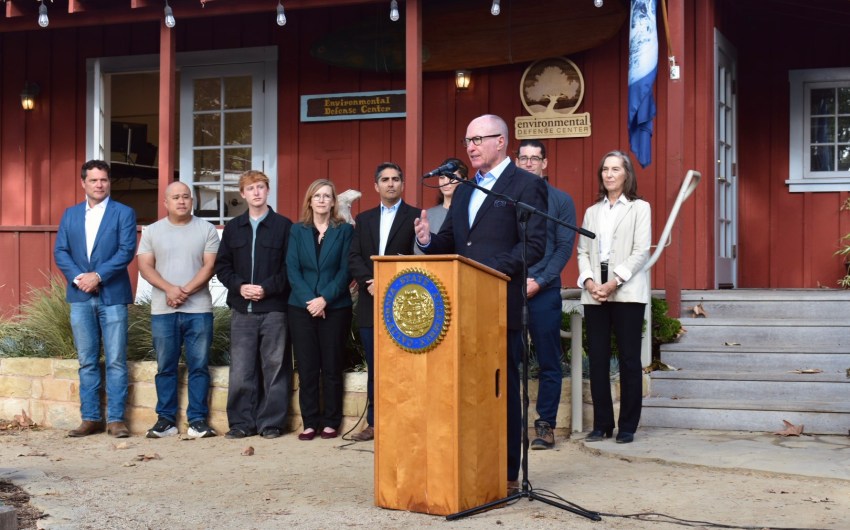
Young Carpinteria residents traveled to Goleta on May 5 to oppose a proposed new Marine Protected Area (MPA) off their coastline — a state-designated ocean zone that would restrict certain human activities to protect marine life.
The meeting was the first of two hosted last week by the California Fish and Game Commission to gather public input on proposed changes to the state’s MPA network, including several along the Central Coast.
The tribally co-led proposal for Carpinteria would protect nine acres of marine habitat, limiting most extractive activities while still allowing shore-based recreational fishing, non-extractive activities such as swimming, and fishing by Chumash members using hand-based tools.
Local fishers rallied under the slogan “Keep Carp Fishy,” arguing that it would limit access to a beloved pastime and local food source.
Molly and Max Diamond, two young residents, joined the group of community members wearing green shirts with the message, “Fishing Access Is Equitable Access.” The Carp reef stretches for miles along the coastline and provides a “close and safe” space for kids to fish, they said.
“Many families depend on Carp reef for food,” Molly said. “Would you rather have kids fishing or inside on iPads, thinking food only comes from the grocery store?”
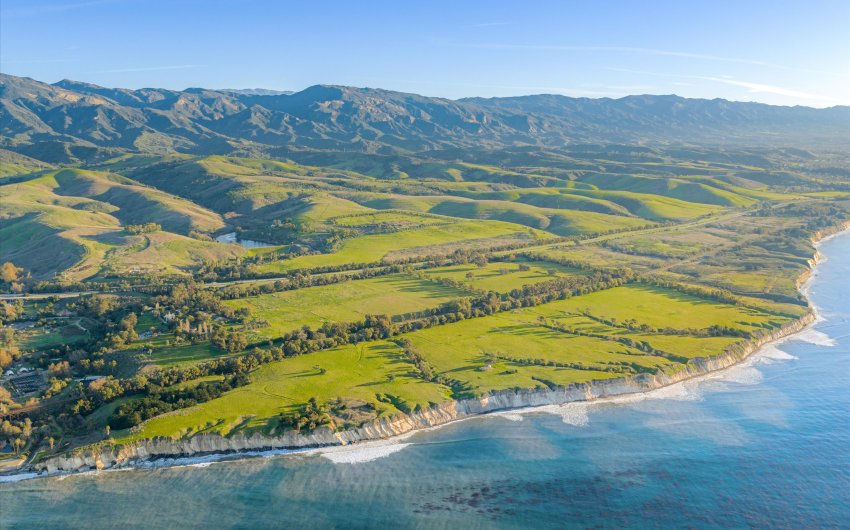
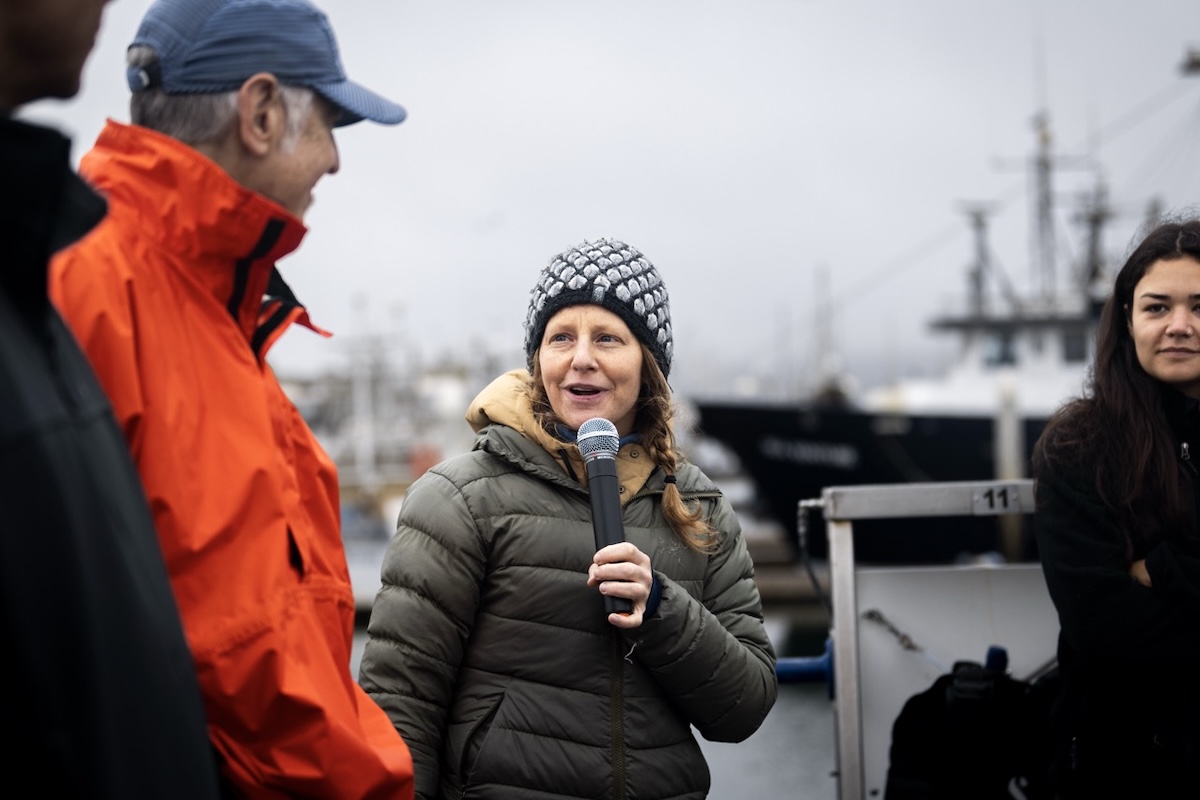
Proponents argued that this area of coastline is “extremely special,” for both ecological and cultural reasons, warranting protection. Sandy Aylesworth with the National Resources Defense Council, who presented the petition alongside Nakia Zavalla, Tribal Historic Preservation Officer and Cultural Liaison for the Santa Ynez Band of Chumash Indians, told the commission that the long, rocky reef supports kelp forests and marine animals, such as juvenile great white sharks.
“Accessing the marine area and resources within the Mishopshno MPA continues the ancestral and cultural connection to the traditional ways of life,” Zavalla said. “Almost every species that you can come across in the ocean has a place in our culture with deep meaning, deep purpose, and names in our languages.”
Commissioner Erika Zavaleta underscored that there has been no formal evaluation by the Department of Fish and Wildlife on any of the tribally led petitions yet. “There’s a lot of complexity in this one,” she said. “This isn’t a rush; we wanna get it right, and that might take some time. It’s really clear to me that the shared value in this room is a lot of love for this part of the ocean.”
While no formal action was taken during the May 5 and 6 meetings, the Commission heard perspectives on various proposals for the state’s MPA network, ranging from adding new MPAs, expanding existing ones, or reducing restrictions to allow limited fishing within them.
The meeting on May 6 heard presentations for non-tribally led petitions, including the expansion of an existing MPA around Anacapa Island to restrict seasonal lobster fishing and protect eelgrass habitat. Although those 10 non-tribally led petitions were already recommended for denial by the California Department of Fish and Wildlife, people still came out to speak either for or against them.
In total, the public submitted 20 petitions to modify the state’s MPA network, each containing dozens of unique requests for regulation changes. Within those petitions, there are 11 suggestions seeking to expand or improve MPAs around Santa Barbara County and the Channel Islands, where 13 MPAs are already established. On the flip side, there are nine that seek to eliminate or reduce them.
The point of these meetings was to daylight areas of agreement or disagreement, as well as potential modifications and compromises. Commissioners deliberated on petition content without making final decisions, which will occur at later meetings.
The commission expects to make its final recommendations on June 17.