
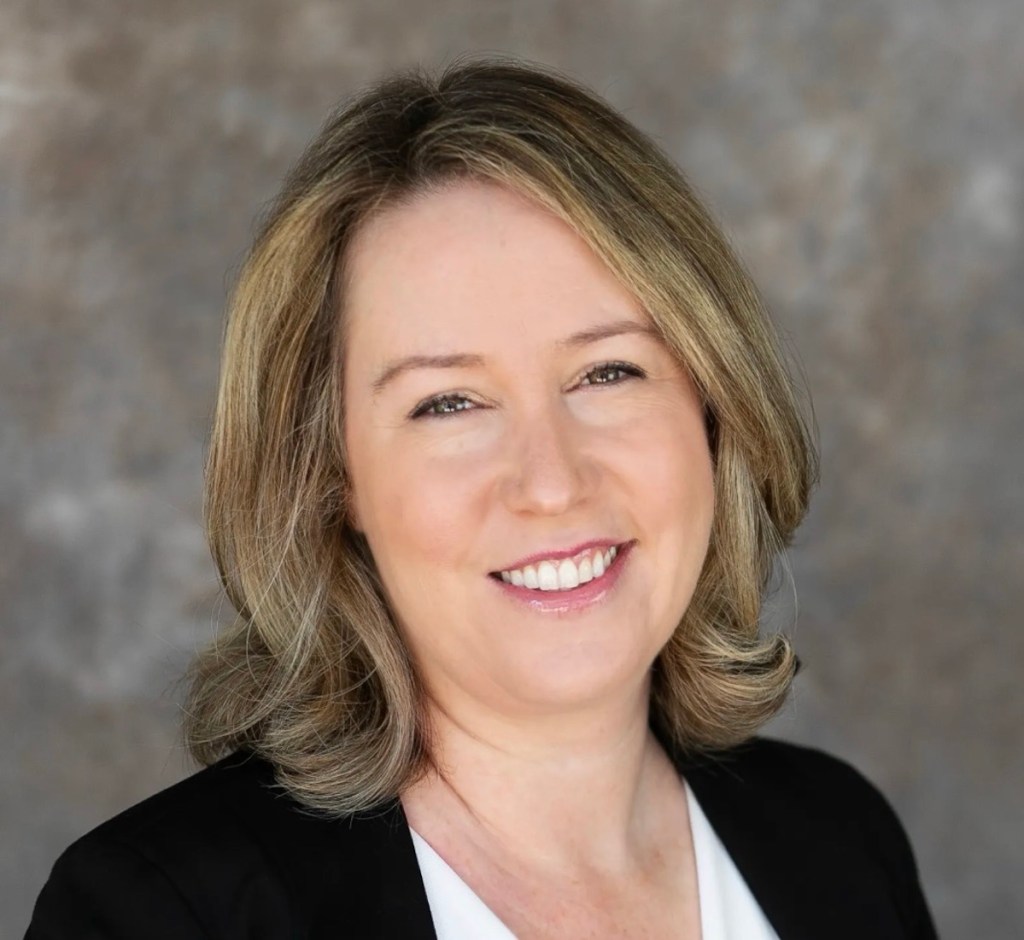
Marina Owen may be the most important person on the Central Coast nobody ever heard of. Maybe not even Governor Gavin Newsom. That may be about to change.
For the past five years, Owen has run the organization responsible for connecting members of the single largest healthcare plan on the Central Coast — one of three residents of Santa Barbara and San Luis Obispo counties are members — with their healthcare providers. Owen is Executive Director of CenCal Health, an outfit that connects 240,000 Medi-Cal enrollees with doctors and specialists in two counties. People on Medi-Cal don’t make a lot of money. It’s limited to people who don’t. About two-thirds of CenCal’s members are Latino. Maybe half speak Spanish at home. Right now, 38,000 are what’s referred to as “UIS,” or Unsatisfactory Immigration Status. Given the political climate, perhaps a more fitting acronym would be SOL.
This Tuesday, Owen was flying to Sacramento to share her thoughts about Governor Gavin Newsom’s revised budget plan and its impact on people designated UIS. Statewide, Owen points out, there are no fewer than two million UIS residents who will be adversely affected by the governor’s budget proposal. Owen is going as a representative of what’s known as the Stakeholders Advisory Committee for the Department of Health Care Services. (“They run Medi-Cal,” Owen says by way of explanation.) Accompanying her will be NAACP’s Lawanda Pruitt-Lyons and Promotores’s Mary Ellen Reese. Together, they will be meeting with members of the State Assembly and State Senate. There’s about $1.5 billion in Medi-Cal pain in what President Donald Trump calls his “Big Beautiful Budget,” but right now, Owen is focused on the $538 million worth of pain about to befall the state’s UIS population.
Part of Newsom’s proposal to contain healthcare costs is to make Medi-Cal eligibility tougher and monthly premiums higher. But part of the plan, Owen said, is to take the 38,000 UIS residents now enrolled with CenCal and put them in a much cheaper fee-for-service program as an alternative.
“Here’s the problem. The fee-for-service program doesn’t exist. In fact, it hasn’t existed for 20 years. It’s only theoretical.”
In person, Owen is indefatigably soft-spoken, measured, and precise. When she walks into a room, others tend to follow suit. But when speaking of the governor’s plan, Owen betrays a hint of edge. “Here’s the kicker,” she says. “There are no doctors in this plan. Sansum doesn’t take fee-for-service patients.”
Right now, she says, her CenCal clients bring in about $205 million a year in Medi-Cal payments. Under the governor’s proposal, the state would lose about half that. The state won’t save as much as the proposed budget indicates, she says. Invariably, people will get sick or injured. Sooner or later, they’ll will wind up in one of the county’s emergency rooms. Federal law does not allow hospitals to turn people away from ERs. It’s infinitely cheaper, Owen says, to pay for patient care in a doctor’s office than it is in an ER. “For every dollar we spend on primary care, we save two in emergency care.”
An administrator’s administrator with an ability to talk to those in her field who can’t talk to each other, Owen expresses concern about the financial stability of some hospitals. Three in the state, she says are on the precipice of collapsing within the next 60 days. Lompoc Hospital, much worried about, is fine for the time being, she says. But three years from now, she cautions, might be another story.
Her concern is more focused than that. “It’s the kiddos,” she says. “You have to take care of the kids. No matter what you think about immigration or immigration reform, we have to take care of the kids. They’re going to our schools. If we don’t, we’re doing irreparable harm.”
She makes similar arguments about older adults, though not with the same degree of emphasis. The Newsom administration, she says, is using Trump as a scapegoat for budget cuts it feels compelled to make for other reasons.
Owen has a possible compromise up her sleeve. Children and older UIS adults should be allowed to remain on Medi-Cal. The others — less fragile and vulnerable — could be put in the nascent fee-for-service program.
“They say they have no options,” she says. “They always have options.”










You must be logged in to post a comment.