

This story was originally published in the Santa Barbara Green Guide, a collaboration between the Independent and Bluedot Living.
Cape Ivy is a perennial vine with petite yellow flowers that was introduced to California in the late 19th century as an ornamental houseplant. But it wasn’t long before the South African species escaped its pots and took root in the wild, creeping across West Coast landscapes in thick mats that smother native plants and throw entire ecosystems out of whack.
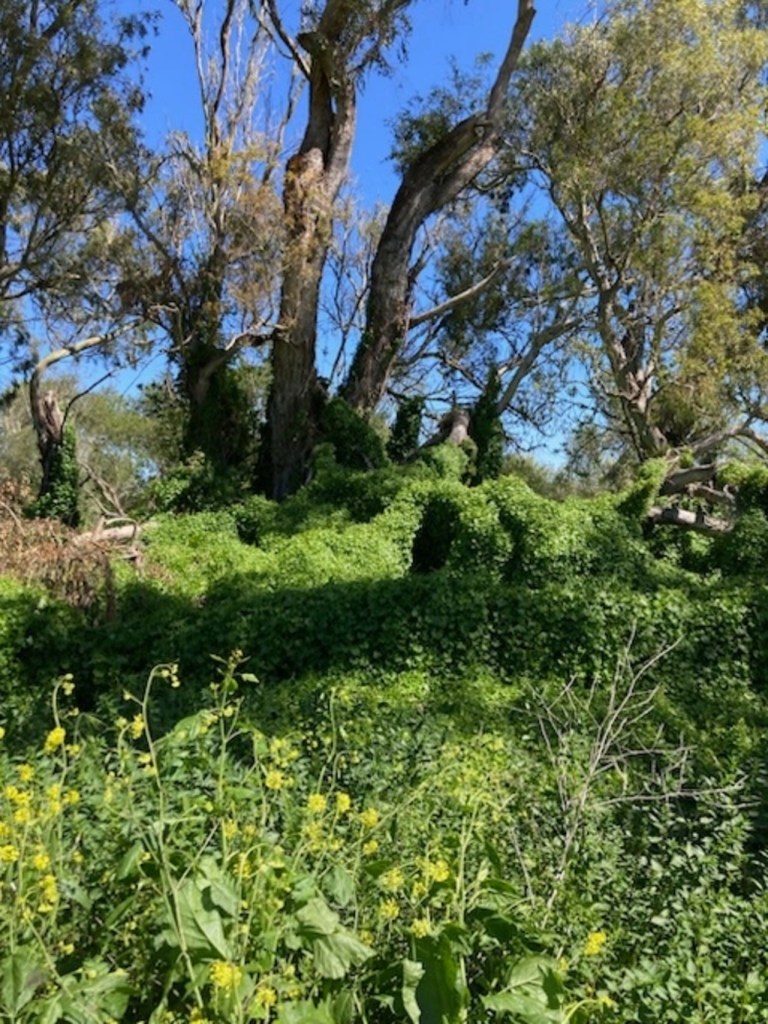
Today, Cape Ivy ― nicknamed “Kudzu of the West” after its equally destructive cousin in the eastern U.S. ― occupies more than 500,000 acres of California. With a shallow root system, it’s fond of shady riparian corridors but can also survive on sunny hillsides, where it laps up morning fog. It grows so fast ― up to a quarter-mile a year ― and with so much mass that it’s been known to topple fences and telephone poles and block train tracks. In the summer it goes dormant, dries up, and creates fire hazards.
Given the scale of the problem, controlling Cape Ivy with bulldozers or chemicals would be a massive undertaking, not to mention prohibitively expensive. Golden Gate Park in San Francisco, for example, recently spent three years and $600,000 trying to map and eradicate its infestation, with mixed results. But what if an insect from the same region of South Africa could help curtail this ecological threat?
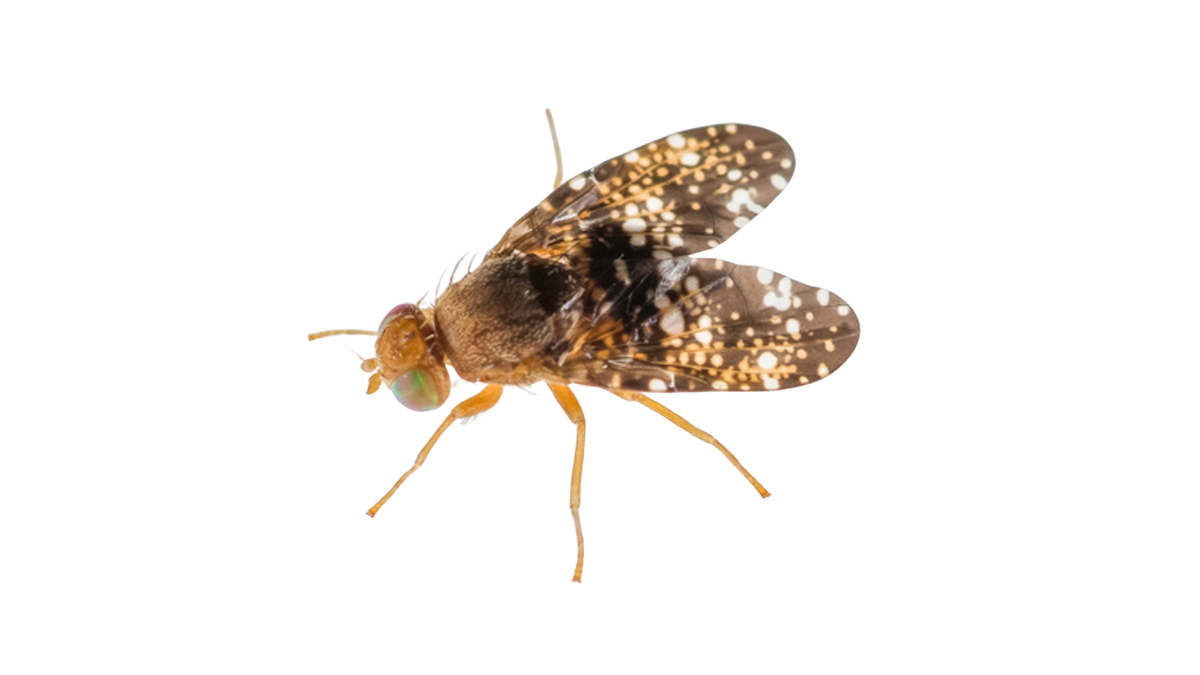
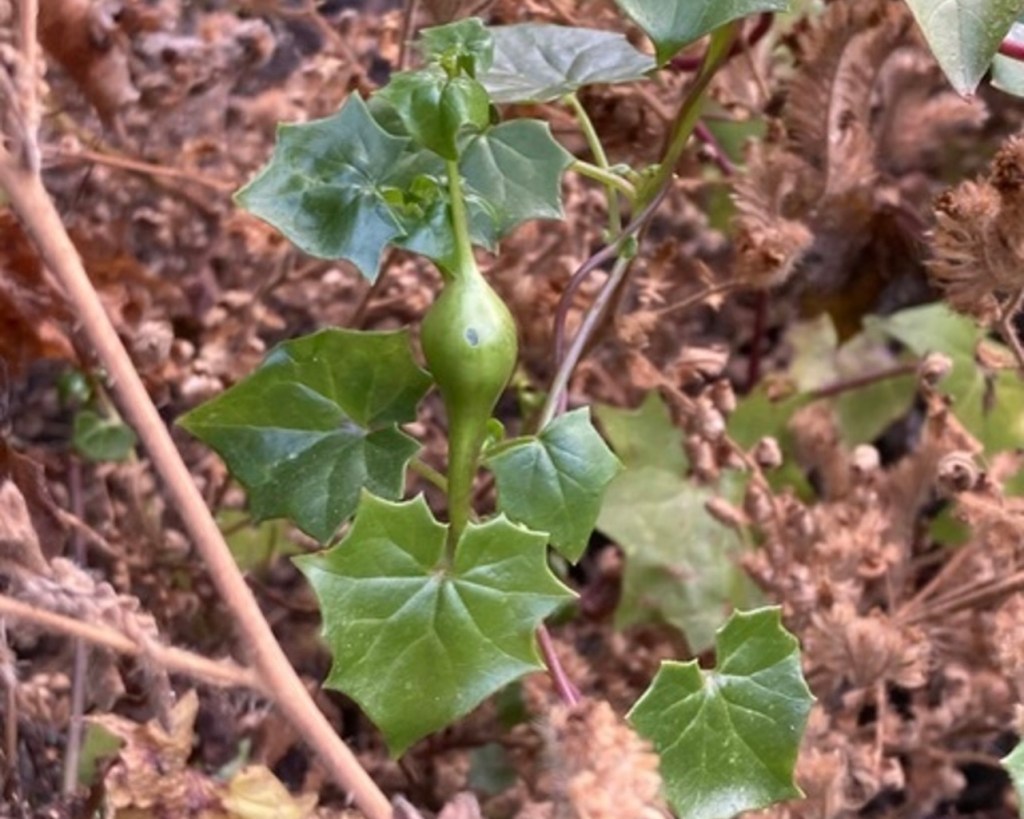
Since 2016, after a decade of intensive research by the U.S. Department of Agriculture to ensure no unintended consequences, scientists have been releasing thousands of tiny Cape Ivy flies across 22 coastal California sites as a form of “biological control.” Adult females lay eggs within new growth tips of the vine, and as larvae develop, their feeding stimulates the plant to form galls — hollow, spherical swellings around the feeding site. These galls, while not immediately lethal, disrupt shoot development and significantly slow the ivy’s growth and ability to spread.
Ten years into the project, the army of introduced flies is making a real impact, said Madeline A. Holroyd, a grad student researcher with UC Santa Barbara’s RIVRLab. Holroyd recently presented findings from an ongoing survey to the USDA, where she and her team documented the concentration and pattern of galls at release sites. “The numbers are looking really promising,” she says.
Among the most successful locations thus far are Santa Barbara’s Atascadero Creek and Toro Canyon Park, where more than 100 galls were counted, some 3.5 miles from where the flies were released. Further north in Big Sur, “a site has actually shown strong reduction in [Cape Ivy] from biocontrol and likely some recovery of the native coastal sage scrub habitat that was being smothered before,” says Tom Dudley, director of the RIVRLab. Other promising locations include Garrapata State Park in Carmel and Glen Deven Ranch in Monterey.
Over the years, scientists have refined their release methods. Early efforts used cages containing equal numbers of male and female flies placed at release sites. More recent techniques involve planting greenhouse-reared Cape Ivy plants already laden with galls into the field. In her presentation to the USDA, Holroyd noted that sites with connected riparian corridors may facilitate higher dispersal rates and should therefore be prioritized for future releases.
By its nature, biocontrol is a slow, steady process, Holroyd explained. Results don’t appear overnight. “It’s a tricky thing,” she says. “People like to see results, and they like to see them fast.” That can frustrate impatient land managers, but Holroyd stressed a main upside of the strategy: Once the fly colonies are established, no more human intervention is needed. “We could all lose interest and funding and the flies will still be there doing their thing,” she says.
Holroyd is also investigating how insects might be used to slow the spread of tamarisk and yellow star thistle, two more invasive weeds wreaking havoc on native California habitat. In lab tests, a type of weevil has proven its mettle, but they’re especially difficult to rear, Holroyd says. “But that’s an interesting part of it, too,” she says. “The learning process.”
Holroyd is currently in talks with a conservation group in Ventura County that is concerned about Cape Ivy climbing trees and disturbing monarch butterfly colonies there. It could be a perfect opportunity for another release. Holroyd likes the idea of one insect helping another.
And while the monarchs are renowned for their flashy orange and black, the flies have their own charm too. “Under a microscope, their wings look like stained glass,” she says. “They’re really quite beautiful.”








You must be logged in to post a comment.