
Ten days after the June 2 primary election and two weeks before the election results are scheduled to be finalized, nearly 45 percent of the ballots have been cast and counted. None of the outcomes already reported have a chance of being upended.
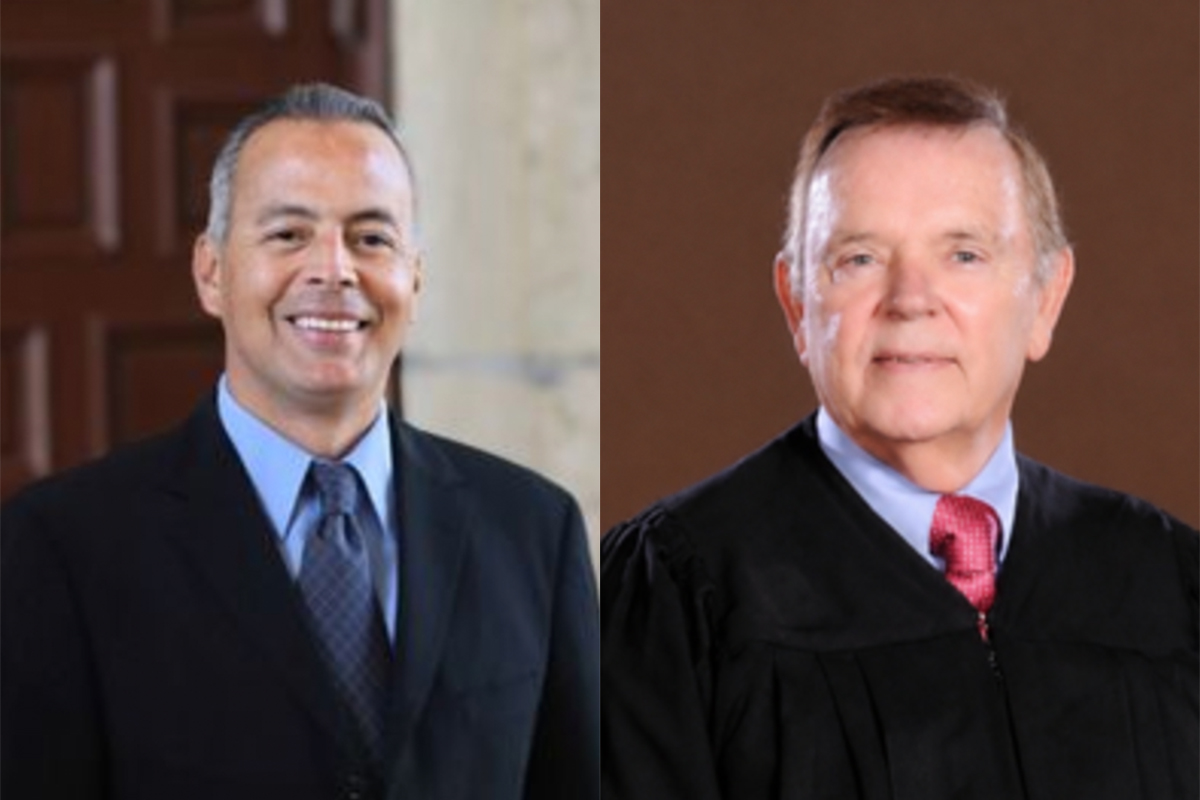
The big upset of the race remains the big upset, but only more so. Incumbent judge Thomas Reagan Adams — a 50-year veteran of Santa Barbara’s judiciary — was beaten by more than 3,000 votes by Luis Esparza, a private attorney with a relatively small practice. Esparza seems to have successfully tapped into whatever anti-incumbent sentiment has been percolating throughout the county, winning the endorsement of not just the local Republican Party but Indivisible—the organization leading the charge in organizing the No Kings rallies against President Donald Trump.
Throughout his long career, Adams pioneered several key programs to make the court system more sensitive to the needs of juveniles and families, but that was many years ago. More recently, as an arraignment court judge, Adams sought to humanize what for many is an intimidating and forbidding experience.
But Adams — who started out in life as a successful folk singer with the group the Wayfarers — was also the focus of a damning letter of admonition by the state’s judicial review council, which faulted Adams for throwing 40 pages of legal filings at a young attorney with the Public Defender’s office in a fit of pique. Adams has denied that account, insisting he merely dropped the papers onto what he mistakenly thought was a table on the other side of his bench.
Like many judges, Adams enjoyed a long, comfortable career untroubled by ever having an opponent to run against. More challenging still, Esparza — whose prior political career consisted of two also-ran campaigns for the Santa Barbara City Council in which he didn’t come close coupled with a stint on the board of directors running the Earl Warren Showgrounds board — was aided and abetted by two well-known and outspoken Democratic Party activists, E.J. Borah and Christina Pizarro, who made it their mission that Adams not be reelected. Such is the fragile tapestry of electoral coalitions in Santa Barbara judicial races.
Runoff Race Set for 5th District Supervisor
The other big news is the first-place finish by Ricardo Valencia — an outspoken, left-leaning progressive, not to mention high school teacher and Santa Maria School boardmember — in the race for Santa Barbara County Board of Supervisors 5th Supervisorial District, which encompasses Santa Maria and Guadalupe. That race will be decided in a runoff in November’s general election.
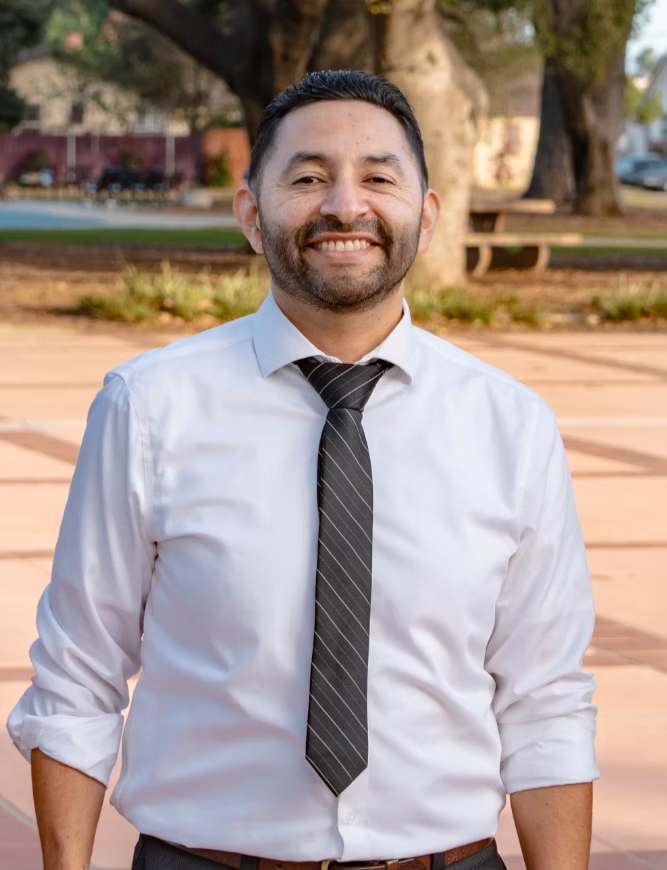
On the campaign trail, Valencia — the child of undocumented immigrants — highlighted his local roots, pointing out he grew up in Guadalupe and then moved to Santa Maria where marijuana and drug use would have knocked him off the rails were it not for the intervention of teachers who saw in him what he did not see in himself.
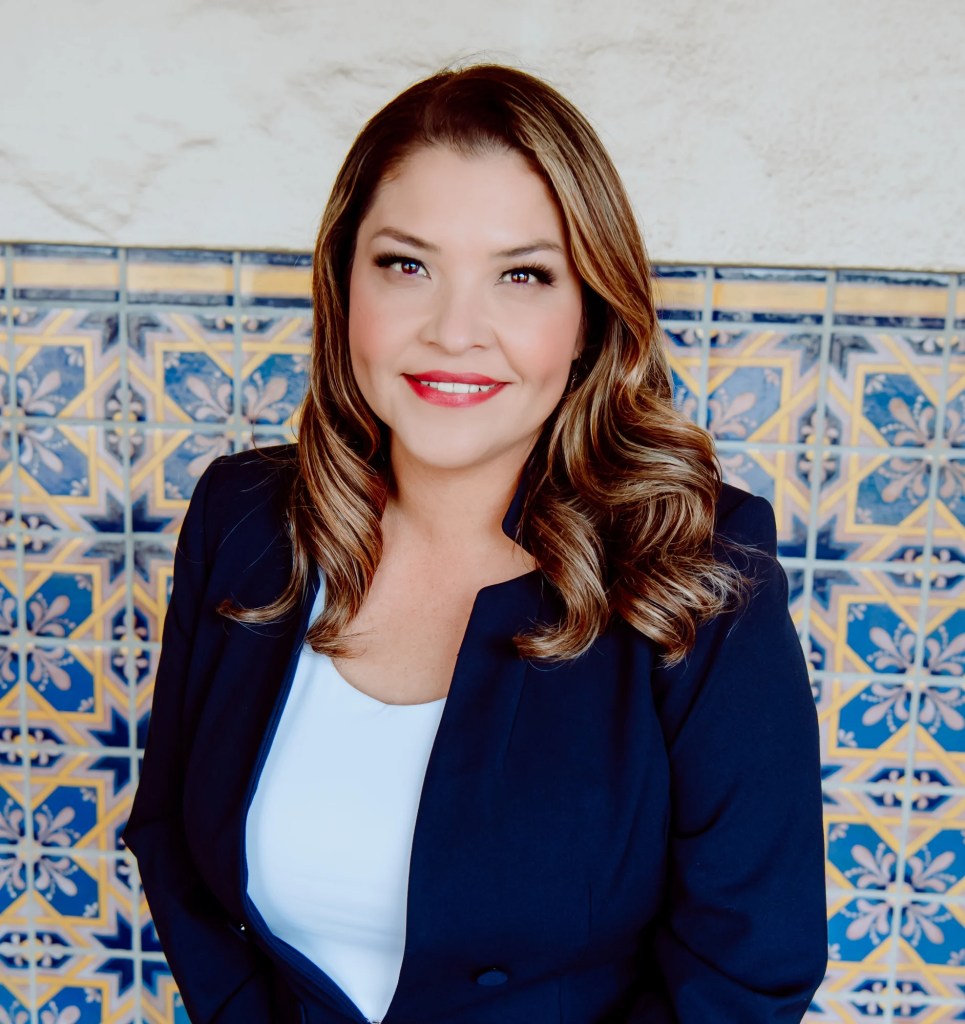
Valencia beat his closest rival by 10 points — 874 votes — in a region infamous for its chronic low voter turnout. Coming in second is Maribel Aguilera, herself the child of immigrants who as a 5-year-old picked strawberries in the fields of Santa Maria. Where Valencia is a diehard Democrat, Aguilera is registered as a declined-to-state, but has received qualified support by the local Republican party not to mention the ag and business interests. Aguilera is currently serving on the Santa Maria City Council and before that on the city planning commission. She’s a lawyer by trade, specializing in real estate law, most notably involving oil companies.
Come November, the fight will put the two children of immigrants from different sides of the ideological tracks against each. The outcome of that contest will have repercussions far beyond the borders of the 5th District and could easily have major ramifications countywide.
Whoever wins will replace 16-year supervisor Steve Lavaganino, a former Republican until Trump got elected in 2016 in the wave of anti-immigrant rhetoric he gave rise to. As Republicans went, Lavagnino, a Catholic school survivor and onetime stand-up comedian, lent the board an exceptional degree of good will, good faith, and good humor and his spirit was contagious.
With Lavagnino out — no matter who wins— the unusually collegial board chemistry will no doubt change. If Valencia wins, the change will be one of politics as well as temperament; Lavagnino was by nature a moderate and a pragmatist, a conservative who genuinely believed government can help. Should Valencia win, the liberal and more environmentally minded board majority would hold an even stronger majority, and conservative 4th District Supervisor and current Board Chair Bob Nelson would find himself more a lone wolf howling in the wilderness. If Aguilera wins, the balance of power will be far more even. Both Aguilera and Valencia raised significant sums; come November the race for the money—and everything else—will be exponentially more intense.
It should be noted, that Cory Bantilan, Lavagnino’s right-hand man and longtime district director, came in a distant third. Although Bantilan — a political pro and, like his boss, also a reformed Republican — lost nearly 30 pounds walking precincts, he came in 1300 votes behind Valencia and 400 votes behind Aguielera. While the other two could tout their local roots, Bantilan was born in Minnesota, and his family moved to Santa Barbara, where his father ran a small business. Bantilan only recently moved into the district, a fact brought up by his critics even though he’d worked professionally representing the district 15 years.
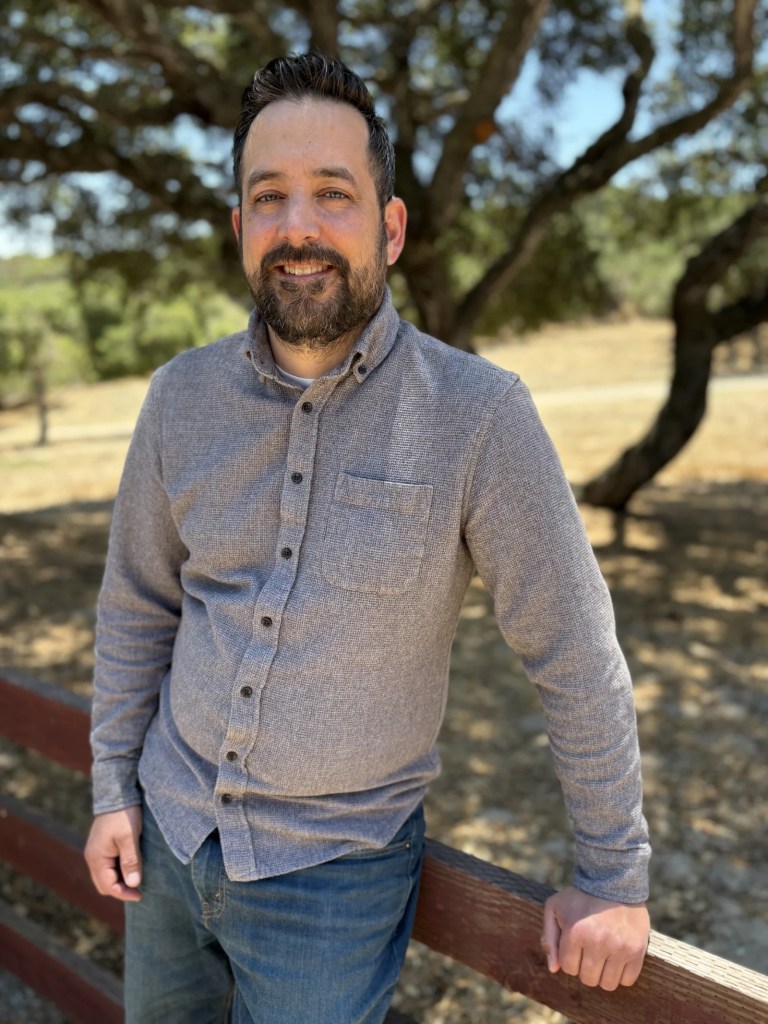
As hard as Bantilan worked, he and Lavagnino had initially hoped to back another candidate who was forced to withdraw when it became clear he couldn’t hope to weather a whisper campaign gathering steam about him. In this scenario, Bantilan was Plan B. While Bantilan’s knowledge of the intricacies of county government was unsurpassed, his campaign pledge to tell people the truth even if they didn’t want to hear it was not designed to stir the masses.
Voter turnout appears to be in the ball park of 45 percent, which is a smidgen better than average for midterm primaries and much better than average when the top ticket — the governor’s race — brought 61 candidates out, none of which really excited even their own base.
According to Martin Cobos, chief deputy registrar of voters, 876 ballots were tagged for inconsistencies between the signature on the ballot envelope and the signature on their voter registration form. Those voters have been notified of this inconsistency and have until June 24 to respond. None of these questionable ballots have been determined to be the result of fraud, Cobos noted. He added that his office is still receiving a trickle of late ballots, but he won’t have any accurate info as to how many until next week. When asked if there were any glitches, Cobos replied, “No, all went very smoothly.”





You must be logged in to post a comment.