


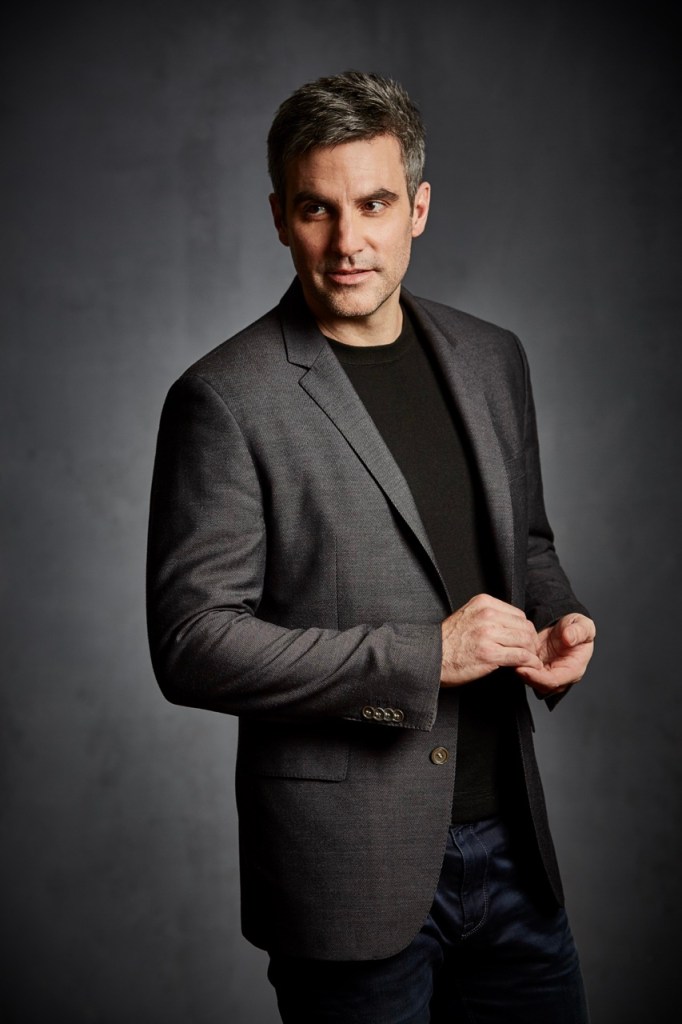
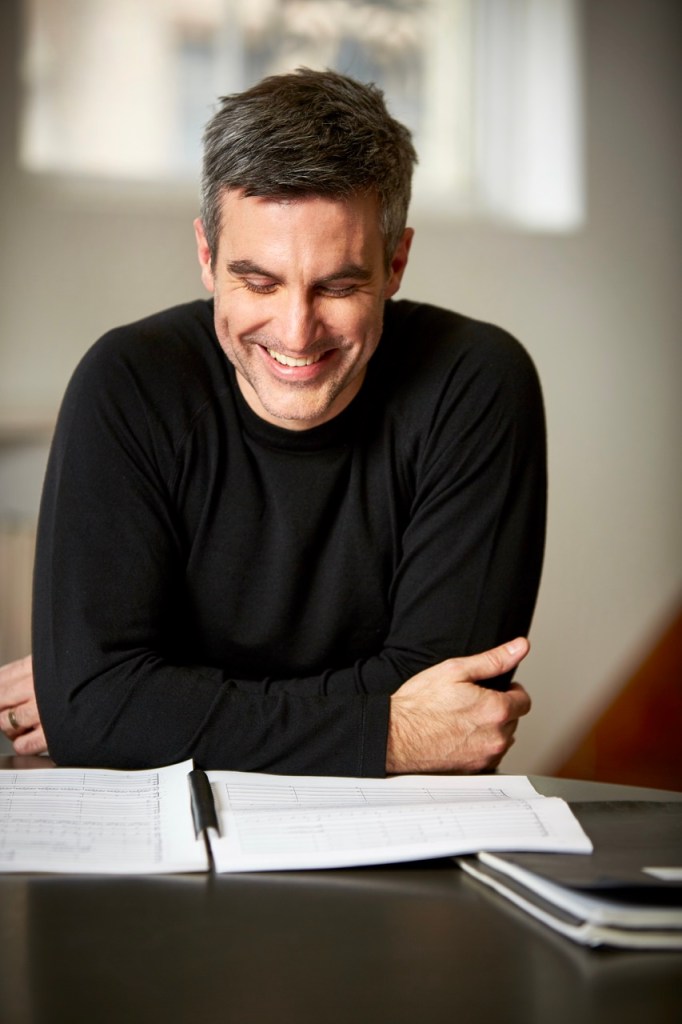
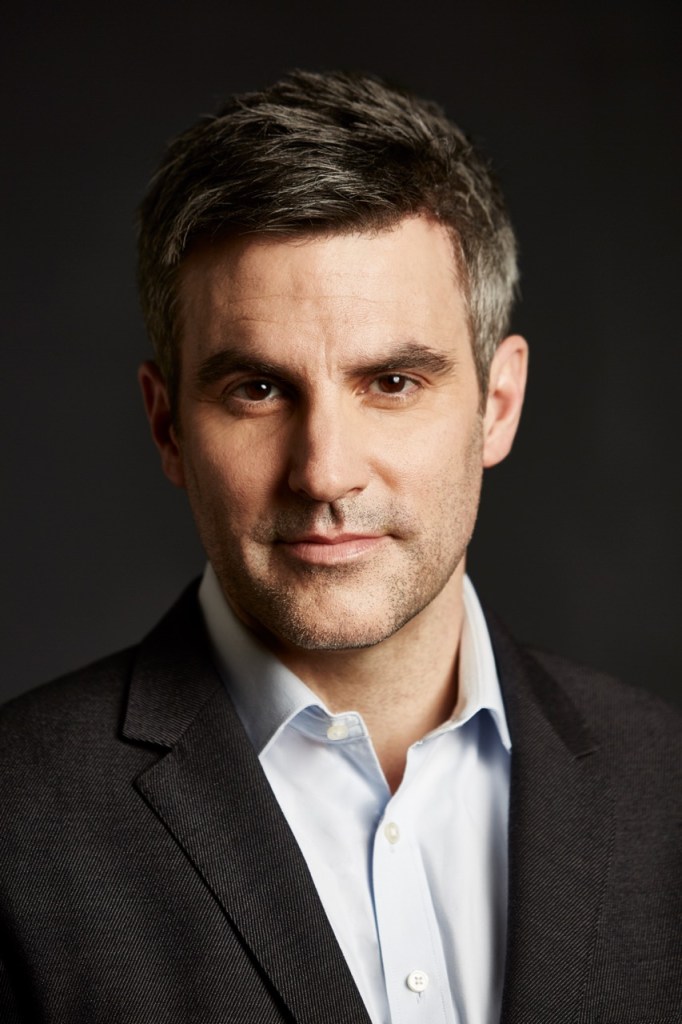
Kevin Puts, the famed composer of operas and more, will be making its first bold presence locally this month, under the auspices of the Music Academy of the West festival in motion. And yet Santa Barbara audiences have already been primed to the Puts touch by a significant proxy — Joyce DiDonato, the acclaimed mezzo-soprano who has championed and performed his music at The Granada Theatre, more than once.
The most famous lady, DiDonato was one of three prominent singers — along with Renée Fleming and Kelli O’Hara — showcased in the popular Metropolitan Opera popular production of Puts’s The Hours. His résumé is also distinguished by winning a 2012 Pulitzer Prize for his first time out in the opera field, for Silent Night.
Local audiences will get a more expanded view of the composer’s output and personal voice when the Music Academy’s annual opera spotlight turns on Puts’s one-act Opera Elizabeth Cree. Described as a “Victorian gothic thriller” and promising to have an appeal beyond the opera fan base proper, the opera lands at the Granada on July 24 and 26. In addition, Puts, as one of a few contemporary composers featured on this year’s schedule, will speak at a “Composer’s Chat” at the Academy’s Miraflores campus on Wednesday, July 15, at 1:30 p.m.
We checked in with the composer to get an update on his musical life in progress.
You have had crossover with many musicians connected with the Music Academy of the West, including Sasha Cooke, Jeffrey Kahane, and others. Is it a familiar cultural landscape for you to be featured at the Music Academy?
You are correct, I have had the honor of writing for both Sasha and Jeff and I have collaborated with other faculty as well. I have of course known about MAW for many years — college friends of mine talked fondly of being students there, so it’s very exciting for me to have my music featured at this legendary place.
I was happy to see that Elizabeth Cree is this summer’s full opera production. Generally, that slot has gone to standard repertoire, although I do remember productions of Jennifer Higdon’s Cold Mountain and William Bolcom’s The Wedding years back. Can you tell me about your opera, in terms of its origins and intentions?
[Librettist] Mark Campbell and I were commissioned by Opera Philadelphia immediately following Minnesota Opera’s premiere of Silent Night, and Mark had the idea to adapt Peter Ackroyd’s book. It was attractive to me because it was so different from Silent Night, so I said “Why not?” We wanted to write a one-act of about 90-minutes that would not allow the audience to take a breath.
I am just thrilled they are doing Cree at MAW. I have said on several other occasions that I believe it is perhaps my strongest piece. Of course, we composers have feelings about our work that might differ from others’ opinions: What do we know? But I like how I solved many things in the piece, I like the structure of it, and the way it rotates through different settings, and the way music associated with those settings develops with each rotation. This creates a sense of order and logic for the audience and one of context as well. Mark Campbell wrote a brilliant libretto.
It’s a thriller; it’s a whodunnit; it’s gruesome but hopefully has heart as well.
You have worked in many contexts, but as an opera composer, you scored with your first opera, Silent Night, which won a Pulitzer in 2012, and a decade later rightfully earned accolades and audiences for The Hours. Was working in opera always your ultimate ideal from early on, and what motivated that direction?
In 2009 or thereabouts, I was asked by Dale Johnson, then Artistic Director of Minnesota Opera, to write an adaptation of the French film Joyeux Noël with Mark Campbell. I had never really considered writing an opera. I had no idea how to start such a thing and thought of myself mainly as an orchestral composer.
But once I got the first act of Mark’s libretto in the mail, I sat down at the piano and began working through it, scene by scene, playing and singing. It felt so natural, and I loved it. I didn’t realize until that moment how important storytelling had been in my writing — I had been telling stories in an imaginary way through concert music, but here was an actual story and I could bring it to life for the audience.
I felt like the film composer I had always imagined I would be. I hoped it wouldn’t be my last experience with opera, and I am happy to say it wasn’t.
Your music has been heard in Santa Barbara, thanks to Joyce DiDonato’s appearance here in January with Emily — No Prisoner Be. Is she a strong artistic ally and maybe a muse for you by this point?
Yes, I was very fortunate when Joyce was cast as Virginia Woolf in “The Hours” at the Metropolitan Opera. She was truly electrifying, and I was eager to find another opportunity to work with her. I introduced her to the trio Time for Three, and she was drawn immediately to them — the Emily idea just emerged in a very natural way once that connection was made.
So yes, Joyce is a true ally and muse and friend — a truly wonderful, soulful human! We have worked on another project together as well, a piece for the St. Louis Symphony called “House of Tomorrow.” Her identity as an artist and an interpreter is so strong that my approach to writing for the voice has actually been affected simply through working with her.
It’s interesting to note the varied sources of your work, from film to poetry and the lives of literary figures and historical women, and in Elizabeth Cree’s case, a relatively obscure pocket of American history. Are you always open to ripe opera subject possibilities when pondering new projects?
I am always open to possibilities, no matter how strange and unlikely. I usually have a pretty good sense when something might work — the story has to invite music into the picture in some way or another. Elizabeth Cree is set in and around an English music hall, so that was an easy one. As was The Hours, as I could imagine three women living in different decades singing duets and trios with one another, across time.
Sometimes I have an idea for an opera, but I can’t get anyone to commission it. Opera companies are very careful when it comes to what they decide to present.
One thing you’ve done is to make American contemporary opera a valid and evolving — and also accessible — proposition, rather than a token gesture for opera companies. Is that actually something you are interested in promoting, or is that just a happy peripheral benefit of your work?
I don’t believe in simply fulfilling the requirements of a composition or writing a piece to be performed once. If I choose to do something, I want it to work entirely. I want to create moments you want to hear again, like the moments I love in operas that I want to experience again and again.
I understand what you are saying about “the token gesture” by an opera company, like: “Let’s commission a piece because we have determined as a company that it’s important to do so, but we all know it’s the Bohemes and the Figaros people really care about.” It is perhaps impossible to match the greatness of those repertoire pieces. As a composer whose skill hopefully improves year after year, I feel in some ways the brilliance of those pieces and their composers feels even further out of reach and more astonishing the better I get! It is simply staggering to truly come face to face with the score of Don Giovanni or Tosca and not look away.
But I will continue to face this music and try to get closer, in my own work, to the level of these pieces. It seems as good a use of my time on this planet as any.
You mentioned accessibility, but even music written in a challenging musical language can be accessible to the audience in the hands of a skilled composer. I love the music I love, and my own music is a reflection of it.
I am not on some sort of crusade to “make contemporary music more accessible,” or something like that. I know I am somewhat of an outlier, and that’s fine with me. But the music I write is the only kind I am able to write convincingly. It’s made of the musical elements that mean the most to me.
Can you point to American operas in the recent past — or deeper in history — that you have been especially impressed with?
I am always impressed with John Adams’s operas, really any of them, though my favorite remains Nixon in China. I think Thomas Adès’s The Tempest is amazing. And operas by Jake Heggie as well. He knows what he is doing better than any of us. I love Peter Grimes. I have always wanted to write an opera that works in a way similar to Philip Glass’s Akhnaten, but I don’t imagine I would be successful at it. I guess my favorite opera is probably The Marriage of Figaro, but so many would say the same thing.
You will also be involved in the educational aspect of the Music Academy of the West festival, and will have other music performed. Can you explain what all that entails?
I will be working with the students in rehearsal and also sharing what I can about my career path, hopefully answering any questions they have about their young careers. I always love the opportunity to do this. It feels like yesterday I was in their shoes.
Is the process and machinery of music education something you have a passionate personal relationship with, and has that brought you into contact with the state of the younger generation of musicians coming up?
I don’t know anything about early music education, and I don’t have skills in teaching very young people, to be honest, or at least I have no evidence that I have these skills. I teach on the college level at the Peabody Institute and at Juilliard, and if a student is talented and very motivated, I really come alive, and there is really not much limit to the time and energy I will give them. It is incredibly gratifying to see them improving, going on to big things.
There are extraordinary people “on the ground,” doing the hard work of teaching very young people as band directors, piano teachers, voice teachers, etc. They are truly amazing, and their energy and generosity are an inspiration.
Growing up in rural Michigan, I was lucky to have had a band director who saw promise in me and went way beyond his responsibilities as a middle school band director. He encouraged me to write my own piano concerto, which I did, and then he orchestrated it for the band to play. I don’t believe I would be doing what I am doing today without that experience, which was unforgettable.
What do you have on your horizon, project-wise? Is it a healthy blend of opera and other instrumental music?
I am trying to land on a good subject for a new opera, but in the meantime, I am doing a mix of things — writing violin concertos for two different amazing artists. I have a new bassoon concerto premiere with the great Judy LeClair — who is on faculty at MAW — with the New York Philharmonic this November. I was commissioned by the Mozarteum in Salzburg to complete the unfinished Mozart opera Zaide, so I am doing that. I am going to write a big symphony for wind ensemble. There are chamber works on the horizon as well. So lots of different things.
You seem to really have landed in a rich and productive period in your creative life. Does this feel like a strong chapter in your ongoing journey, and how does that square with your visions of what your musical life would be as a young artist?
I had no idea I would be doing any of this. I didn’t know what a composer’s life might look like. I thought I might play the piano and write some music…. I had no idea I would be writing pieces for leading soloists, orchestras, and opera companies.
Life is unpredictable and sometimes a bit surreal, but I remain focused on working hard to give these stellar performers, who entrust me with writing for them, music that feels tailor-made to who they are as musicians, music they can respond to. I love this kind of collaboration. And I feel at peace with the music I am writing and who I am as a composer.
Related Posts

Premier Events

Sat, Oct 03
9:00 AM
Santa Barbara
Fall Plant Sale and Master Gardener Workshop
Sat, Oct 03
7:00 PM
Santa Barbara
Clean Comedy at Carrillo Recreation Center
Sat, Nov 14
7:00 PM
Santa Barbara
Clean Comedy at Carrillo Recreation Center
Sat, Dec 05
7:00 PM
Santa Barbara
Clean Comedy at Carrillo Recreation Center
Thu, Oct 01
11:00 AM
Santa Barbara
In Studio: Julie Anderson Mathias

Thu, Oct 01
7:30 PM
Santa Barbara
Robert Plant with Saving Grace and Suzi Dian

Fri, Oct 02
5:30 PM
Santa Barbara
Pet Blessing at Trinity Episcopal Church
Fri, Oct 02
8:00 PM
Santa Ynez
Comedian Ron White Performs at Chumash Casino Resort
Sat, Oct 03
9:00 AM
Goleta
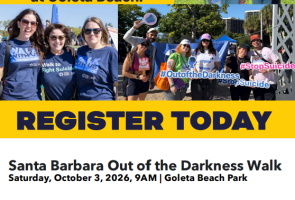
Out of the Darkness Suicide Awareness Walk
Sat, Oct 03
10:00 AM
Santa Ynez
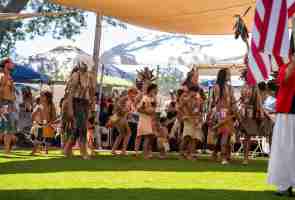
Chumash Intertribal Powwow Returns
Sat, Oct 03
10:00 AM
54th Santa Barbara Old -Time Fiddlers’ Festival

Sat, Oct 03
11:00 AM
Santa Barbara
OktoBEERfest at Dutch Garden Restaurant!
Sat, Oct 03
12:00 PM
Santa Barbara
Reclaim Your Radiance Fall 2026 Healing Arts Faire
Sat, Oct 03
12:00 PM
Santa Barbara
CWC Docs: “SURFILMUSIC” (2026)
Sat, Oct 03 9:00 AM
Santa Barbara
Fall Plant Sale and Master Gardener Workshop
Sat, Oct 03 7:00 PM
Santa Barbara
Clean Comedy at Carrillo Recreation Center
Sat, Nov 14 7:00 PM
Santa Barbara
Clean Comedy at Carrillo Recreation Center
Sat, Dec 05 7:00 PM
Santa Barbara
Clean Comedy at Carrillo Recreation Center
Thu, Oct 01 11:00 AM
Santa Barbara
In Studio: Julie Anderson Mathias
Thu, Oct 01 7:30 PM
Santa Barbara
Robert Plant with Saving Grace and Suzi Dian
Fri, Oct 02 5:30 PM
Santa Barbara
Pet Blessing at Trinity Episcopal Church
Fri, Oct 02 8:00 PM
Santa Ynez
Comedian Ron White Performs at Chumash Casino Resort
Sat, Oct 03 9:00 AM
Goleta
Out of the Darkness Suicide Awareness Walk
Sat, Oct 03 10:00 AM
Santa Ynez
Chumash Intertribal Powwow Returns
Sat, Oct 03 10:00 AM
54th Santa Barbara Old -Time Fiddlers’ Festival
Sat, Oct 03 11:00 AM
Santa Barbara
OktoBEERfest at Dutch Garden Restaurant!
Sat, Oct 03 12:00 PM
Santa Barbara
Reclaim Your Radiance Fall 2026 Healing Arts Faire
Sat, Oct 03 12:00 PM
Santa Barbara



You must be logged in to post a comment.