

[Updated: Thu., July 16, 2026, 1:45pm]
On July 11, local organizations and community members came together to commemorate the one-year anniversary of the federal immigration raid on Carpinteria’s Glass House Farm that vanished 10 individuals from their workplace. The coordinated raid with Camarillo’s Glass House Farm on the same day of July 10, 2025, amounted to a total of 361 people detained and the death of farmworker Jaime Alanís Garcia. During the raids of both cannabis farms, agents deployed less-lethal armaments — including tear gas, smoke grenades, flashbang grenades, and rubber bullets — on the hundreds of protesters gathered outside both cannabis farms.
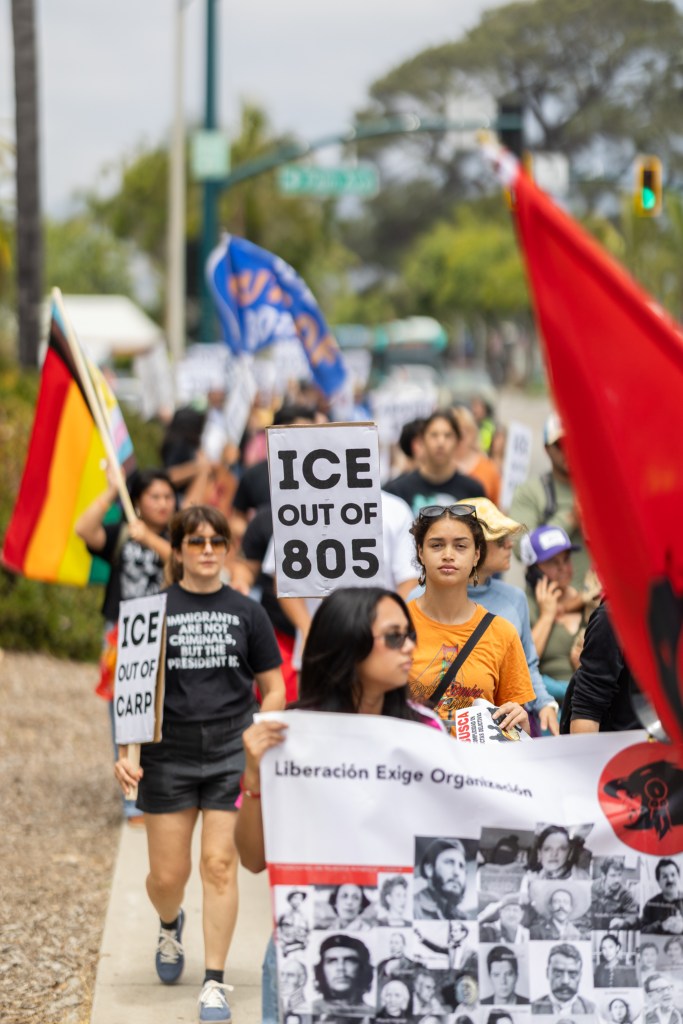
For Saturday’s event, Carpinteria Sin Fronteras organized a four-hour program of ceremony, Aztec dance, speakers, and a march from Linden Avenue field to Glass House Farm and back. The event was organized in collaboration with 805UndocuFund’s 805 Rapid Response Network, Unión del Barrio, SBResiste, Carpinteria Indivisible, and other allies.
“Your presence helps strengthen our message and increases the visibility of our fight for justice,” said a spokesperson for Carpinteria Sin Fronteras. “This is an opportunity for our communities to stand together, for organizations to unite, and to show that we will not forget or be divided.”
The 1.8-mile march from Linden Avenue to Glass House Farm was met with cheers and supportive honks from many passersby. Others stopped to record the procession on their phones, some with disapproving expressions and comments such as “I support ICE.” The marchers did not engage with oppositional onlookers and peacefully walked and danced past them.
Congressmember Salud Carbajal was the first to speak at Glass House Farm — recalling his arrival at the scene during last year’s raid to fulfill his congressional oversight responsibilities and monitor the immigration enforcement operation. He said he was denied access to the farm, along with other community members, elected officials, and protesters. Carbajal argued that federal immigration agents should adhere to standards and practices expected of law enforcement officers.

Saturday’s march through Carpinteria | Credit: Ingrid Bostrom 
Credit: Ingrid Bostrom 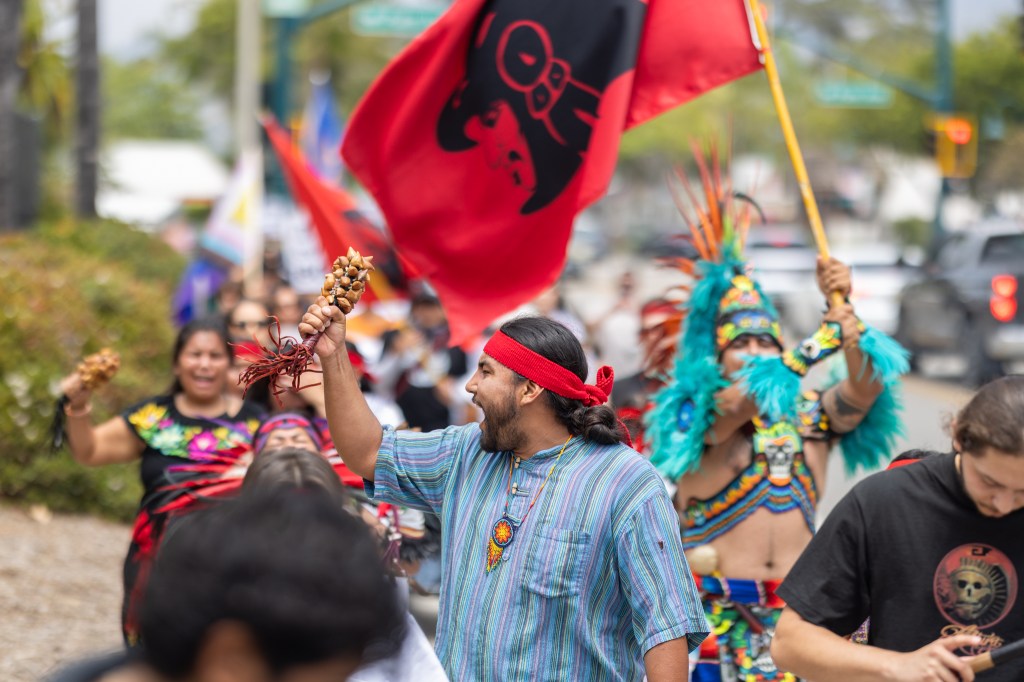
Saturday’s march through Carpinteria | Credit: Ingrid Bostrom 
Community members and officials take a knee at Linden Avenue field during Saturday’s gathering. | Credit: Ingrid Bostrom 
Saturday’s march through Carpinteria | Credit: Ingrid Bostrom 
Saturday’s march through Carpinteria | Credit: Ingrid Bostrom 
Unión del Barrio representative at Saturday’s march | Credit: Ingrid Bostrom 
Protesters carried “ICE Out of 805” signs during Saturday’s march through Carpinteria. | Credit: Ingrid Bostrom 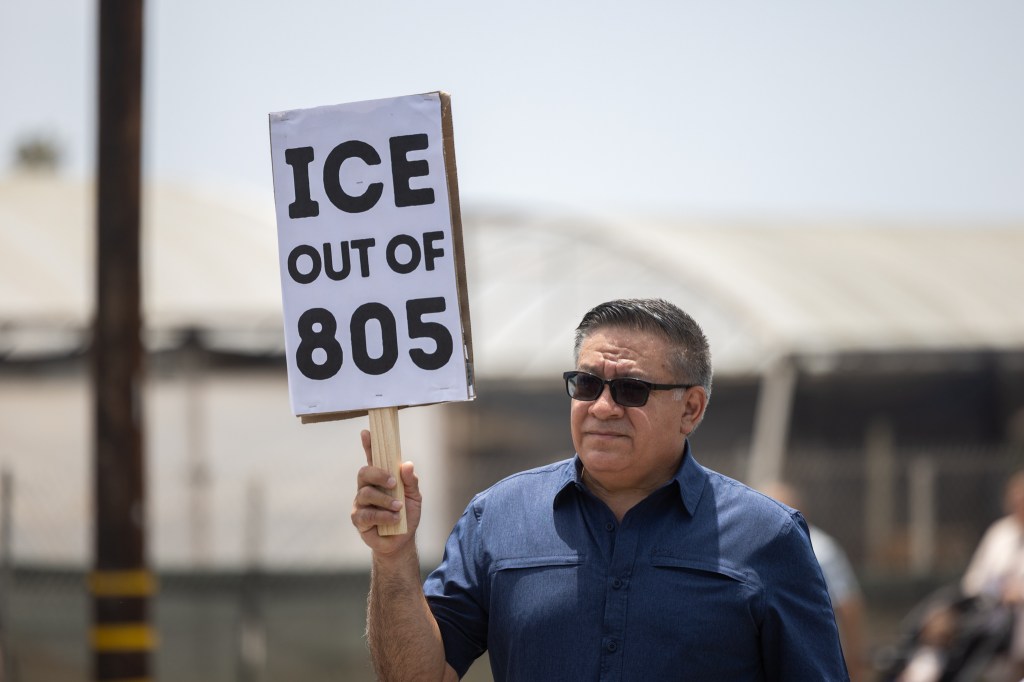
Congressman Salud Carbajal | Credit: Ingrid Bostrom 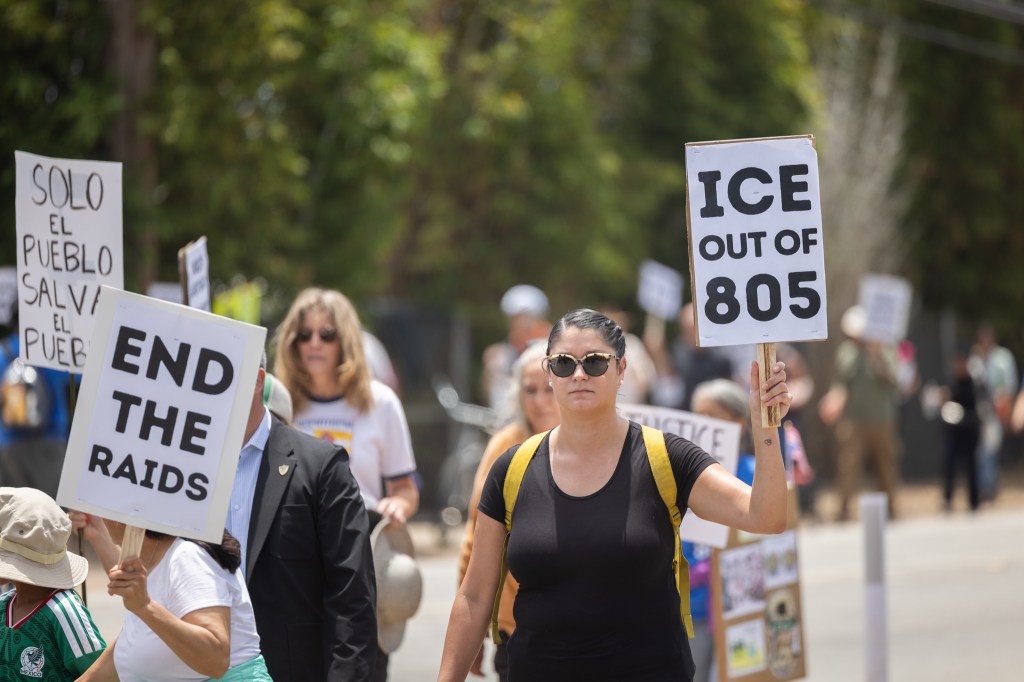
Erica Reyes | Credit: Ingrid Bostrom 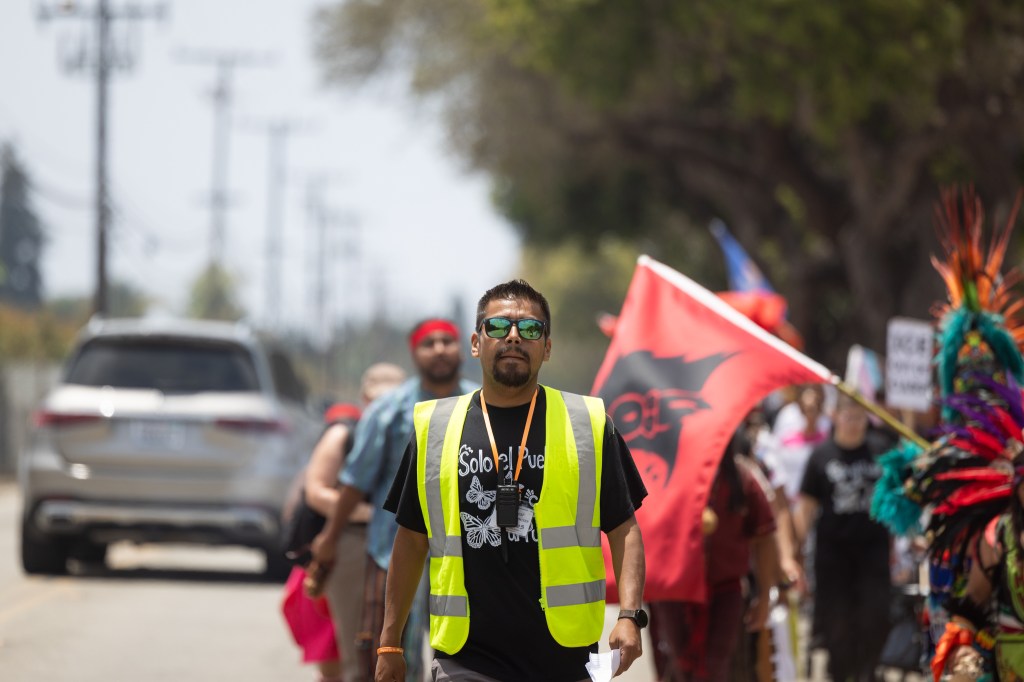
Saturday’s march through Carpinteria | Credit: Ingrid Bostrom 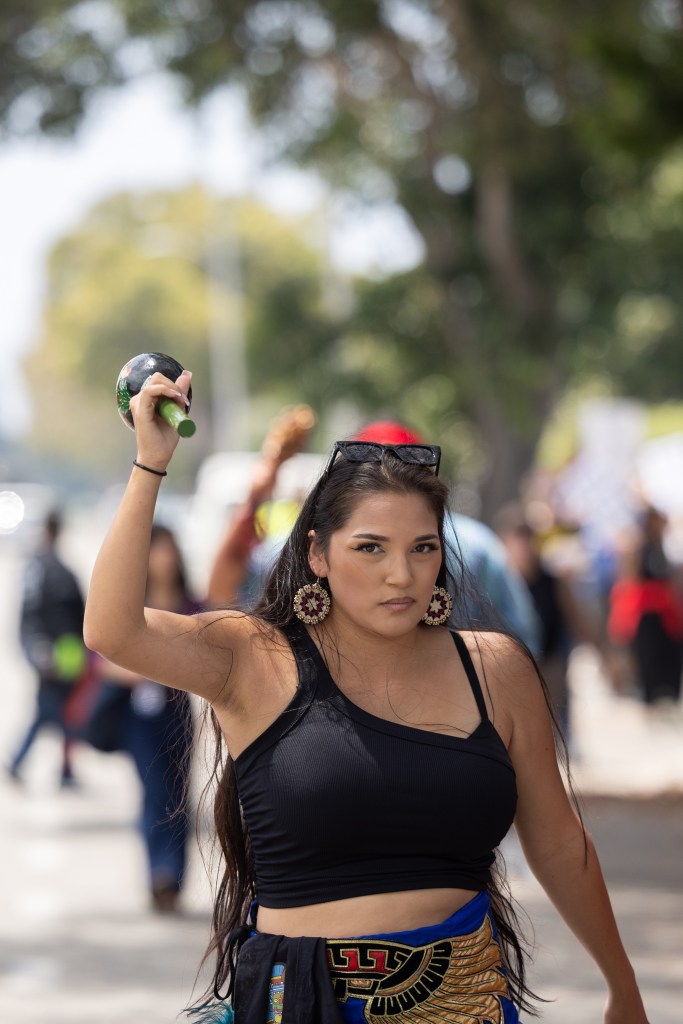
Saturday’s march through Carpinteria | Credit: Ingrid Bostrom 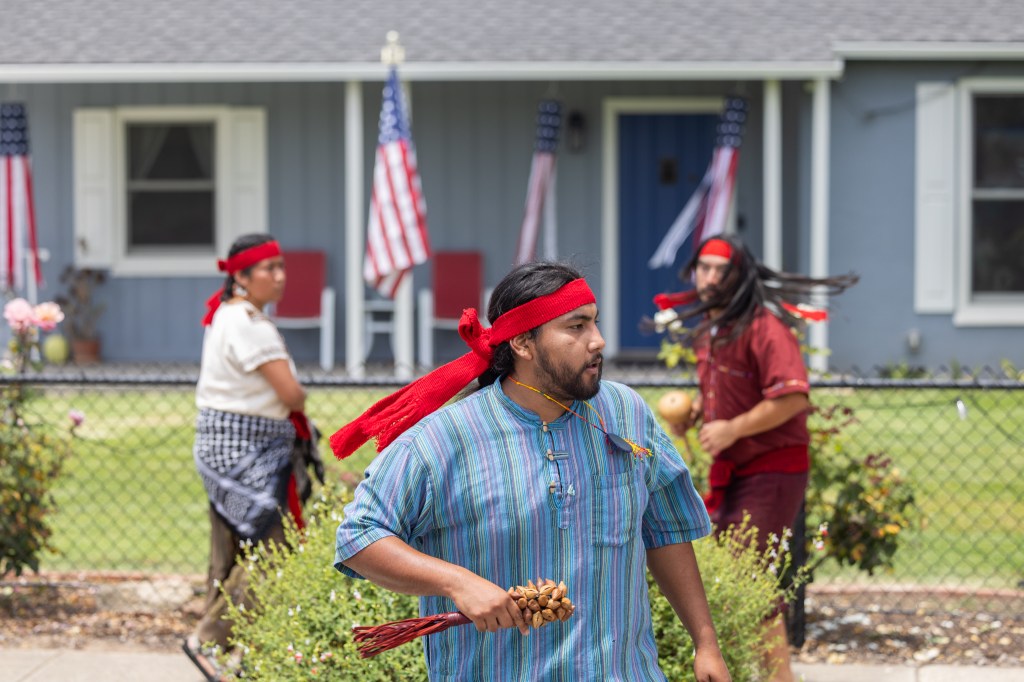
Saturday’s march through Carpinteria | Credit: Ingrid Bostrom 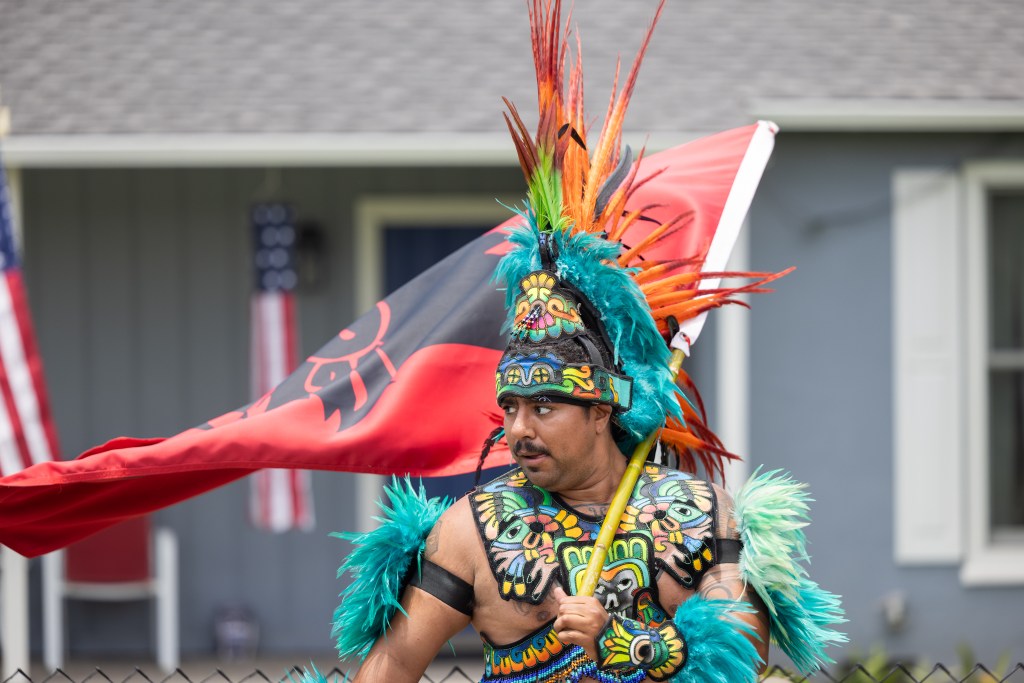
Unión del Barrio representative at Saturday’s march | Credit: Ingrid Bostrom 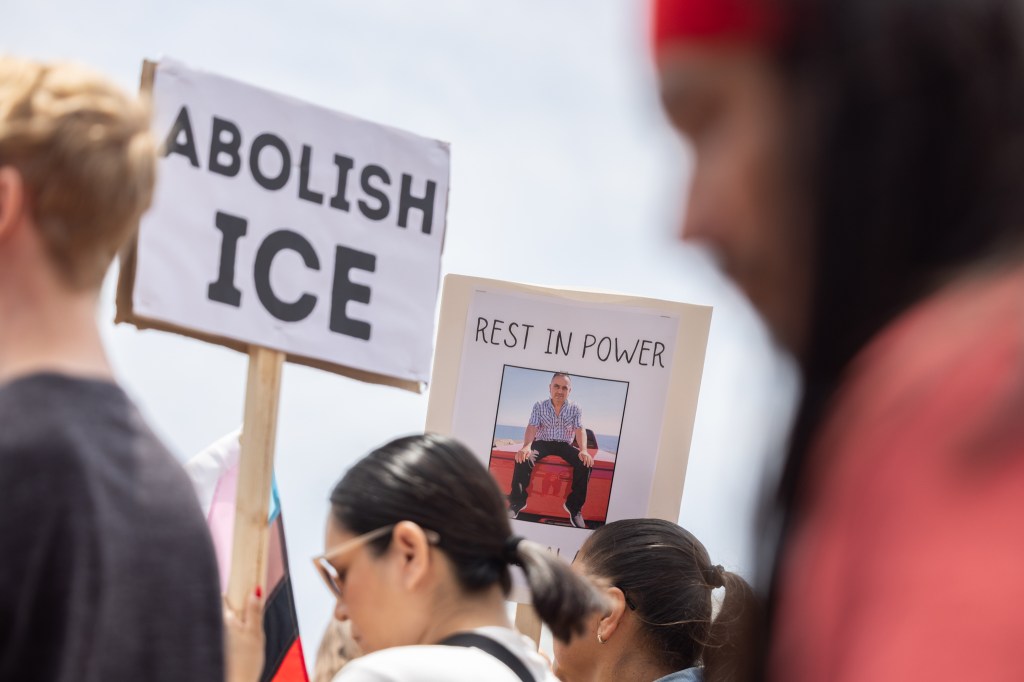
A protester’s sign memorializes Jaime Alanís Garcia, who died during last year’s raid at Camarillo’s Glass House Farm. | Credit: Ingrid Bostrom 
Carbajal was urged to stay and listen to the rest of the speakers | Credit: Ingrid Bostrom 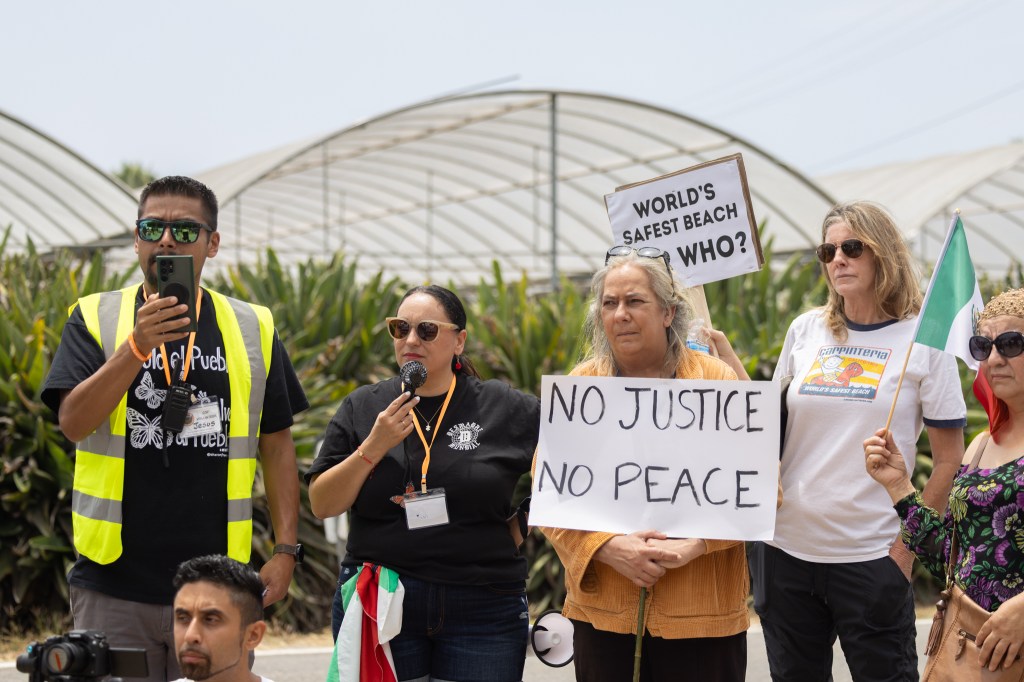
Marchers gather outside Glass House Farm in Carpinteria to commemorate the one-year anniversary of the federal immigration raid there. | Credit: Ingrid Bostrom 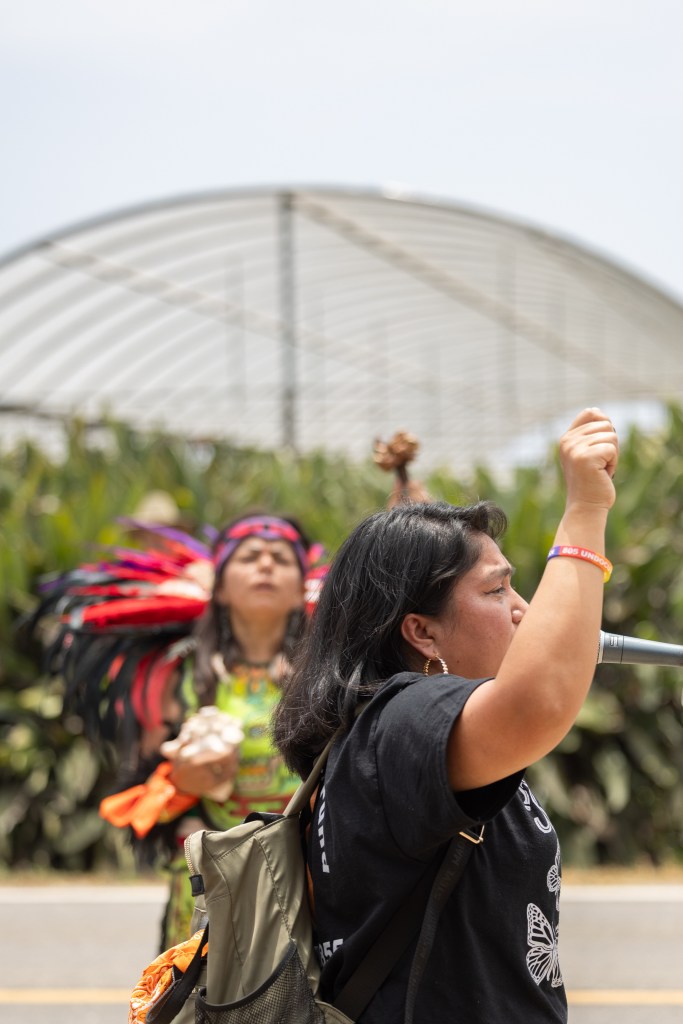
Primitiva Hernandez, Executive Director of 805UndocuFund | Credit: Ingrid Bostrom 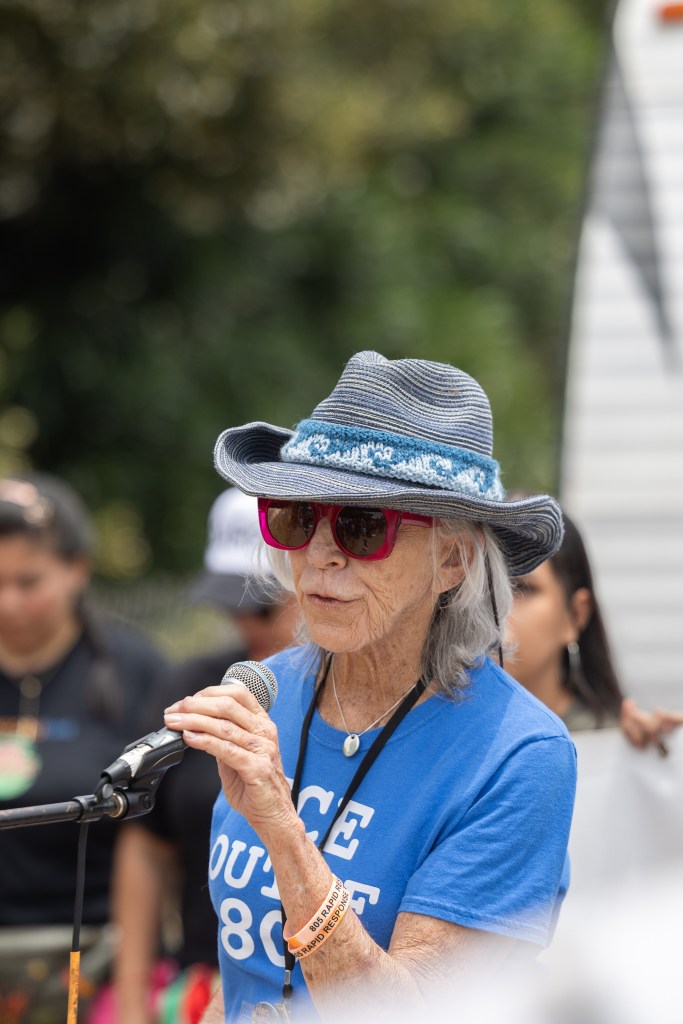
Indivisible Carpinteria representative | Credit: Ingrid Bostrom 
Unión del Barrio representative | Credit: Ingrid Bostrom 
VC Defensa representative | Credit: Ingrid Bostrom 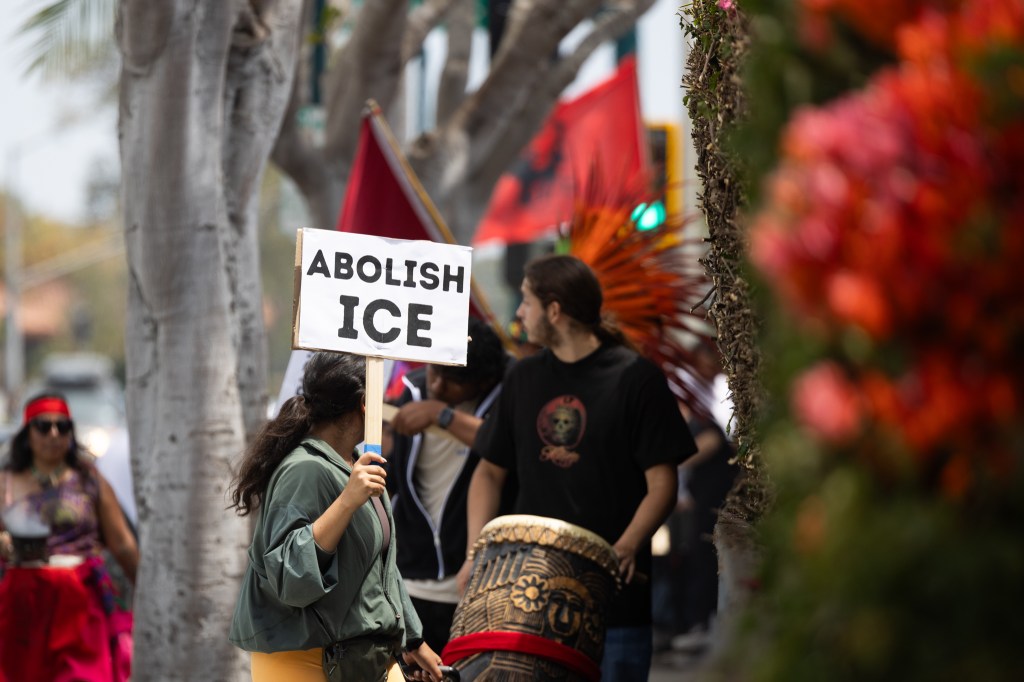
Saturday’s march went from Linden Avenue field to Glass House Farm and back. | Credit: Ingrid Bostrom 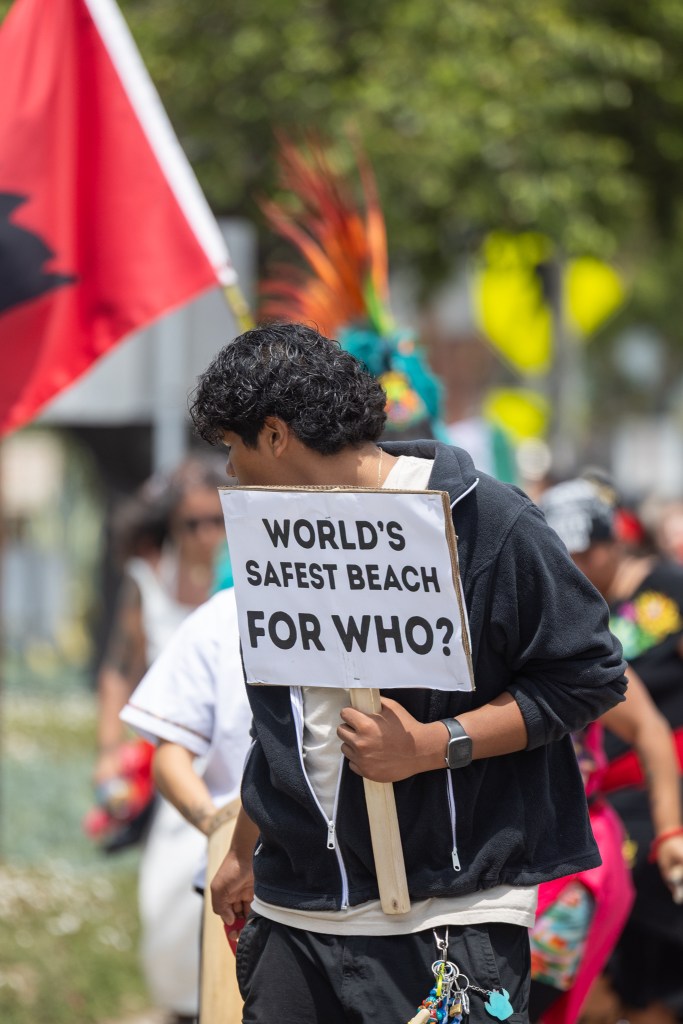
Saturday’s procession through Carpinteria | Credit: Ingrid Bostrom 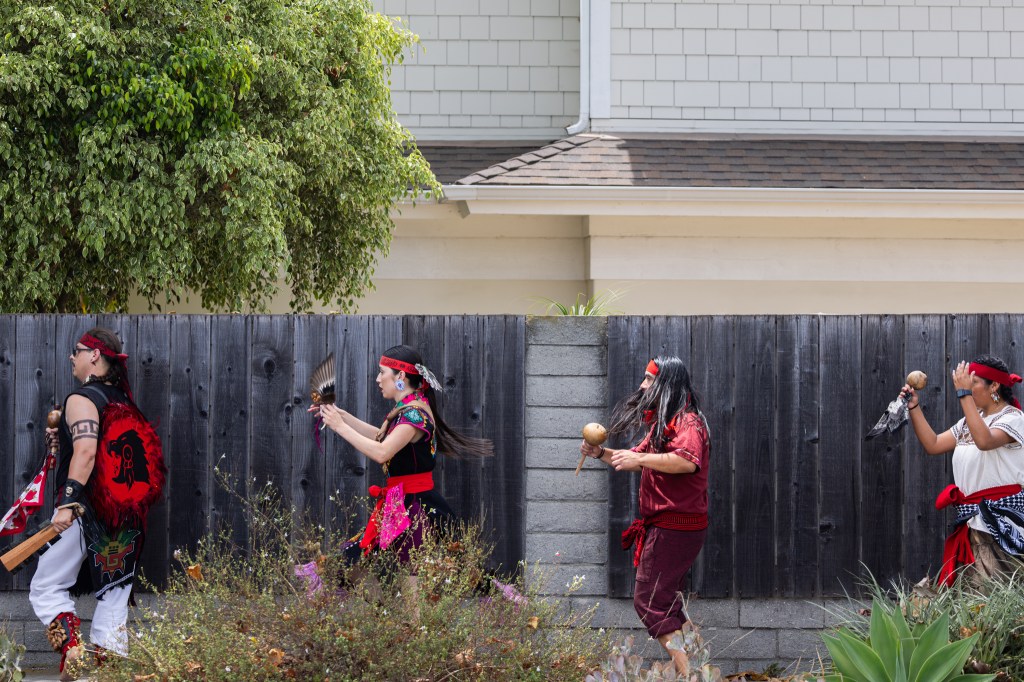
Aztec dancers were part of Saturday’s procession through Carpinteria | Credit: Ingrid Bostrom 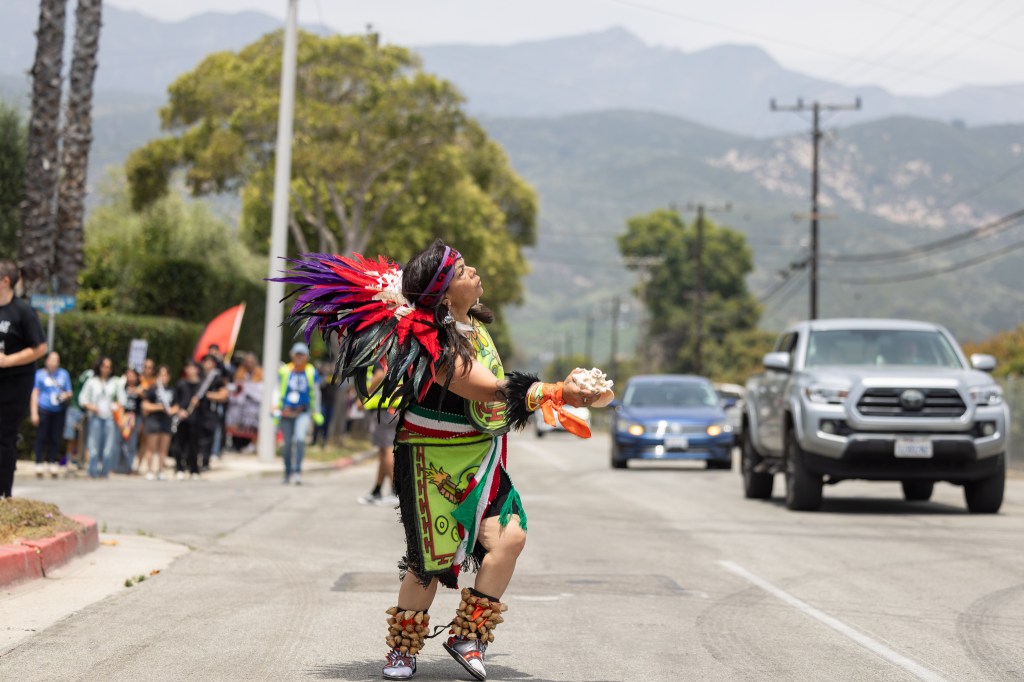
An Aztec dancer in Saturday’s procession | Credit: Ingrid Bostrom 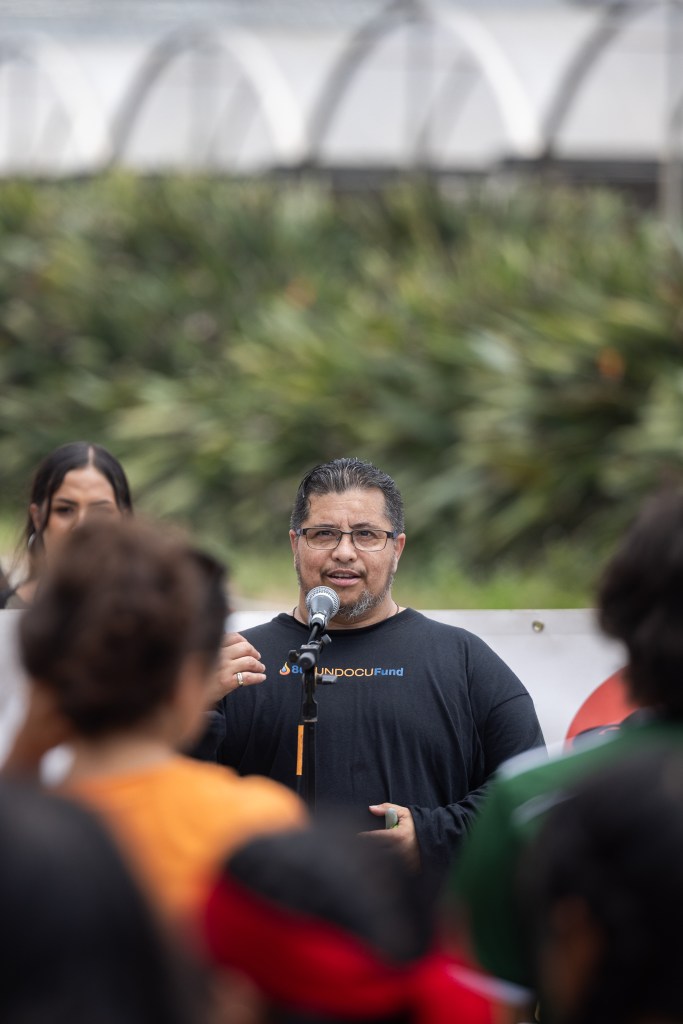
805 UndocuFund representative | Credit: Ingrid Bostrom 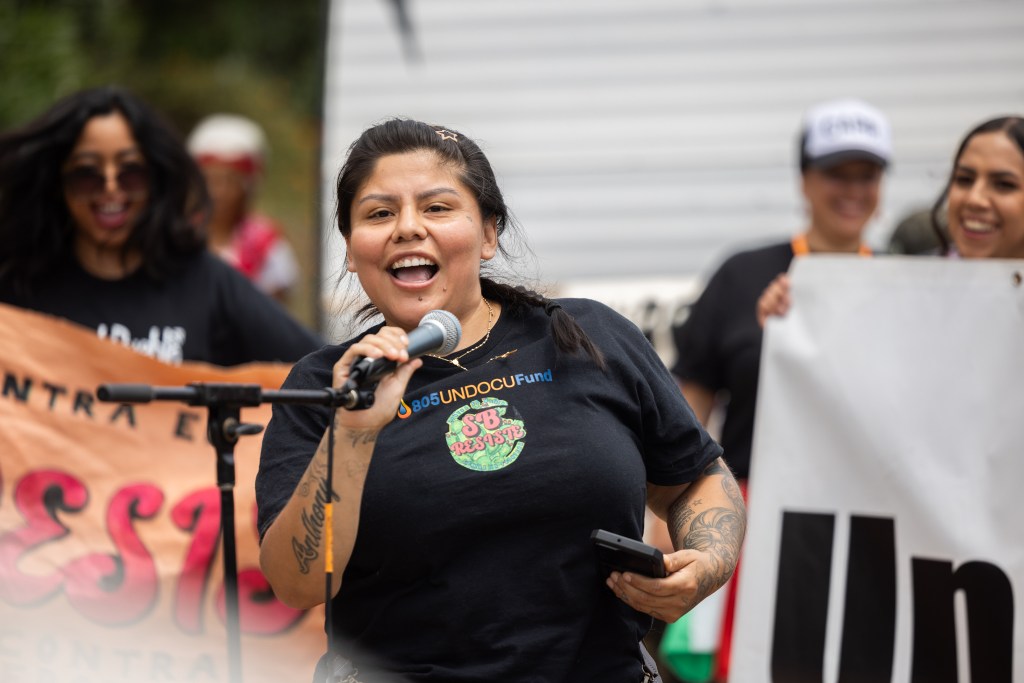
SBResiste representative | Credit: Ingrid Bostrom 
Some passersby showed their support during Saturday’s procession. | Credit: Ingrid Bostrom 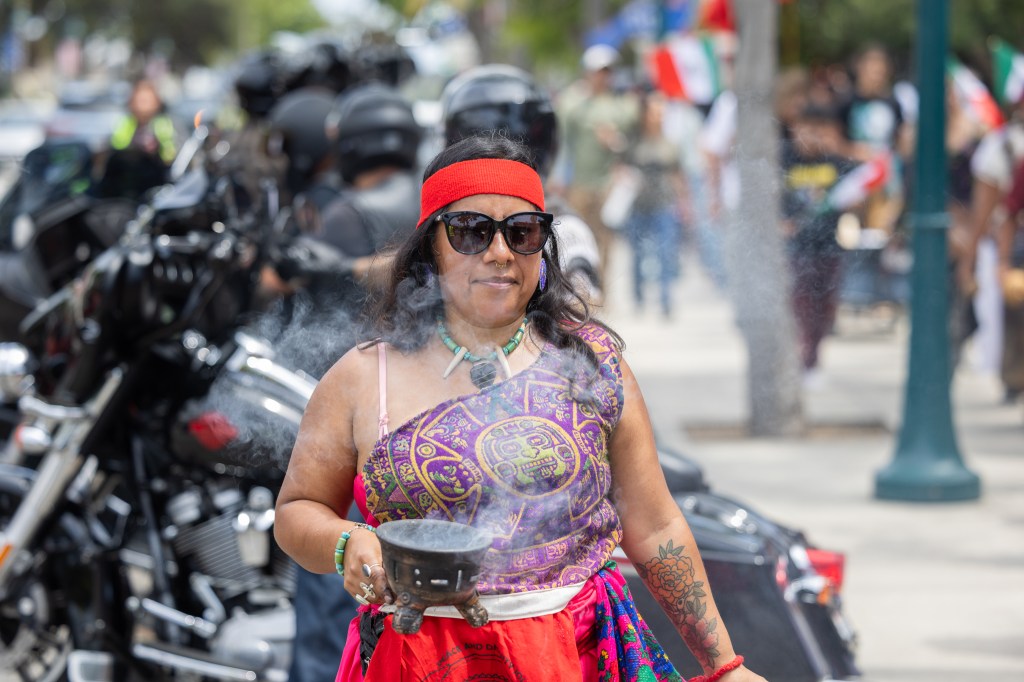
Aztec dancer walking past a motorcycle group that commented “I support ICE” | Credit: Ingrid Bostrom 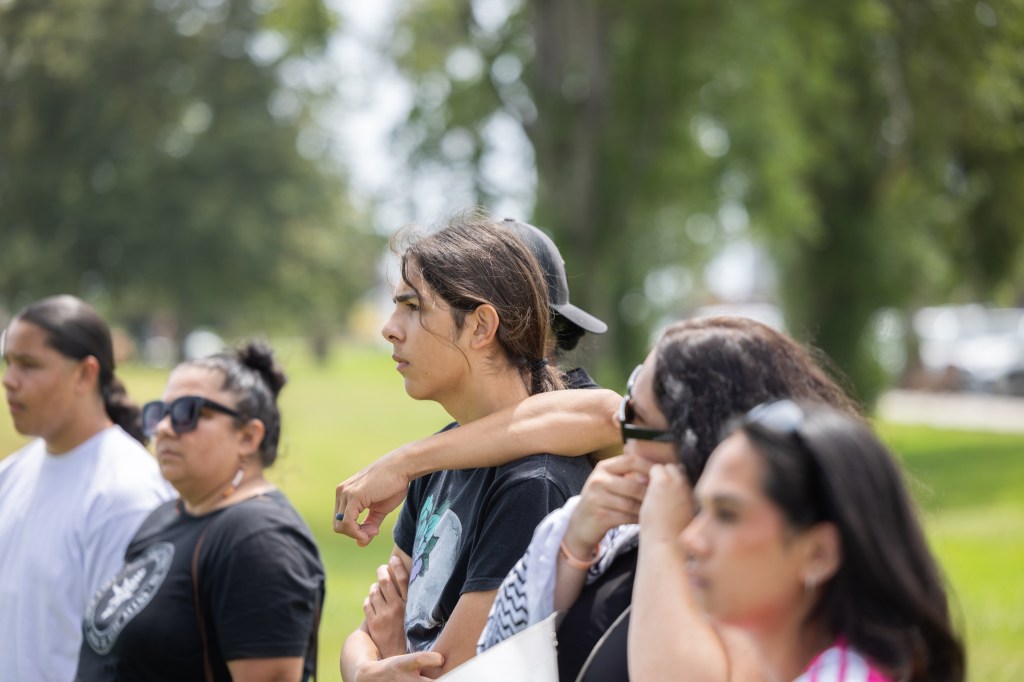
Community members gather on Linden Avenue field. | Credit: Ingird Bostrom 
Ceremonial blessing | Credit: Ingrid Bostrom 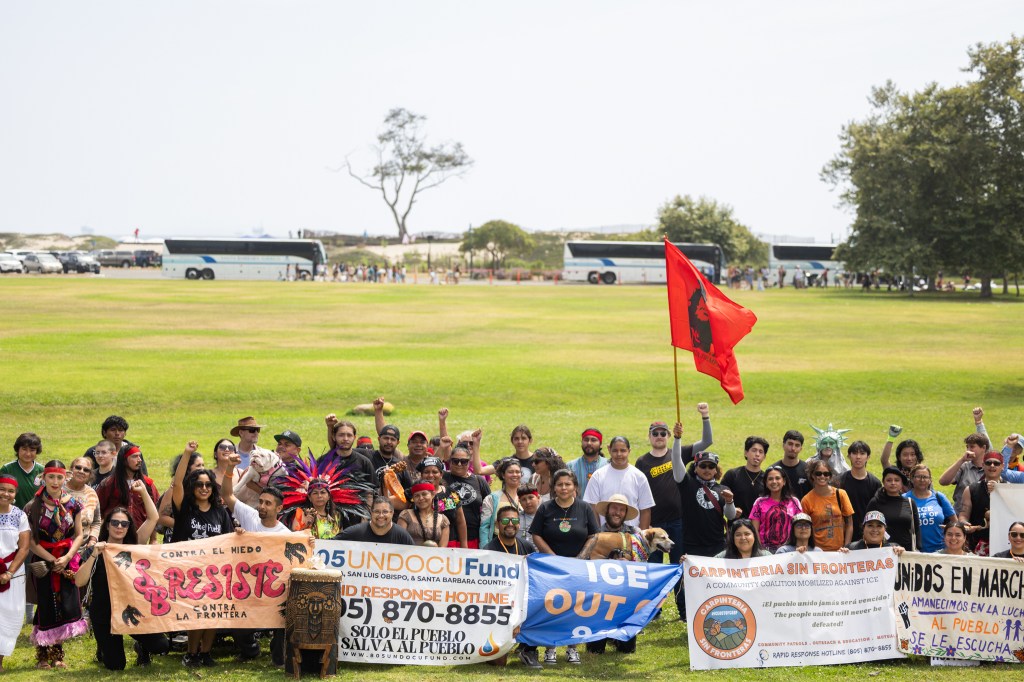
Some of the participants of the four-hour event gather on Linden Avenue field. | Credit: Ingrid Bostrom 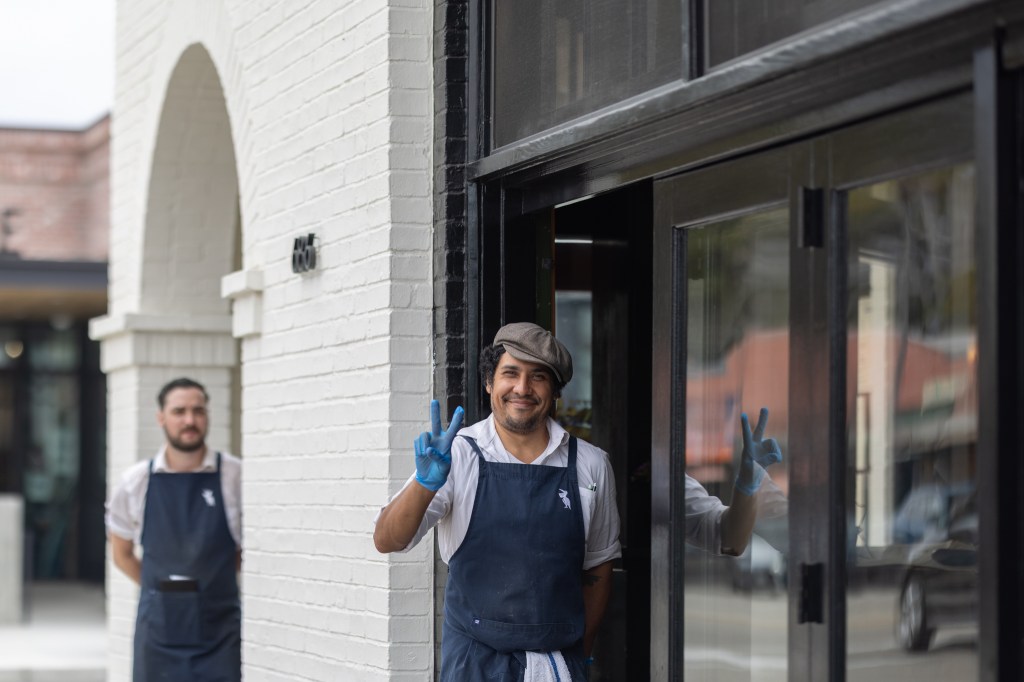
Little Doms staff watching the procession down Linden Avenue | Credit: Ingrid Bostrom 
The 1.8-mile march from Linden Avenue to Glass House Farm was met with cheers and supportive honks from many passersby. | Credit: Ingrid Bostrom 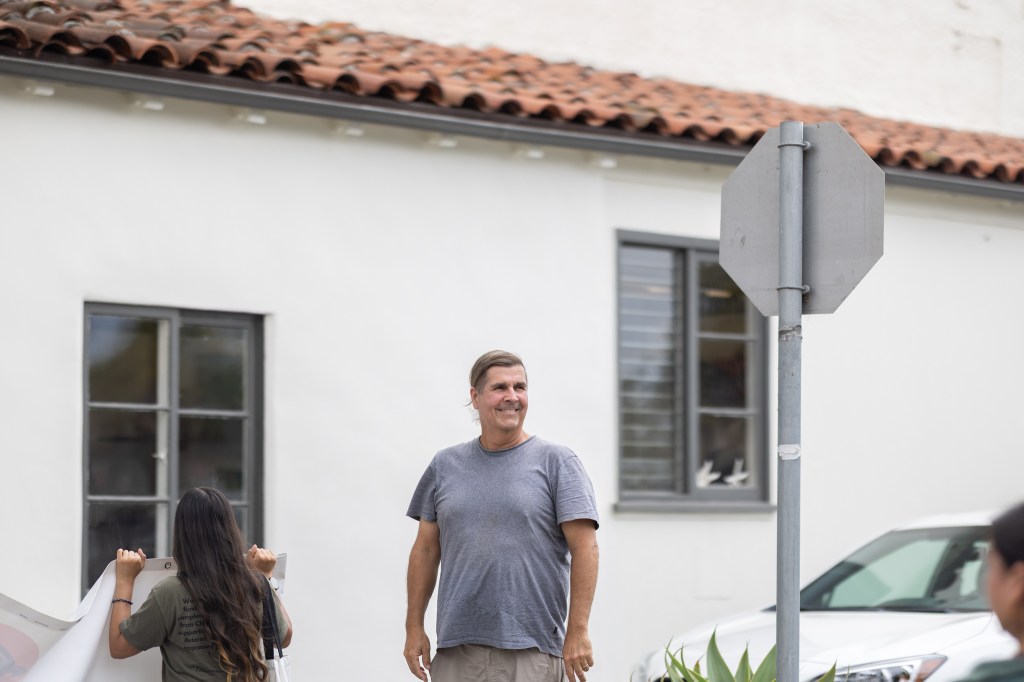
Observer taking in the procession down Linden Avenue | Credit: Ingrid Bostrom 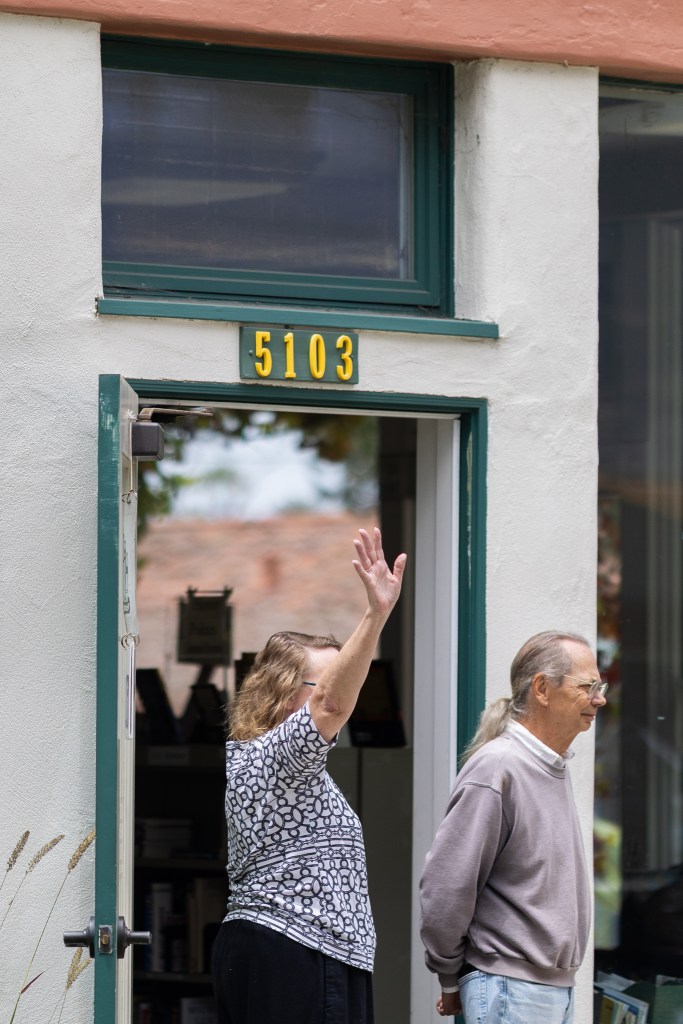
Many people stepped out of their businesses and homes to greet the group marching | Credit: Ingrid Bostrom 
Many people stepped out of their businesses and homes to greet the group marching | Credit: Ingrid Bostrom 
The 1.8-mile march from Linden Avenue to Glass House Farm was met with cheers and supportive honks from many passersby. | Credit: Ingrid Bostrom 
Some stopped to record the procession on their phones. | Credit: Ingrid Bostrom 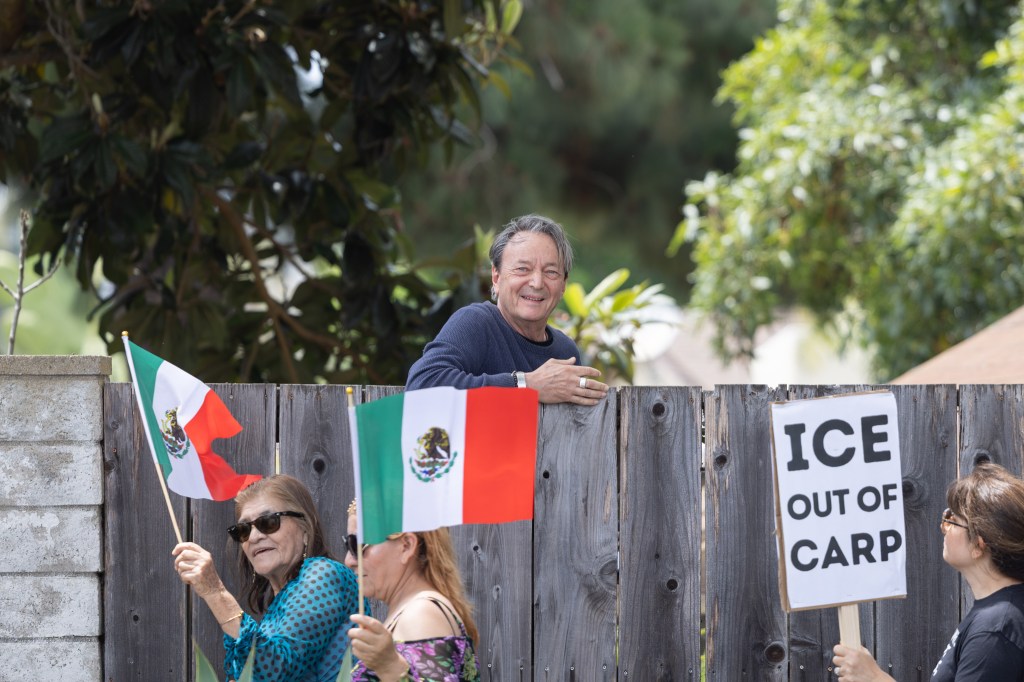
Fran Collin | Credit: Ingrid Bostrom 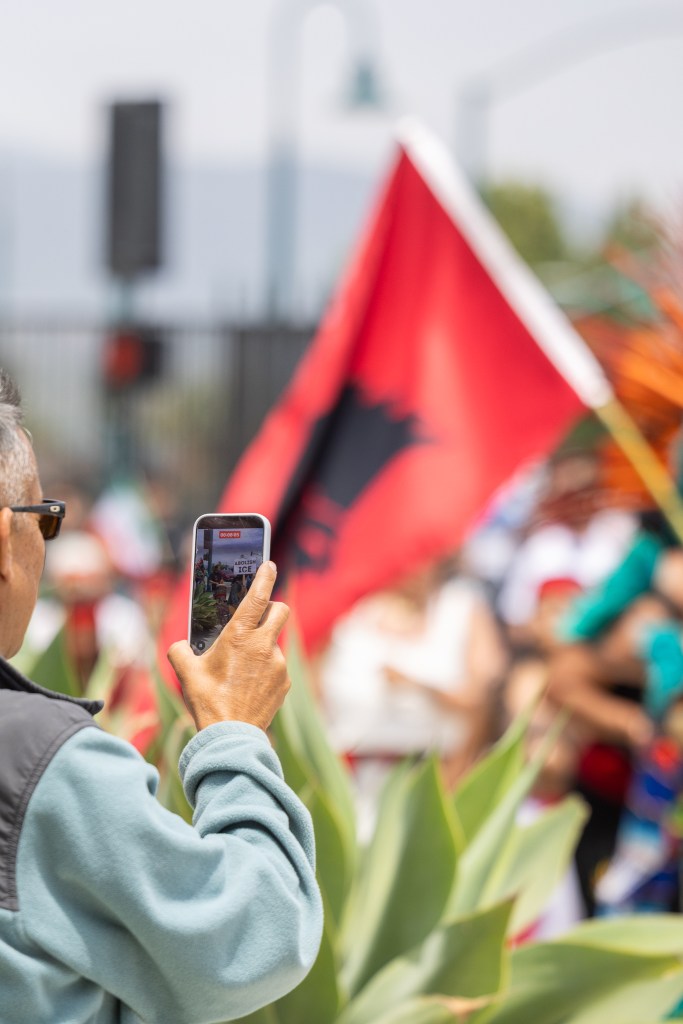
Some stopped to record the procession on their phones. | Credit: Ingrid Bostrom 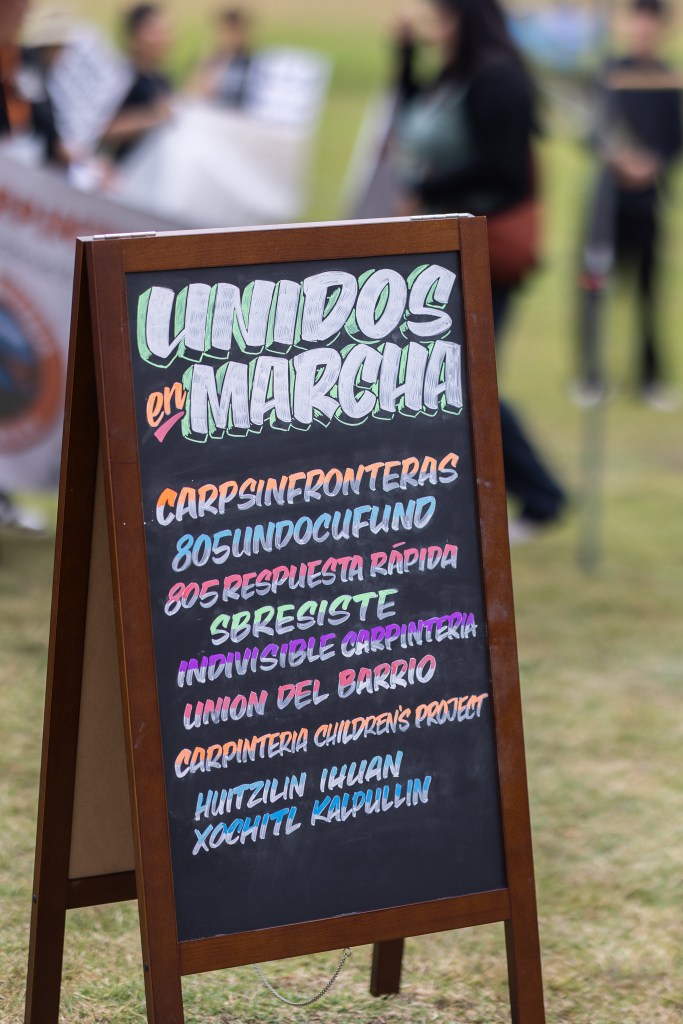
Saturday’s march was organized by a coalition of local organizations. | Credit: Ingrid Bostrom 
Aztec Dancer | Credit: Ingrid Bostrom 
Ceremonial Blessing | Credit: Ingrid Bostrom 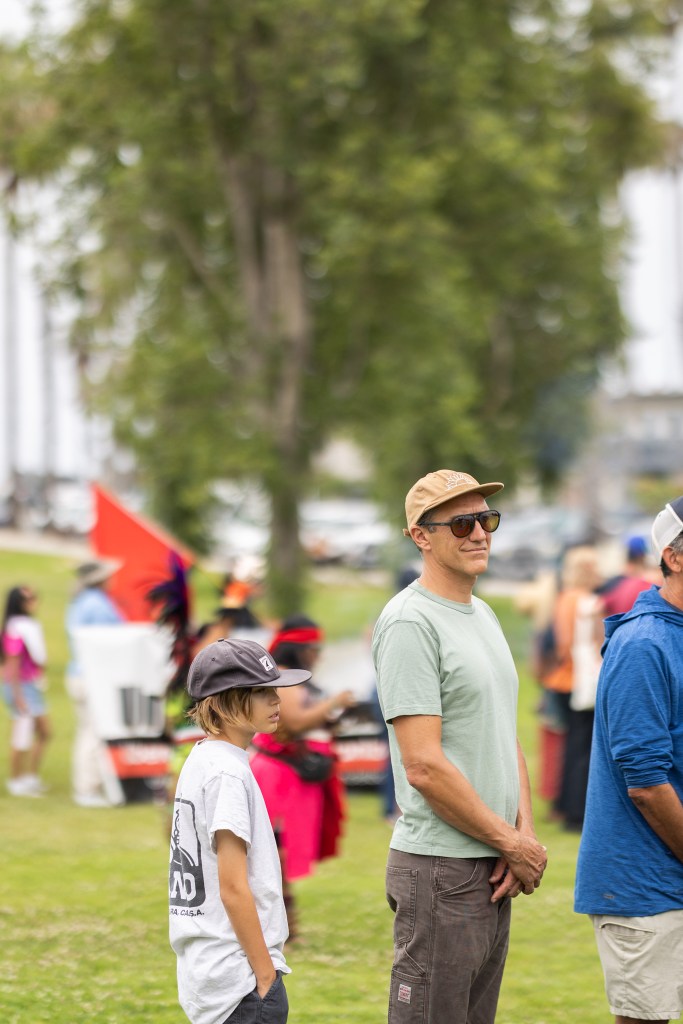
Fin and Matt Kraybill (left to right) | Credit: Ingrid Bostrom 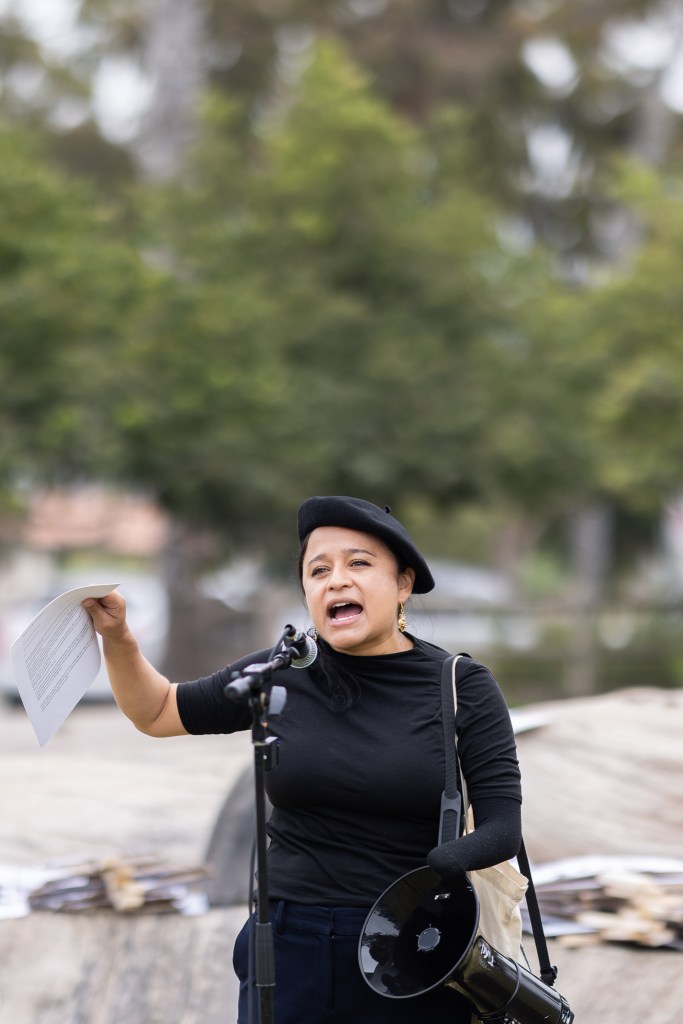
Carpinteria Sin Fronteras representative | Credit: Ingrid Bostrom 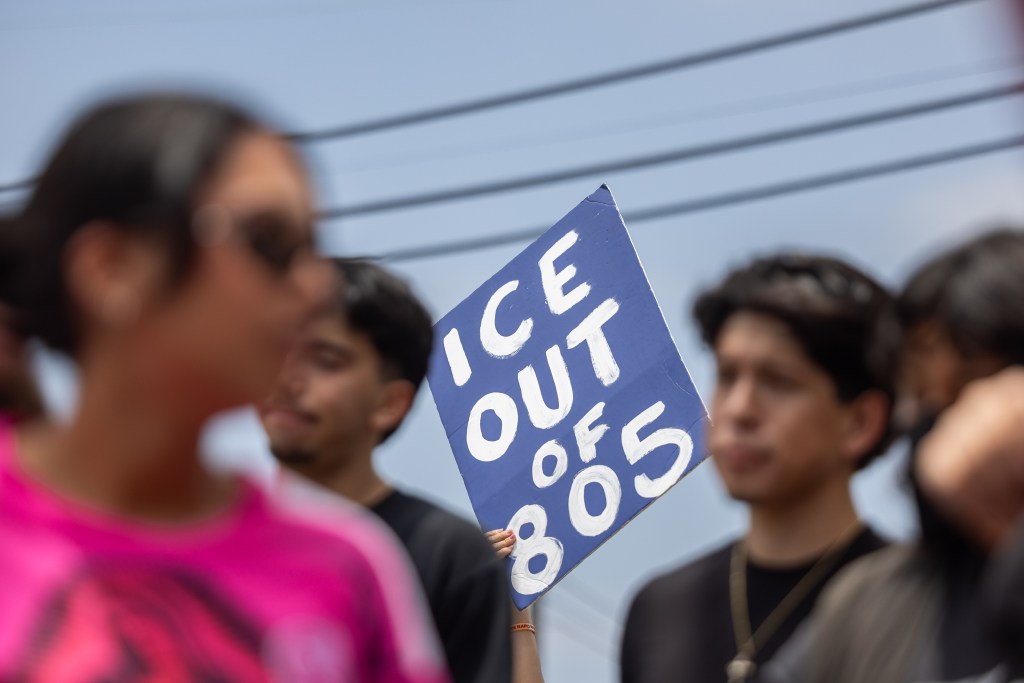
Saturday’s march commemorated the one-year anniversary of the Glass House Farms raids. | Credit: Ingrid Bostrom 
An Aztec dancer outside Glass House Farm in Carpinteria during Saturday’s march | Credit: Ingrid Bostrom 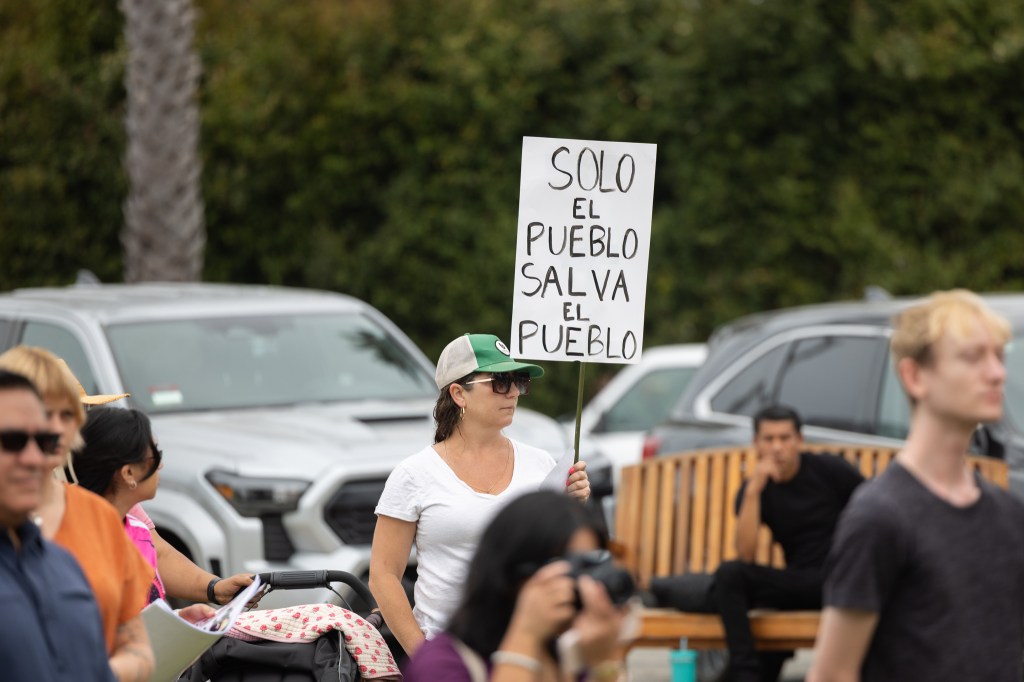
Katrina Kuryliw (center) | Credit: Ingrid Bostrom 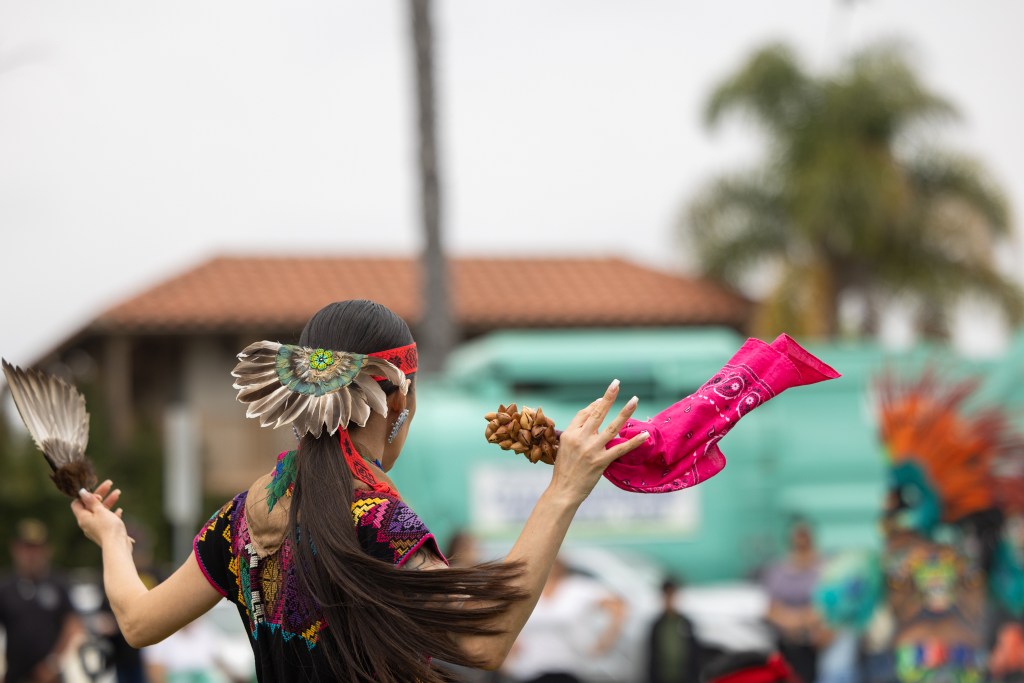
Aztec Dancer | Credit: Ingrid Bostrom 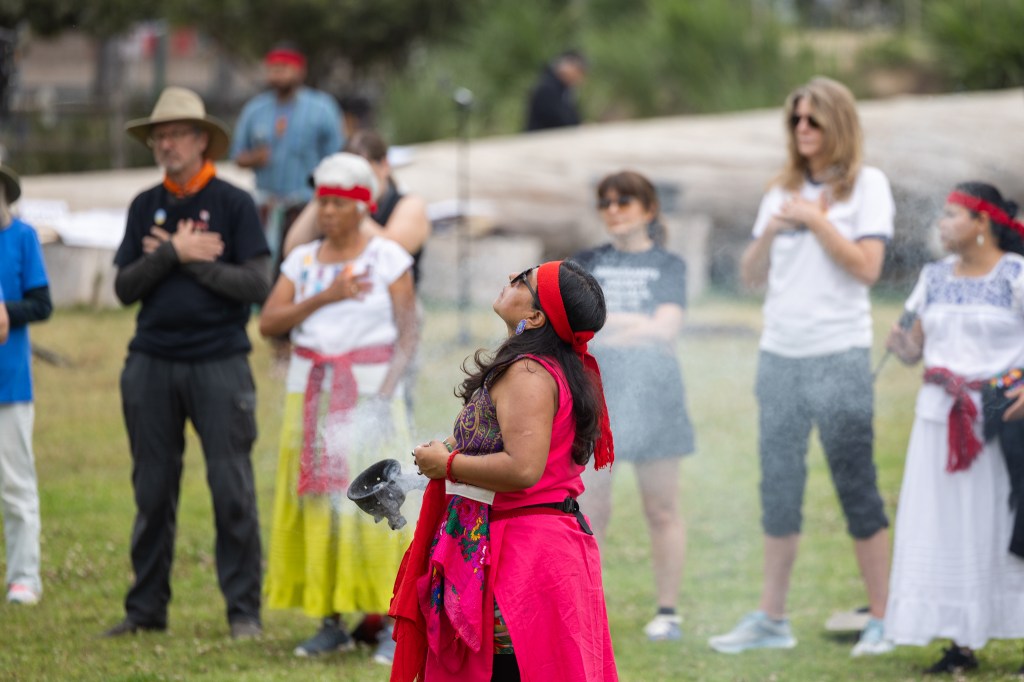
Ceremonial blessing | Credit: Ingrid Bostrom 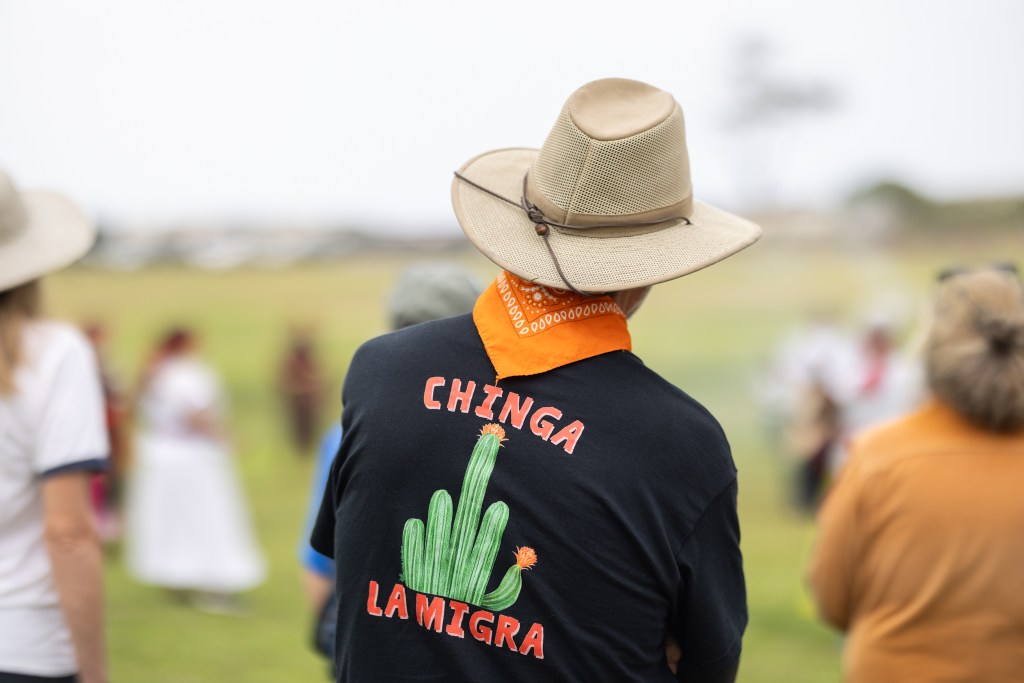
Community members gather on Linden Avenue field. | Credit: Ingrid Bostrom 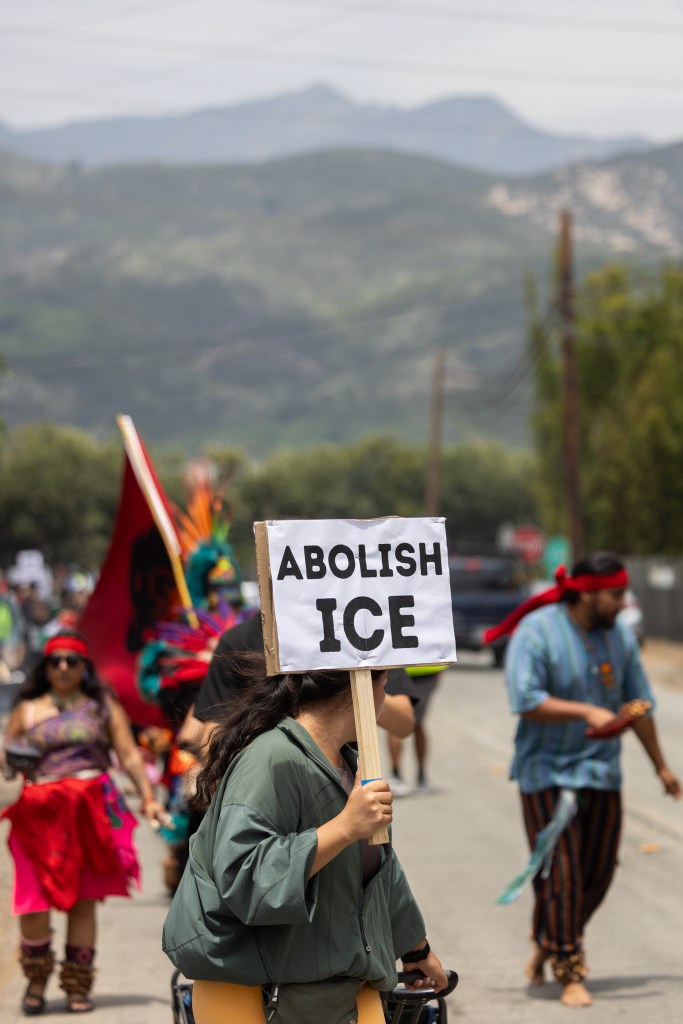
Marchers outside Glass House Farm | Credit: Ingrid Bostrom 
Carpinteria Sin Fronteras representative | Credit: Ingrid Bostrom 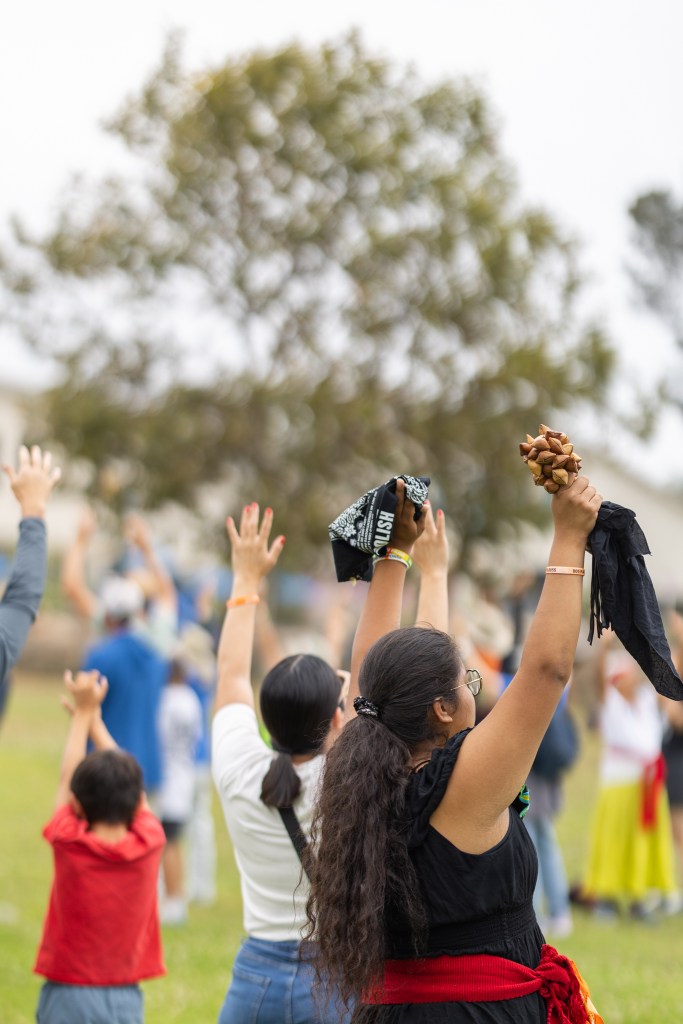
Ceremonial Blessing | Credit: Ingrid Bostrom 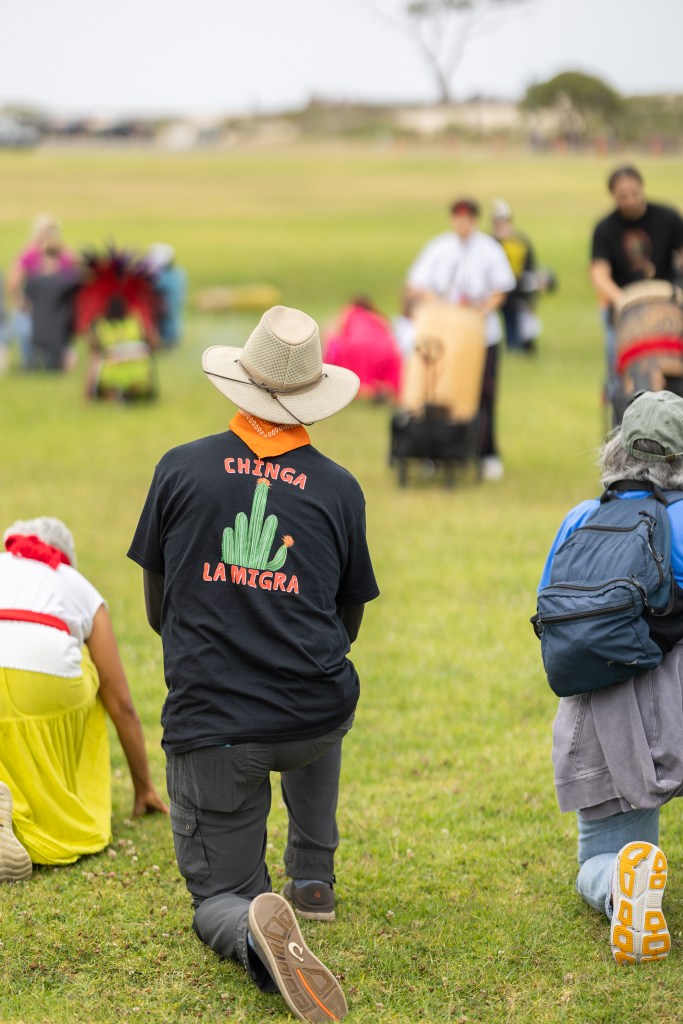
Community members take a knee at Linden Avenue field during Saturday’s gathering. | Credit: Ingrid Bostrom 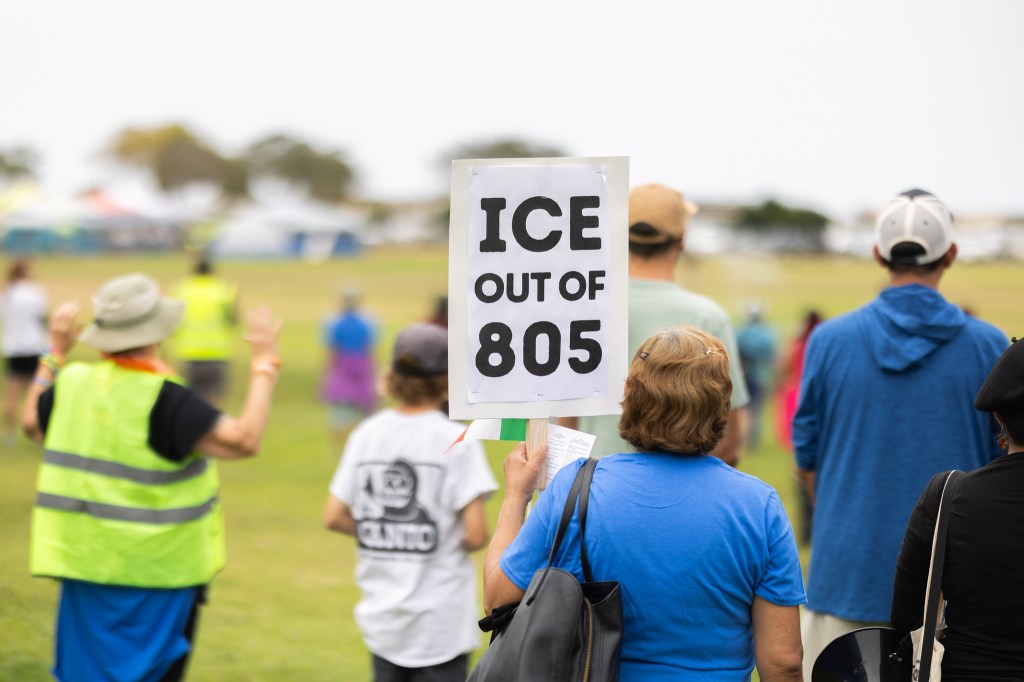
Saturday’s march started and ended at Linden Avenue field. | Credit: Ingrid Bostrom 
Aztec dancers on Linden Avenue field | Credit: Ingrid Bostrom 
Community members gather on Linden Avenue field. | Credit: Ingrid Bostrom
As Carbajal concluded his remarks and walked away from the gathering, a couple of representatives from Unión del Barrio followed after him, urging him to stay and listen to the remaining speakers. Numerous speakers recounted their memories of the raid and reflected on the ongoing struggles against racial discrimination, violence toward legal observers, and the detention of individuals on their way to work. One called out the offices of Carbajal and raised concerns about the unprocessed DACA applications.
Carbajal returned to the microphone to respond that his staff is doing everything they can to assist applicants but has encountered roadblocks from the administration. A Unión del Barrio representative later shared that “constituents depend on congressional offices to accurately and timely submit inquiries, provide information to these federal agencies, and relay the agency’s responses back to the constituents. Unfortunately, many DACA recipients have shared that that has not been their experience with Carbajal’s office and share similar experiences and frustrations about lack of urgency and responsiveness on their behalf.”
(After this story was published, Carbajal’s office reached out to the Independent to provide additional context about the DACA applications they are handling. “Our office currently has 74 open DACA cases, all of which are actively being handled and engaged by our casework team. In addition to direct constituent services, the Congressman has sent three separate, joint letters this year to the Trump administration to advocate directly for DACA recipients and press for the expedited review of renewal applications.”)
In spite of some tense moments and tearful stories, the day left an impression of tenacity and resilience — both from the accounts of everyday actions by community organizers and volunteers to the miles of marching and dancing in the heat and humidity.
“Our lasting impression of the gathering was how many in our immigrant community felt empowered by being connected with their strength, cultural heritage, and resilience with every beat of the Aztec dancers’ drums and songs as they led the march,” said a representative from Carpinteria Sin Fronteras, who asked not to be named out of fear of retribution. “We were able to create a sense of unity and upliftment in Carpinteria during a day that felt so heavy for many.… Together we can transform a tragedy. By strengthening our collective action, we can create a Carpinteria that is safe for everyone, irrespective of legal status.… Immigration enforcement is the civil rights issue of our time, and everyone has a role to play in advocating on behalf of the most vulnerable among us.”






You must be logged in to post a comment.