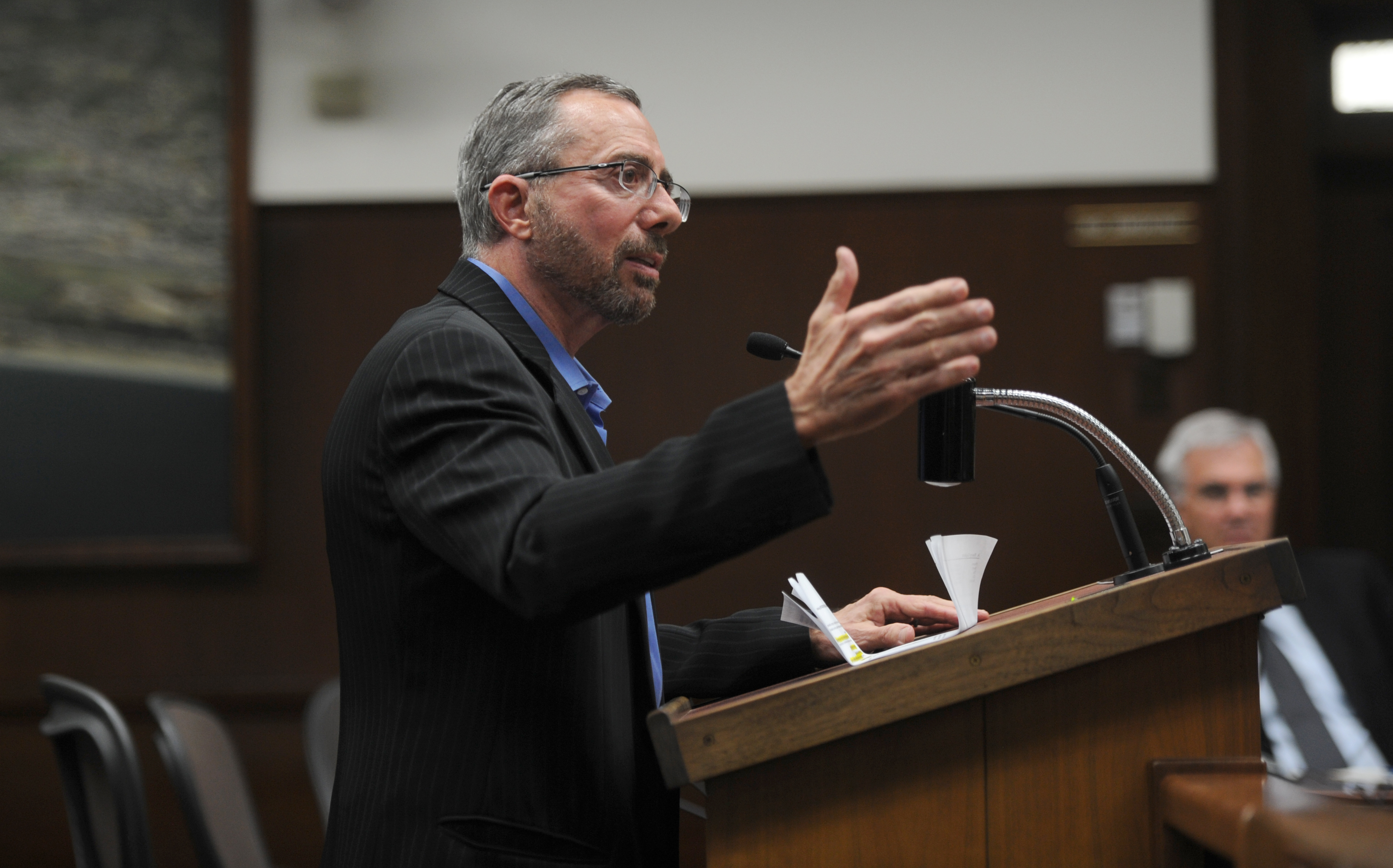
In a 31-page court ruling, a federal judge sent Barry Capello — a living legend in Santa Barbara courthouse circles and a former city attorney — back to the drawing boards, dismissing his complaint on behalf of the Santa Barbara Rental Property Owners Association that the temporary rent freeze enacted earlier this year the Santa Barbara City Council constituted an illegal, capricious, arbitrary, and unconstitutional taking of their properties without due compensation.
The judge faulted Capello’s pleadings for not containing enough factual evidence to buttress his allegations. As a result, Judge Sherilyn Peace Garnett ruled his case failed to pass the plausibility test needed to withstand the motions made by City Hall’s lawyers to have the case dismissed. Judge Peace Garnet did, however, leave the door wide open for Capello to file amended complaints for most but not all of his initial claims. Translated into plain English, the landlords’ case got tossed, but could bounce back.
Earlier this year, the Santa Barbara City Council voted 4-3 to place a temporary freeze on all residential rent increases while its members hashed out the details of a permanent rent stabilization ordinance they intend to pass in the coming months. With a permanent ordinance in the offing, the council majority argued, many landlords might be tempted to give their tenants as big a rent increase as they could while it was still legal. In response, Capello sued the City Council and City Hall itself on behalf of the 1,000 property owners who make up the apartment owners’ association and the 23,000 rental units they reportedly control.
Given Capello’s reputation as a tough and theatrical litigator, he was perhaps the best saber the landlords’ association could have hoped to rattle. His very presence can be unnerving around the chambers of City Hall, where he once held sway.
Although Capello’s pleadings contained detailed accounts from a handful of landlords as to how their bottom line might be harmed in the future by the rent freeze and how they might even find themselves financially underwater, the judge was not buying it.
“The Rent Freeze Ordinance imposes at most a slight economic burden upon Plaintiffs,” she wrote in her ruling. “As discussed above, because the Ordinance will last for at most one year and because California already prohibits the annual rent hikes greater than 10 percent, the Ordinance will, at most, cause a 10 percent reduction in Plaintiffs’ rental income. As the Ninth Circuit has held, ‘The mere loss of some income because of regulation does not itself establish a taking.’”
As to whether the councilmembers acted in haste, violating due process, without reading the ordinance out loud in public, the judge found the council majority articulated a clear public benefit for what they were hoping to achieve. Whether their means would actually achieve their stated goals — or even backfire, as Capello had argued — was another matter, she ruled, and not up to her to judge.
In a written statement, Capello commented, “The lawsuit against the City is ongoing and is not over. The key legal claims in the complaint remain.” Specifically, he cited the takings complaint. That issue, he said, has yet to be decided on the merits. “The Court explicitly granted Plaintiffs to file an amended complaint.”