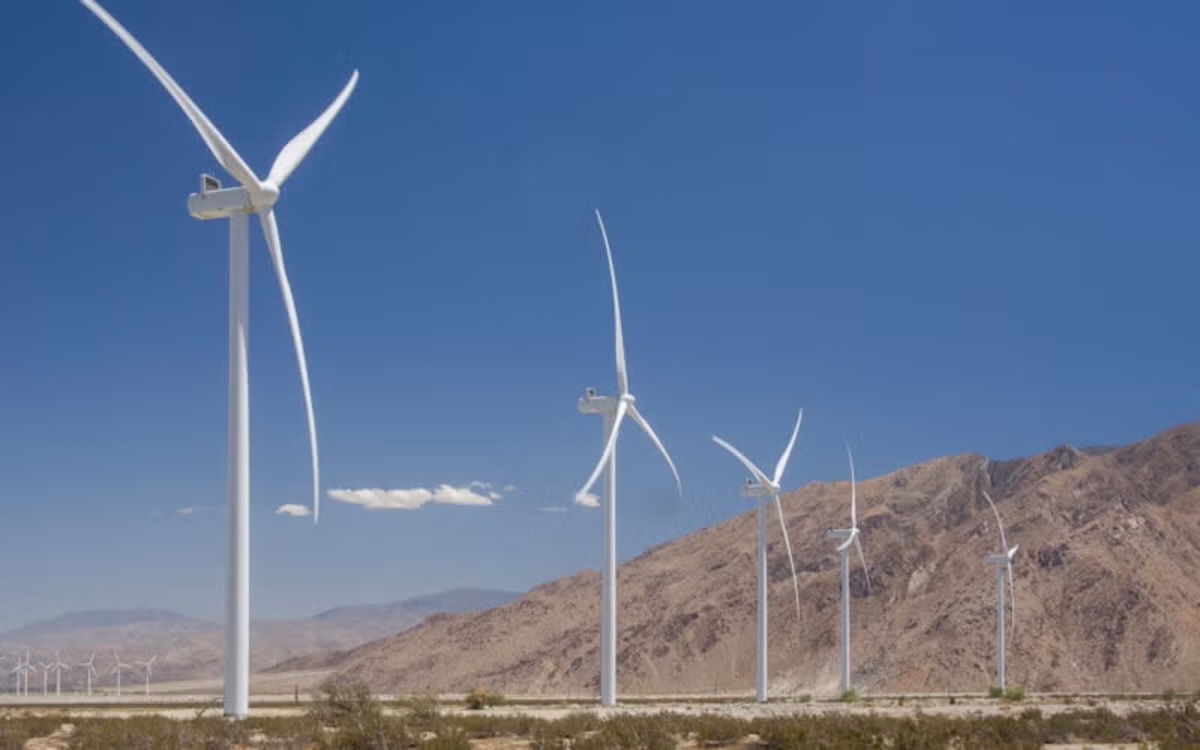
California joined 19 other states on July 16 to take a swing at a Trump administration delay tactic in approving onshore wind energy projects. In light of California’s goal for its energy to be 100 percent carbon-free by 2045, wind plays a large part. On a hot and humid afternoon like this Friday’s, renewable energy is supplying 70 percent of the 34-gigawatt demand. Wind makes up 11 percent of that carbon-free renewable energy.
Any project that uses wind turbines taller than 200 feet must be reviewed by the Federal Aviation Administration and the Department of Defense. Since August 2025, the Department of Defense stopped processing the reviews, which examined if military operations, radar systems, or flight paths were at risk from the new installation.
Projects stopped mid-stream as countersignatures, agreements, and communications came to a halt, a press release from Attorney General Rob Bonta’s office described. Projects nationwide are “frozen” while the DoD conducts “further agency coordination.” The 20 attorneys general seek to intervene in a case brought by wind project groups, arguing that the delay undermines the intent expressed by Congress that the department “balance national security concerns with the responsible development of renewable energy.”
In the underlying case, Renewable Northwest v. Hegseth, at least 125 utility-scale projects in 25 states are stalled. Not only did this affect the future generation of 30 gigawatts of electricity, but the nine energy associations and businesses also were at risk from financing and power purchase agreement defaults, loss of federal tax credit eligibility, and other harms, totaling $50 billion, according to media reports.
The increase in renewable sources have enabled California to avoid the Flex Alerts that plagued the early 2020s, when consumers voluntarily set thermostats to 78°F or more and turned off appliances to decrease electricity usage and brownouts. Since the last Flex Alert in 2022, more than 25 gigawatts of renewables and 17 gigawatts of battery storage have been added to California’s supply, said Jeremy Lipps with the California Independent System Operator.
But demand keeps growing. The electricity needs of enterprises like data centers have increased demand. Early this year, the California Energy Commission counted more than 200 data centers in the state, using about 1 megawatt (MW) of energy, or 2 percent of peak electricity demand. That was expected to increase to 4,500MW, the agency forecast, or 9 percent of peak demand by 2040.
The real drive in demand will come from electric cars and all-electric homes, SoCal Edison forecasts in its “Countdown to 2045” white paper. EVs were 23 percent of California’s new car sales in 2025, and the state has more than 100,000 chargers. Vehicles alone could increase electricity demand by 50,000 gigawatt hours in Edison’s Southern California service area by 2045.