
While a 191-unit housing development on the Carpinteria Bluffs faces blunt opposition from community members, a separate proposal on the bluffs to remodel vacant office space into 31 units was met with soft support last week.
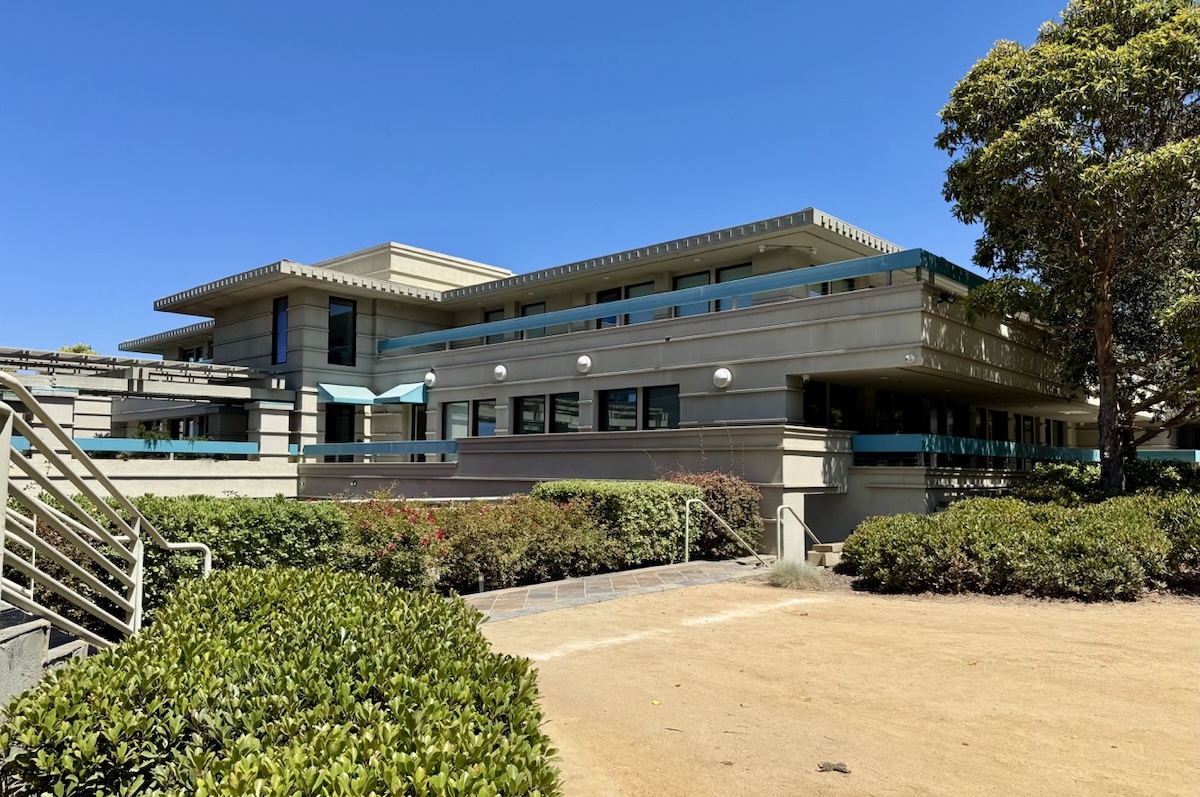
The differences lie in size and logistics. Unlike the larger proposal, dubbed “The Farm,” this new project involves structures that already exist. Right now, the 3.85-acre bluffs property at 6185 Carpinteria Avenue hosts two empty office buildings next door to Procore.
The developers’ conceptual review presented to the Carpinteria City Council on July 13 plans to turn that space into 20 market-rate live-work units and 11 housing units. That includes 14 studios; three one-bedroom and three two bedroom live-work units; and nine one-bedroom and two two-bedroom residential units. It would also include 102 parking spaces, thanks to the property’s existing parking podium.
A live-work unit is a hybrid space combining living quarters with commercial or professional workspace. Occupants would need business licenses.
The project proposal comes from Peter Lewis, who owns Palm Lofts, a live-work development on Palm Avenue in Carpinteria. His conceptual design is subject to feedback from the city before it can be submitted for formal review.
At last week’s council meeting, Lewis called the property — which is currently zoned as industrial/research, and was previously occupied by a retirement-planning firm— the “ideal candidate to create living and working space that helps the current housing deficit.”

Lewis envisioned the project improving the asymmetrical “housing-jobs balance” in the city. He added that since it would maintain the existing buildings and footprint, there will be “absolute minimum environmental impacts.”
Two current Palm Lofts residents who have opposed The Farm for its potential impacts came to the meeting on Monday to express their support for the Carpinteria Avenue project.
Arturo Tello, a landscape painter in town and 21-year resident of Palm Lofts, has been very outspoken in his opposition to The Farm, especially as former president of the Citizens for the Carpinteria Bluffs. He considered the Carp Ave. project’s potential impacts on the environment to be minimal in comparison.
“I have never supported residential development at the bluffs,” he said. “But when I picture my community at the Palm Lofts, and I transpose it to this office building, I really see very, very little impact because I know the kind of community I live in.”
However, city staff did emphasize that Lewis’s project would not create affordable housing — rough estimates say the lowest rental rate would go for $2,900 per month. Additionally, environmental impacts could include intensified light, noise, and traffic throughout the day compared to its use as an office park, staff said.
No housing is currently located on the bluffs, despite current zoning allowing for residential use on large portions of the bluffs. That includes where The Farm and Lewis’s project are proposed on opposite sides of the Bluffs Nature Preserve.
In the past, there has been little support from city decision makers when housing has been proposed for on the bluffs, staff said, citing that two housing developments proposed for the area since 2013 have not moved forward. That stemmed from multiple concerns, including that projects would “open the door” for more development on the environmentally sensitive bluffs.
But the project could add a needed bump to the city’s housing supply and support business owners, staff noted.

While councilmembers did acknowledge the glaring precedent of community opposition to development on the bluffs, they seemed open to turning “empty buildings” into “beautiful places for people to live,” to borrow words from Councilmember Julia Mayer.
“I really appreciate hearing people who are big bluffs advocates who are also supporting this project,” Vice Mayor Mónica Solórzano said. “I think that’s really helpful to hear there are some housing developments on the bluffs that maybe the community does have an appetite for.”
Still, the lack of affordable housing in the project struck them. Councilmembers asked about the feasibility of potentially including affordable units in the project — notably, The Farm would include 20 percent affordable units — but Lewis said it would not be possible. For the record, the property itself is listed at $11.7 million.
“The reality is that affordable housing has to be done with tax credits,” he said. “No other outcome happens…. It’s just an unfortunate reality of where we are today.”
He shrugged, noting it would not be affordable for him to pursue the project if an affordable component were required. “I couldn’t afford to take the hit.”
Councilmembers were held up on that aspect. “As much as I understand the limitations to having affordable housing,” Solórzano said, “I think that given that the bluffs are such a sensitive issue that the community feels so strongly about, I really do feel like there needs to be more of a public benefit to these housing projects where there is affordability built into them.”
No motion was required from the council, and its conceptual feedback will be considered by the applicant and city staff before moving forward with a formal application.




You must be logged in to post a comment.