
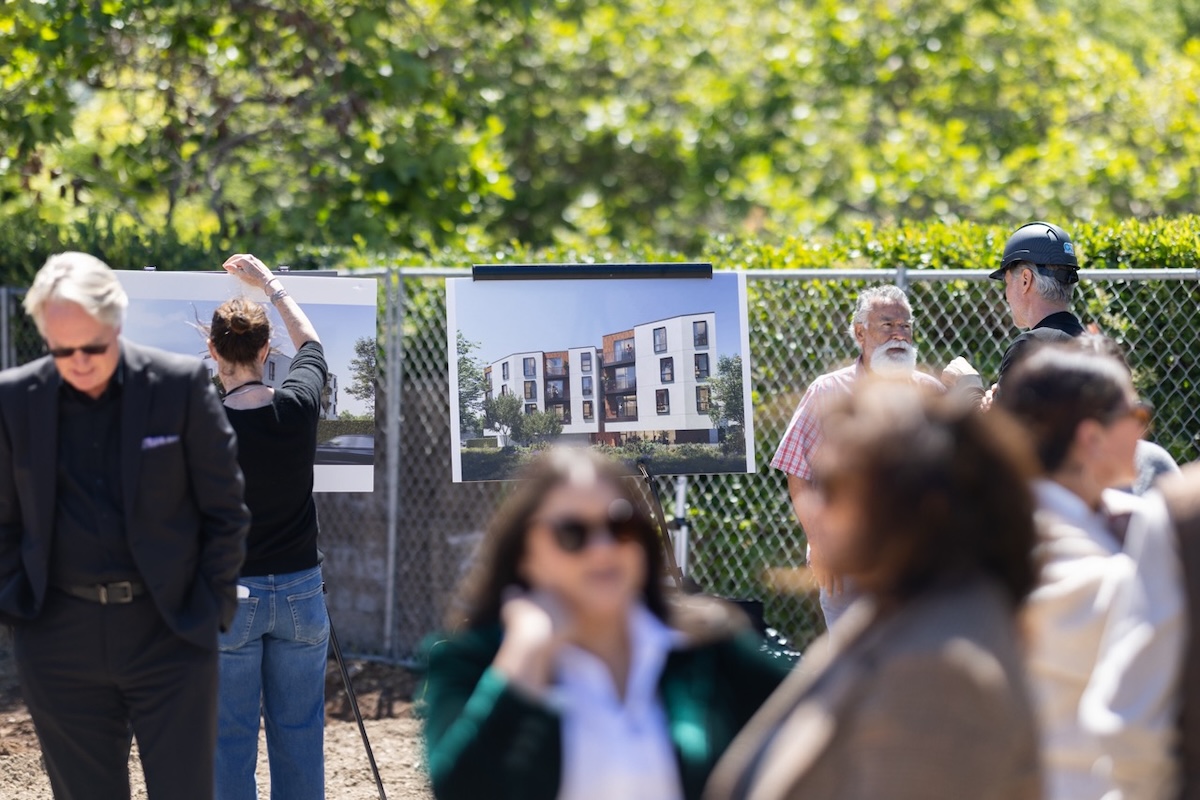
The biggest federal housing bill in decades became law earlier this July. The 21st Century ROAD (Renewing Opportunity in the American Dream) to Housing Act is a Frankenstein’s monster of more than 60 pieces of legislation introduced by federal lawmakers, outlining dozens of policy and regulatory changes aimed at making it easier to build affordable housing. It doesn’t come with dollars attached, but the act still offers more pathways for building and renting affordable units, including here on the South Coast.
Paving the Way for More Low-Income Housing Tax Credits
Low-income housing tax credits have funded the majority of affordable housing projects built by both the City and County of Santa Barbara’s housing authorities in recent years. They aren’t new. Congress approved the program 40 years ago. Banks can reduce their tax liability by purchasing the credits. Essentially, by investing their money in affordable housing, the banks get a tax break.

But there’s a cap: Before the law passed, banks could put no more than 15 percent of their assets into low-income housing tax credits.
Matt Schwartz, president of the California Housing Partnership, a nonprofit that partners with affordable housing developers and local governments to provide technical assistance, said that raising the cap to 20 percent will most likely impact smaller banks, allowing them the chance to invest more.
“It won’t be JP Morgan or Wells Fargo or some of the other big banks,” Schwartz said, about who the change is likely to impact. “It’s going to be smaller, medium-sized banks that are most likely to have been limited, and will apply to regulators for this new authority to increase their investments.”
When the federal government raised the cap from 5 percent to 15 percent back in 2003, Schwartz said, the change resulted in about $30 billion of community development investment over the following two decades.
For the city and county housing authorities, that means more credits that they can apply for to build projects.
“It opens up the pool of potential investors,” said John Polansky, director of Housing Development at the Housing Authority of the County of Santa Barbara.
Reducing Redundant Inspections for Housing Voucher Homes
When a landlord decides to rent a unit to someone who uses federal housing assistance vouchers, like Section 8 vouchers, that unit requires inspection. The 21st Century ROAD to Housing Act doesn’t get rid of that inspection requirement wholesale. Rather, it cuts down on multiple inspections in quick succession. Inspections are now waived if a unit has been inspected as part of a requirement for other federal housing programs within the past year.
New landlords can now do “pre-inspections,” getting the inspection requirement out of the way so that a low-income tenant can move into the property faster.
Between the city and county’s housing authorities, there are approximately 6,700 federal housing vouchers distributed to tenants.
Delivering Disaster Recovery Dollars Faster
When natural disasters, like wildfires or mudslides, destroy homes, the state receives money from the federal government to help rebuild. That money comes from the Department of Housing and Urban Development’s Community Development Block Grant Disaster Recovery. Santa Barbara County received these funds after the 2017 Thomas Fire and subsequent mudslides.
That’s not unique. Matt Schwartz from California Housing Partnership said that a majority of communities that have seen homes destroyed by wildfires in recent years have received money to rebuild from the grant. But Congress needs to approve its appropriation each time. Getting the money to rebuild could take years, Schwartz said.
The ROAD to Housing Act authorizes the disaster recovery program for three years, a move Schwartz said will shorten the time communities have to wait for federal relief dollars.
Making It Easier to Build Manufactured Housing
Manufactured homes are faster and cheaper to build compared to traditional home construction, making them a tool in boosting an area’s housing stock. The 21st Century ROAD to Housing Act removes a rule requiring manufactured homes be built on a steel chassis, making it easier to finance them and decreasing construction costs. It also reduces the number of restrictions on multi-family manufactured housing.
No Additional Funding

The act’s biggest shortfall, California Housing Partnership CEO Schwartz said, is the lack of money attached to it.
“It’s authorizing lots of improvements without putting funding behind it, and for affordable housing, almost nothing is feasible without the funding,” he said.
The Housing Authority of the City of Santa Barbara’s CEO Rob Fredericks agrees: The act increases pathways to build housing, he said, but is limited. Communities need direct appropriations for building affordable housing and providing rental assistance, he said.
A lack of federal funding limits housing authorities’ abilities. Fredericks said that the city has more federal vouchers to help with rent but Congress does not fund the program sufficiently to offer them. Federal reductions in housing support, including the elimination of the emergency housing voucher, mean need is increasing further.
In Washington, D.C.
President Donal Trump did not sign the act, which passed with widespread bipartisan support, in an attempt to pressure Congress into passing the SAVE America Act. The housing act, Trump told reporters at the White House late last month, was unimportant compared to the SAVE Act, a bill that would require proof of citizenship and a presented photo ID to vote in federal elections. The housing act passed after 10 days on his desk.
In Washington, Massachusetts Senator Elizabeth Warren has already expressed interest in a follow-up housing act. For Schwartz and the California Housing Partnership, it’s legislation they intend to follow and support.
“The Partnership intends to work with members of Congress on a “Road to Housing 2.0” that would include funding to realize the promise of version 1.0 for low-income renters,” Schwartz told the Independent.
Related Posts




Premier Events

Sun, Oct 04
11:00 AM
40th California Avocado Festival

Sun, Oct 04
1:30 PM
Goleta, CA
📚 Library Card Day

Tue, Oct 06
All day
Santa Barbara
New and Emerging Technologies in the Hands of Artists: Brave New Work 2.0

Tue, Oct 06
6:00 PM
Santa Barbara
Chaucer’s Books- Horror Stories with Joseph Fink

Wed, Oct 07
7:30 PM
Santa Barbara
The Theatre Group at SBCC Presents: “CLUE”

Wed, Oct 07
7:30 PM
Santa Barbara
Ensemble Theatre Company Presents: “Buyer & Cellar”

Thu, Oct 08
5:30 PM
SANTA BARBARA
Oh the Horrors! New Book Club at S.B Public Library

Fri, Oct 09
7:00 PM
Santa Barbara
Paseo Nuevo Spooky Movie Nights

Sat, Oct 10
10:00 AM
Ojai
Ojai Design x Vintage

Sat, Oct 10
10:00 AM
Ojai
Ojai Studio Artists Open Tour
Sun, Oct 04 11:00 AM
40th California Avocado Festival
Sun, Oct 04 1:30 PM
Goleta, CA
📚 Library Card Day
Tue, Oct 06 All day
Santa Barbara
New and Emerging Technologies in the Hands of Artists: Brave New Work 2.0
Tue, Oct 06 6:00 PM
Santa Barbara
Chaucer’s Books- Horror Stories with Joseph Fink
Wed, Oct 07 7:30 PM
Santa Barbara
The Theatre Group at SBCC Presents: “CLUE”
Wed, Oct 07 7:30 PM
Santa Barbara
Ensemble Theatre Company Presents: “Buyer & Cellar”
Thu, Oct 08 5:30 PM
SANTA BARBARA
Oh the Horrors! New Book Club at S.B Public Library
Fri, Oct 09 7:00 PM
Santa Barbara
Paseo Nuevo Spooky Movie Nights
Sat, Oct 10 10:00 AM
Ojai
Ojai Design x Vintage
Sat, Oct 10 10:00 AM
Ojai


You must be logged in to post a comment.