

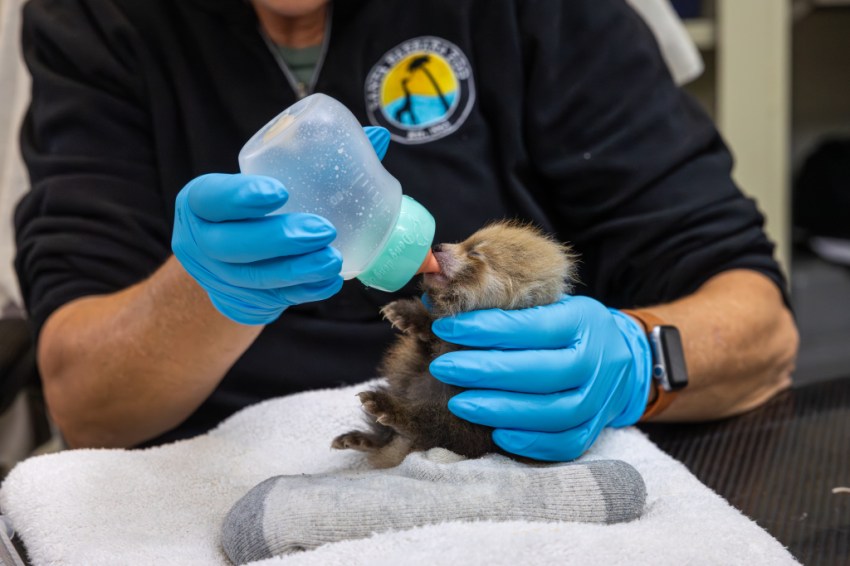
The recent deaths of two newborn red panda cubs at the Santa Barbara Zoo have been heartbreaking for their caretakers. But behind the losses is a larger story of conservation.
Raj, who arrived at the zoo in 2023, became the zoo’s first red panda resident since Rusty, who died around 2009. He came to Santa Barbara from New York when he was just eight months old. In 2025, Ruby, now his partner-in-crime, was paired with him for breeding.
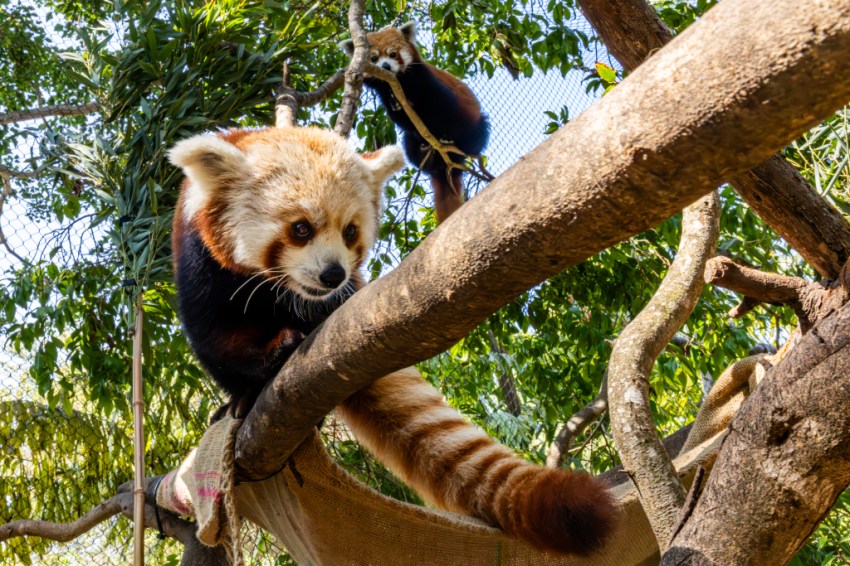
Both pandas arrived while they were still young, as planning for zoo transfers begins within the first months of a cub’s life. Ruby was still white when she arrived, but her coat gradually reddened with age. Raj, too, still had some of his baby fluff when he first moved in. Now, he’s grown into what Zoological Manager Liz Cunningham called “the perfect red panda.”
“He could be a model,” she said.
As their coats have turned a deep rusty red, they have settled into their home. It was, of course, built specifically for them, with places to climb and forage for hidden snacks. Over time, the two got to know each other. Ruby is a bit more extroverted, balancing out the quieter Raj, Cunningham said. “Socially, they’ve done really well with each other,” she said.
Ruby becoming pregnant during her first year at the zoo was “pretty amazing” on its own, Cunningham explained. They first became suspicious she may be pregnant when she instinctively began building nests. Then she began eating more (mostly fruit, jicama being her favorite). She did not, however, take well to the hard-boiled eggs or bugs they tried to feed her to increase her protein intake. Animals can be picky — it took trial and error to figure out what Raj liked and disliked, Cunningham recounted.
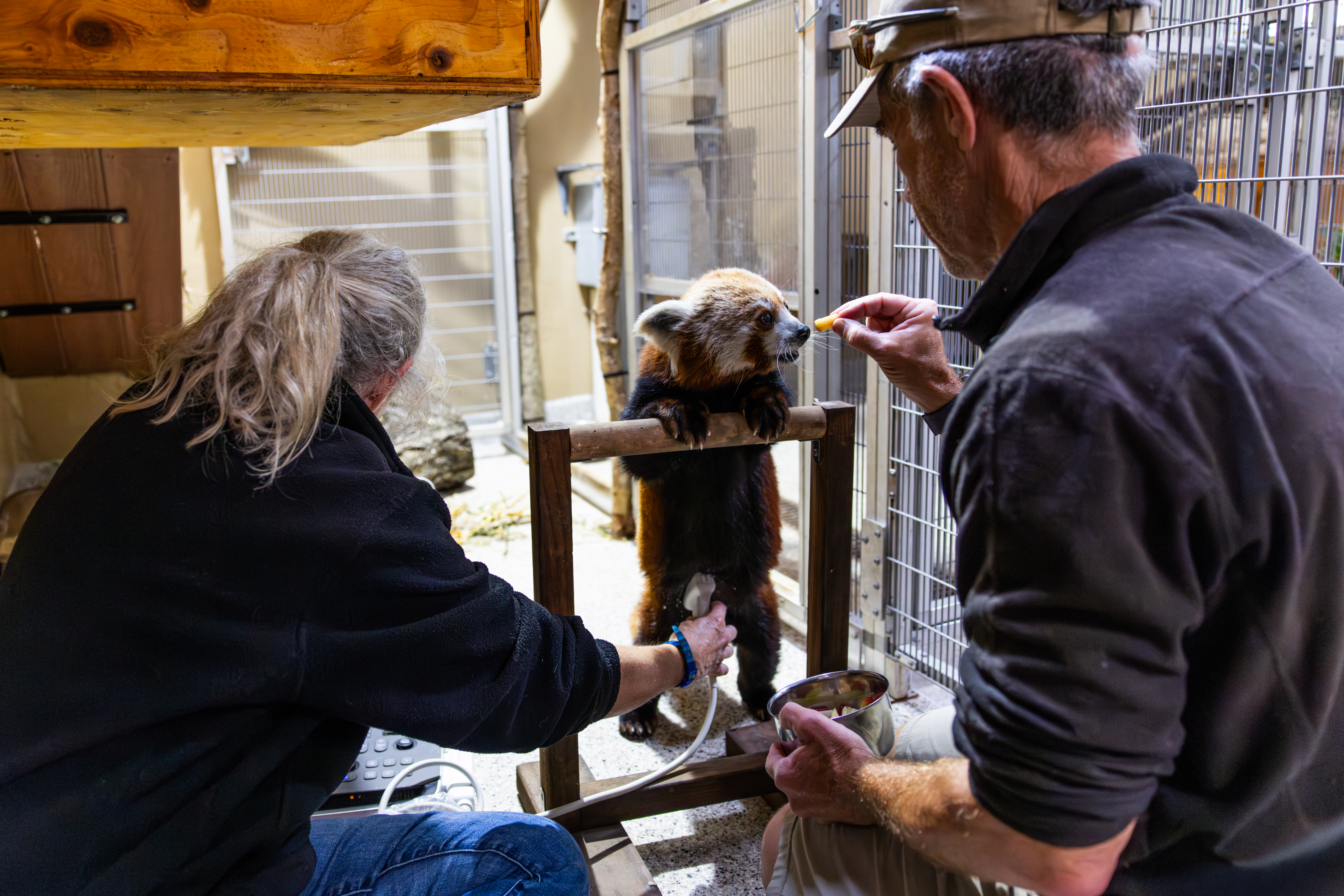
Staff were not able to officially confirm Ruby’s pregnancy until her first ultrasound, which she had to be specially trained for. It took a lot of prep on behalf of her keepers, but she got the hang of it. She was pregnant for about 4 months, and after the cubs were born, she appeared to be shaping up as a great mother.
Had the cubs survived, they would have been transferred to another accredited zoo within about a year to continue the breeding program — called the Red Panda Species Survival Plan, through the Association of Zoos and Aquariums (AZA). Red pandas are solitary animals, and in the wild, cubs naturally stray from their mothers around that same age. With healthy red pandas often living into their teens or early twenties, Ruby and Raj will likely have many more opportunities to breed.
Still, that is ultimately up to the pandas.
During the next breeding season, typically between December and February, the pair could produce anywhere from one to four cubs. But a female’s fertile window is very brief, so staff will closely monitor the pair during that period and cross their fingers.
The one breeding episode staff witnessed was in broad daylight, right in the middle of the habitat. But Cunningham suspects they may have been sneaky, and other encounters could have happened off-camera.
“We never say never, because we never saw Michael, our giraffe, breed,” she said. “He and the girls were sneaking around in the dark.”
Red pandas are far from the only animals breeding at the zoo. Through the AZA, the zoo participates in several conservation breeding programs.
Most recently, the zoo celebrated the successful rearing of Malia, a giraffe born in 2023. Before that came Marta, a rare Amur leopard born in 2021. Marta was later transferred to the Cleveland Zoo and gave birth to a cub of her own on July 1.
The zoo’s pair of bleeding-heart doves have also successfully bred, and are, Cunningham said, “fantastic parents.” Last year, too, the zoo hatched its first-ever tawny frogmouth chick, which has now been recommended for breeding and could have chicks of its own next spring.
When the zoo’s animals reproduce successfully, Cunningham said, it’s a “little ray of sunshine.” It means they are healthy, and feel comfortable enough to get it on, she said.
“This is what we work for, what we train for, and what we hope for,” she said. “It’s a huge collaborative effort.”
The birds and the bees serve a broader purpose. Breeding programs support healthy genetic diversity outside of the wild, creating a safeguard against potential catastrophic events and population losses, while supporting future reintroduction efforts if they become necessary.
Fewer than 10,000 red pandas remain in the wild. Their habitats continue to shrink and fragment, while poaching and other human-related stressors continue to threaten populations across their native range in the Eastern Himalayas and southwestern China.
By maintaining healthy breeding populations, zoos help secure the futures of rare and endangered animals. Meanwhile, experts are able to learn more about disease and proper care to support these populations in the wild. That knowledge is especially valuable for red pandas, which are naturally elusive in the wild.
“By breeding here, we’re able to support the future of the red panda here on the planet in general,” Cunningham said, “and one day we may be able to have healthy genetics back out in the wild, too.”
Related Posts



Premier Events

Sat, Oct 10
9:00 AM
Santa Barbara
Treble Clef Chorus Fall Treasure Sale
Sun, Oct 11
5:00 PM
Santa Barbara
Trinity Choir: Choral Evensong

Thu, Oct 08
7:00 PM
Santa Barbara
“A Night of Blues” with Morganfield Burnett

Fri, Oct 09
7:00 PM
Santa Barbara
Paseo Nuevo Spooky Movie Nights

Sat, Oct 10
9:00 AM
Santa Barbara
SBNC 1st Annual Health & Wellness Fair

Sat, Oct 10
1:30 PM
Goleta
🌴 Another Day in Paradise at S.B’s Premier Ice Rink

Sun, Oct 11
7:00 AM
Ojai
Flamenco Guitarist Tony Ybarra

Sun, Oct 11
10:00 AM
Santa Barbara
18th Annual Domestic Violence Solutions Brunch
Sun, Oct 11
10:00 AM
Santa Barbara
Free Community Day at S.B. Botanic Garden

Sun, Oct 11
10:00 AM
Santa Barbara
Downtown Classic Car Show Santa Barbara
Sun, Oct 11
11:00 AM
Santa Barbara
Raíces y Sueños: Bilingual Storytime at Santa Barbara Museum of Art

Sun, Oct 11
2:00 PM
Santa Barbara
The Theatre Group at SBCC Presents: “CLUE”
Sat, Oct 10 9:00 AM
Santa Barbara
Treble Clef Chorus Fall Treasure Sale
Sun, Oct 11 5:00 PM
Santa Barbara
Trinity Choir: Choral Evensong
Thu, Oct 08 7:00 PM
Santa Barbara
“A Night of Blues” with Morganfield Burnett
Fri, Oct 09 7:00 PM
Santa Barbara
Paseo Nuevo Spooky Movie Nights
Sat, Oct 10 9:00 AM
Santa Barbara
SBNC 1st Annual Health & Wellness Fair
Sat, Oct 10 1:30 PM
Goleta
🌴 Another Day in Paradise at S.B’s Premier Ice Rink
Sun, Oct 11 7:00 AM
Ojai
Flamenco Guitarist Tony Ybarra
Sun, Oct 11 10:00 AM
Santa Barbara
18th Annual Domestic Violence Solutions Brunch
Sun, Oct 11 10:00 AM
Santa Barbara
Free Community Day at S.B. Botanic Garden
Sun, Oct 11 10:00 AM
Santa Barbara
Downtown Classic Car Show Santa Barbara
Sun, Oct 11 11:00 AM
Santa Barbara
Raíces y Sueños: Bilingual Storytime at Santa Barbara Museum of Art
Sun, Oct 11 2:00 PM
Santa Barbara



You must be logged in to post a comment.