
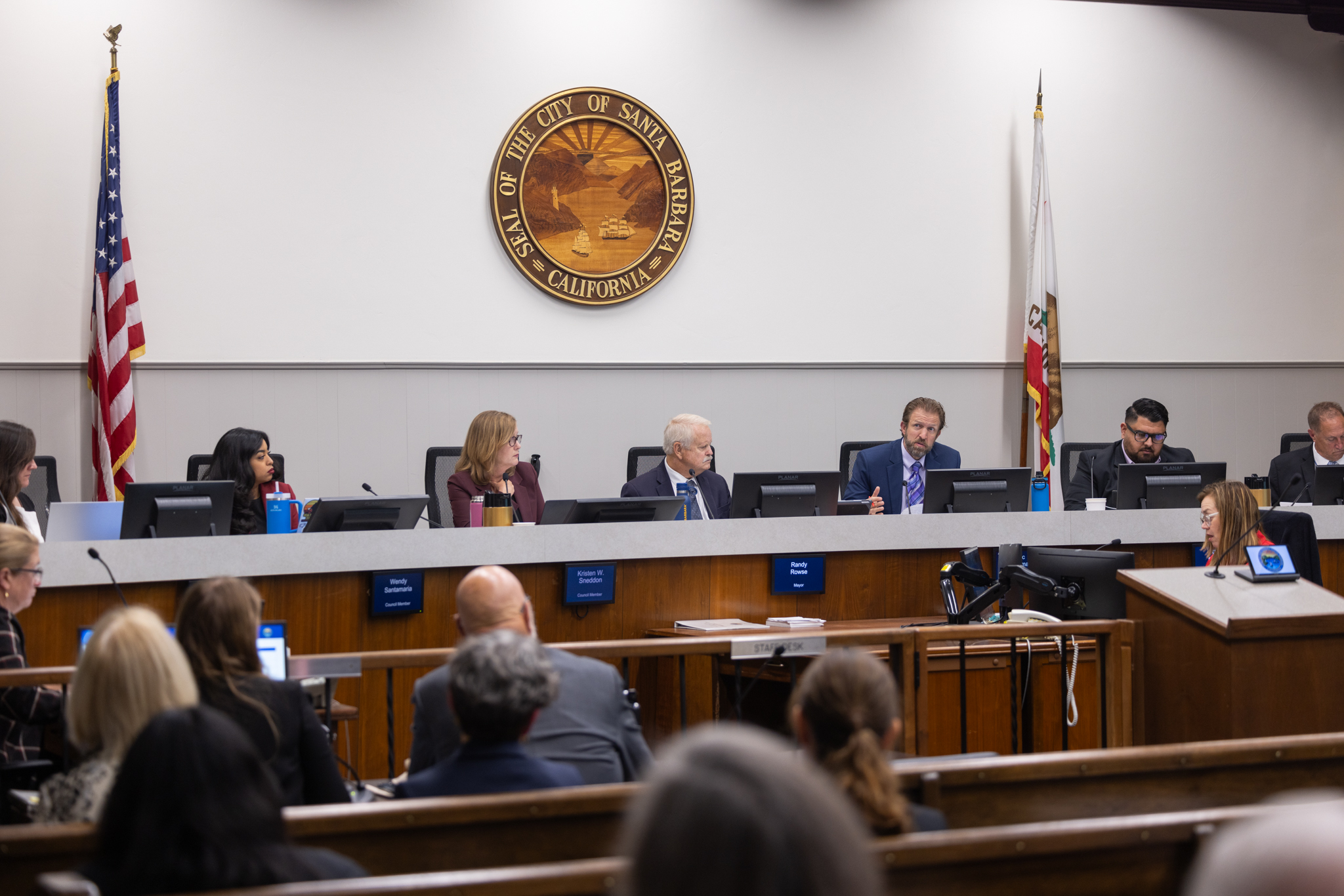
Last week, the Santa Barbara City Council approved a plan that expedites environmental review for its housing projects and programs.
The city needs new housing, and lots of it. Specifically, it needs to build 8,001 new units over eight years to meet its regional housing needs allocation. According to state data, the city is far behind its housing targets.
The city’s Housing Plan is meant to streamline the process. It includes 32 current and future programs to make the city’s housing goals — such as increasing affordable housing production — a reality, covering everything from short-term rentals to adaptive reuse and accessory dwelling units.
With a holistic environmental review, the city aims to save time in implementing these programs.
The City Council approved the final Housing Plan program environmental impact report (EIR) at its meeting on August 11 in a 5-1 vote, with Councilmember Kristen Sneddon voting against it and Councilmember Mike Jordan being absent from the meeting.
The EIR does not evaluate specific development projects. Instead, it serves as a sweeping environmental analysis on impacts related to implementing the city’s housing programs — namely, new construction and development.
During the public comment period for the Housing Plan EIR, residents raised concerns about potential impacts of construction and development on habitat and wildlife, historical resources, schools, transportation, and infrastructure.
However, the final EIR states that the plan’s overall impacts — i.e., from facilitating new residential and mixed-use development — would be negligible in many cases or can be significantly reduced with proper mitigation measures, such as protections for creeks and woodland and a construction noise management plan. Those measures would need to be applied to any applicable housing development that could result in environmental impacts.
Councilmember Sneddon still voted against the EIR, saying that she was “hesitant” to support an “overarching, holistic EIR that exempts things first and then goes back to projects.” She was dissatisfied with the scope, noting she would have liked to see it cover other areas such as waste management and how schools would accommodate new residents.
“Even though I can see what the streamlining ability would be,” she said, “I’m just hesitant to streamline too far.”
Councilmember Eric Friedman and City Administrator Kelly McAdoo both emphasized that the EIR covers mitigation without stalling housing production. If each individual housing program had to go through its own environmental review process, McAdoo noted, it would create additional expenses and administrative burdens for the city.
Even though the program is meant to streamline the city’s review process, the city maintains a right to subject projects to further review when necessary, such as if there are potential impacts outside of the scope of those analyzed in the EIR.
“We do need to keep an eye on a lot of these issues that development is causing, but at the same time, we’re either going to move forward with housing production where we need it in strategic areas and facilitate that, or we’re not,” Friedman said.
Related Posts




Premier Events

Wed, Oct 14
5:30 PM
Santa Barbara
Jodi House “Paint the Town Blue” Benefit for Brain Injury Awareness

Mon, Sep 28
5:30 PM
Santa Barbara
S.B. Independent: Santa Barbara City Council District 4 Forum

Tue, Sep 29
6:45 PM
Santa Barbara
Patti Zlaket Album Release Show at SOhO

Tue, Sep 29
7:00 PM
Santa Barbara
Birds of California’s Channel Islands – Lecture and Book Signing

Tue, Sep 29
7:30 PM
Santa Barbara
Marty Stewart and his Fabulous Superlatives

Wed, Sep 30
12:00 PM
Santa Barbara
Origins of Fashion in France: Zoom Lunch & Learn

Wed, Sep 30
5:30 PM
Santa Barbara
S.B. Independent: Santa Barbara City Mayoral Forum

Thu, Oct 01
10:00 AM
Solvang
Spirits of Solvang: Harvest, Haunts and Happenings

Thu, Oct 01
11:00 AM
Santa Barbara
In Studio: Julie Anderson Mathias

Thu, Oct 01
6:00 PM
Santa Barbara
Natural History of Mezcal and Agave Spirits

Thu, Oct 01
7:30 PM
Santa Barbara
Robert Plant with Saving Grace and Suzi Dian
Wed, Oct 14 5:30 PM
Santa Barbara
Jodi House “Paint the Town Blue” Benefit for Brain Injury Awareness
Mon, Sep 28 5:30 PM
Santa Barbara
S.B. Independent: Santa Barbara City Council District 4 Forum
Tue, Sep 29 6:45 PM
Santa Barbara
Patti Zlaket Album Release Show at SOhO
Tue, Sep 29 7:00 PM
Santa Barbara
Birds of California’s Channel Islands – Lecture and Book Signing
Tue, Sep 29 7:30 PM
Santa Barbara
Marty Stewart and his Fabulous Superlatives
Wed, Sep 30 12:00 PM
Santa Barbara
Origins of Fashion in France: Zoom Lunch & Learn
Wed, Sep 30 5:30 PM
Santa Barbara
S.B. Independent: Santa Barbara City Mayoral Forum
Thu, Oct 01 10:00 AM
Solvang
Spirits of Solvang: Harvest, Haunts and Happenings
Thu, Oct 01 11:00 AM
Santa Barbara
In Studio: Julie Anderson Mathias
Thu, Oct 01 6:00 PM
Santa Barbara
Natural History of Mezcal and Agave Spirits
Thu, Oct 01 7:30 PM
Santa Barbara

