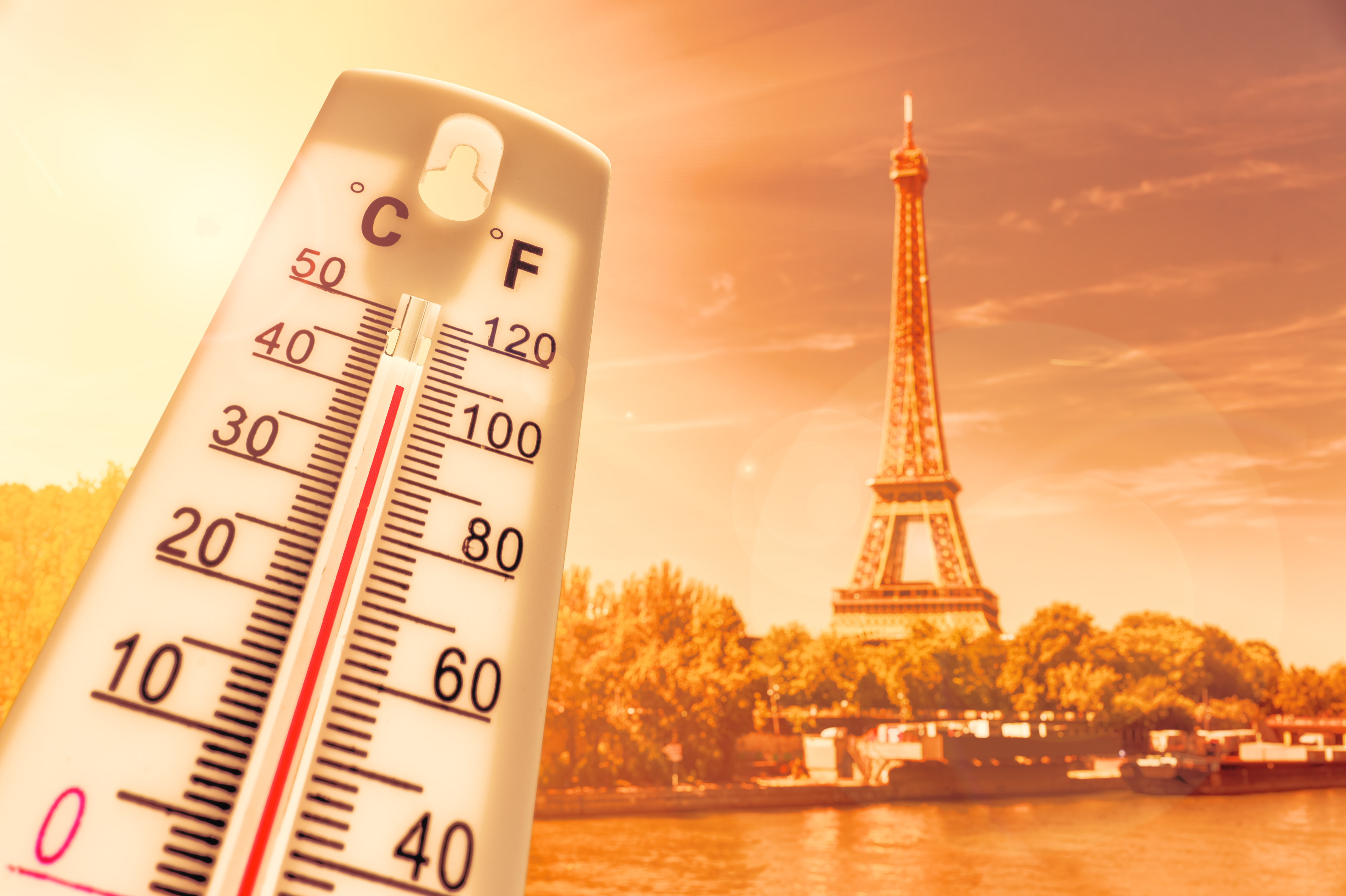
This summer has been blistering hot across Europe, accompanied by a spate of wildfires. Not surprisingly, these record heat waves are pushing people toward air-conditioning.
France, especially Paris, is embracing a different path, one seeking nature-based solutions. As far back as the 1990s, Paris started installing a district cooling system using a network of pipes to carry chilly Seine River water. The initial phase was 75 miles of pipe delivering chilled water to museums, hospitals, schools, and offices. Before this water flows back into the river, it is re-cooled via a heat exchanger where the chilled inlet water runs beside the outlet pipes. Cooling this warm water before it reenters the Seine protects the river’s aquatic ecosystems.
The system is now being tripled in scope to reach every arrondissement of the city. This expanded infrastructure will reach 3,000 buildings including luxury hotels, office buildings, daycare centers, and retirement homes. Data shows that district cooling has a much higher energy and environmental performance than individual cooling units. It is expected that many of the 2.1 million residents of central Paris will be dissuaded from buying AC units.
After the extreme heat wave of 2003, France set up a nationwide red heat warning system. Misting systems for cooling people and the surrounding air have been installed in many parks and squares. More than 1,200 public drinking fountains have been added in Paris in the past few years.
Another initiative is the city’s interlinked network of cool “islands.” These islands are 800 accessible cool spaces such as parks, mini-forests, swimming pools, and museums. They are linked by naturally cooled paths and walkways. The strategy is to have one of these places within a seven-minute walk for every resident. The data shows a decrease in temperature of four to eight degrees Fahrenheit compared to surrounding areas.
Addressing heat extremes in Paris is part of larger efforts to cut carbon emissions by 40 percent within 10 years and make the city more livable. Walking and biking are gaining priority. Sixty thousand street parking spaces have been removed and planted with thousands of canopy trees. Thousands more have been added at curbsides for shade and storm water absorption. The banks of the Seine are being transformed into social hubs with newly added parks, makeshift beaches, and floating pools on the river.
The iconic rooftops that define Paris are increasingly acting as heat traps. The city is struggling with the dilemma of architectural preservation and thermal livability. Thus far, there have only been pilot projects under the city’s cool roof program, trying out reflective coatings, vegetation-covered green roofs or rooftop terraces, and better roof insulation. The results are impressive, some turning zinc “ovens” into top-floor apartments that are 32 degrees F. cooler. Other European cities are watching how this preservation-adaption contest plays out in Paris.