
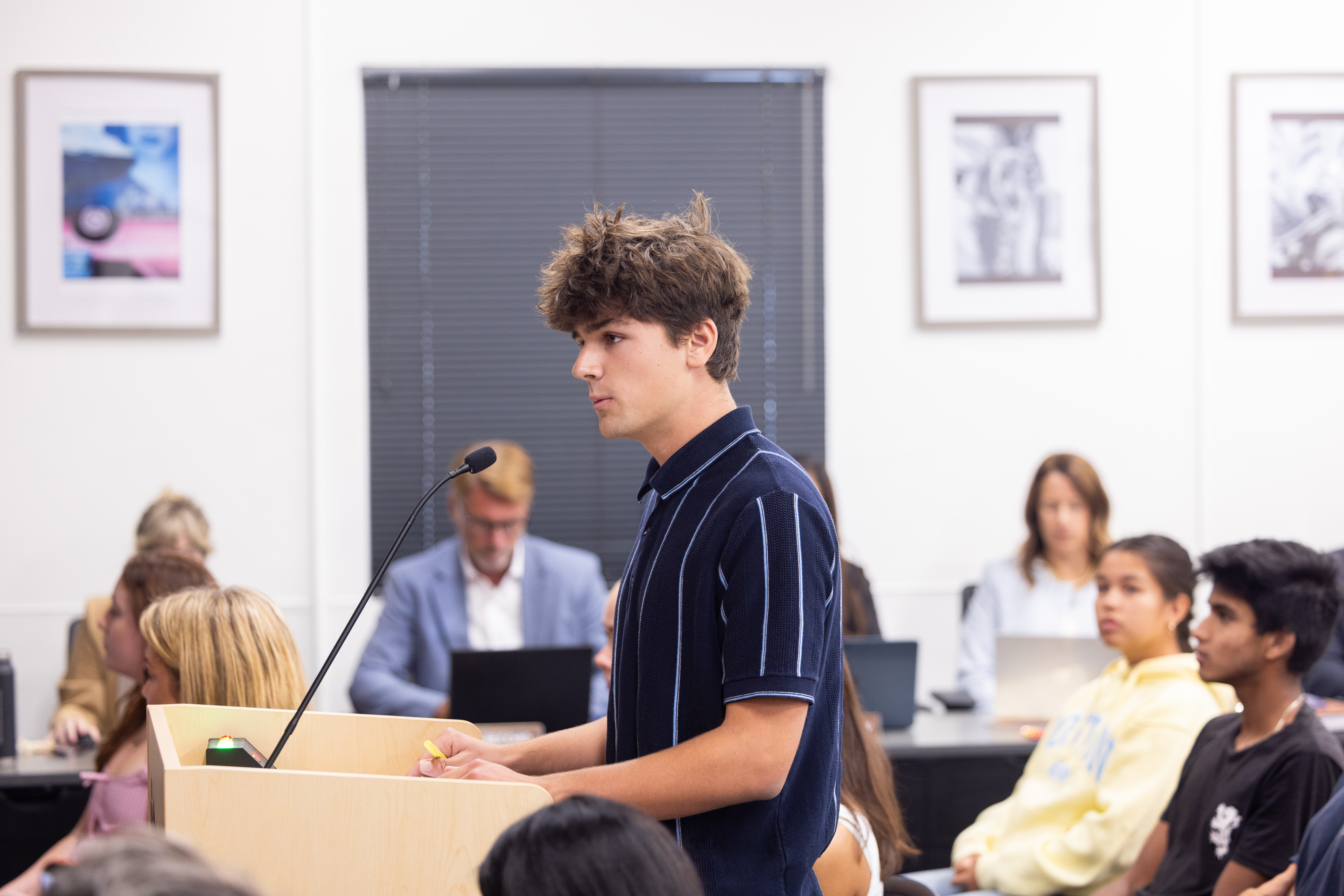
High school students in the Santa Barbara Unified School District are angry due to newly placed restrictions on YouTube and personal devices.
Overall, Mateo Gallegos, a San Marcos High School student, said students understand the complexity of the issue — they are navigating a tech-dominated landscape where device use and social media have been linked to harm and addiction.
But the district’s restrictions are limiting access to creative and educational tools, he said.
Gallegos, in collaboration with student leaders from Santa Barbara and Dos Pueblos high schools, conducted a survey of more than 1,700 students from all three high schools to gauge their perspectives on the YouTube ban and other tech regulations.
“Their responses echoed a similar, unifying message of discontent,” he said.
Of those students, 73 percent described their experience accessing online educational materials as “difficult,” 85 percent said the YouTube ban was “negatively impacting their ability to study, complete assignments, and understand class materials,” and 83 percent said they were only somewhat or not informed about the district’s new “Tech with Intent” policies.
“Only 16.1 percent of students were well-informed,” he said. “If I ever scored 16.1 percent on a test, it would mean I had failed.”
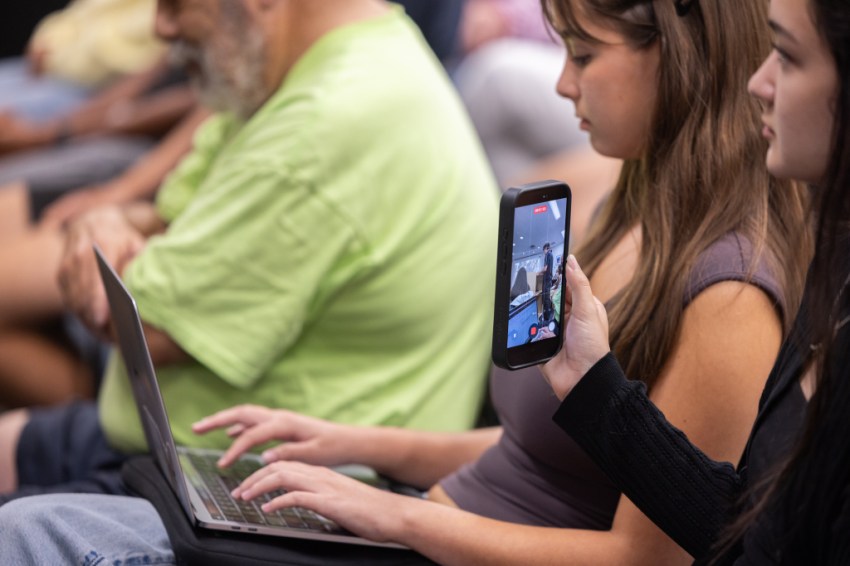
Tech with Intent policies were championed by parents, urging the district to move away from a tech-centered curriculum and heavy device use in the classroom. They cited harm to their children’s development, safety, learning, self-confidence, mental health, and behavior.
Over-reliance on devices is linked to lower test scores due to less “friction” required to learn, with tech accused of replacing critical thinking; declining mental health among students exposed to harmful and addictive content on social media; and concerns around data privacy, to name a few.
Students were reported using their school-issued devices to spend hours scrolling through YouTube at night, watch noneducational videos during the school day, and play video games.
In response, the district’s policies include strictly limiting personal device use (including cellphones and laptops) during the school day, reducing use of school-issued iPads, and banning YouTube and other Google Services at the high schools.
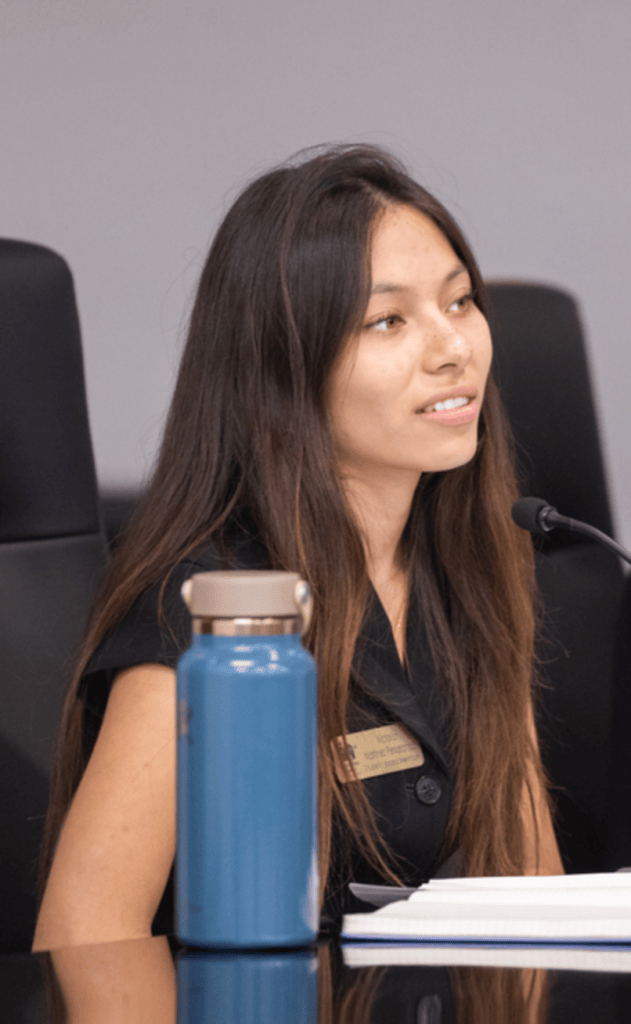
Student boardmember Victoria Martinez Peñaranda said she worked on gathering student input herself and received mixed reviews about the district’s tech policies.
Devices had been a “big distraction” in non-advanced classes, she reported, which has improved since, while others described using devices as “learning tools.”
“Students recognize that social media and unrestricted access to technology can cause real harm,” she said. “However, many believe that the district has already taken meaningful action and some are concerned about how additional restrictions could affect learning.”
Students with accommodations often “struggle silently,” she added, and advocating for necessary tools can “itself become a barrier.” She hopes that students with learning disabilities, students from lower socioeconomic backgrounds, and families new to the district “do not fall through the cracks with new restrictions.”
For students, it seems the YouTube ban was the straw that broke the camel’s back.
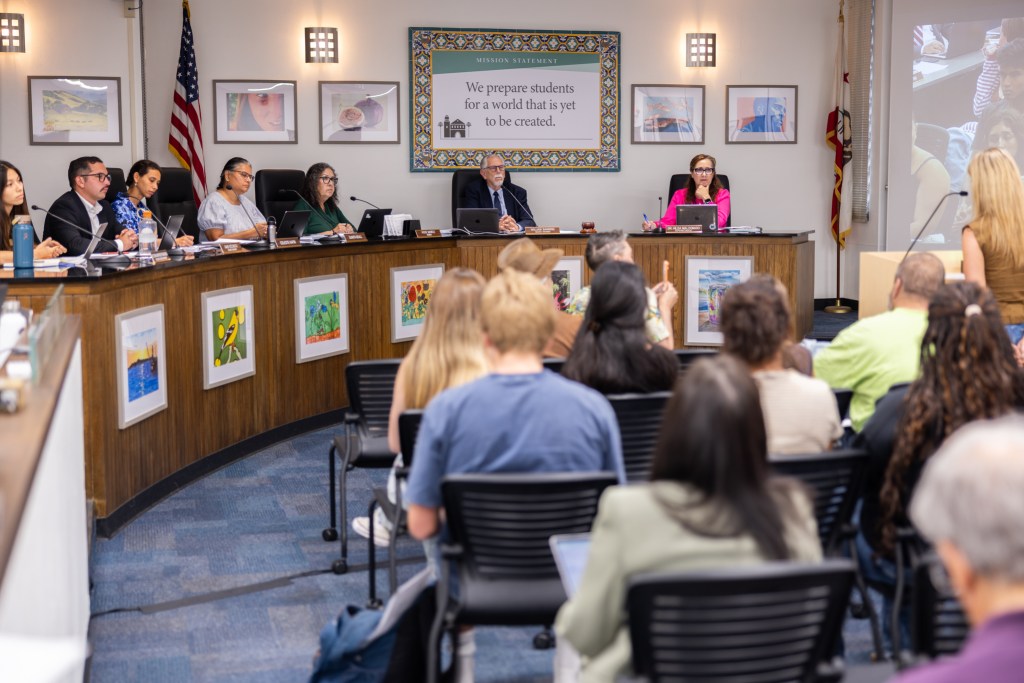
At Tuesday night’s school board meeting, students packed the board room to air their grievances. They said many students surveyed were unaware of the policies being implemented, and now face disproportionate learning challenges without educational videos.
Students lined up at the podium to read student responses to the survey.
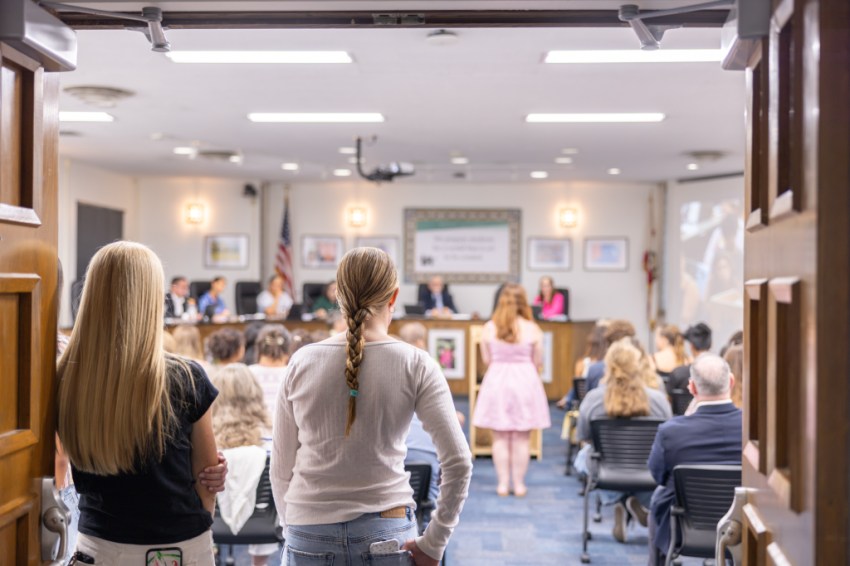
For some students, YouTube is the tutor they cannot afford, said one. Theater students cannot access their vocal tracks or research characters, said another. Others claimed that students with learning disabilities have lost helpful online tools that made learning less frustrating.
“We can’t even watch DP News,” Dos Pueblos’s student news broadcast, students reported.
“What if a school-issued iPad was the only piece of technology a student had access to?” student Emilio Gonzalez asked.
“Santa Barbara is one of the wealthiest counties in California, but also has one of the highest poverty rates in the state,” Gonzalez said, noting disparities in access to academic support. Tutors, he noted, can cost thousands of dollars, “while we live in a city where some parents struggle to put food on the table.”
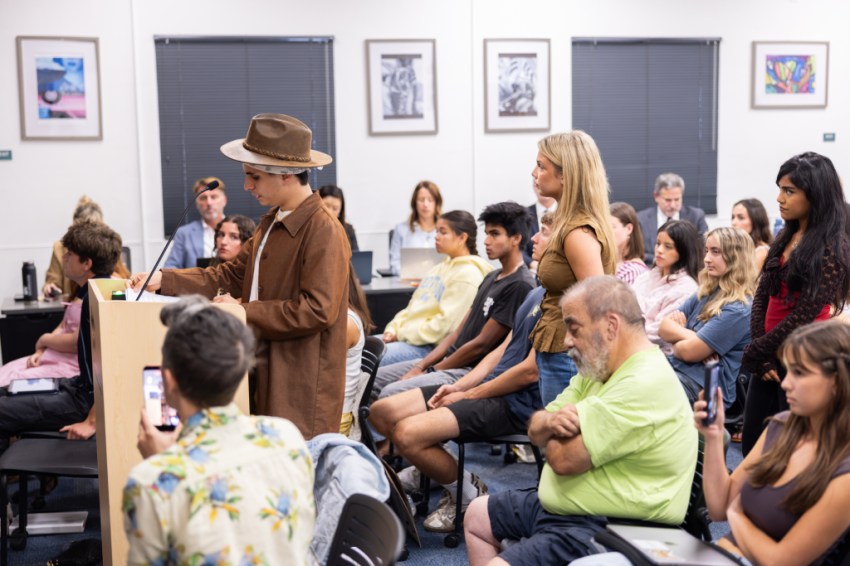
One student from San Marcos reported, “As someone who has dyslexia, I heavily rely on YouTube videos for my classes that require a lot of reading. I now only have access to textbooks that take hours for me to read and which I struggle to comprehend. The ban on YouTube and additional websites makes it harder for me to learn.”
Students are allowed to request access to helpful educational videos, but around 40 percent reported not doing so. From an educator’s perspective, teacher Joel Block said that it can get a little “byzantine” to upload YouTube videos onto Canvas — the way students are allowed to access them — and called the process “cumbersome.”
Santa Barbara Teachers Association President York Shingle said that “student voices should not be relegated to public comment.”
Boardmember Sunita Beall said “including the student voice in what we do as a district is very important,” adding that, while they have taken steps, “clearly, we have a lot of work to do to include the student voice.”
She acknowledged that students used YouTube for learning and said it was difficult to hear that such a low percentage of students seemed aware of the changes.
“But,” she continued, “the question we have to ask is, ‘What is the acceptable risk to our students?’ because there is no risk assumed by these [tech] companies in exposing our students…. How much risk are we willing to expose our students to in the name of education?”
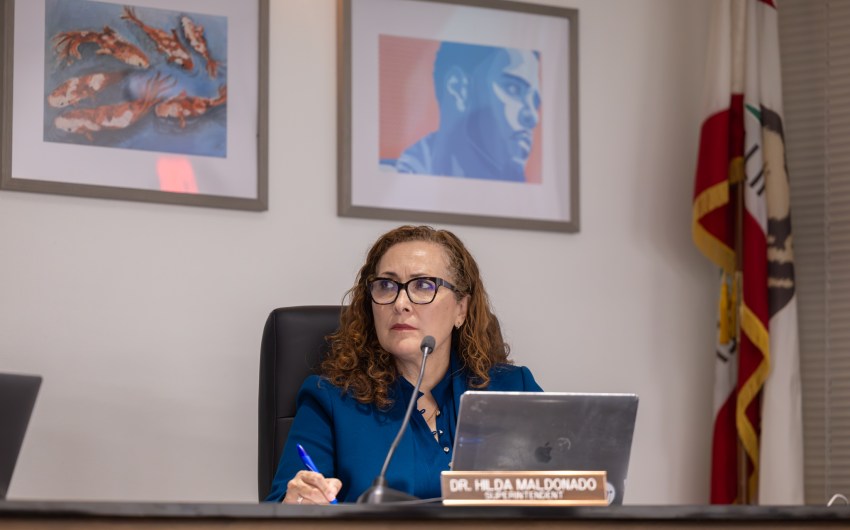
Boardmember William Banning said that the board has made meaningful attempts to engage with students, including meeting one-on-one with Gallegos. Superintendent Hilda Maldonado added that they “champion” Gallego’s efforts and want him to engage with their student advisory council, a meeting for which was scheduled on Wednesday.
“I want to make it clear that we encouraged him to participate with our student boardmember and look into options that would have allowed something other than just us listening,” Banning said. “We had a great conversation with him, and I think we will have more opportunities to do that later on … we’d love to work it out for the board to be involved in the conversation.”
In response to the students’ concerns, district spokesperson Ed Zuchelli provided the following statement:
“Santa Barbara Unified values student voice and welcomes the feedback students are bringing forward as part of our Tech with Intent Initiative,” he said.
“Student input has been an important part of this work, and hearing directly from students helps us understand how district decisions like technology use affect their learning and school experience.”
He said district staff will review the students’ feedback as they “continue working to ensure that technology is used safely, intentionally, and effectively to support student learning. We will continually strive to improve our efforts to reach all students.”
Related Posts



Premier Events

Sat, Oct 24
2:00 PM
Santa Barbara
Japanese Sacred Architecture: Shinto and Buddhism
Sat, Oct 24
10:30 AM
Santa Barbara
Picnic in the Cemetery: A Live Historical Event
Sat, Oct 24
11:00 AM
Goleta
2nd Annual Charger Cup to Benefit DP High Golfers

Sat, Oct 24
12:00 PM
Santa Barbara
Makers Hive Market
Sat, Oct 24
2:00 PM
Santa Barbara
Japanese Sacred Architecture: Shinto and Buddhism

Sat, Oct 24
2:00 PM
Santa Barbara
Thriller 2026 – Get Scary for Charity!

Sat, Oct 24
3:00 PM
Santa Barbara
Downtown Santa Barbara Trick-or-Treat

Sat, Oct 24
5:00 PM
Santa Barbara
15th Annual DSASBC Halloween Hoedown

Sat, Oct 24
5:30 PM
Solvang
Solvang Haunted House and Street Fair
Sat, Oct 24
7:00 PM
Santa Barbara
Anima: Theater of the Feminine Underground
Sun, Oct 25
11:00 AM
Santa Barbara
Free Family Day: Día de los Muertos
Sat, Oct 24 2:00 PM
Santa Barbara
Japanese Sacred Architecture: Shinto and Buddhism
Sat, Oct 24 10:30 AM
Santa Barbara
Picnic in the Cemetery: A Live Historical Event
Sat, Oct 24 11:00 AM
Goleta
2nd Annual Charger Cup to Benefit DP High Golfers
Sat, Oct 24 12:00 PM
Santa Barbara
Makers Hive Market
Sat, Oct 24 2:00 PM
Santa Barbara
Japanese Sacred Architecture: Shinto and Buddhism
Sat, Oct 24 2:00 PM
Santa Barbara
Thriller 2026 – Get Scary for Charity!
Sat, Oct 24 3:00 PM
Santa Barbara
Downtown Santa Barbara Trick-or-Treat
Sat, Oct 24 5:00 PM
Santa Barbara
15th Annual DSASBC Halloween Hoedown
Sat, Oct 24 5:30 PM
Solvang
Solvang Haunted House and Street Fair
Sat, Oct 24 7:00 PM
Santa Barbara
Anima: Theater of the Feminine Underground
Sun, Oct 25 11:00 AM
Santa Barbara


You must be logged in to post a comment.