

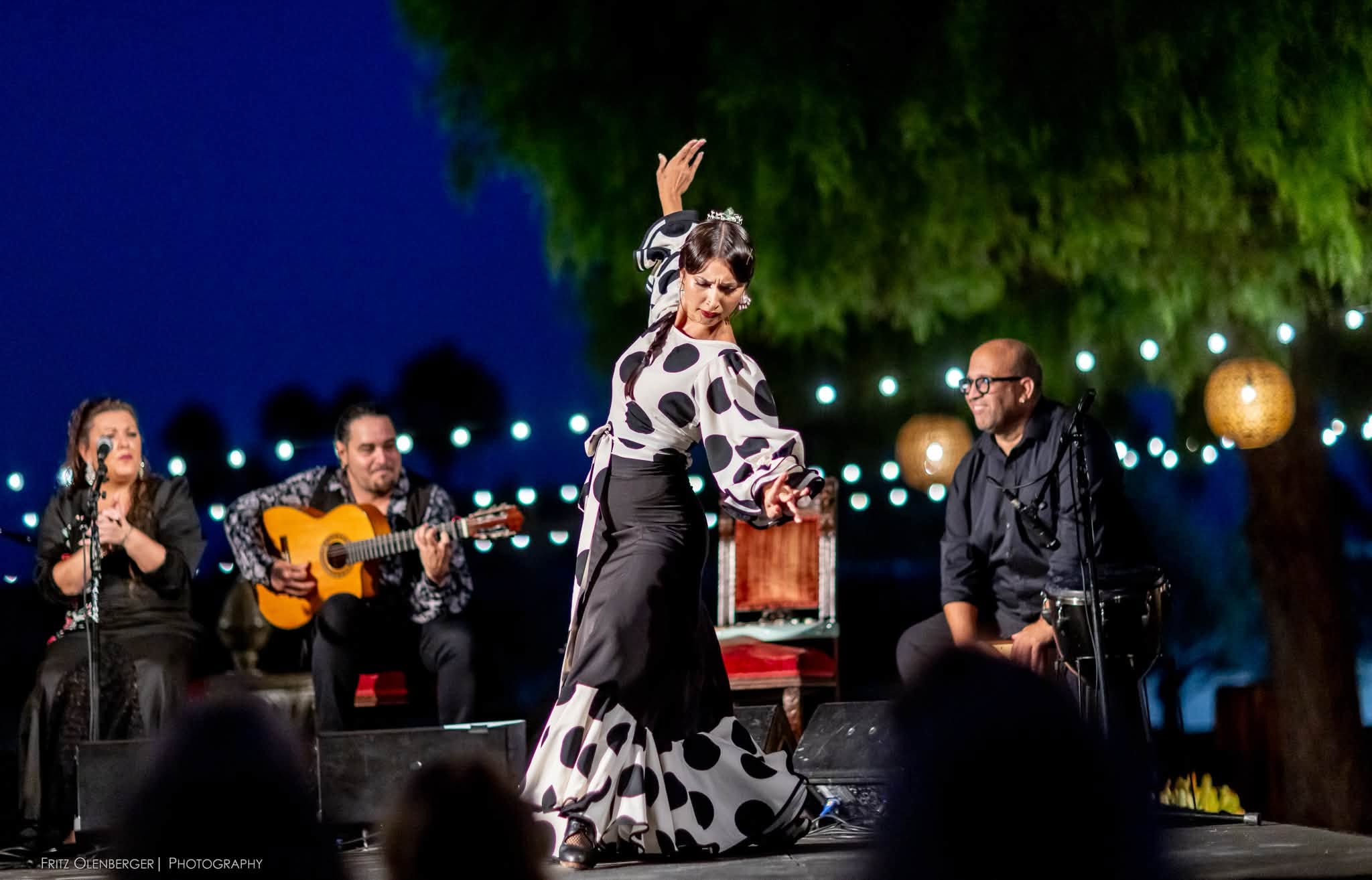
The universality of flamenco was powerfully realized by the spectacular bouquet of international artists who performed together at Convivencias on September 9, in the beautiful plaza of the Santa Barbara Historical Museum.
Maestra Maria “La Chacha” Bermúdez, Artistic Director of ¡Flamenco! Santa Barbara, who lived in Jerez de la Frontera, the birthplace of flamenco, for over three decades, described how she birthed the idea for this concert: “I had a vision of bringing these specific artists from Spain and the U.S. together in one show. It was quite a monster challenge because of logistics, but thanks to technology and individual dedication to the project, we pulled it together magically, and [I] saw my vision fulfilled.”
Fourteen artists from both sides of the Atlantic created a most inspiring and captivating evening.
First – the music. Unlike western dance styles such as ballet and contemporary, which can express their stories in any music a choreographer chooses, flamenco is defined by its unique music, which tells the story of the collective struggles and joys of the Gitano People in Andalucía. As Bermúdez said, “Cante (song) is the base of flamenco, which is pain, manifest through the voice and heart.”
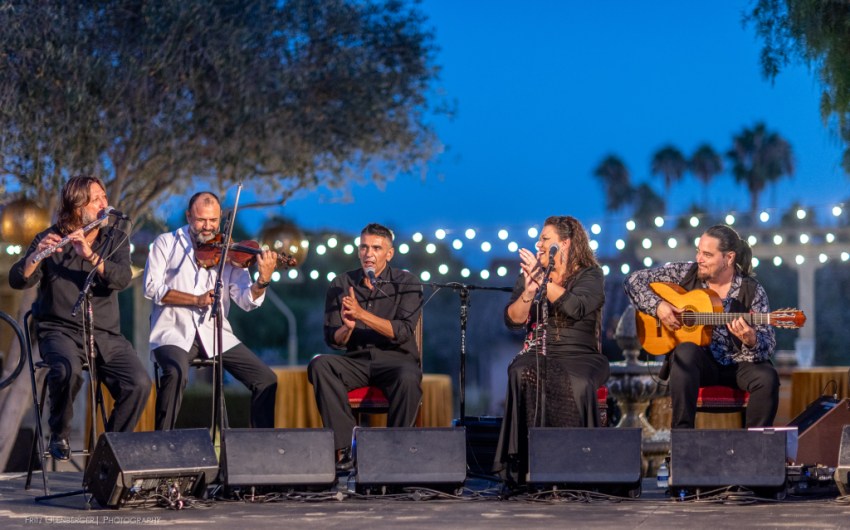
One could not get any higher in the world of flamenco music than the cuadro assembled by Bermúdez for Convivencias. Starting from stage right were the internationally-acclaimed Juan Parrrilla (flute) and Bernardo Parrilla (violin) from the legendary Parrilla family of Jerez. Next to them were the powerful singers Ismael Fernandez from the famous Familia Fernández of Sevilla and Carmen Grilo from Jerez. Next to Grilo was our own Latin-Grammy-nominated Andrés Vadín (guitar), and to his left Manu Hernandez, son of Juan Parrilla, playing electric guitar. Finally, 12-times-nominated, 2010 Latin-Grammy-winner Diego “El Negro” Álvarez playing cajon and djembe. At times it seemed like Álvarez, Vadín, and Hernandez were having their own party on stage! When they glanced at each other with a subtle wink and a nod, you just knew they were communicating in a profound language that transcends words, and it was a privilege for the audience to be part of their conversation.
“It’s always a joy to work with artists who love their profession. Everything just flows and evolves into a symbiosis of artistic connection. Even though some of the artists met for the first time in this show, it felt as though we’ve all been one forever,” said Bermúdez.
The show opened with a lively Bulerías, introducing each artist, presaging the virtuosity of the performances to come.
The first soloist to take the stage was the graceful Talia Vestal, dancing Tarantos, a slow, solemn palo, which is said to have originated with the Gitano miners of Almería and Murcia. A Santa Barbara native, Vestal is now a professional flamenco dancer living in Sevilla, home for the summer to perform and coach the professional trainees at Timo Nuñez Arte Flamenco.
“One thing to note about this show,” commented Jack “Joaquin” Harwood afterward, “is that all the pieces the dancers chose were among the oldest, most heavy flamenco palos.”
Flamenco music can be divided into cante jondo and cante chico . Cante jondo is the deepest, oldest, most serious form, closely linked to the suffering and marginalization of the Romani people. Spanish poet Federico García Lorca called canto jondo the most primitive music of all Europe. Cante chico is the lighter, more festive style. Aside from the opening and closing Bulerías, all the solos were in the cante jondo style, the most difficult to perform.
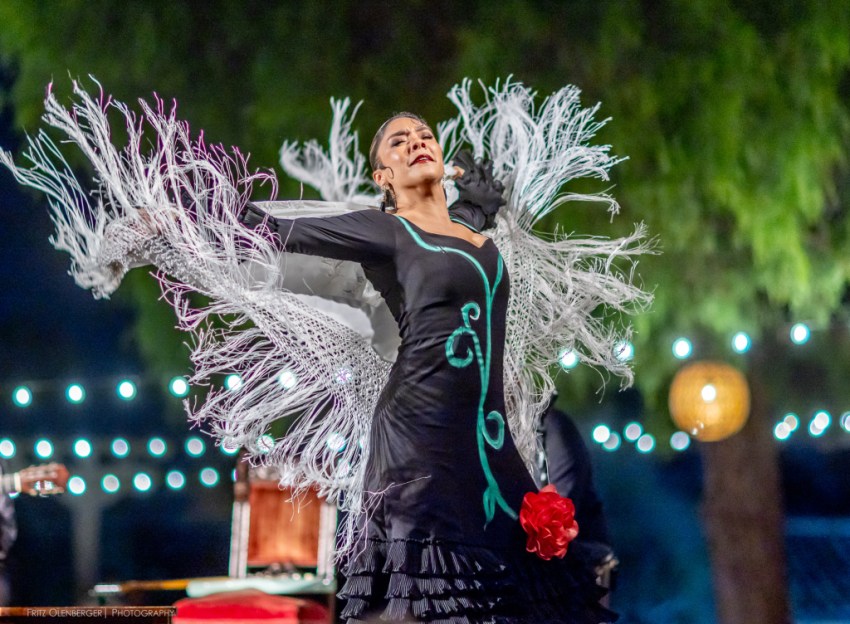
Ysabella Yturalde and Sabrina Ibarra performed a dramatic Caña, choreographed by Timo Nuñez. Caña, one of the oldest and most solemn flamenco cantes, has a unique set of “ayes,” vocal progressions that are characteristic of this cante. Sung in harmony by Grilo and Fernandez, they gave the audience chills on that warm night. Following a slow introduction, Ibarra and Yturalde wielded large mantones in perfect synchronicity, their slow, measured movements alternating with fast precise footwork.

Our own dance legend Timo Nuñez performed a very technical Martinete. Known as a palo seco (acapella), martinetes originated in the forges of the Gitanos of Andalucia. Once danced to the sounds of hammers on anvils, martinetes express themes of hardship, persecution and imprisonment. Nuñez performed his passionate, spectacular footwork accompanied by Álvarez and the singers. The surprise was a flaming-hot duet in which Grilo got up and sang to Nuñez “up close and personal,” and he danced only for her.
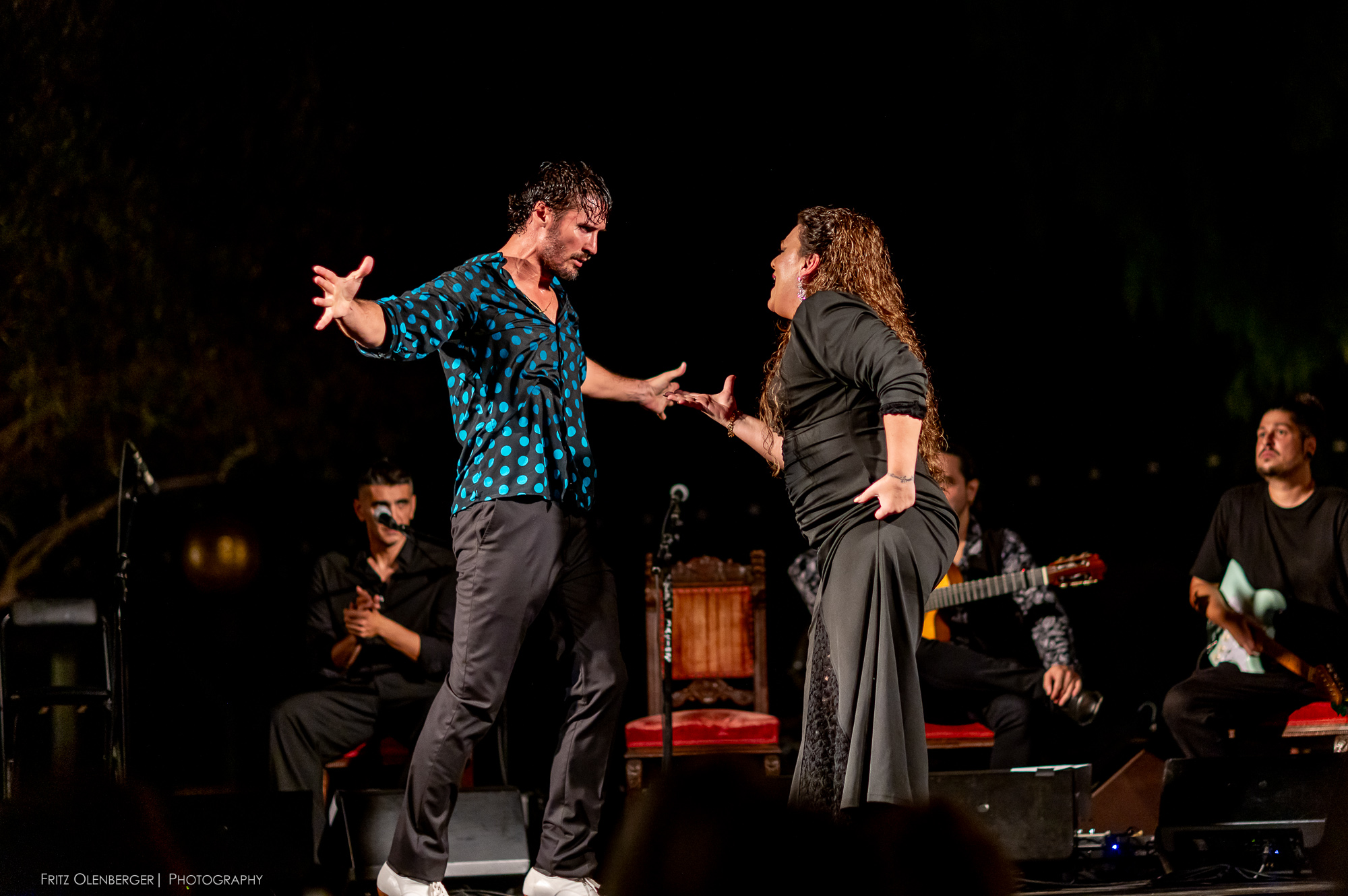
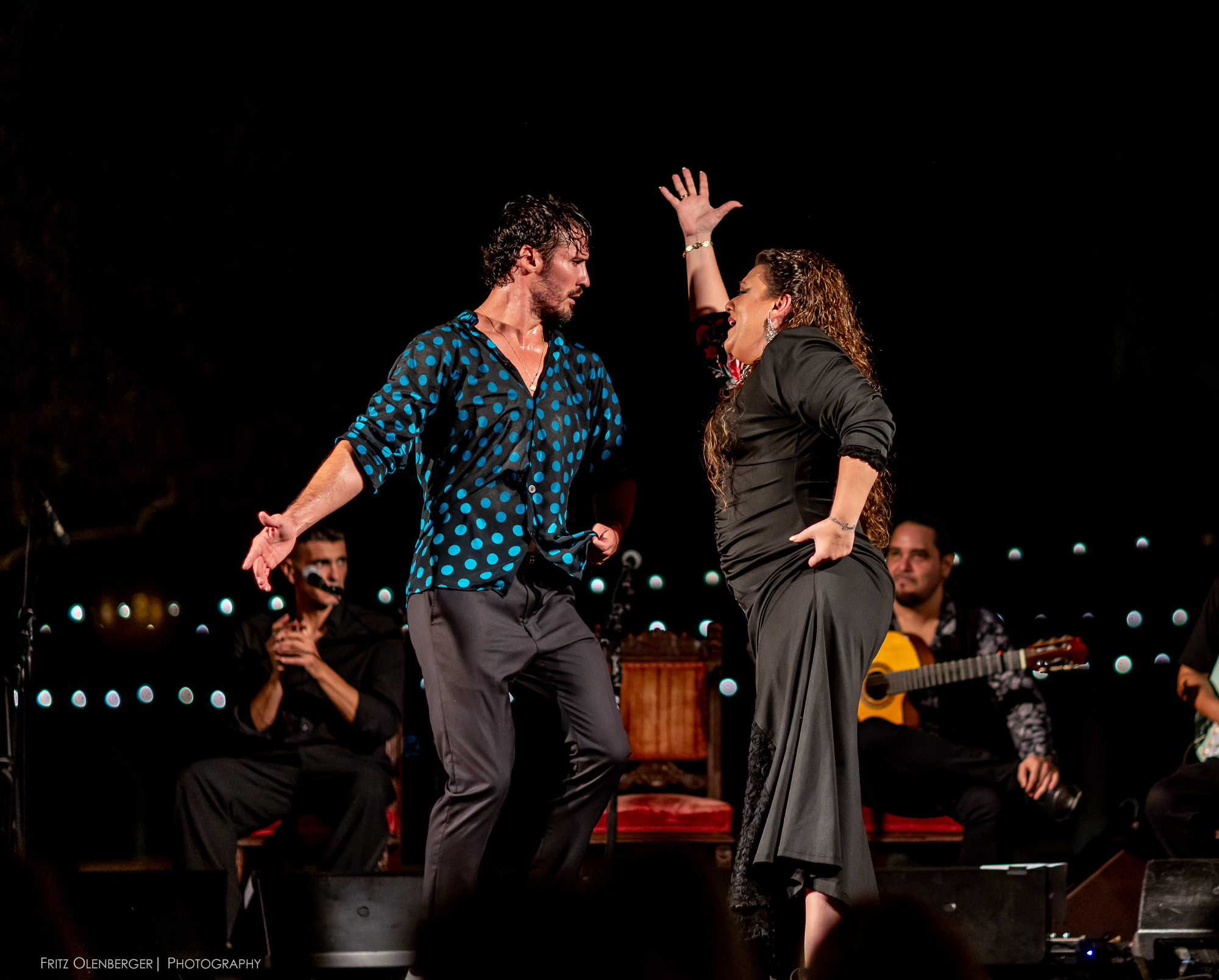
Timo Nuñez with Carmen Grilo. | Photo: Fritz Olenberger
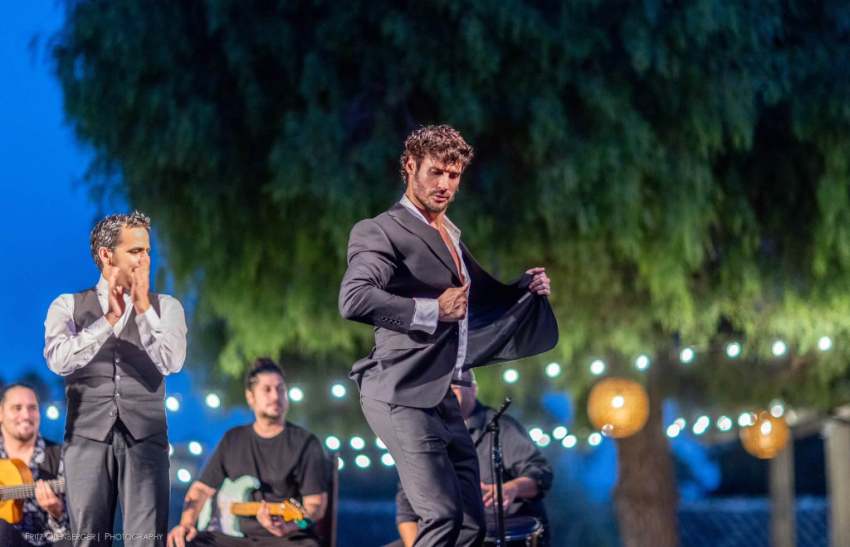
Carlos Menchaca, from New Mexico, danced Seguiriyas. Seguiriyas expresses grief, loss, betrayal, and despair — themes that followed the Roma people through their centuries of migrations and persecution. Menchaca alternated slow, spiral movements, in which one could see the energy building in his body like a cobra slowly rising, with explosively fast footwork. A dance professor at the College of Fine Arts of the University of New Mexico, he is a highly sought-after performer.
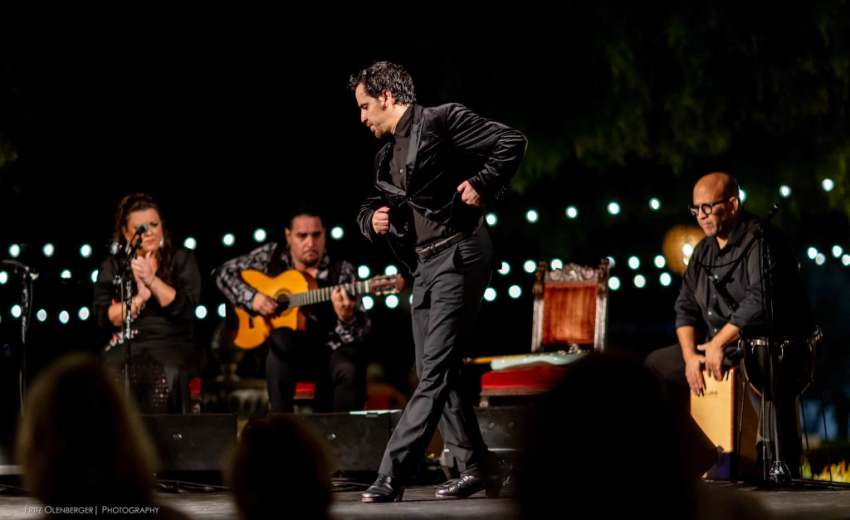
Then, providing a cheerful musical interlude, the musicians performed an original composition by flautist Juan Parrilla called “Farruca Escalarta.” Later, I asked Vadín about this piece. He described it as “Juan’s original composition, with some Piazolla flavor.”
The fiery Nino de los Reyes performed Solea por Bulerias, slow and solemn, punctuated with explosively fast taconeo and turns. A dance professor at the Boston Conservatory at Berklee and son of the legendary dancer Ramon de los Reyes of Madrid, de los Reyes is the first dancer to win a Grammy for his contribution as a flamenco dancer to Chick Corea’s 2020 album Antidote.
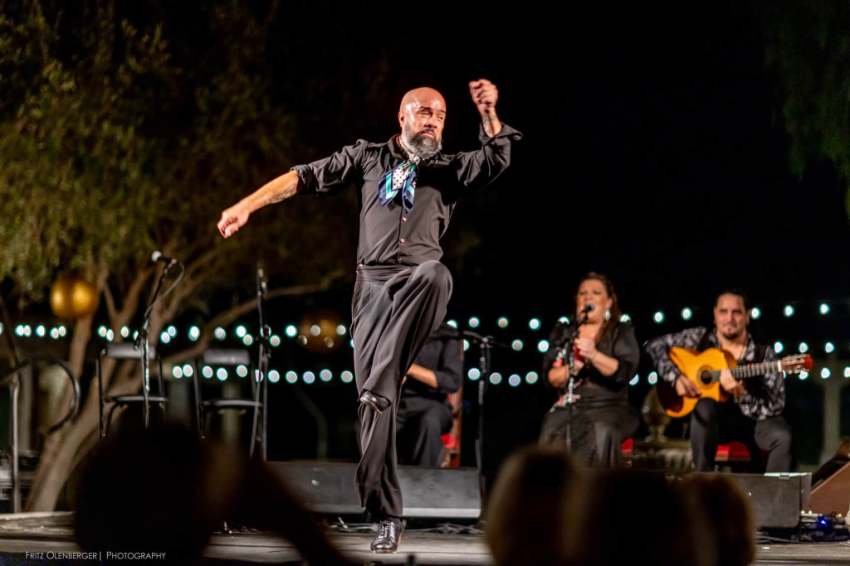
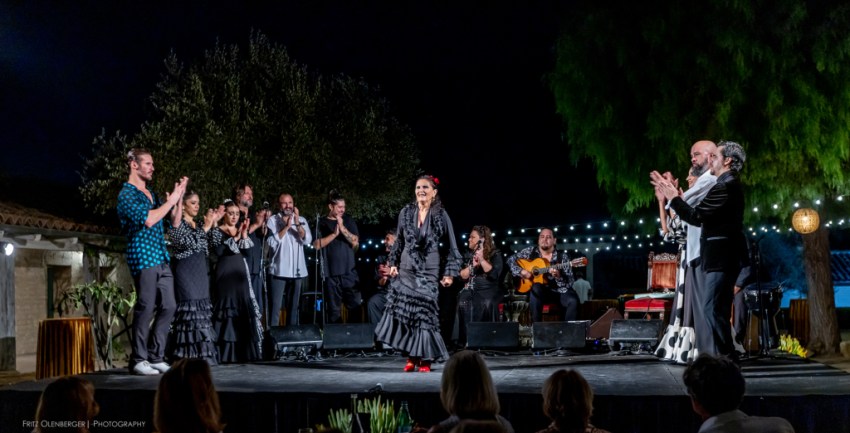
Finally, the Queen of the evening, María “La Chacha” Bermúdez, performed Soleá. Soleá is often described as a foundational or “mother” form because so many other flamenco palos relate to it, a fitting finale for the show that Bermúdez created. Her power, control, and duende are unsurpassed. After her solo, she invited the rest of the dancers back to the stage for a joyous Bulerías finale.
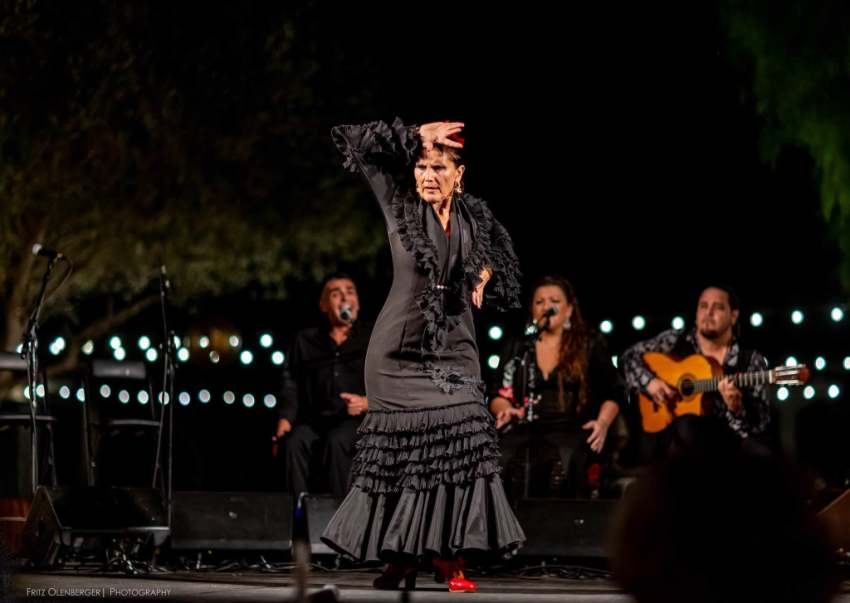
Wow, what a show! I asked Bermúdez if she planned to have more concerts like this one. “We’re on it,” she said. “This show is one I would love to see on tour. The variety and level of excellence in each and every one of the performers is worthy of showcasing to aficionados of flamenco and beyond. There is something to fall in love with at any given moment in this performance, something to move you to your core and to connect us all in community, in Convivencias.”
To find out about future concerts, see flamencosb.org.
Related Posts

Premier Events
Sat, Oct 17
9:00 AM
Santa Barbara
Mesa Harmony Garden Fall Plant Sale Continues…
Sat, Oct 17
2:00 PM
Santa Barbara
A New America: Phoenix Rising- Conversation with Dr. James Tepfer
Fri, Oct 23
2:00 PM
Santa Barbara
Music & Meditation: Clarinetist Nancy Mathison & Pianist Antonio Artese
Sat, Oct 24
9:00 AM
Santa Barbara
Mesa Harmony Garden Fall Plant Sale Continues…

Sat, Oct 17
8:00 AM
Goleta
Isla Vista Elementary Rummage Sale Fundraiser

Sat, Oct 17
9:00 AM
Santa Barbara
No Kings: Vote Early Carpinteria
Sat, Oct 17
10:00 AM
Santa Barbara
No Kings: Vote Early Lompoc
Sat, Oct 17
12:00 PM
Santa Barbara
No Kings: Vote Early Rally S.B
Sat, Oct 17
1:30 PM
Santa Barbara
Screening of “Unseen” A Documentary and Q&A with Director Set Hernandez and Subject Pedro

Sat, Oct 17
2:00 PM
Santa Barbara
Halloween Costumes, Decorations Workshop & Games
Sat, Oct 17
3:00 PM
Montecito
Author Talk & Signing Lorenzo DeStefano ”The Magic Hour” Photography
Sat, Oct 17
5:00 PM
Santa Barbara
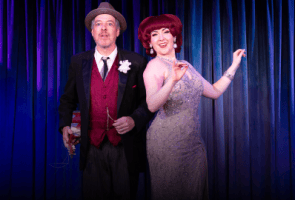
“Lucy Darling – All That and More”
Sun, Oct 18
9:00 AM
Santa Barbara
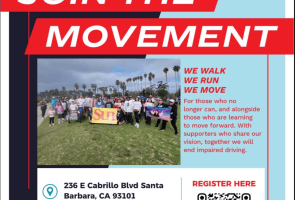
“Move with MADD” Santa Barbara 3K Community Walk & Fundraiser to Prevents Impaired Driving
Sun, Oct 18
11:00 AM
Santa Barbara
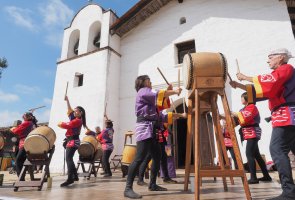
17th Annual Asian American Neighborhood Festival
Sat, Oct 17 9:00 AM
Santa Barbara
Mesa Harmony Garden Fall Plant Sale Continues…
Sat, Oct 17 2:00 PM
Santa Barbara
A New America: Phoenix Rising- Conversation with Dr. James Tepfer
Fri, Oct 23 2:00 PM
Santa Barbara
Music & Meditation: Clarinetist Nancy Mathison & Pianist Antonio Artese
Sat, Oct 24 9:00 AM
Santa Barbara
Mesa Harmony Garden Fall Plant Sale Continues…
Sat, Oct 17 8:00 AM
Goleta
Isla Vista Elementary Rummage Sale Fundraiser
Sat, Oct 17 9:00 AM
Santa Barbara
No Kings: Vote Early Carpinteria
Sat, Oct 17 10:00 AM
Santa Barbara
No Kings: Vote Early Lompoc
Sat, Oct 17 12:00 PM
Santa Barbara
No Kings: Vote Early Rally S.B
Sat, Oct 17 1:30 PM
Santa Barbara
Screening of “Unseen” A Documentary and Q&A with Director Set Hernandez and Subject Pedro
Sat, Oct 17 2:00 PM
Santa Barbara
Halloween Costumes, Decorations Workshop & Games
Sat, Oct 17 3:00 PM
Montecito
Author Talk & Signing Lorenzo DeStefano ”The Magic Hour” Photography
Sat, Oct 17 5:00 PM
Santa Barbara
“Lucy Darling – All That and More”
Sun, Oct 18 9:00 AM
Santa Barbara
“Move with MADD” Santa Barbara 3K Community Walk & Fundraiser to Prevents Impaired Driving
Sun, Oct 18 11:00 AM
Santa Barbara


You must be logged in to post a comment.