

The curtains are open as the audience arrives. Smoke emanating from what appears to be a cave fills the stage and theater. As the music starts, I discern a dark, shadowy figure standing on top of the cave, barely visible in the darkness. Below her, an orange glow begins to light the inside of the cave. The silhouette of another figure appears, standing at the mouth of the cave, her arms raised straight up, like Moses holding the 10 Commandments. The orange light intensifies, and we hear what sound like crackling noises. I wonder: Is it a fire? Is she being sacrificed?
According to the program, Akram Khan’s Thikra: A Night of Remembering tells the story of a tribe of women coming together to awaken the spirit of those who came before them. “The Matriarch, the elder and leader of the gathering, returns for one night of exchange. She understands the power of all its elements. Beside her stand two distinct forces: the Vessel and the Shaman — one who evokes and one who becomes the ritual conduit. Together they lead the tribe to summon their ancestor spirit from the Knowledge Rock.”
The setting is the ancient oasis of AlUla (al-Ula) in the northwest desert of present-day Saudi Arabia. Known for its giant sandstone formations with ancient carvings, and dwellings carved into the rocks, AlUla was a major crossroads along the incense trade route that connected India, the Persian Gulf and Europe for thousands of years. Thikra means “memory” in Arabic. According to the company website, “Thikra draws inspiration from AlUla’s ancient landscapes, mythology and cultural heritage to evoke the idea that without a past, there is no future.”
AlUla is now a major tourist destination, supported by the Saudi government. Thikra was commissioned by the AlUla Arts Festival, and was originally performed outdoors at Wadi AlFann, a 65 km2 area of AlUla, intended to be a global destination for art and cultural expression.
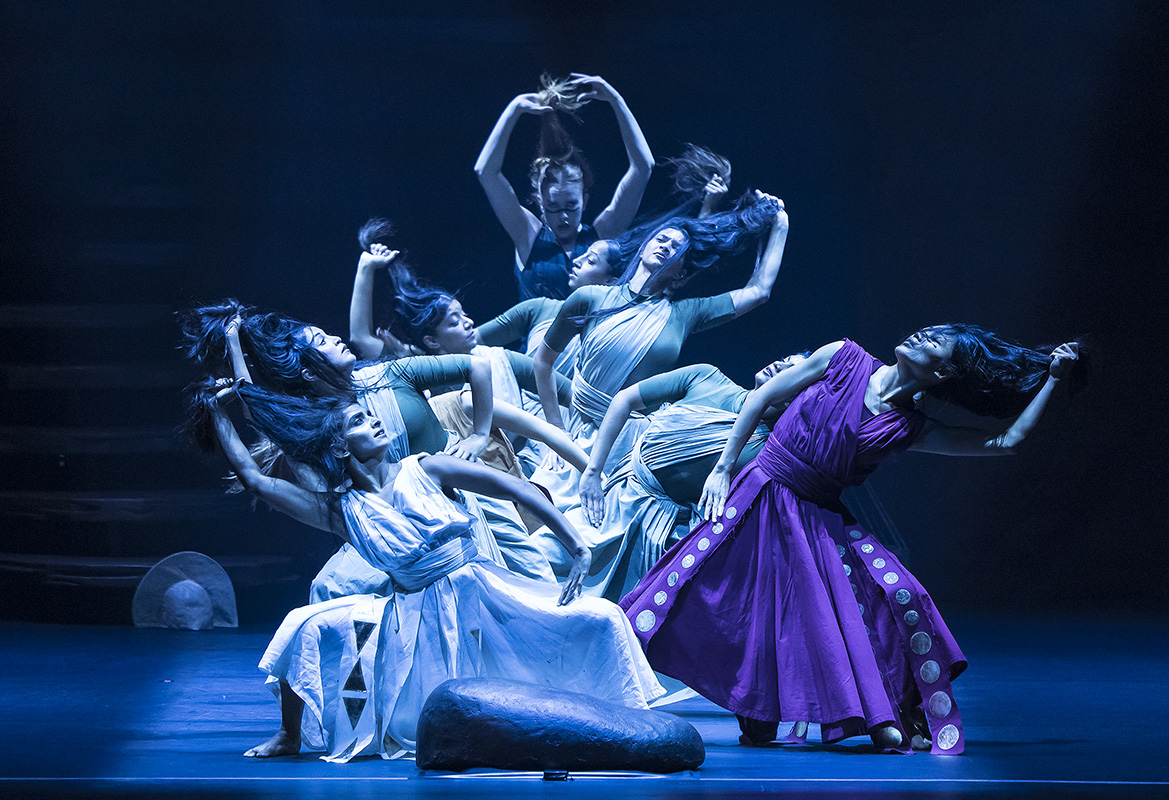
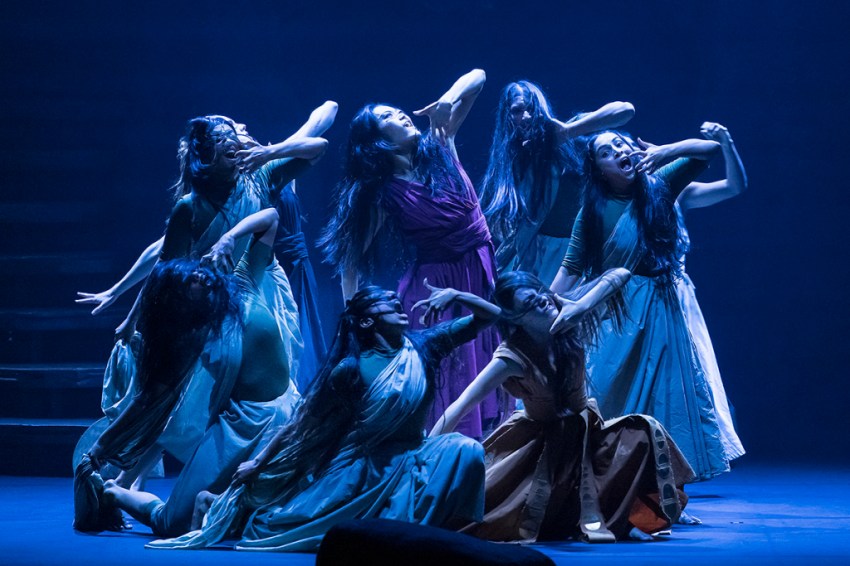
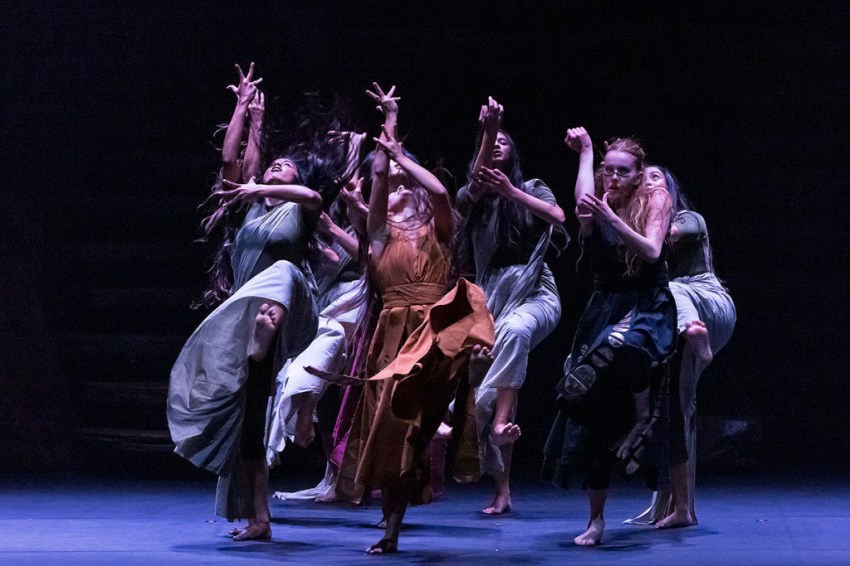
The rituals and memories performed by the all-female cast appear violent and frightening. My initial impressions were: a lot of writhing in agony; tossing hair, pulling hair, being choked by hair; beating the air, beating their chests, wildly gesticulating, silently screaming. The women seem to be in a lot of pain, with no relief.
But AlUla was a prosperous city, and the Nabataean women had wealth. With its sandstone formations and gargantuan rock carvings, AlUla today seems serene. So, why was Thikra so violent?
According to one reviewer, “the piece explores echoes of a colonized past.” Blue Pieta, the dramaturge who helped stage Thikra, wrote that the piece explores “epistemologies of the Global South … rooted in ancestral, ecological and pre-colonial world views.”
The mystery of Thikra is beginning to make sense. Colonialism equals violence, and throughout history, women’s bodies have been the locus of much cultural violence. I am reminded of works by our own stellar choreographer, Meredith Ventura, whose work explores female archetypes, including women who were tortured and martyred. Ventura asks, “How do we use women’s death to teach the hero a lesson?”
Khan’s choreography gives voice to women’s stories, grounded in both tradition and innovation.
After the cave scene, Khan introduces the beautifully-synchronized chorus of dancers. The Bulgarian folk song Gjura Beli Belo Platno, depicts a girl, Gjura, who is washing her white cloth in a river, when the rushing muddy waters sweep her cloth away. She laments, “Oh Mother, I have spent three years weaving that cloth!” Traditional Balkan songs are layered with meaning. The muddy water is a metaphor for the loss of maidenhood, loss of innocence, possibly a broken marriage (she lost her dowry), or other tragedy.
The song is in 5/8, meter, counted “quick-slow,” or “1-2 1-2-3,” with the second “1” getting the emphasis. This rhythm imitates the irregular sound of the human heart: “lub-Dub, lub-Dub.” On the last note of the refrain, each time the song repeats, all the dancers, in very-low plié, throw their long hair down in front of their bodies, covering their faces, momentarily touching the floor.
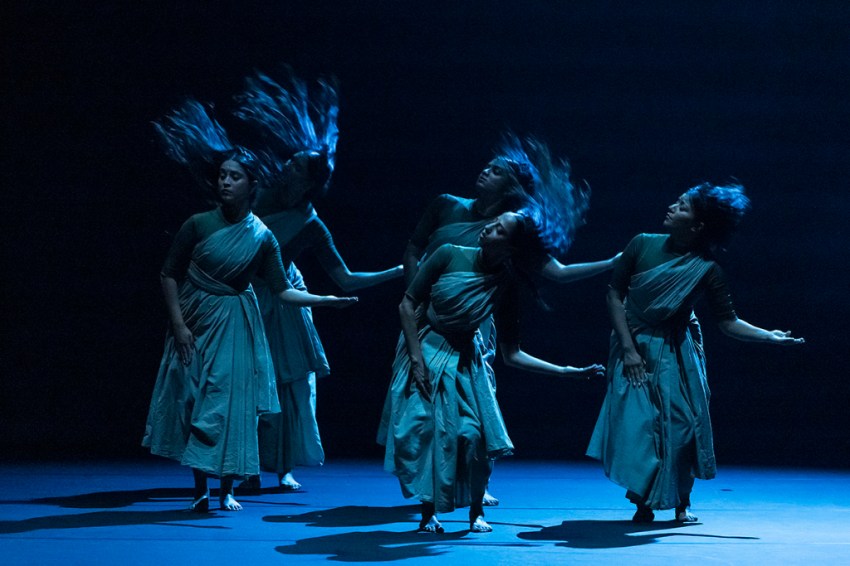
The hair tossing reminded me of the Khaleegy style of women’s communal hair-tossing from the Gulf region. In Thikra, Khan has taken the graceful, Khaleegy hair tossing to a level of almost-violence. Khan’s women whip their hair around, pull it, twist it around their own necks, and grab it by the fistful.
This piece definitely “pulsates with physical intensity and ancestral rage.” A slow-motion trailer on the Thikra website gives glimpses of the work.
The soundscape, created by Aditya Prakash, has been called haunting, resonant, and rhythmic, combining Arabic, South Indian, and Bulgarian music. I found that, for each haunting piece of music that drew me in, the sound became amplified almost to distortion, verging on painful (the ushers issued ear plugs!). After the Bulgarian beginning, I detected hints of South Indian and Arabic chants, but the melodies were overlain with loud, electronically-distorted drums, making the music difficult to follow.
The choreography was undoubtedly difficult, physically as well as emotionally. The dancers are extremely flexible, remaining in low stances for extended periods. Some of them arched up from lying on their backs without any assistance — a very difficult move. The dancing was definitely tour-de-force.
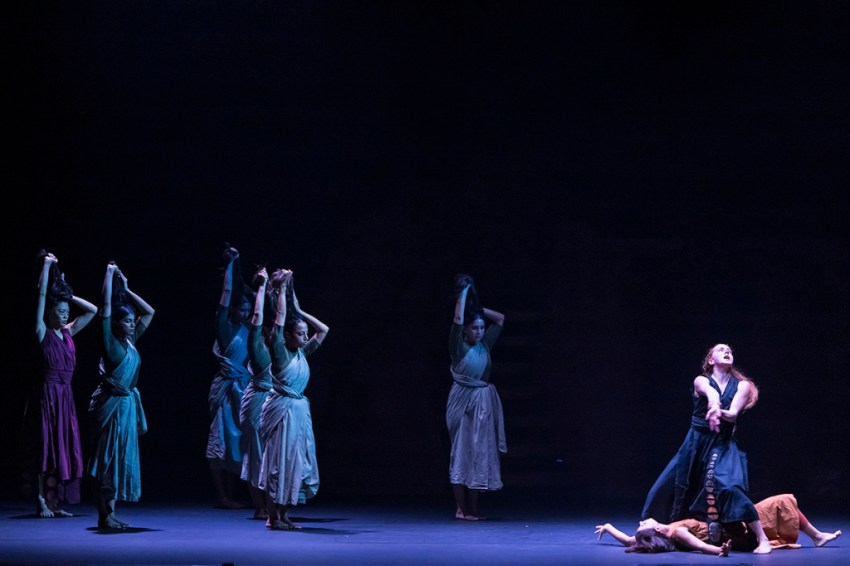
One moment flowed into the next, from the “maiden” in white being slain (?) by a group of soldiers (?), to the “exorcist” in black healing one who was writhing (in agony?), to the “priestess” in red silently screaming and beating her chest. Thikra does not really have a narrative; rather, it is a garland of images that the viewer strings together.
“Thikra is an excavation, a way of listening,” says Saudi artist Manal AlDowayan, Khan’s collaborator. “I think a lot about the feminine archive, the things that never make it into history books but are written onto the body itself.”
“Through the memory of their history and a colonized past, the tribe finds space to heal, to transcend as they surrender to the ritual of life and death,” notes the program, indicating that we, too, are encouraged to heal from our past.
Related Posts




Premier Events

Thu, Nov 19
10:30 AM
Santa Barbara
Sunshine In a Jar, The Art of Making Meyer Lemon Marmalade

Mon, Nov 16
7:00 PM
Santa Barbara
Toast – The Best of Bread at the Arlington
Tue, Nov 17
7:00 PM
Santa Barbara
CWC Screening and Conversation: “Criminal Minds” James T. Clemente
Wed, Nov 18
12:00 PM
Santa Barbara
UCSB Son Jarocho

Wed, Nov 18
7:00 PM
Santa Barbara
Outside+ Showing of “Warren Miller’s Days Off”
Fri, Nov 20
11:00 AM
Santa Barbara
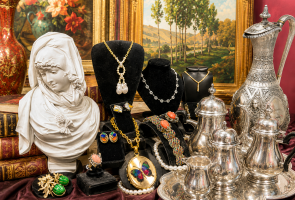
Santa Barbara Antique & Vintage Show

Sat, Nov 21
10:00 AM
Solvang
56th Annual Holiday Open House

Sat, Nov 21
10:00 AM
Santa Barbara
MOXI’s Seaside Sock Skating
Sat, Nov 21
11:00 AM
Santa Barbara
Santa Barbara Antique & Vintage Show
Sat, Nov 21
11:00 AM
Santa Barbara
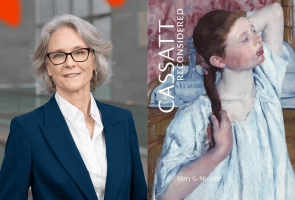
Cassatt Reconsidered: Lecture with Mary G. Morton
Sat, Nov 21
7:30 PM
Santa Barbara
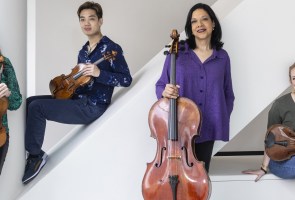
Juilliard String Quartet & Simone Dinnerstein
Thu, Nov 19 10:30 AM
Santa Barbara
Sunshine In a Jar, The Art of Making Meyer Lemon Marmalade
Mon, Nov 16 7:00 PM
Santa Barbara
Toast – The Best of Bread at the Arlington
Tue, Nov 17 7:00 PM
Santa Barbara
CWC Screening and Conversation: “Criminal Minds” James T. Clemente
Wed, Nov 18 12:00 PM
Santa Barbara
UCSB Son Jarocho
Wed, Nov 18 7:00 PM
Santa Barbara
Outside+ Showing of “Warren Miller’s Days Off”
Fri, Nov 20 11:00 AM
Santa Barbara
Santa Barbara Antique & Vintage Show
Sat, Nov 21 10:00 AM
Solvang
56th Annual Holiday Open House
Sat, Nov 21 10:00 AM
Santa Barbara
MOXI’s Seaside Sock Skating
Sat, Nov 21 11:00 AM
Santa Barbara
Santa Barbara Antique & Vintage Show
Sat, Nov 21 11:00 AM
Santa Barbara
Cassatt Reconsidered: Lecture with Mary G. Morton
Sat, Nov 21 7:30 PM
Santa Barbara


You must be logged in to post a comment.