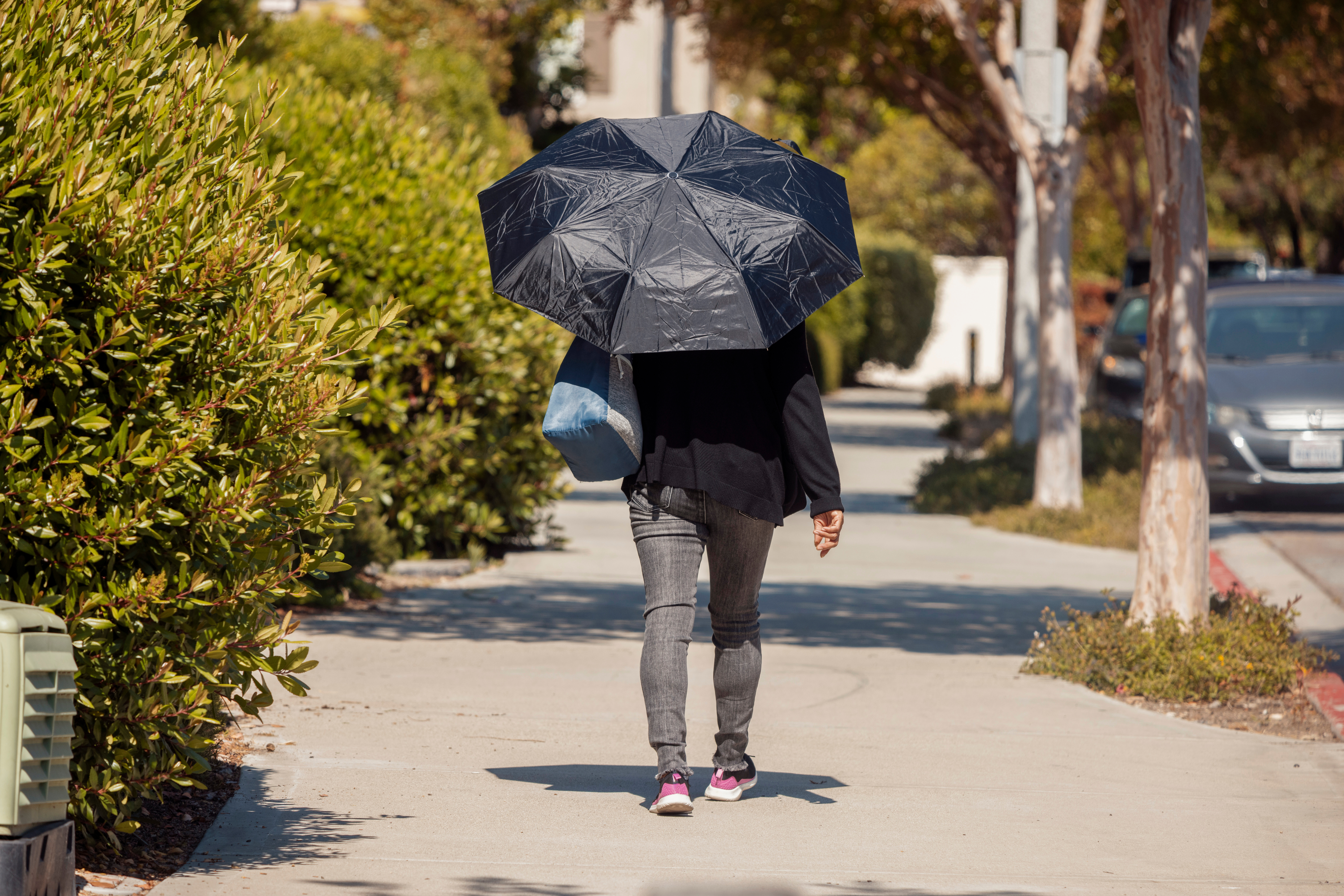
As our planet keeps warming, air-conditioning systems are proliferating. While such systems make interior work and living spaces cooler, they add heat to the immediate outside space. Almost every city suffers from the heat island effect, a phenomenon where concrete-abundant environments trap and radiate heat. This released hot air makes neighborhoods hotter, further discouraging people from going outdoors. Space cooling accounts for about 30 percent of total electrical usage worldwide. With increasing temperatures, this number keeps growing, adding more greenhouse-gas emissions and more climate impact.
An international team of scientists in Singapore has recently developed a cement-based paint that mimics our body’s natural cooling mechanism of sweating. Most cooling paints rely on the radiative and reflective properties of white to reflect sunlight and beam heat to the colder outer space by emitting infrared radiation. Such products work well in dry climates with clear skies but falter in humid regions with frequent cloud cover and high humidity. The moisture and blocked skies trap heat and prevent it from escaping. In addition, these paints don’t work well on vertical surfaces, which cannot emit to the overhead skies.
The new paint incorporates passive cooling mechanisms. It combines three forms of passive cooling: radiative cooling, evaporative cooling (like our sweating), and solar reflection. It reflects 88-92 percent of sunlight, even when humidity is high, and emits up to 95 percent of the heat it absorbs.
Commercial paints repel water to protect structures. This new paint, however, stores water in its porous structure, slowly releasing it and evaporating heat away in the process. In control tests, the commercial products faded to yellow under the equatorial sun, while the passively designed product remained a brilliant white with high reflectivity and consistent cooling. To further enhance performance, researchers added nanoparticles (calcium silicate hydrate) for greater reflectivity and durability, along with some polymer and salt to help retain moisture and prevent cracking. It can hold 30 percent of its weight in water.
The new paint’s performance is impressive, reducing energy use for air-conditioning by 30-40 percent. This is significant since around 60 percent of building energy is used for cooling. In tropical regions, those most in need of cooling, this Singapore-inspired paint provides 10 times the cooling power of other cooling paints.
Evaporative cooling absorbs significant amounts of thermal energy from surfaces as the water turns from liquid to vapor. With climate change cranking up the thermostat, innovations like this offer a passive, planet-friendly way to beat the heat.