

“Put your hand out,” said Violet Sage Walker with an inviting smile. A wet hunk of muscle began squirming on my palm at the abalone farm on Dos Pueblos Ranch, which Sage Walker sees as an essential element in the future stewardship of the ranch by the Northern Chumash Tribal Council. As chair of the council, Sage Walker and her council are in the middle of buying the historic Dos Pueblos Ranch and its other assets for $62 million. But first, they must raise $45 million by January.
“You have to hold one to love one,” she said, indicating the young abalone in my hand, an ethos that underlies Sage Walker’s intentions for Dos Pueblos Ranch — to bring people into contact with the bucolic ranch, and to feel the urge to safeguard its rare coastal beauty. “If people can enjoy something, they will want to protect it,” she said.
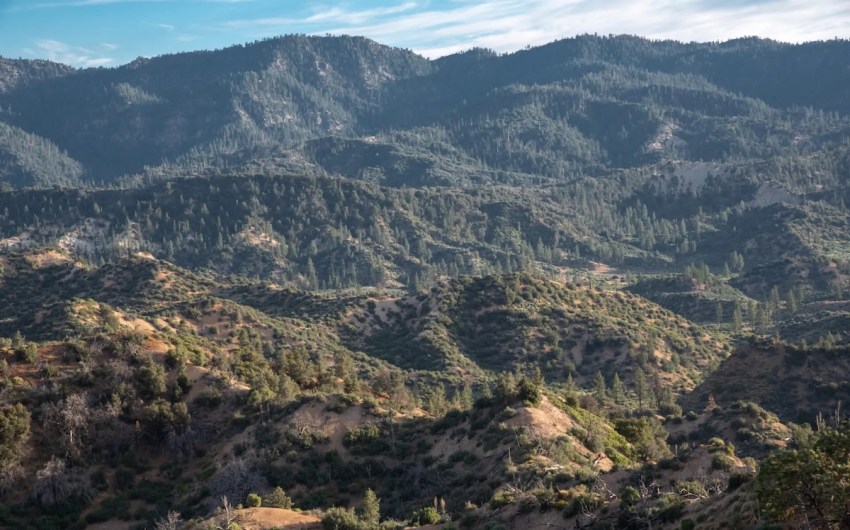
Sage Walker’s goal is to combine scientific research with education for children and adults at the 219-acre property on the Pacific Ocean, just a few miles outside Goleta. Ultimately, she wants to create meaningful, tangible opportunities for the tribe. “We are the ones who know how to take care of the land. We are the ones who can restore the balance,” she said. “Let’s bring the steelhead back. Native people are doing that.” Those goals are not unlike those held by the current owner.
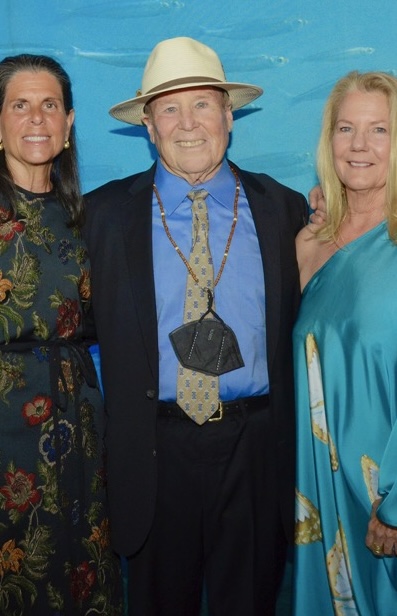
In 2022, Humpty Dumpty Rancho Dos Pueblos — an LLC owned by developer Roger Himovitz and some partners — purchased the property for more than $40 million, which Himovitz said included numerous parcels, equipment, assets like the abalone farm, and permits he bought over a 15-month period. The asking price of $65 million takes in costs over the past four years. He established the Dos Pueblos Institute to bring outdoor agriculture classes and Chumash ceremonies back to the land. Then earlier this year, Himovitz, who is in his eighth decade of life, decided to contact the Northern Chumash.
He had taken note of the Northern Chumash council’s successes, including its 10-year quest to establish a marine sanctuary from Morro Bay to just east of Dos Pueblos Creek: “Violet and her group have been diligently pursuing the preservation and restoration of these coastal resources for decades, including their successful establishment of the latest Marine Sanctuary which they initiated and are co-administering.”
At first, Sage Walker was uncertain, but she realized that she had gained knowledge and contacts from the extensive fundraising and outreach work that led to the approval of the marine sanctuary — an enormous project started by her late father, Fred Collins. She decided to turn that experience toward a new goal: The restoration of Dos Pueblos Ranch for education, conservation, and return of the land to the Chumash.
The ranch was once home to what Sage Walker calls the Chumash “capital cities” of Mikiw and Kuyamu. The two were large villages on the bluffs where Dos Pueblos Creek meets the Pacific Ocean, and they were where mainland Chumash first met the Europeans of the Cabrillo expedition of 1542 when they paddled out to visit the giant ships. Not only is the land historic, it holds deep ancestral significance for the descendants of those who lived there for millennia.
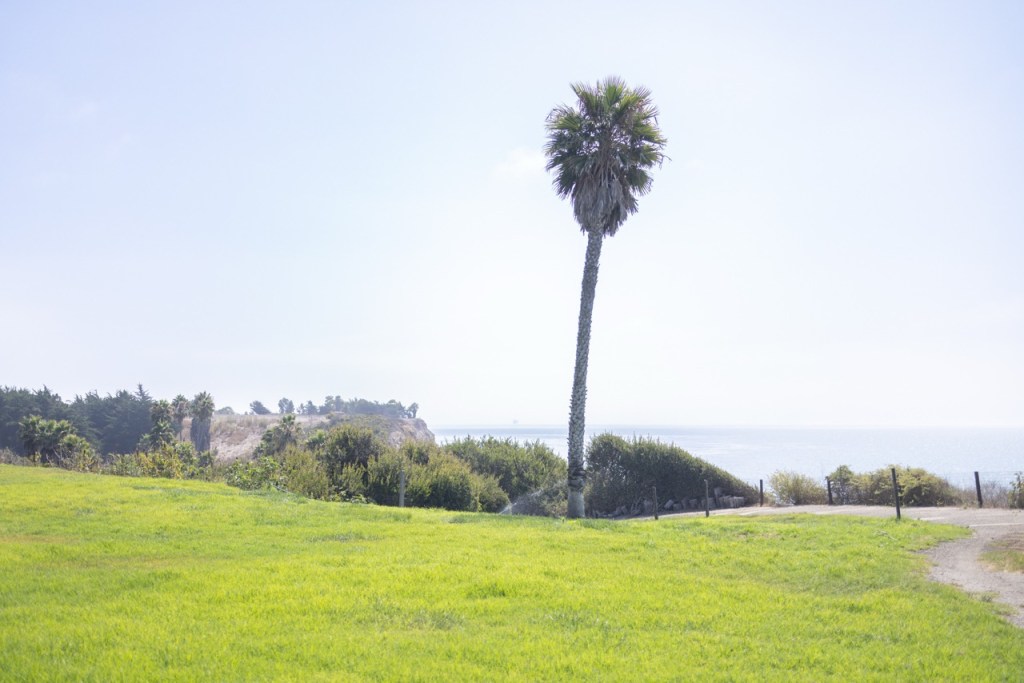
One of Sage Walker’s first steps was to have lunch at the ranch with other Chumash members, including those belonging to the Coastal Band, and the Santa Ynez tribe, to let them know of the deal. Many proposals and concepts came up at that meeting. “I have to tell people,” Sage Walker said, “ideas come after we buy it.”
With a $45 million deadline only four months away, Sage Walker began fundraising in earnest this week. She said that although they have a year-and-a-half-long escrow, the owners want some early certainty that her group will be able to raise the money.
In addition to the marine sanctuary success, the Northern Chumash are in the midst of becoming a sanctioned Land Trust and already have two projects in North Santa Barbara County that received state grants to conserve agricultural lands. What could lie ahead at Dos Pueblos Ranch are repairs to the aging infrastructure: roads, bridges, water pipes, and structures.
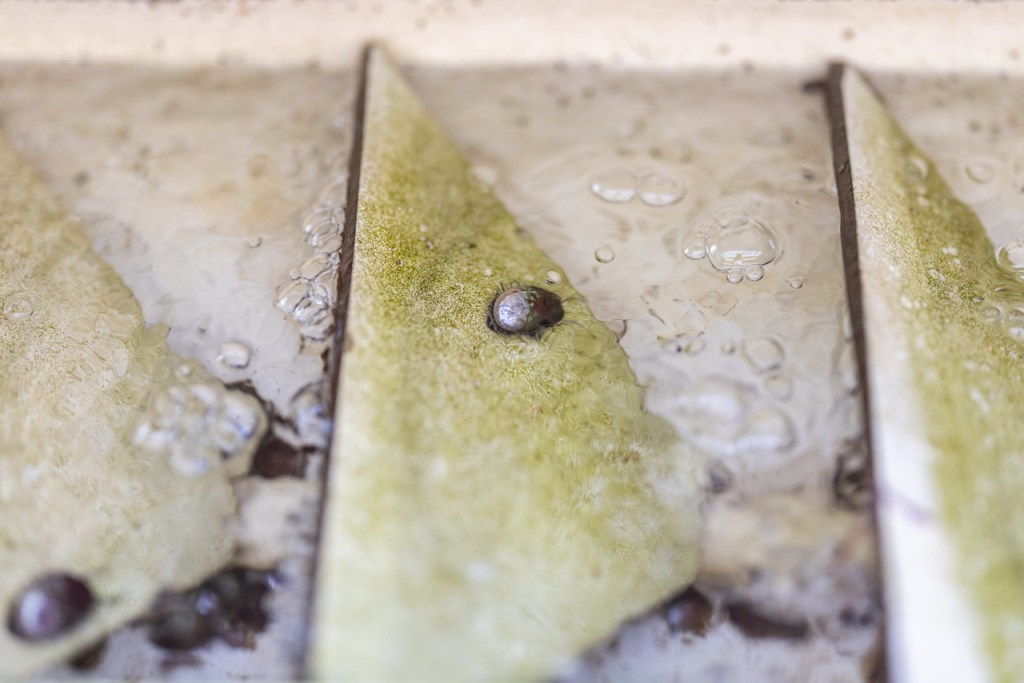
A business like the abalone farm, established in 1989 and the largest and most viable one in the country, could supplement conservation work across the ranch, Sage Walker said. She had created the Chumash Kitchen in San Luis Obispo, which serves gourmet meals with all native food. “Imagine sitting down and having abalone … and, like, a blackberry acorn cobbler, and all this created with native foods, and sitting in a place like this,” she said, gesturing to the oaks and cottonwoods growing in the sunlight beyond the abalone farm.
She views the conservation work from top to bottom in a Chumash way, from ridding the creek of its concrete walls and establishing reeds used in basket-weaving, to cleaning the water for eel grass and healthy kelp forests offshore, potential urchin diving, and the reestablishment of the coastal estuary.
Himovitz said in an email, “We are delighted to be under contract with the group and excited and hopeful that we will be able to return this sacred land to the descendants of its original owners.”
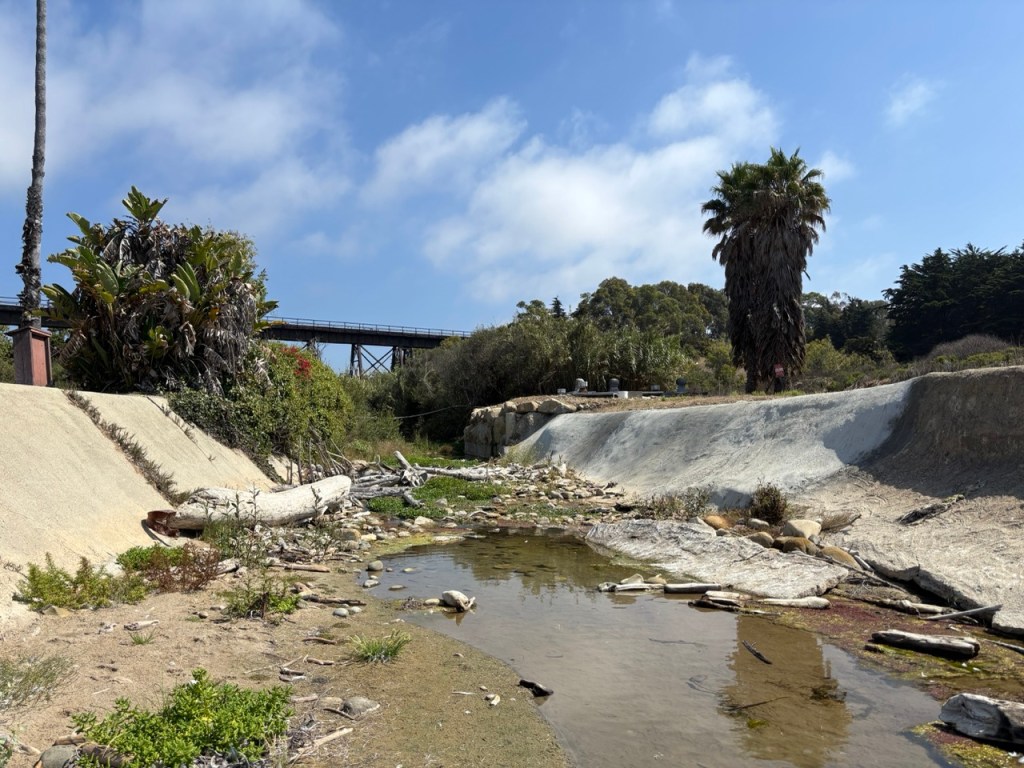
Removing the concrete from Dos Pueblos Creek is part of Sage Walker’s vision to restore the ecosystems on the ranch. | Credit: Jean Yamamura 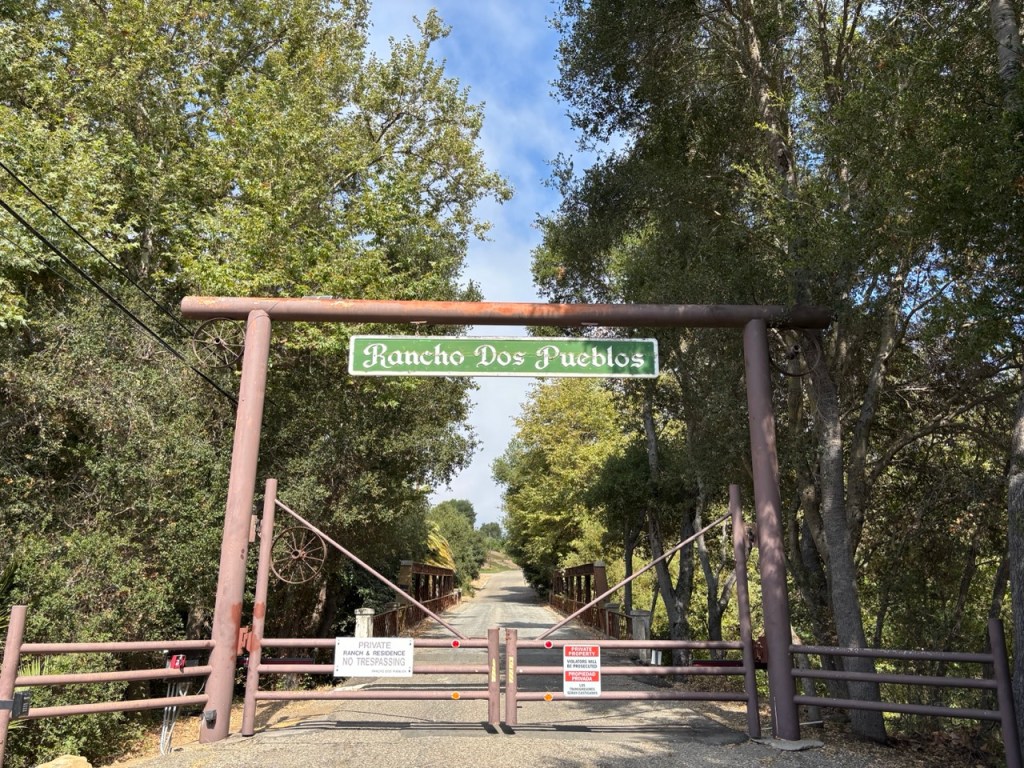
Through the gate and across the creek are the homes on the ranch, including Casa Grande, built by Signal Oil’s Sam Mosher after he bought the property in 1943. | Credit: Jean Yamamura 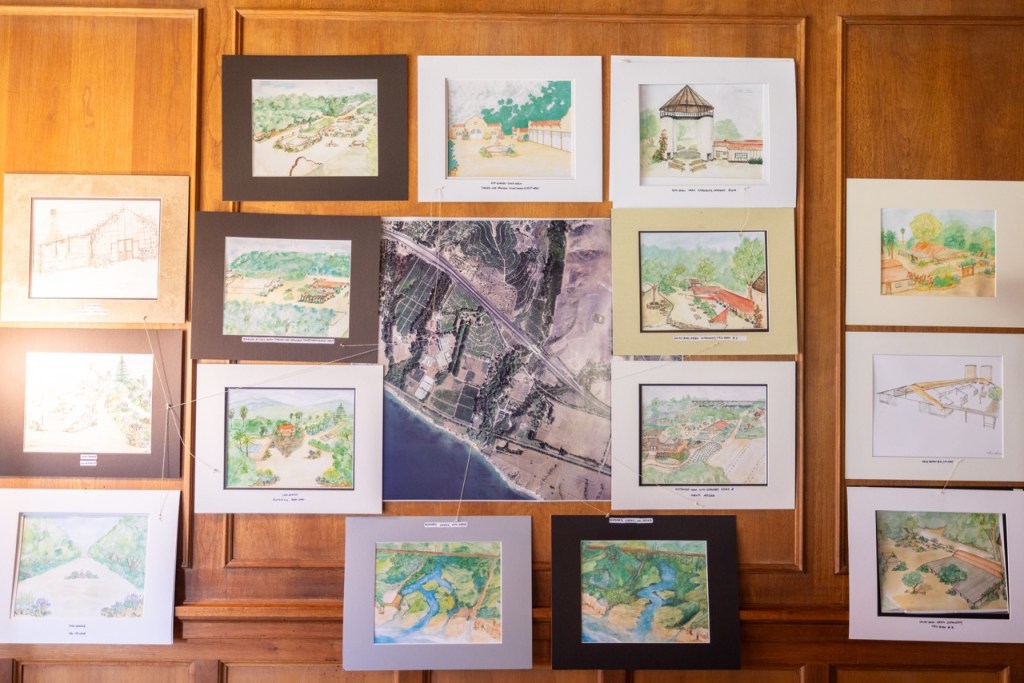
An aerial photograph of the ranch is surrounded by sketches by resident Tricia Saroya depicting hoped-for transformations on the property. | Credit: Ingrid Bostrom
Sage Walker, who breeds Arabian and Andalusian horses, foresees other outdoor potential, similar to how Himovitz had originally intended such as camping and glamping under the new rules of the county’s Agricultural Enterprise Ordinance. Perhaps down the line, they could add worker housing for the employees of the ranch, she noted. For Sage Walker, conservation does not mean keeping people off the land; it means inviting them in to experience how it is worth conserving.
“If people are going to donate money to this property, we want them to be the first ones to use the beach to get married,” she said.
Editor’s Note: The Independent had received information that challenges the Indigenous authenticity of the Northern Chumash Tribal Council. While they are not a federally recognized tribe, they work together with such a tribe, Chumash in the area, and identify as Chumash.







You must be logged in to post a comment.