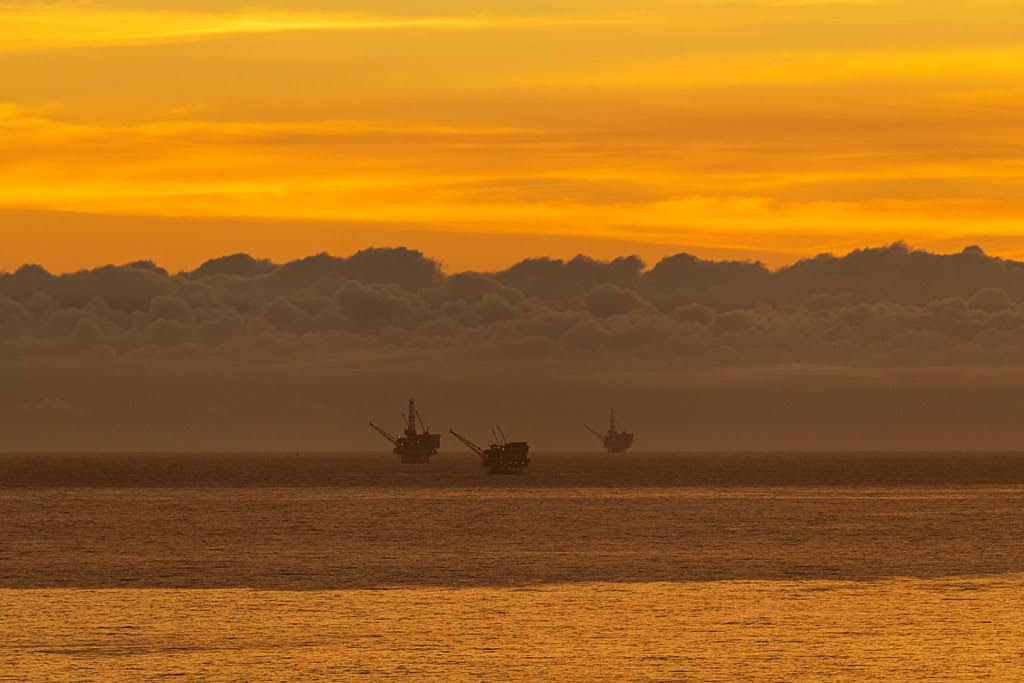
For Santa Barbara, the oil pipeline debate is not new. It comes with hard-earned lessons shaped by decades of oil development in the Santa Barbara Channel, a catastrophic spill in 2015, and repeated efforts by the community to ensure that the risks of offshore oil production are not shifted onto the citizens and our community.
The pipeline system runs from the Las Flores Canyon processing facilities on the Gaviota Coast inland to California facilities for processing 120 miles away in Kern County. It does not cross state lines. It never has. Now the federal government, once happy to offload the project to state jurisdiction, has swept in to claim the pipeline is “interstate” and hand over the operation to the underfunded company, Sable Offshore.
We all remember May 2015, that same pipeline system failed and ruptured near Refugio State Beach, releasing oil that flowed into creeks, reached the ocean, and spread along 150 miles of coastline. Beaches closed. Wildlife was harmed. Tourism and local livelihoods suffered. The spill left a permanent scar on the community’s memory. Tyler Hayden and Nick Welsh of the Santa Barbara Independent have written brilliantly about that history.
At that time, Federal investigators concluded the cause was external corrosion — a slow, invisible deterioration of the pipe wall that went undetected until it burst. The failure was not freakish or unforeseeable. It was the predictable result of aging infrastructure operating out of sight and under strain.
In the aftermath, regulators reexamined not just safety practices, but the legal status of the pipeline itself. That review led to a critical and formal determination.
Beginning in 2016, the pipeline—then known as Plains All American’s Lines 901 and 903 — was explicitly defined as an “intrastate” pipeline, placing it under the authority of California’s Office of the State Fire Marshal pursuant to federal law. This was not an informal assumption. It reflected how the system actually operated: the oil stayed entirely within California, and Californians bore the risks.
That designation mattered. It allowed California to impose stricter safety requirements that reflected a basic principle: decisions about risk should be made closest to the communities affected.
And Santa Barbara County leaders to their credit went further.
Under County Code Chapter 25B, the Santa Barbara County Board of Supervisors in 2001 established clear rules governing changes in ownership, operatorship, or financial guarantors for oil and gas facilities. Before any permit or lease could be transferred, a new operator must demonstrate financial strength, adequate insurance, and the ability to cover cleanup, damages, and long-term impacts if something goes wrong. Sable has failed time and again to do just that and their repeated defiance of local and state agencies has angered even pro-oil conservatives, not to mention the State Attorney General and the local District Attorney.
The purpose of Code Chapter 25B was simple: to prevent risky oil infrastructure from being handed to companies who cannot afford the consequences of a failure.
Exxon is one of the most sophisticated oil companies in the world. As the current lease owner, it has evaluated its options — and its decisions speak volumes. They explored ways to avoid using the pipeline by transporting oil in large tanker trucks through Santa Barbara County. That plan would have sent heavy crude along narrow, winding highways, through populated areas and environmentally sensitive corridors. Local governments and environmental groups objected and ultimately the county agreed that the routes posed unacceptable safety risks. Large-scale trucking, as a plan, ended.
Even then, Exxon chose not to restart oil transport through the pipeline.
That choice is telling. Exxon had the technical expertise and financial capacity to operate the system if it believed the risk was manageable and safe. Instead, it likely concluded that the pipeline’s corrosion history, heightened scrutiny after the Refugio spill, and massive liability exposure made the risk outweigh the reward.
Rather than decommission the infrastructure or retain responsibility for its long-term risks, Exxon has been attempting to transfer the assets to Sable Offshore Oil, a small poorly capitalized company. Sable has been financed by a large loan from Exxon and thereby potentially insulating Exxon from future operational liability. Pretty clever. If oil flows again and something goes wrong, liability falls first on the small new operator. If that operator lacks the resources to pay, the burden shifts — to insurers, courts, and ultimately “We the People”.
It is a familiar pattern: the risk stays local, while accountability evaporates into the ether.
Now, at the final hour, a deeply controversial federal intervention is on the scene. The Trump administration invoking the “national energy emergency” declared by President Trump upon taking office, reasserted federal authority a couple of weeks ago, declaring the pipeline “interstate” by virtue of Sable’s unilateral designation and the federal government’s concurrence in an effort to strip California state agencies and Santa Barbara County of oversight. This action has just been challenged by environmental groups represented by the Environmental Defense Center in a filing on Christmas Eve. That challenge has merit. Not a thing about the pipeline’s operation has changed. The oil still crosses no state lines. The risks remain local and significant. All that has changed is who gets to decide.
This maneuver is even more troubling because the pipeline remains subject to a federal consent decree, imposed after the 2015 spill. It designated the pipeline “intrastate,” its safety to be assessed by the State Fire Marshal, who has deemed Sable’s requests for waivers from safety requirements inadequate. This current jurisdictional relabeling by the federal government is being used to obliterate state and local authority.
Supporters of restarting the pipeline argue that the oil is needed for national security, although the last I checked America has so much oil we export tens of millions of barrels daily. And the oil carried by this Santa Barbara system is heavy crude — more polluting to extract, more energy-intensive to refine, worse for Santa Barbara air quality than lighter oils. Heavy crude requires heating and additional processing, releasing smog-forming gases, sulfur compounds, and fine particulate matter — pollutants linked to asthma, cardiovascular disease, and degraded air quality along the Central Coast.
The pipeline itself remains what it has always been: an aging intrastate system with a documented. history of corrosion. That corrosion does not stop because ownership changes or legal labels shift. Given its age and history, another spill is not a remote possibility. It’s all but a certainty.
Californians understand that the energy transition will take time. But reviving old, high-risk infrastructure — while overriding state authority, weakening county safety laws, allowing multinational corporations to shed liability, and re-labeling reality for regulatory convenience — is not a responsible transition. Shifting the definition does not make the pipeline safer. It only makes it easier for powerful actors to distance themselves from responsibility and for President Trump to take a victory lap over Governor Newsom and Californians.
Santa Barbara deserves better. California deserves better.
And the path to a cleaner energy future should not be built by asking the same community to take the same risks — all over again.
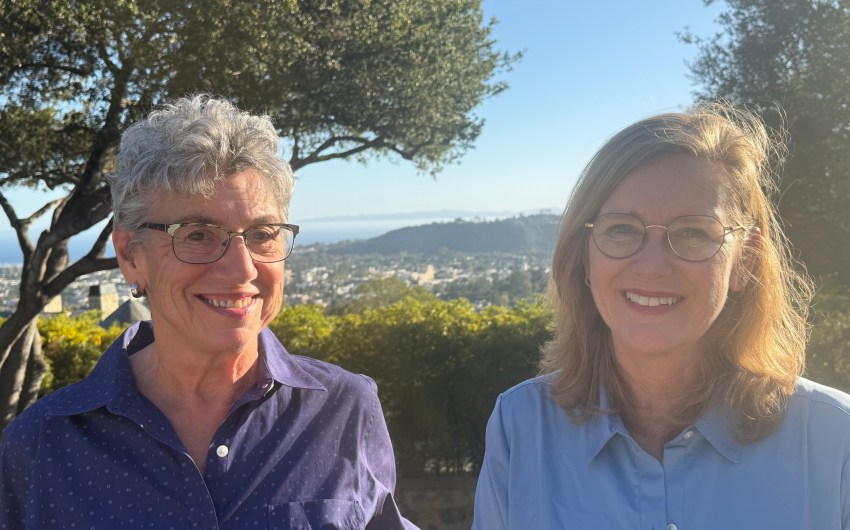
Victoria Riskin is the founder of Bluedot Living, a multiplatform media company delivering stories in print and digital that focus on healthy living, sustainability and climate solutions. She co-publishes, with the Santa Barbara Independent, the Santa Barbara Green Guide each year in April on the anniversary of Earth Day.