

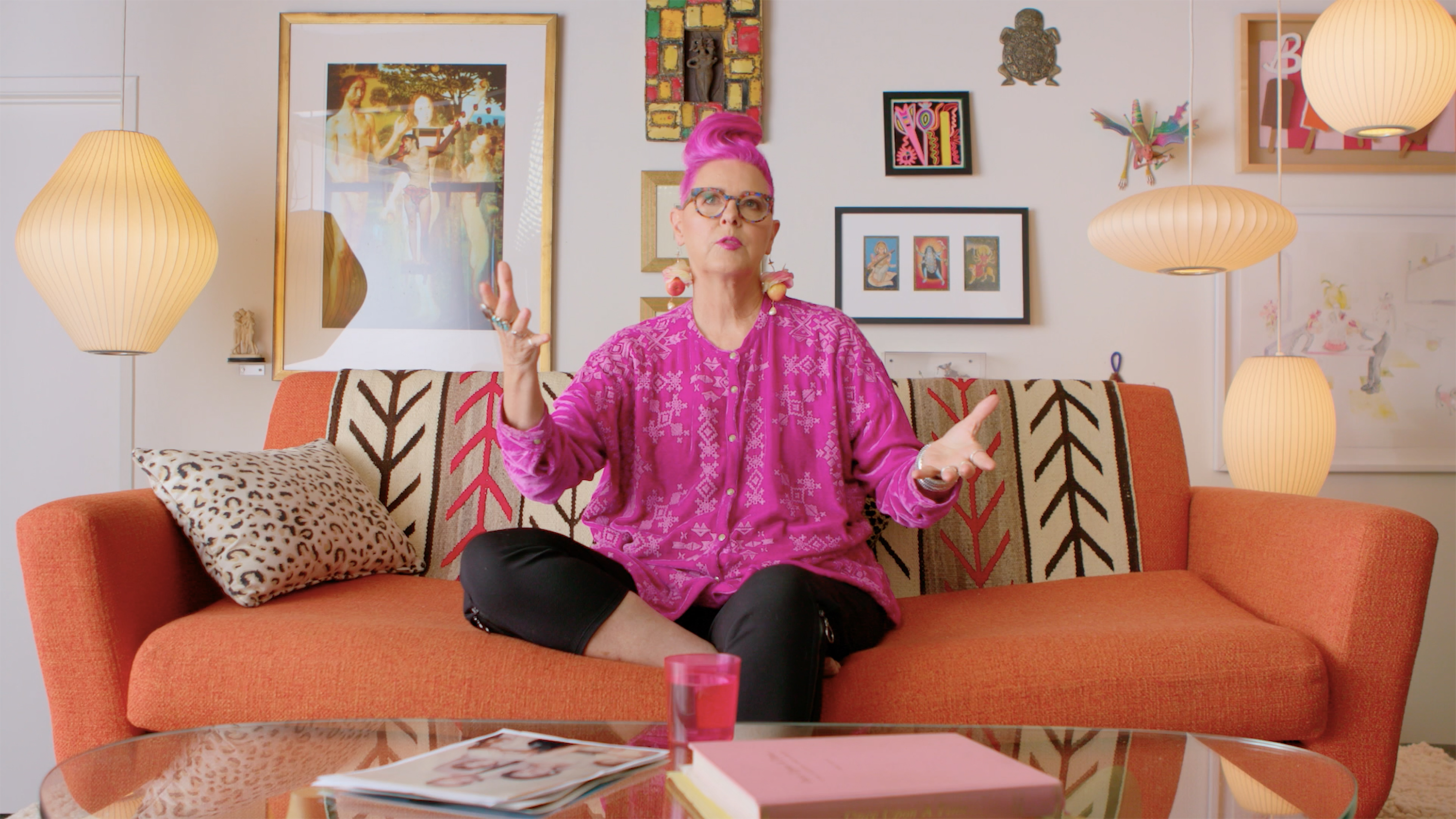
More than five decades ago, a movement started that impacted more than half the population. While the result of that movement is still felt, seen, and heard on college campuses, boardrooms, and restaurants across America, the origins itself have largely been erased from history. “It’s been 50 years, and in those 50 years, we’ve felt very invisible,” says writer, director, artist, and feminist Cheri Gaulke.
That knowledge gap is set to change this December when the documentary Acting Like Women premieres at UCSB’s Carsey-Wolf Center. The film, written and directed by performance art luminary Gaulke and writer/producer Anne Gauldin, follows the rise of West Coast performance art through the foundation of the Woman’s Building, a Los Angeles hub for feminist artists.
The Woman’s Building was central to some of the medium’s most significant feminist work. For her film, Gaulke felt it critical to focus on the emergence of performance art. “We were at this historic moment where performance art was a brand-new medium and people didn’t really know what it was,” she told me recently while in New York promoting the documentary. “[The Woman’s Building] offered women the opportunity to kind of step into it, take it on, and use it for our purposes, which ultimately became inventing a kind of art that would reach the public in new ways to foster social change.”
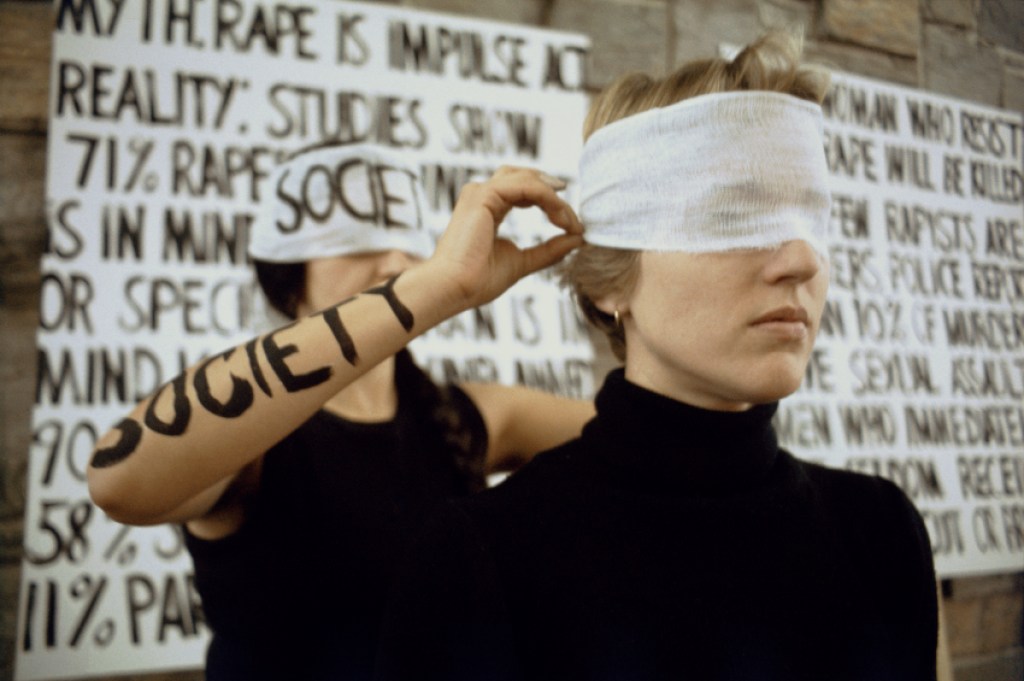
The film captures a moment in time where women were given a space to tell their stories and the stories of others. That space, both in the literal sense and the figurative one, sparked a series of changes not just for female artists but for women in general.
Acting Like Women anchors itself in Gaulke’s upbringing. Raised by a Lutheran minister in a household that leaned into traditional gender roles, her limited exposure to feminist artists catapulted her into an unfamiliar world while in college. With the use of archival footage and cinematographic elements to tell her story, the audience follows Gaulke as she uncovers her true identity once she’s exposed to the work of artists such as the founders of the Woman’s Building: Judy Chicago, Sheila Levrant de Bretteville, and Arlene Raven.
“When we came to the Woman’s Building,” says Gaulke, “we learned from Arlene Raven that the function of feminist art, which was the kind of art that we wanted to make, raised consciousness, invited dialogue, and transformed culture. And so that became our mission.”
But more than just introducing audiences to West Coast feminist performance artists, Acting Like Women is a tool to educate audiences about the origins of the feminist movement. “[The film] is about the role of women artists coming of age at the dawn of the feminist movement,” says art historian Jenni Sorkin.
Sorkin, professor and chair of UCSB’s Department of History of Art and Architecture, who first came across Gaulke’s work while receiving her MA in Curatorial Studies at Bard College, is the reason why the film, along with Gaulke and Gauldin, will be on campus. “I feel as an art historian, it’s my role to create visibility for underrecognized artists and art movements, particularly women artists,” she said. Over the years, the former weaver (she abandoned making art her senior year at The School of the Art Institute of Chicago) has taught the work of historically impactful feminist artists since 2013.
Sorkin recently participated in Getty Research Institute’s Performance, Protest, and Preservation: The Legacy of High Performance Magazine, where artists, curators and educators gathered to celebrate the first ever publication dedicated specifically to performance art. Over the years, Sorkin has covered the work of performance art — including her award-winning article for Art Journal that led to an exhibition covering the first five years of the publication.
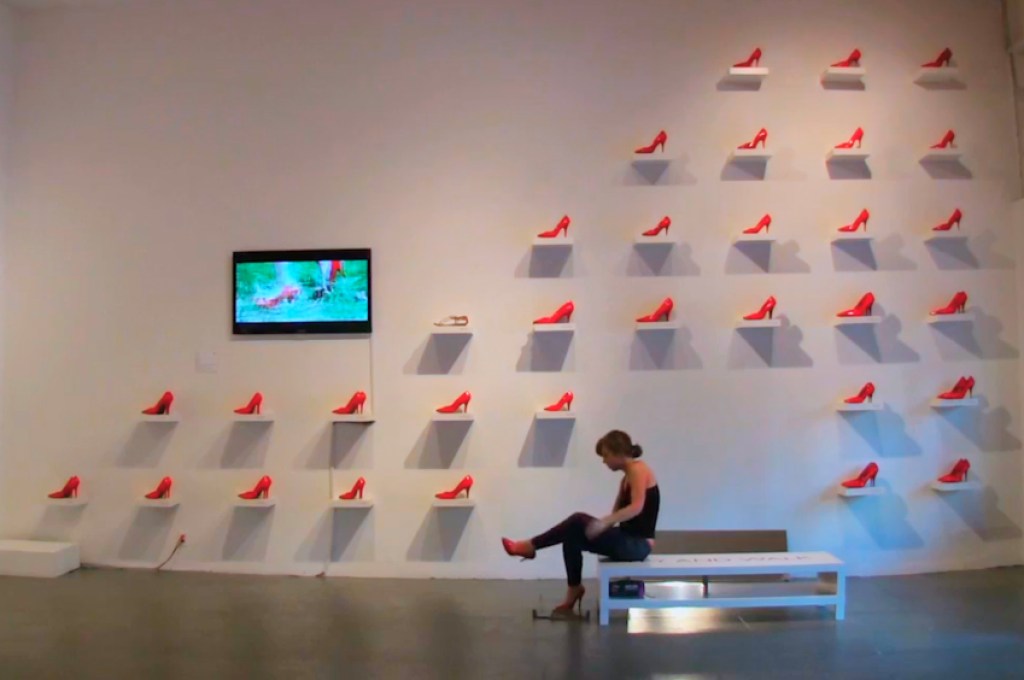
Though it’s been years since Sorkin first came across Gaulke and Gauldin, she’s stayed in close proximity to the artists not only through her teaching, but also her writing and panel appearances and talks. It’s the kind of work that Sorkin loves to teach her students, especially as the definition of performance art gets muddled with the age of social media.
Performance Art Museum describes performance art as “an art form that has strengthened American democracy by giving diverse voices a public stage from which to question power and expand civic imagination.” Since the ’70s, in large part due to places such as the Woman’s Building and publications such as High Performance magazine, social change has occurred because of these artist moments. But, Gaulke says, “I don’t think it’s art’s role to change society.”
Social media has given everyone a public stage, which Gaulke likes to say makes “everyone a performance artist.” Though that might mean that over the years, the shock value from earlier feminist work has been reduced to a scroll, the role of performance art in questioning power hasn’t.
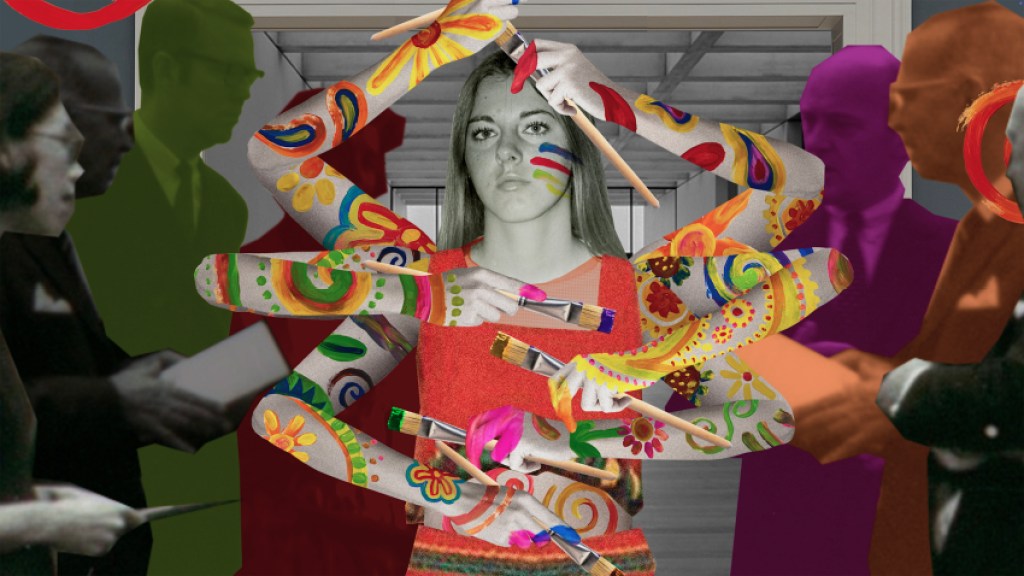
Performance can be many things and nothing at the same time: beautiful, poetic, abstract, literal, absurd. Take the opening scene of the film, where Gaulke stands in a room devoid of anything but a bed. Just the act of making a bed — simply putting clean sheets on a mattress — may open up a discussion on traditional gender roles and the female identity. Feminist artists today, whether performing on social media or simply in life, have been influenced in one way or another by the work that came out of the Woman’s Building in the ’70s. It’s critical that their history is told, and no longer invisible.
Acting Like Women will be screened at UCSB’s Pollock Theater on Thursday, December 3, at 7 p.m., followed by a discussion with filmmaker Cheri Gaulke and producer Anne Gauldin, moderated by Jenni Sorkin. The event is presented in partnership with the exhibit Bonnie Ora Sherk: Life Frames since 1970, which closes November 29. The event is free, but reserving tickets is recommended. Tickets can be reserved online at carseywolf.ucsb.edu/pollock-events/cwc-docs-acting-like-women.
Related Posts




Premier Events

Sat, Nov 21
9:00 AM
Santa Barbara
Hope as a Phenomenon of Human Nature

Sat, Nov 21
9:00 AM
Goleta
Holiday Gift Boutique in Goleta
Fri, Nov 20
11:00 AM
Santa Barbara
Santa Barbara Antique & Vintage Show

Sat, Nov 21
10:00 AM
Solvang
56th Annual Holiday Open House
Sat, Nov 21
10:00 AM
Santa Barbara
MOXI’s Seaside Sock Skating
Sat, Nov 21
11:00 AM
Santa Barbara
Santa Barbara Antique & Vintage Show
Sat, Nov 21
11:00 AM
Santa Barbara
Cassatt Reconsidered: Lecture with Mary G. Morton
Sat, Nov 21
7:30 PM
Santa Barbara
Juilliard String Quartet & Simone Dinnerstein
Sat, Nov 21
7:30 PM
Santa Barbara
Santa Barbara Blues Society Presents Teresa James and the Rhythm Tramps
Sun, Nov 22
11:00 AM
Santa Barbara
Santa Barbara Antique & Vintage Show
Sun, Nov 22
2:00 PM
Goleta
Prime Time Band Fall Concert
Sun, Nov 22
5:00 PM
Santa Barbara
Choral Evensong: Sung by the Trinity Choir
Sat, Nov 21 9:00 AM
Santa Barbara
Hope as a Phenomenon of Human Nature
Sat, Nov 21 9:00 AM
Goleta
Holiday Gift Boutique in Goleta
Fri, Nov 20 11:00 AM
Santa Barbara
Santa Barbara Antique & Vintage Show
Sat, Nov 21 10:00 AM
Solvang
56th Annual Holiday Open House
Sat, Nov 21 10:00 AM
Santa Barbara
MOXI’s Seaside Sock Skating
Sat, Nov 21 11:00 AM
Santa Barbara
Santa Barbara Antique & Vintage Show
Sat, Nov 21 11:00 AM
Santa Barbara
Cassatt Reconsidered: Lecture with Mary G. Morton
Sat, Nov 21 7:30 PM
Santa Barbara
Juilliard String Quartet & Simone Dinnerstein
Sat, Nov 21 7:30 PM
Santa Barbara
Santa Barbara Blues Society Presents Teresa James and the Rhythm Tramps
Sun, Nov 22 11:00 AM
Santa Barbara
Santa Barbara Antique & Vintage Show
Sun, Nov 22 2:00 PM
Goleta
Prime Time Band Fall Concert
Sun, Nov 22 5:00 PM
Santa Barbara


You must be logged in to post a comment.