
‘Welcome to Isla Vista‘ is a six-part podcast series. Listen to new episodes here or anywhere you get your podcasts.
Welcome to Isla Vista. I’m Christina McDermott. In the last episode, we talked a little about the origins of I.V.’s development and how by 1950 a new money-making resource — renting to students — was on the horizon. Now we’re going to look at what happened after UC Santa Barbara opened.
This is “Student Stories, Part One.”
In 1954, 18-year-old Shyama Osborne drove from her hometown in downtown Santa Barbara to Goleta in a Pontiac.
“It had bench seats, and you could squeeze three people in the front, four in the back, in a pinch, but usually three. So I carpooled with three other friends,” she said.
The university she was going to, still called the Santa Barbara College of the University of California, had just traded its downtown location for the much larger, much emptier Goleta campus. Osborne describes driving through walnut groves and lemon orchards. In this time, Highway 101 still had stoplights.
Osborne said she remembers two completed permanent buildings on campus: the first phase of the library (before its expansion) and Webb Hall, which now houses the Earth Science Department. She said two-story classroom buildings left over from I.V.’s Marine base days populated the rest of the campus. And, of course, there were the barracks.
“Then there were barracks. Those were one story, and men lived in those,” Osborne said. “And those were used as dormitories for men.”
“Not the women?” I asked.
“No. As far as I know, none of the women,” she said.
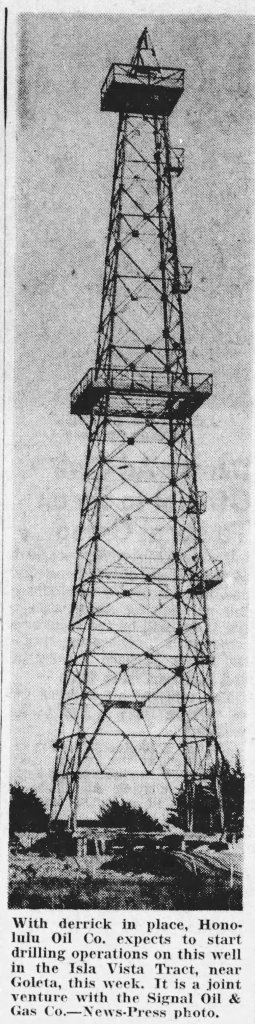
In 1954, Isla Vista had an estimated 550 people living there. Of that 550 people, less than 6 percent were students. As late as 1947, people were still looking for oil in I.V. A joint oil venture by Signal Oil and Gas (owned by Samuel Mosher —a name you might recognize from the area) and Honolulu Oil poured more than $1.5 million into drilling in I.V., historian Dr. Jennifer Strand writes in her master’s thesis. That’s more than $20 million in current currency.
There still wasn’t reliable running water in Isla Vista either. In 1953, the Santa Barbara News-Press published results from a study on I.V. by the county’s health department. More than one in three people did not have an indoor bathroom.
Isla Vista had dirt roads, too. A description from a 1954 News-Press article said the ruts were so big you could “bury a calf.”
When voters approved the construction of Cachuma Dam (now called Bradbury Dam) in 1948, developers and the few locals realized it would turn on the tap for I.V.
By 1953, I.V. was preparing for students. The county approved muti-unit residential zones so basically everywhere could have at least a duplex. Single-family zoning would come four years later.
In the ’60s, I.V. saw a building boom. In 1960, 112 “dwelling units” were constructed. Three years later, the county recorded more than 1,000 builds.
Dr. Jennifer Strand is a historian who did her master’s and PhD work at UCSB in the ’80s and ’90s. She studied Isla Vista.
“There’s one quote in there,” Strand said. “It says, we’ll build until we run out of room.”
Opportunity for even more growth came in 1964, when developers successfully lobbied for denser zoning for I.V. That meant more units for UCSB’s growing student population. In 1966, developers again proposed to build for more density, requesting a zoning law that would require less parking and smaller side lots. The UCSB Chancellor for Business and Finance at the time opposed this ordinance. A group of I.V. Realtors protested that opposition from the university. That group then lobbied to get the university to stop building on-campus housing so as to have less competition. The county supervisors actually passed a resolution saying the UC Regents should stop building on campus until I.V. was more full. The original ordinance ended up requiring bigger parking spaces, but allowed tandem parking and parking on side lots.
The county granted “variances,” too — exceptions to zoning rules. A 1970 document called the Trow Report, which outlines I.V. ‘s problems, says that through the ’60s, on average, one variance a month was granted.
“They weren’t trying to build the Taj Mahal at all,” Strand said. “They were trying to get away with what they could, the way people do. I’m not saying anyone was evil here. It was mostly just [the] opportunity. And, you know, they weren’t going to have to live there. It was just for students.”
Then there was a local loan source, Goleta Savings and Loan. Its president? Samuel Mosher of Signal Oil. UCSB Chancellor Vernon Cheadle and a Goleta-area Realtor, John Harlan, were also officers of the Savings and Loan. It’s unclear, exactly, what role the Savings and Loan played in I.V., but the list of folks involved could raise eyebrows. After all, Cheadle, Mosher, and Harlan each could have had financial interests in the area.
Regardless of the particulars of its financial investors, I.V. became a place of duplexes and student units. Thousands upon thousands of students moved in. In 1955, a little over 2,200 students were enrolled at UCSB. Fifteen years later, it grew to six times that.
In 1968, the United States was at a point of flux. The U.S. waged a more than decade-long technically undeclared but brutal war in Vietnam while anti-war protests continued at home. In April, civil rights leader Martin Luther King Jr. was assassinated outside of Lorraine Motel in Memphis, Tennessee, resulting in widespread mourning, protests, and riots. That same month, President Johnson passed the Civil Rights Act of 1968, also known as the Fair Housing Act, which prohibits discrimination from housing providers like landlords or real estate companies.
In theaters around the country, thousands of people watch 2001: A Space Odyssey. On the radio, the top single is “Hey Jude.” And in Isla Vista, the dirt roads are largely gone.
In 1968, George Thurlow arrived in I.V.
“I hitchhiked from where the signal lights used to be — everybody hitchhiked from there,” he said.
I.V. was like an island in and of itself at that time. The UC Regents owned — and own — the then-undeveloped land on all sides of it besides the ocean.
“I was picked up by an older, not old but older, woman, who taught me how to drink red wine out of a jug,” he said.
Thurlow would go on to have a career as a journalist. From the mid-’90s to the early 2000s, he worked as the publisher for the Santa Barbara Independent, and later, he served as UCSB’s vice chancellor for alumni affairs, as the special assistant to Chancellor Henry Yang for I.V., and on the Isla Vista Community Services District as UCSB’s appointee. Thurlow said, except for some development along Embarcadero Loop, I.V. hasn’t changed much.
“It hasn’t changed. The only thing that’s changed is there’s a new coat of paint. And that’s one of the reasons why many of those apartments have not fallen down, is they regularly get painted,” he said.
If you’re unsure, this is sarcasm.
Thurlow went to school through an especially turbulent year for UCSB and Isla Vista: 1970.
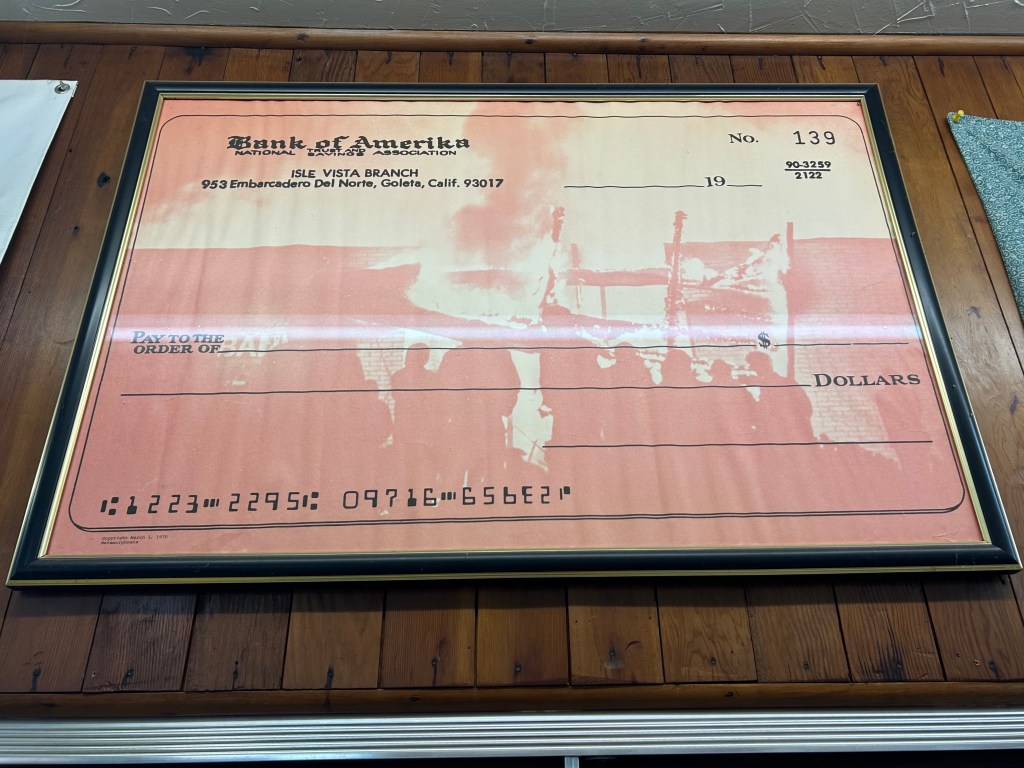
If you go into the Isla Vista Coop, you’ll see a big blown-up image of what looks like a Bank of America check. That image shows a building ablaze. That Bank of America was where the Embarcadero Hall is today. A fire was set inside it one night amid protests, police violence, and civil unrest. We’ll talk more about it in Episode 4.
Throughout the rest of the decade, Isla Vista experienced political engagement and community investment. I.V. The system of parks, the food co-op, and a health clinic were all established, and there was a major push to make I.V. a city. A housing cooperative was established, too. But by and large, private development remained dominant.
“The buildings were relatively new. But the one thing — people did not like the buildings from the beginning,” Frank Thompson said.
Today, Thompson is a housing consultant in Santa Barbara. He’s helped build dozens of projects, including penciling out how to make affordable housing work. In the ’70s, he was a student at UCSB and involved in the I.V. community.
In the ’70s, building in I.V. stopped. The Goleta Water District had imposed a moratorium in 1972 — you weren’t allowed to connect any new water meters, and you couldn’t up the usage for existing connections.
Thompson said that while I.V. grew in the ’50s and ’60s, so did Goleta, replacing those lemon orchards that Shyama Osborne drove through with single-family homes that used water differently than agricultural land. The moratorium was a way to limit, or stop, growth.
“There’s a group of people that I think were legitimately worried that the Goleta Water District, which used to be called the Goleta County Water District, because it used to provide water for agricultural farms, suddenly had this giant demand for single-family homes,” he said.
Thompson said the moratorium started as a temporary, urgent measure. That measure extended for over 25 years. He said some folks in Goleta could create private wells, but I.V. didn’t have enough reliable water to do that. The long and the short of it? Except for a few cases in the ’80s, people didn’t build in I.V. through that time. So you got what you got.
In 1980, Greg Sanders was a sophomore at UCSB. Sanders surfed and scuba dived. He actually still does these things and went on to work leading scuba teams. Diving in I.V., he said, you had to look out for tar.
“It’s actually a good place to dive. There’s a certain technique to it, because there’s a lot of tar [from] the natural oil seeps,” he said. “And some of those oil seeps would gather on the outside of the kelp beds. So if you surface right outside the kelp bed, you might be right under a tar mat.”
Back on land, in the early ’80s, UCSB didn’t have enough regular dorm rooms to house its students, he said.
“When I was on campus at the dorms, they were actually putting some students in laundry rooms that they converted into makeshift dorms,” he said.
Sanders moved to I.V. after completing his first year. In his first apartment, he lived with five other guys. He had a car so he could drive home on the weekends, and he said in I.V., it took some time to find a place to park it.
“Once you found a spot, you kind of took hold of it,” he said. “Once you left, yes, it was a little hard to find something.”
Sanders said he remembers the buildings being rundown. Even a rundown building, though, is better than no building. As a third-year, Sanders wasn’t able to find a spot.
“I ended up essentially being homeless in Isla Vista for nearly the entire year,” he said.
He said he slept in his car, in the trailer that the dive club on campus owned, and on friends’ couches.
“I even lived on a boat for part of that time,” Sanders said.
A friend of his had a Norwegian rescue boat. That friend anchored it off Goleta Beach, and a little boat ferried Sanders and his friend back and forth.
Sanders said he found an apartment during his senior year. He paid about $150 a month (a little over $500 in today’s money) to share a one-bedroom with a roommate and many, many cockroaches.
“We’d see them running around every once in a while. You get used to it. You know there are pet cockroaches,” Sanders said. “But there was a little tiny one — it was probably a quarter-, half-inch long — and we saw it in the kitchen.”
It ran under the molding on a wall. Sander’s roommate decided to get out the roach spray.
“He sprayed the whole molding,” Sanders said. “And he sprayed so much on it, it was just dripping down the molding. As it was dripping down the molding, about 100 cockroaches came flying out of the wall into that liquid, dying and dripping down the wall.”
You don’t have to go far to hear about how Isla Vista is full of critters. Matt Kettmann, who today is a senior writer at the Independent, lived in I.V. in the ’90s.
During his sophomore year, Kettmann lived on Del Playa with several of his friends. He remembers when racoons got, well, friendly, on their porch and around their house.
“We’d have raccoon issues,” Kettmann said. “The raccoons didn’t care, like, they were right up in your face, and we’d throw things at him, and they just kind of dodge them and look at you.”
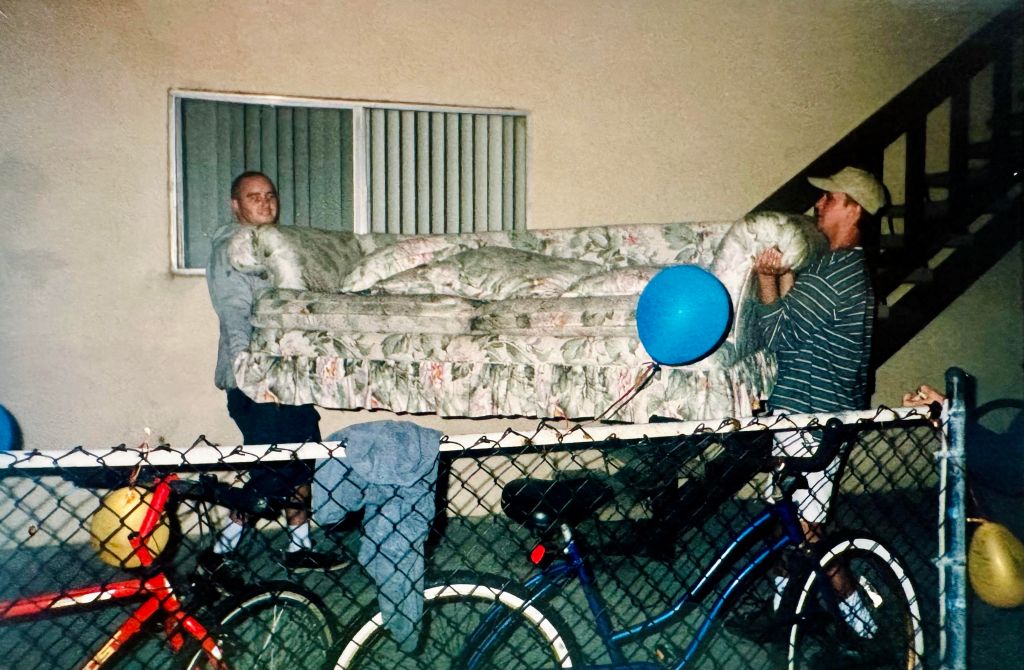
In his senior year, he said, he spent approximately $350 a month to share a room. In 2025 dollars, that’s about $680 per month. Despite the crowded conditions, Kettmann said I.V. was a pretty cool spot. He said live music was everywhere.
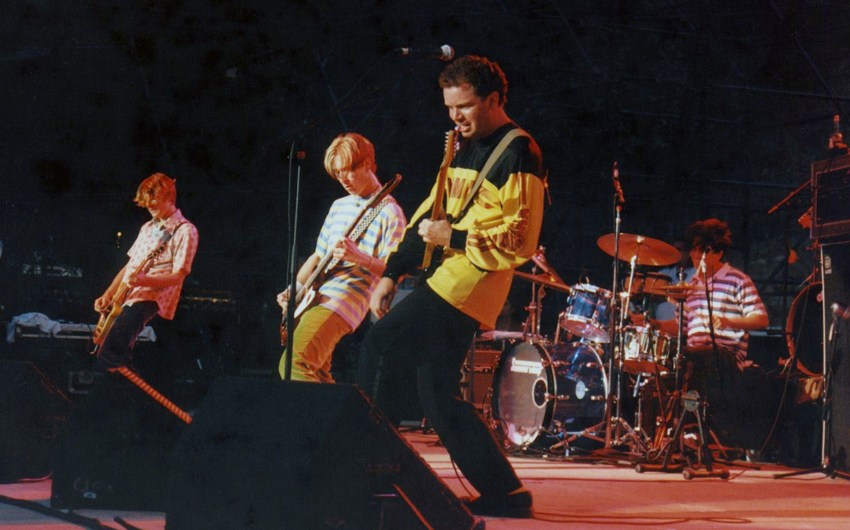
“Jack Johnson was playing in a band called Soil. That was when I was there,” he said.
Kettmann said Bradley Nowell of Sublime played in I.V., too.
“[Sublime] would play. One of the great musical regrets of my life was, there was this chance I could have seen them, and I just didn’t go to the show,” he said. “And then he, like, died two weeks later.”
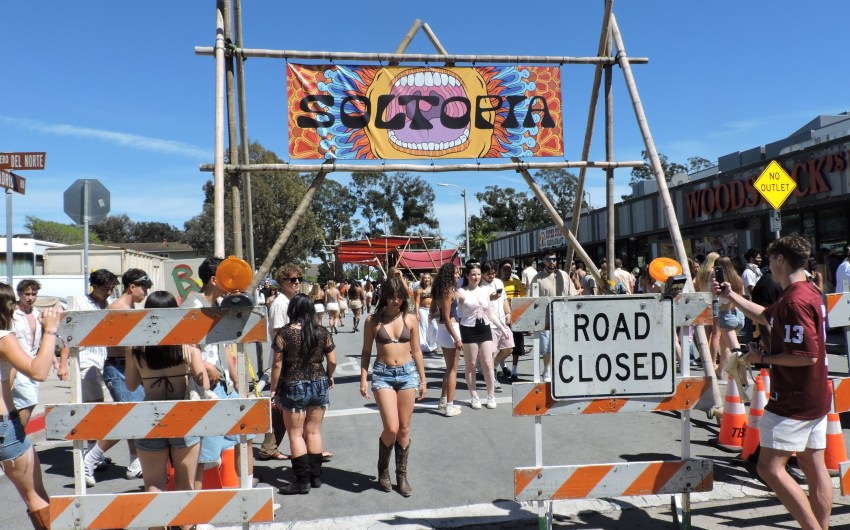
And of course, I.V. had parties, as it still does. Big ones.
“There’d be hundreds, thousands of people in the streets regularly,” Kettmann said. “It wasn’t like a special weekend thing. It was like every weekend there was probably 1,000 to 5,000 people on Del Playa.”
By the ’90s, the county made moves to limit partying on Halloween weekend with restrictions. But generally, Kettmann said, compared to today, things were more lax.
Kettmann stayed in Santa Barbara. He interned at the Independent while in school and after graduation started as a proofreader. He wrote, too. In 2001, Kettmann, alongside longtime reporter and columnist Nick Welsh, covered tragedy in I.V. On February 23, 18-year-old David Attias drove his car into a group of people on Sabado Tarde, killing four and seriously injuring a fifth. Attias was found insane by the court in a case that made national news.
The tragedy caused eyes to turn to Isla Vista. Attias’s defense brought up I.V.’s party scene, and a few years later, California Highway Patrol added a patrol car and officers to I.V.’s streets on the weekends. Reporting at the time says the Attias case was the inspiration.
In 2002, the Santa Barbara County Grand Jury called Isla Vista a “community in neglect.” The county, UCSB, the I.V. Parks District, and I.V. residents were working to create an Isla Vista Master Plan — a document meant to lay out a clear path for I.V.’s development.
Life continued to move in Isla Vista. All the cycling to class and the parties and spending time at the beach kept going. Housing did not get any easier to find.
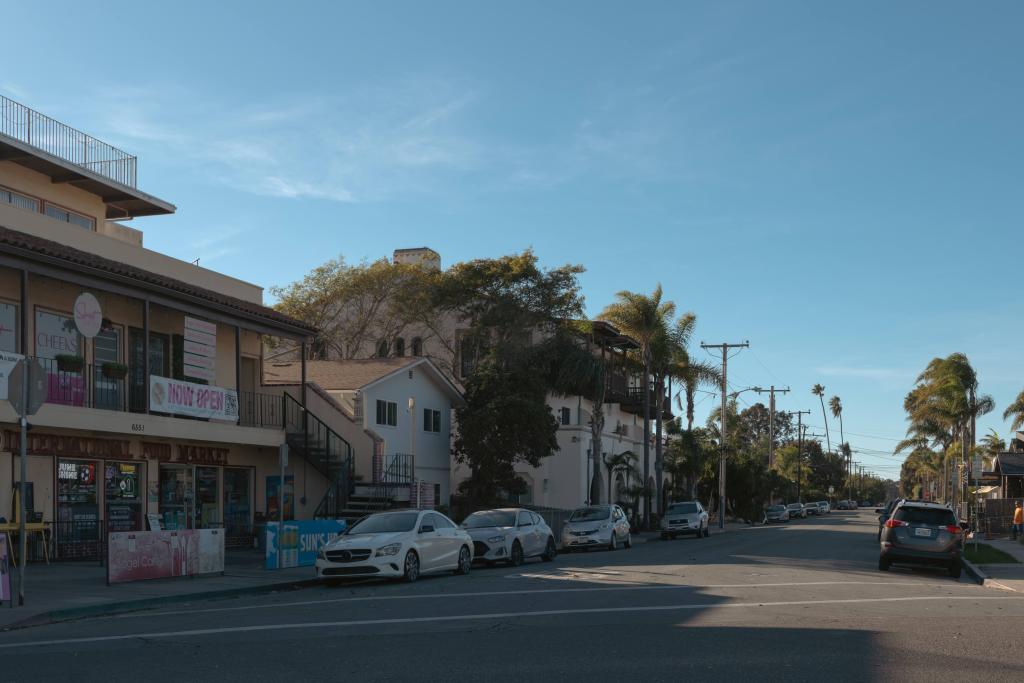
“Everywhere is shoddy and dirty and old and held together with duct tape and paint,” Tyler Hayden said.
Tyler Hayden started at UCSB in 2004. Today, Hayden also works for the Independent as a senior editor.
At the end of his first year, Hayden said, he and his friends walked up and down Del Playa and the nearby street, Sabado Tarde, knocking on the doors of listed properties, looking for a spot to rent. People were friendly. Eventually, they found one — a three-bedroom. They built bunk beds and doubled up.
Like today, and like in the ’80s, it was hard to find a place to park your car.
“At any given time, we were trying to cram, you know, five or six cars in [a] driveway that was probably designed for two to four,” he said. “You know, scraping bumpers and trading paint and doing Tetris to try to fit it in.”
Hayden said that I.V. felt constantly in flux. But the density wasn’t all bad.
“Just because everything is so dense and so close, you meet your neighbors. You get to know the people who run the co-op or the bagel shop. Freebirds was there,” he said.
Freebirds, or Freebirds World Burrito if you want the full name, is known for its tasty burritos and will turn 40 next year. Since it started, it’s expanded to a chain in Texas, but you can still hit up the original one in I.V.
A little over a decade after Hayden started at UCSB, Spencer Brandt enrolled. Today, Brandt is the president of the Isla Vista Community Services District.
The world had changed since the early 2000s. Smartphones were everywhere. The U.S. had experienced the biggest economic downturn since the ’30s, meaning the UC system had raised tuition to try to make up for funding cuts, and I.V. had experienced more turbulent years and tragedy.
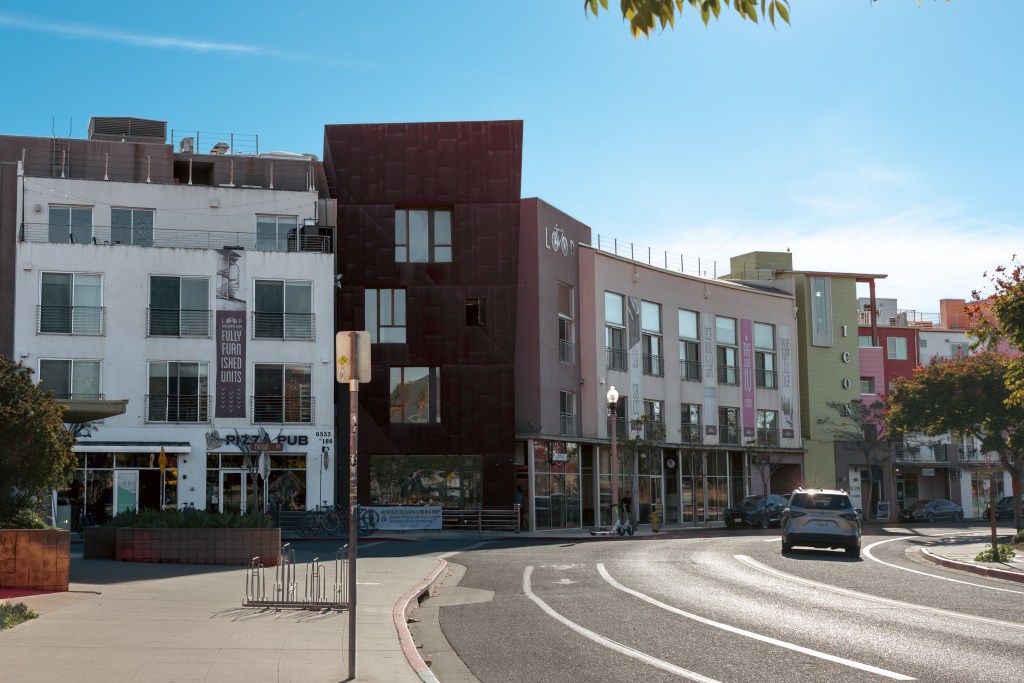
Housing, though? You guessed it. Except for the Loop, which is a four-story apartment building on Embarcadero Loop, the status quo was the same. The County Board of Supervisors had adopted the Master Plan in 2007, but the California Coastal Commission, a state body that regulates use of coastal land, declined to certify it over concerns for its parking plan. By 2016, residents were calling the Master Plan, which was brought before the Board of Supervisors again, outdated.
Brandt was nice enough to walk around I.V. with me and show me where he lived in 2016.
“It’s this big, blue house here,” Brandt told me, later adding “We lived on the bottom story. It’s two bedrooms, plus a garage.”
He lived in the garage in a quad (that’s sharing a room with three people) and paid a little under $700 a month to do so (that’s about $925 today). Remember — that’s a quad. So for half the room or a double, the going rate today would sit a bit above $1,800 a month.
“It’s really tight conditions,” he said. “It was one of those things where, when you’re 18 or 19 years old, you’re just excited to be living with your friends,” he said.
Brandt said he’s never been able to figure out if the garage was a legal dwelling place. But the house, he said, has gotten more expensive, nearly doubling by 2024.
Brandt graduated in 2019 and decided to stay in Isla Vista, continuing work with the newly formed Isla Vista Community Services District.
I graduated from another university the same year. I remember thinking at the time that graduating in 2020 sounded cooler — it’s just a fun number to say. But nine months later, I decided 2019 was a fine year to graduate. A lot of our public spaces, our community, shut down. And I.V. along with it.
COVID was here.
This article has been updated to clarify that the framed check in the Isla Vista Co-op is not an official Bank of America check but a poster which has been reproduced. Additionally, Embarcadero Hall is where the Bank of America was, not the community center.
That was Episode 2 of Welcome to Isla Vista. Next week, tune in to Episode 3: The Near-Then and Now. What has I.V. become post-COVID for student residents? What do landlords say? And what, exactly, does a property management company do?
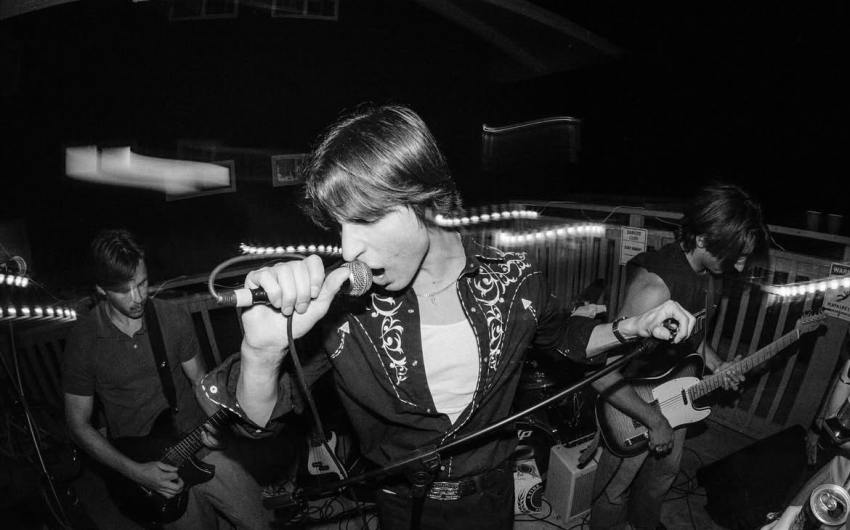
Episode 2 was written, fact-checked, recorded, and produced by Christina McDermott, the Mickey Flacks Fellow for the Santa Barbara Independent. Episode 2’s script was edited by the Independent’s news editor, Jackson Friedman. The historical clip from a 1954 News-Press article was voiced by Dylan Charney. And the song in this episode is “Run Run Run” by Salvidoria. You can find Salvidoria’s music on Spotify here and you can follow them on Instagram @salvidoria.







You must be logged in to post a comment.