Doing Away with ‘Don’t Ask, Don’t Tell’
How UCSB’s Palm Center Is Winning the War Against Gay Discrimination in the Military

It’s only a matter of time before the controversial “don’t ask, don’t tell” policy governing gays in the military is buried once and for all. When that day comes, Aaron Belkin’s fingerprints will be all over the shovel.
For the past 12 years, the political science professor has run the Palm Center at UCSB, a small think tank of scholars and lawyers focused on the fate of sexual minorities within the military. The situation, they soon found, was cruelly absurd and gratuitously self-defeating. At the same time the United States was waging two full-blown wars across the globe, the military was kicking out nearly 14,000 servicemen and -women for violating the dangerously nebulous terms of “don’t ask, don’t tell,” including more than 50 skilled translators — many fluent in Arabic — who had not securely locked themselves in the closet. In some cases, mere possession of a k.d. lang album or a Dinah Shore Golf Classic poster was sufficient cause to launch internal investigations. Meanwhile, the American military — strapped for qualified personnel and forced to relax admission qualifications — allowed more than 4,000 convicted felons to enlist.
The “don’t ask, don’t tell” policy first arose in 1993 as a compromise between the Clinton White House and Republican leaders, the Christian Coalition, and key Southern Democrats, who were threatening a total ban on gays in the military. Back then, such high-profile players as General Colin Powell and Senator Sam Nunn argued that allowing out-of-the-closet homosexuals in the military would prove detrimental to the “unit cohesion” required by military discipline.

Over time, both Powell and Nunn would come to disavow that argument, but they didn’t have much of a choice. The research unearthed by Belkin and other scholars with the Palm Center exposed that there was no factual basis for the “unit cohesion” argument. More damningly, they found there never had been. If anything, they found that “don’t ask, don’t tell” was far more corrosive on military morale due to the capricious persecution that ensued. Even more startling, the Palm Center also revealed that 25 other modern militaries had allowed openly gay men and women to serve without suffering any loss of morale or cohesion.
As think tanks go, the Palm Center consistently punches way above its weight. Although steadily gaining credibility with the nation’s military brass over the years, the center’s most dramatically effective relationships are with news outlets and D.C. politicians. Belkin and his former Palm Center colleague Nathaniel Frank have been interviewed so many times by National Public Radio that listeners could be excused for thinking they work there. Likewise, they’ve made themselves abundantly available to members of Congress and, more importantly, to key legislative staffers. And while their point of view has always been evident, their stock-in-trade is the quality of their scholarship.
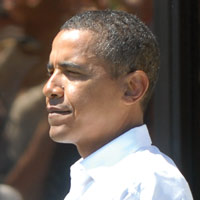
To the extent Belkin can savor the imminent repeal of “don’t ask, don’t tell,” he’s quick to credit the interventions of President Barack Obama, who vowed to end the policy in this year’s State of the Union speech. Ironically, lawyers working for Obama’s Justice Department will be opposing a constitutional challenge to “don’t ask, don’t tell” taking place this week in federal court in Riverside, California. That challenge was filed by the Log Cabin Republicans, a group of gay members of the GOP on whose behalf Belkin will testify as an expert witness. The Justice Department is not expected to rebut Belkin or other experts called by the Log Cabin Republicans. Instead, its attorneys will argue that members of Congress, however misguided, had a rational basis to believe the policy would further the objectives of military morale at the time they voted.
While Belkin was barred from discussing specifics of that case, he was willing to share some of his thoughts on “don’t ask, don’t tell” last week in a telephone interview.
A whole lot has happened this past year with “don’t ask, don’t tell.” Where are we now and what’s next? We are probably going to win, which means that “don’t ask, don’t tell” is going to be repealed and gays will probably be allowed to serve openly. The main hurdle to an inclusive policy was getting legislation through the Senate. And the White House, along with Senator [Carl] Levin and Senator [Joe] Lieberman, figured out an ingenious strategy to move forward … They were able to attach an amendment to a must-pass bill, the budget bill. It’s going to be impossible for the Republicans to strip the amendment from the bill because they need 60 votes. The bill is going to pass. The House of Representatives passed the amendment with the exact same language, so the amendment will become law. The amendment says that the Pentagon is studying “don’t ask, don’t tell,” and that once that study is done and the president, the chairman of the Joint Chiefs, and the secretary of defense have certified that repeal will not harm the military, then “don’t ask, don’t tell” will be repealed.
I heard Senator John McCain was threatening to filibuster. He said a few years ago that the moment military leadership said they wanted a repeal to happen, then he would favor a repeal. Well, sure enough, the chairman of the Joint Chiefs a few months ago said that gays should be allowed to serve openly, and McCain did a flip-flop. He’s on a sinking ship. It’s not credible that he’s going to filibuster the budget bill unless he somehow wants the troops to not get paid. He’s facing a challenge from a Republican more extreme than he is, so he’s trying to pump up his homophobic credentials to appeal to his base.
The Pentagon recently sent a survey to 400,000 troops about changing the policy, but many in the gay community are urging gay troops not to answer because they might risk their careers. We are not legal experts. We say there is minimal risk for participation, but it’s not a case of zero risk. We leave it for the servicemember to decide.
Why has the Palm Center criticized parts of the survey? The questions being asked are deeply problematic, if not offensive. Can you imagine asking servicemembers about any other identity group, like “How would your spouse feel about being housed on base next to a Chinese family?” or “Would you take orders from a Catholic officer?” “Would you share a tent with a Jewish soldier?” The point is there are some questions you poll the troops about, and some you don’t. We don’t poll the troops about whether they want to go to war. The reason why we don’t poll the troops about “Would you share a tent with a Jewish soldier?” is because asking that question constitutes the minority group as second-class citizens.
The other problem with the study is that it’s premised on a false pretense. [Military leaders] have said, “We don’t have any objective research about how we should manage a repeal process and, therefore, we need to spend millions of taxpayers’ dollars and a year studying the issue.” That is flat wrong. There is actually a mountain of evidence. You want to snap your fingers and do it all at once. You do not want to spend a year. That’s what’s best for the military. But that’s not where we are at politically, hence the study.
The Palm Center and you have taken intense heat from gay activists for being too willing to compromise. The compromise is half a loaf, and there are many people in the gay community who want the full loaf, and who have said some not-so-nice things about me and the Palm Center because of our arguments about the benefits of taking half a loaf. We stand very much behind what we said. We don’t think it is politically possible to get full repeal at this time. We’ve taken that heat, yes.
When you talk about the compromise, what specifically are you talking about? The compromise includes two important elements. One is that repeal will not happen now, but only after the president and military leadership certify that they are ready for repeal. No one really has much of a problem with that.
The piece of the compromise people have a problem with is that the amendment will not impose a requirement upon the Pentagon to implement nondiscrimination. So, in other words, the Pentagon will have statutory legal discretion to implement whatever policy it wants, whether that’s integration or discrimination. We are not afraid of the compromise. It’s not perfect, but pretty darn good. That’s because the chairman of the Joint Chiefs of Staff and the president of the United States, the commander-in-chief, have made it very clear that they want gays to serve openly and equally. So we have every confidence that once the law is repealed, good regulations will be put in place, and those good regulations will basically be tamper-proof if future administrations try to make trouble. We think that’s a victory.
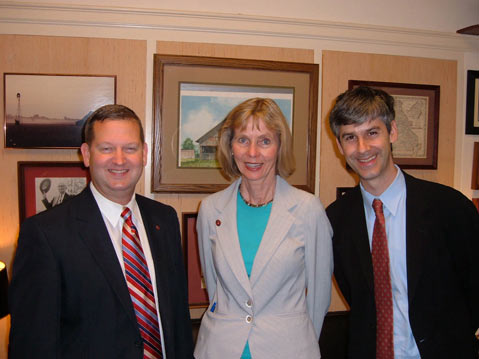
In the 1990s, when “don’t ask, don’t tell” was first introduced, Walter Capps was running for Congress. His campaign manager told me if I asked Walter about gays in the military during an interview, the interview would be over. Today, Walter’s wife, Lois Capps, is in Congress, and she’s very out front in support of repeal. What changed? We should talk about Congresswoman Capps. She’s incredibly strategic, but she also has this reputation as the nicest member of Congress, of all 535 members. She gets along with everybody. Because of her relationships on the Hill, she has been able to push this issue forward in many behind-the-scenes ways. She’s used her position to spread the word among members of Congress and talk to them privately on the importance of the issue. She gets no public credit for that … She’s just there at every step, literally every single step.
As to why attitudes have changed, it’s because, in part, of political leaders like Congresswoman Capps, who have talked about gay and lesbian issues in a very mainstream way. The issue has become more normalized over time, and that is why people are able to have conversations about it. At the same time, the cultural change is not only about political leaders. There have been a lot of important and brave grassroots heroes who have been working on the ground to try to help the public understand that homosexuality is not scary, and gay and lesbian people deserve their rights just like everybody else.
You once described President Obama’s approach to gay issues as “anemic,” but that was before he appointed a woman softball player to the Supreme Court. What are your thoughts now? I think the president has taken tremendous strides since I made that comment. Look at what he has done on “don’t ask, don’t tell” since that time. He inserted himself into a very messy congressional process and he, along with Senator Lieberman and Senator Levin, twisted arms on the Senate Armed Services Committee … The White House just pushed and pushed and pushed and then got the amendment through committee, and that took a lot of capital.
I’m struck by how little mojo the other side is showing on this one. Have they just given up? They know that they are on the wrong side of history. Depending on the polls, between 58 and 81 percent of the public supports the repeal. The majority of Republicans support repeal. The majority of churchgoers support repeal. The majority of old people support repeal. Ninety-one percent of young adults support repeal. Homophobes know that they lost, that they are on the wrong side of culture. They can see that the scare tactics they used have become less effective. It’s harder to scare the public about gay marriage and gays in the military.
In 1993, “gays in the military” was the biggest fundraising cash cow for the Christian right that they ever had. They raised tens of millions of dollars off this one, and coordinated a massive national lobbying campaign. This time, you have Republican leaders in the House like Buck McKeon sending letters to the Pentagon every now and then, but basically they are posturing. They know they lost.
You cite 25 countries where gays are now allowed to serve openly. Was there any blowback when the policies shifted? Nothing. The Brookings Institute and the Palm Center sponsored a conference on Allied military experiences last month. We had generals and commanders from around the world who said again and again that they thought disaster would ensue when policy changed, but that it was just not a big deal.
How do you make the change? It’s not rocket science. You need two or three things. You need a single code of conduct that applies to all servicemembers, gay or straight, so hold everyone to the same standards. Our military already has such a code, so we don’t need anything there. We need leadership signals from the top that everybody is expected to work together. If you have those two things, then you are not going to have a problem.
In 1993, the generals argued that gays in the military would undermine what they described as “unit cohesion.” What have you learned about that? The claims about harming unit cohesion have always been a pretext for, whatever you want to call it, moral opposition of homosexuality or homophobia. But it’s never been about unit cohesion. The people who came up with the unit cohesion rationale recently confessed to my former colleague Nathaniel Frank [for research in his book Unfriendly Fire] that it’s based on nothing. There was no evidence at the time that gays undermined unit cohesion, and there was a lot of evidence that they don’t. The reason they used the unit cohesion rationale is because it sounded good. They didn’t want to go to Congress and say, “We don’t like gay people.”
How long have you spent studying this? Twelve years. I had been studying the military in graduate school, and I came out of the closet, and I was studying the military and realized there was a tremendous overlap between my military interests and my gay and lesbian interests.
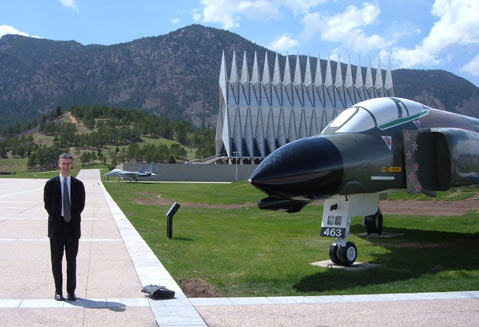
What was your interest in the military? It’s probably been kind of a fascination/repulsion relationship. Ever since I was a kid, I had model airplanes in my attic, and I used to read the World Book Encyclopedia entries on all the wars. I was fascinated by the military and war, but never understood why anyone would join an organization where they’d have to kill someone. There has always been a contradiction lodged in the heart of my interest, and I don’t know why that contradiction is there, but that’s where I’ve been coming from for many years.
So is the military the biggest institution discriminating against gay people in the country? The military is the largest employer in the country. When the largest employer in the country fires you on the basis of who you are, then you can never really be a first-class citizen. For the most part, the rest of the culture has moved on. The federal government has moved on. The CIA allows gays to serve openly. All the other government agencies allow gays and lesbians to serve openly, and the reason I focus on the military is because they don’t.
In addition, there has been a long-standing struggle in this country among groups who’ve been excluded from equal citizenship to struggle for their rights in the military. It happened with women, with Asian Americans, Irish, African Americans; even Jewish Americans, to some extent, have had to prove their loyalty as soldiers.
The reason we are talking about the military and not the post office or Amtrak or the Department of Agriculture is because this is a highly militarized society. People worship the military in this society, and often, I would say, worship the military uncritically. Regardless of what you think about that worship, the bottom line is that the reverence is there, and this society is extremely, highly militarized, and so the military becomes an important stage on which political dramas are played out.
Do you still have people in the military telling you, “To hell with your research, I still know what I know, and I know that if we have gay people in here, it’d be disruptive”? If you ask servicemembers what they think, about 30 percent will say they would like gays to serve openly, about 40 percent would say they don’t want gays to serve openly, and about 30 percent say they don’t care either way. Among those 40 percent who say they don’t want gays to serve, it’s a pretty small minority who feel strongly about it. There’s a lot more support in our military for repeal than there was in the British military when they repealed. About two-thirds of British and Canadian servicemembers said they would not work with gays.
And was that a problem? There were three people that resigned in each case.
What damage has excluding gays from the military caused? They’ve probably spent a billion dollars firing people under “don’t ask, don’t tell,” fired a lot of talent, and fired Arabic linguists. I think the biggest cost to the military goes back to the 1950s and the McCarthy era, when the politics of paranoia ripped this country apart. It was the military that split up Senator McCarthy in the Army/McCarthy hearings, so it was the military that fought the politics of paranoia and helped return the country to a situation of calm and normalcy. In the case of “don’t ask, don’t tell,” the military allowed itself to get dragged into the politics of paranoia and, in fact, lied about that and pretended that this is about unit cohesion and not homophobia or paranoia. That is a dangerous precedent for civil-military relations.
What difference has the Palm Center made? I think a lot of different groups and people need to be given credit for getting us to where we are. I don’t think any one group single-handedly got us to where we are. In terms of the Palm Center’s contribution, I would point to two or three things as being most important.
We’ve broken a great number of stories that help the public understand the cost of discrimination. For the last seven or eight years, we’ve been breaking stories about Arabic linguists being fired for being gay. Before we came along, there was just a conventional understanding in media coverage that, sure, “don’t ask, don’t tell” might be unfair, but discrimination is necessary for military readiness. We’ve done a great deal of research on that question and generated a lot of media coverage about our findings that, in fact, it’s discrimination that hurts the military.
We were also the group that first recognized we were not going to be able to get repeal all at once, and that if we kept holding out for repeal, we would end up getting nothing. There was a moment when the community was asking for a full-scale repeal, and the president was saying, “Look, I don’t have the votes in the Senate, leave me alone.” And he was right; he didn’t have the votes in the Senate. So his administration used conditional language not about when “don’t ask, don’t tell” would be repealed, but if it would be repealed. The issue kept flipping further and further on the back burner.
But we released a report that showed actually the president did not have to wait for Congress — he could simply sign an executive order suspending “don’t ask, don’t tell,” and that would be the first step. That report got a tremendous amount of coverage and ended up generating a lot of heat. Once people realized that Obama could not continue to blame Congress, they started to blame him for “don’t ask, don’t tell,” and that played a role in kind of helping the White House start to move in an aggressive direction.
How do you measure the historic significance of repeal, like Truman integrating the military in the late ’40s? I don’t really have an answer to that question. Every civil rights struggle is different. I’d hate to put this one up on the same plane with situations where civil rights protesters were beaten by police and killed. That said, we’ve been throwing people out of the military for homosexuality for more than 200 years. This is a big one. This is a major step in the path to equality, but it’s not really about sexual orientation and gay people. It’s about American citizenship and what it means to be a citizen when the government punishes people for who they are.
Once it’s repealed, then what will you do? Retire.
4•1•1
For more on the Palm Center at UCSB, see palmcenter.org.