Public schools across the country are still scrambling after the Trump administration froze billions in funds for education programs on July 1, eliciting bipartisan pushback and lawsuits from states and school districts.
Santa Barbara County schools are feeling the strain. The Santa Barbara Unified School District, the county’s largest, is missing about $888,000 in federal funds.
Last week, the president gave in to pressure from the states and released $1 billion in funds initially withheld from after-school programs. However, about $5 billion for teacher training, English learner services, migrant and adult education programs, and academic enrichment are still on ice.
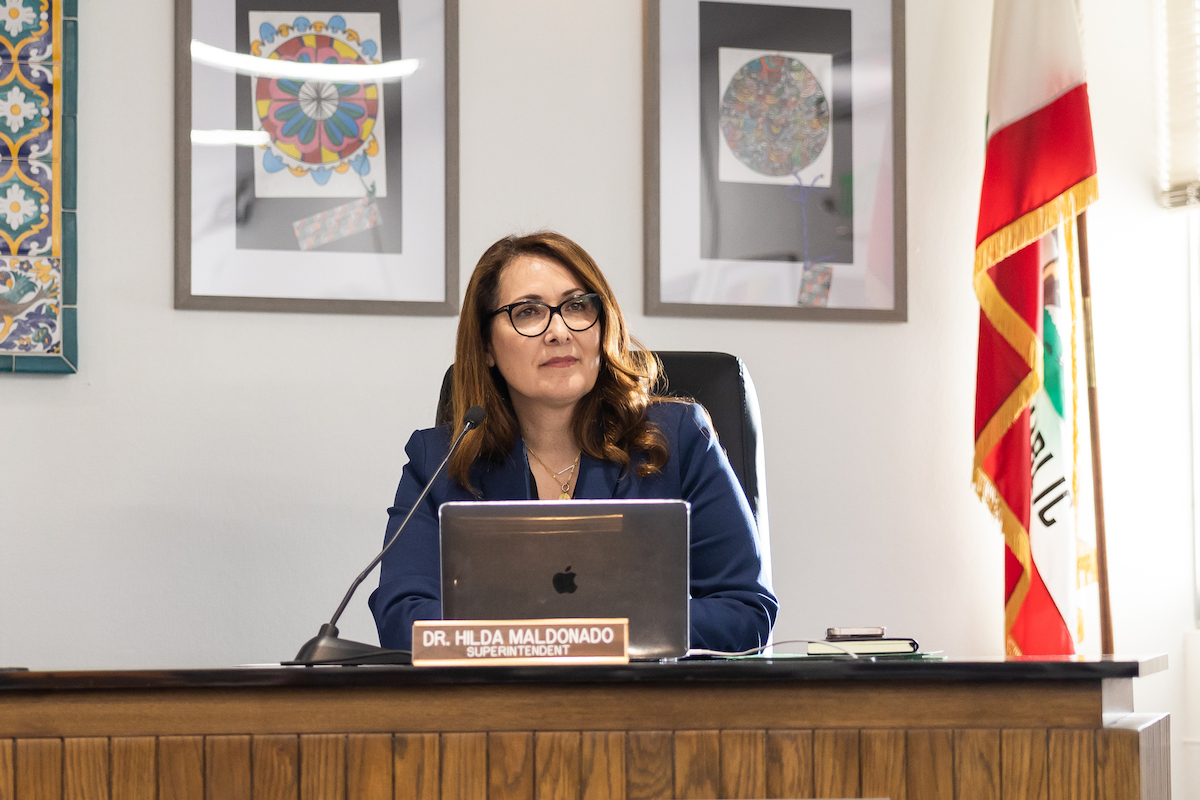
S.B. Unified Superintendent Hilda Maldonado said the district is in “very uncharted waters.” That may be an understatement. With the Trump administration taking an ax to the Department of Education — it recently laid off half its staff — the district, like others, is in a tumultuous sea of uncertainty.
Some of the now-frozen funds were already built into the district’s budget, adopted in June, which “we will have to rethink and have contingency plans about,” said Maldonado. It mirrors the situation felt by districts around California, which, in total, were shorted $811 million when the federal Office of Management and Budget announced on June 30 that the funds wouldn’t be released as expected due to an “ongoing programmatic review.”
In S.B. Unified, the biggest chunk of change was set aside for professional learning, totaling about $400,000 to train teachers, which usually happens over the summer. One such training was scheduled for August 11-13. “We now need to figure out if that’s going to come through or not, or if there are other funding sources that we can use to pay teachers,” Maldonado said.
Another $200,000 was for academic achievement — such as tools to track student and teacher outcomes, as well as backing for programs like the Council on Alcoholism and Drug Abuse (CADA) that helps families struggling with addiction. The district was also going to use some of that money to pay for a Teacher on Special Assignment dedicated to advancing improvements in the arts programs.
Although the sudden freeze on other programs came as an unexpected shock, the district had already anticipated the loss of its $280,000 in federal Title III funding for English learners and immigrant students. Approximately 13.6 percent of the district’s student population — around 1,500 students — are classified as English Language Learners. The district does not track students’ immigration status.
Maldonado noted the administration’s current “rhetoric” around undocumented immigrants, referencing the recent federal raids at greenhouses in Carpinteria and Camarillo. “And so, you can imagine, that group of students needs a lot of support, and this money is specifically for them,” she said.
To make up for those lost federal funds, the district plans to pull from the Local Control and Accountability Plan’s pool of mixed funding, in line with the school board’s newly adopted plan to address the needs of English learners.
Otherwise, while funding for low-income students (Title I) and special education has not yet been slashed, Maldonado is bracing for impact.
“If I had a crystal ball, I would imagine that special ed is going to get hit … it has historically been underfunded,” she said.
Amid the current freeze, and in anticipation of upcoming challenges, the district has “already begun taking a look at our system, looking at our student outcomes, to see what the system can take in terms of reorganization, both at the district level and the school level,” Maldonado said.
The district was already grappling with a $4.2 million deficit, potentially rising to $5 million thanks to federal withholdings. And that’s not accounting for other budgetary burdens that may result from the massive republican budget package that’s gutting multiple social programs, dubbed the “One Big Beautiful Bill Act.”
So far, no teachers or parents have come forward to speak with Maldonado about their concerns, but she anticipates they may get a few worried speakers during their next board meeting on July 22.
“I’m also concerned about just enrollment in general,” she said, citing a downward trend. “I know that if we have fewer students, that means we don’t need as many staff, right? So, we’ll have to think and look at that once we actually kick off the new school year.”
The worst thing about all of this is the “uncertainty and volatility,” she noted. “We hope to continue to do this work by keeping people at the center of our decision making. And that means really looking at how we respect every single person in our system, and how we use our values of love, justice and humanity to continue to make better decisions.”