California’s wildfire season is showing up early — in some regions by more than a month — and a new study says human-caused climate change is a major reason why. In 11 of the state’s 13 ecological regions, the start of peak fire activity has shifted forward by six to 46 days since the early 1990s.
The study, titled “Anthropogenic warming drives earlier wildfire season onset in California,” was published earlier this month in the journal Science Advances. Led by UCLA’s Gavin Madakumbura, researchers analyzed nearly three decades of fire occurrence records across landscapes ranging from the Cascade forests to Southern California’s coastal chaparral — not just to confirm the shift, but to pinpoint its cause.
Among the study’s co-authors is Max Moritz, a UC Santa Barbara adjunct professor and statewide wildfire specialist with UC Cooperative Extension. “It’s not just a trend you might expect from natural variation,” Moritz told the Independent. “The signal from greenhouse-gas-driven warming is there, above and beyond what nature alone would produce.”
To reach that conclusion, the team used a “detection and attribution” approach — a process for separating normal climate swings from trends driven by human activity. This allowed them to ask: even if natural variability might have shifted fire season timing, how much of the observed change can only be explained by human-caused warming? The answer: quite a lot. Fire season now begins 46 days earlier in the Cascades, 31 days earlier in the Northern Basin, and 24 days earlier in the Sierra Nevada.
The study also explains why Southern California’s shift is still significant but less dramatic. In the north, fire activity is often dictated by the dryness of “dead fuels” — fallen branches, logs, and other woody debris that can take days or weeks to lose moisture. In the south, including Santa Barbara County, wildfires burn primarily through living vegetation, making “live fuel moisture” the critical factor.
“What matters here is how quickly green plants dry out,” Moritz said. “When the air is warmer and the humidity lower, they lose moisture faster. That means ignition conditions can arrive weeks earlier than they used to.”
This difference in fuel types means temperature and humidity are only part of the story. In chaparral regions, late-winter and spring rainfall is just as important in determining the timing of fire season. “The amount of spring rain is one of the best indicators of when you’ll hit the more severe part of the fire season,” Moritz explained. “But the warming trend still plays a role because for the same amount of rain, plants are drying faster than in the past.”
That also means some policy talking points don’t translate across ecosystems. As Moritz put it: “That’s really almost irrelevant to the millions and millions of acres of shrublands in California,” when asked about arguments for large-scale forest “clean-up” as a wildfire fix. Forest management can matter in forest systems — but it won’t change the basic flammability patterns of Southern California’s dry shrublands.
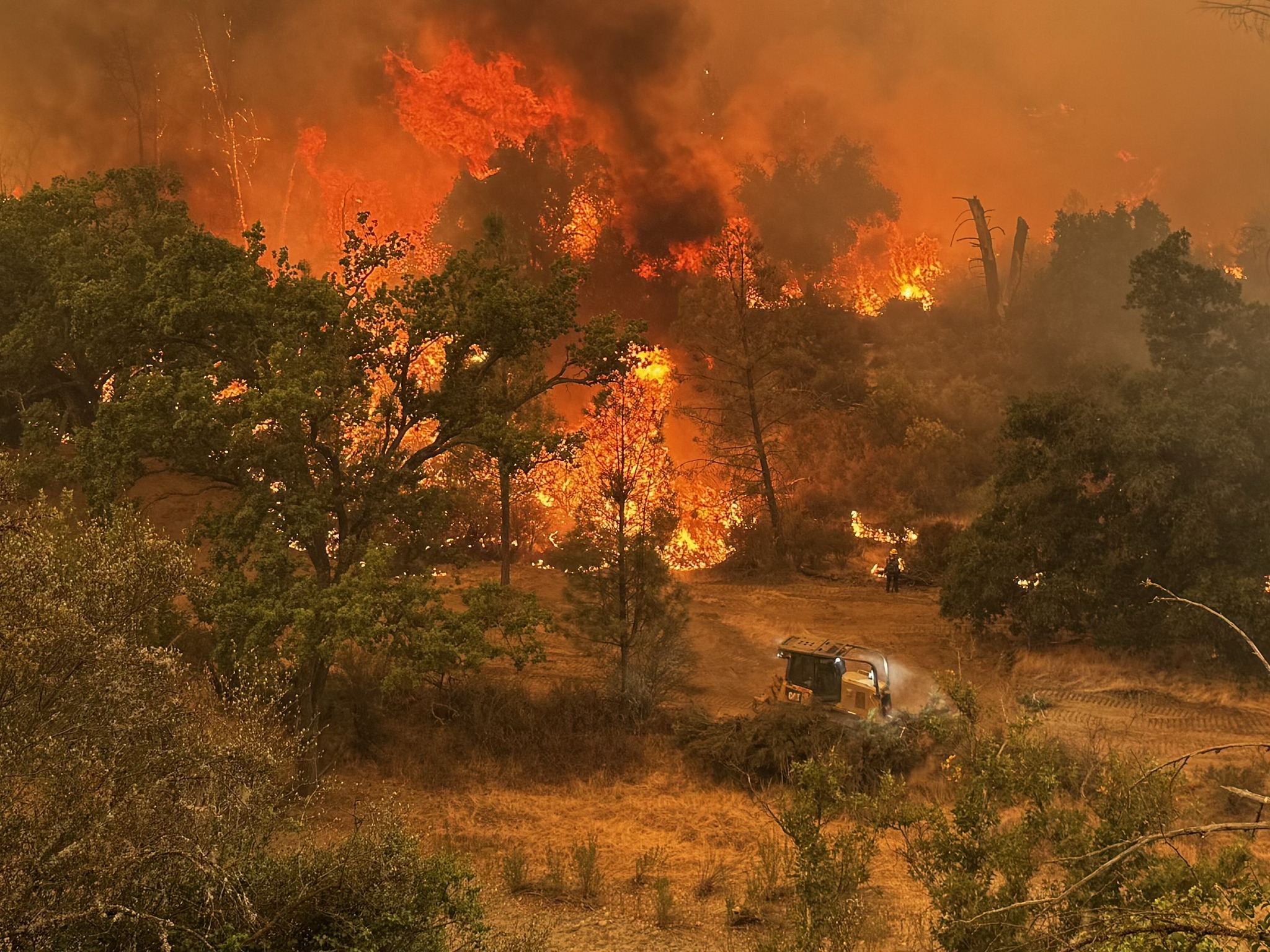
And this year, the data has a name and a map. The Gifford Fire — California’s largest blaze of 2025 — has burned 129,992 acres since it sparked August 1 along State Route 166 northeast of Santa Maria. As of August 18, it had threatened 1,832 structures and injured nine firefighters and three civilians.
Its early-August ignition may not sound unusual, but Southern California’s most destructive fires historically peak later, in September and October, when the region’s notorious wind events are most common. California has already logged 5,362 fires this year, torching more than 374,000 acres — well above the five-year average for mid-August. One-third of this year’s total burned acreage belongs to the Gifford Fire.
Gifford’s timing, size, and speed fit the pattern the new study confirms. The only thing more unsettling than a megafire in August is knowing it no longer counts as “unusual.”