


The two heroic figures making last week’s stunningly fine Los Angeles Philharmonic concert at The Granada Theatre were significant emigrants to L.A.’s musical culture and larger legacy. Maestro Gustavo Dudamel, who appeared for the last time locally during his L.A. Phil tenure, before heading to lead the New York Philharmonic next fall, was a wunderkind from Venezuela when he took up the baton to lead L.A.’s stellar orchestra in 2009. And 20th century master composer Igor Stravinsky spent many years in his later life stage as an Angeleno, active in regional musical projects.
The composer-conductor combination amounted to a wowsome program featuring the considerable talents of both, in a potently realized presentation of a pair of Stravinsky’s ground-breaking ballets penned as a twenty-something, The Firebird Suite and The Rite of Spring, plus the U.S. premiere (Santa Barbara’s concert along with the weekend performances at Disney Hall) of John Adams’s engaging new Frenzy. Conceptual cohesion was at hand in the program, with each piece inter-relating and revealing sometimes surprising parallels to one another, with the legendary game-changer Rite of Spring at the apex.
All in all, by the cathartic close of Dudamel’s righteously crafted Rite of Spring, I had the impression that this was the strongest of L.A. Phil’s annual visits in memory, and a profound way to kick off the new season of orchestra concerts brought to us by the venerable CAMA.
At 16 years into the collaborative pact between the L.A. Phil ranks and Dudamel, the orchestra — one of America’s finest by now — is a remarkable, finely tuned ensemble entity, capable of treating old and new repertoire with fire and finesse. Former music director Esa-Pekka Salonen primed the engine of the organization and turned it into an internationally respected outfit, and Dudamel has further refined and energized the operation.
This much was immediately evident as they launched into the now 77-year-old, great American composer Adams’s fresh and tasty Frenzy: a short symphony, commissioned by the L.A. Phil. True to Adams’s form and background, the piece is tethered to a strong pulse, echoing his early days as a bonafide Minimalist. But the melodic and harmonic content present a different and more recent story, shifting restlessly between tonalities without ever fully committing to an atonal game plan. He also works inventively with the varied colors and myriad blends of the orchestra palette.
Coiled tension in the opening section segues an airy, simmering passage passing for a slow movement. Motoric fragments prod and guide the piece back into its kinetic mode, leading into the “frenzy” portion of the program. Increasingly frantic energies and sound masses, and stabbing percussion all around, spin the piece nearly out of control. Nearly. Adam’s sure structural hand is at the helm of this fine madness, a witty knack for controlled abandon he has shown in such earlier pieces as “Hallelujah Junction” and his “Chamber Symphony” (described as Schoenberg-meets-Carl Stalling).
It turns out that Frenzy works compatibly in a program with Rite of Spring, with its own infamous moments of frenzy verging on chaos.
Echoes of the Rite, or more accurately pre-echoes, can be found in The Firebird, which is often considered the kinder, gentler of the three ballets Stravinsky wrote for choreographer Sergei Diaghilev between 1910 and 1913 (Petrushka being the second of the three). But there are clearly seeds of what would consummate in the more raucous Rite tucked into the firebird’s folds. Dudamel led the L.A. Phil through the abridged 1919 version, a glowing account from the elegant misty opening through the alternately lush, thunderous, and ultimately anthemic finale.
Inevitably, the main event of the program came with the Rite, which this orchestra has shown itself to be an expert interpreter. This piece, once rarely played because of its challenges to conservative audiences (and orchestras), has had a more common presence onstage, thankfully. We’ve heard it on the Granada stage in recent years, as performed by our own Santa Barbara Symphony and by the Music Academy of the West’s orchestra two years back. But the L.A. Phil’s reading brought the piece up several notches in execution and impact.

Dudamel showed himself to be at one with the music, conducting without a score and leading the charges with a bracing clarity through the work’s dualistic elements of primal intensity and yearning lyricism between the tumults. In this performance, an eloquent case was made for the twin forces of tension and tenderness baked into the composer’s overall strategy.
Despite its reputation as a relatively brutal and tonally challenging work for its time — coming fairly soon after the post-romantic instincts in classical music — the piece contains poignant and innocent tuneful passages, literally from start to finish. The yearning sound of the bassoon’s solo opening theme launches the adventure and just before the final hit of the otherwise frenetic finale, a fleeting gentle flute flurry is inserted, a wisp of a kindhearted gesture amid intense sternum-rattling dynamism. Even the famed “Augurs of Spring” movement, with its pummeling and almost pre-rock-n-roll beat, is interspersed with and interrupted by gentler fragments in a kind of hard-soft emotional power play. The L.A. Phil, as boldly led by Dudamel, articulated the work’s complex emotional landscape with power to spare.
No seats were harmed at the Granada during this concert, in contrast with the legendarily riotous response after its 1913 premiere in Paris. But, gauging from the crowd’s ecstatic response and from my own state of post-concert transcendence, minds were blown and opened at the Granada on this night.
Related Posts


Premier Events
Sat, Oct 24
2:00 PM
Santa Barbara
Japanese Sacred Architecture: Shinto and Buddhism
Sat, Oct 24
10:30 AM
Santa Barbara
Picnic in the Cemetery: A Live Historical Event
Sat, Oct 24
11:00 AM
Goleta
2nd Annual Charger Cup to Benefit DP High Golfers

Sat, Oct 24
12:00 PM
Santa Barbara
Makers Hive Market
Sat, Oct 24
2:00 PM
Santa Barbara
Japanese Sacred Architecture: Shinto and Buddhism

Sat, Oct 24
2:00 PM
Santa Barbara
Thriller 2026 – Get Scary for Charity!

Sat, Oct 24
3:00 PM
Santa Barbara
Downtown Santa Barbara Trick-or-Treat

Sat, Oct 24
5:00 PM
Santa Barbara
15th Annual DSASBC Halloween Hoedown
Sat, Oct 24
5:30 PM
Solvang
Solvang Haunted House and Street Fair
Sat, Oct 24
7:00 PM
Santa Barbara
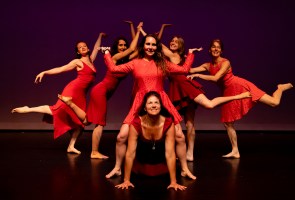
Anima: Theater of the Feminine Underground
Sun, Oct 25
11:00 AM
Santa Barbara
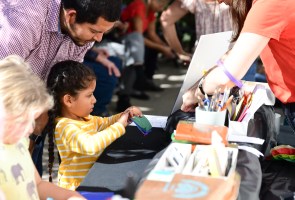
Free Family Day: Día de los Muertos
Sat, Oct 24 2:00 PM
Santa Barbara
Japanese Sacred Architecture: Shinto and Buddhism
Sat, Oct 24 10:30 AM
Santa Barbara
Picnic in the Cemetery: A Live Historical Event
Sat, Oct 24 11:00 AM
Goleta
2nd Annual Charger Cup to Benefit DP High Golfers
Sat, Oct 24 12:00 PM
Santa Barbara
Makers Hive Market
Sat, Oct 24 2:00 PM
Santa Barbara
Japanese Sacred Architecture: Shinto and Buddhism
Sat, Oct 24 2:00 PM
Santa Barbara
Thriller 2026 – Get Scary for Charity!
Sat, Oct 24 3:00 PM
Santa Barbara
Downtown Santa Barbara Trick-or-Treat
Sat, Oct 24 5:00 PM
Santa Barbara
15th Annual DSASBC Halloween Hoedown
Sat, Oct 24 5:30 PM
Solvang
Solvang Haunted House and Street Fair
Sat, Oct 24 7:00 PM
Santa Barbara
Anima: Theater of the Feminine Underground
Sun, Oct 25 11:00 AM
Santa Barbara



You must be logged in to post a comment.