I write with urgency and conviction that the proposed downtown Macy’s Redevelopment Plan is dreadfully wrong.
Everyone agrees something must be done about the Macy’s building, but this plan is not it. It is staff-driven, developer-friendly, and citizen-silent. It lacks support from both the Planning Commission and the Historic Landmarks Commission. The Planning Commission, indeed, stands unanimously opposed. We are ready to help design a solution — but have not been asked.
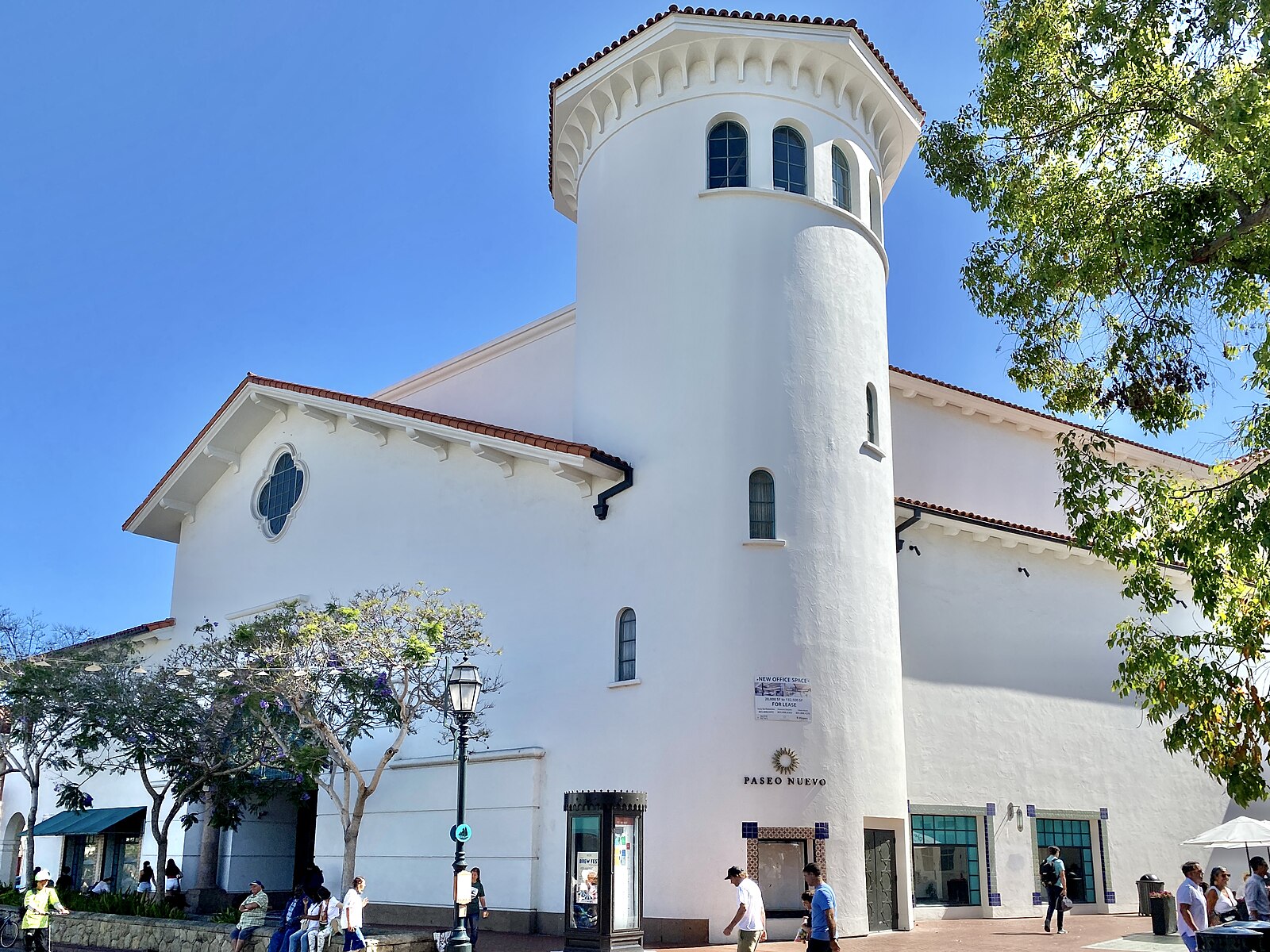
The plan arrived before the Planning Commission fully formed out of a black box, from an out-of-town developer managing $785 billion in global assets. The developer’s awareness of Santa Barbara’s history is paper-thin. Its architect spoke warmly of his “long relationship” with the city but mislabeled all the renderings — apparently unaware of the compass directions of our streets.
Santa Barbara’s planning history is rooted in civic participation. In 1925, the city established the nation’s first Architectural Board of Review, embracing the Mediterranean style that defines our charm. The creation of the ABR made Santa Barbara the birthplace of municipal design review throughout the United States. Two years earlier we created one of California’s first planning commissions, on the principle that residents — not outside corporations — should shape our future.
Our process is slow, sometimes frustrating, but it is democratic. We hold meetings not to tell people what will happen, but to ask what should happen. That process was abandoned here. When the developer insists we approve their plan or, “It won’t happen,” both your commissions replied: Fine. We can wait for a better plan.
Why the Commission Objects
The Planning Commission’s objections are numerous.
- Financial Pressure Should Not Dictate Policy: AB Partners holds the long-term lease of city land under the Paseo Nuevo mall. It is a $785 billion conglomerate. It claims that without a gift of the land, the project “won’t pencil.” We should not hand over public property to rescue a global firm from its own business troubles. Our commissions are clear: That is not the city’s role. Giving away land, in perpetuity, would be a grave mistake. Imagine explaining to future generations that we once owned it — and chose to give it up. How could we justify that?
- Inadequate Presentation: We were told that “the financial analysis proves” this is the only viable design — but we were shown no analysis, no evidence that other options were considered, no highest-and-best-use study, no documentation.
- Affordable Housing Is Treated as an Afterthought: The affordable units are on the alley behind the Canary Hotel, away from the “market-rate” units and their amenities — including the pool, which the affordable tenants would have to walk one-and-a-half blocks to use. When Vice-Chair Lucille Boss said the plan was “lacking in dignity,” she was spot-on.
- No Discussion of Unit Sizes or Types: We were asked to approve a plan with no clear information about what kind of units are being built, bedroom count, etc. This is unheard of for a submission to the Planning Commission. We were told such details would be “worked out later” between staff and developer.
- Important Parking Issues Marginalized: The location of the affordable units would eliminate 186 city-owned parking spaces behind the Canary Hotel. Under new state law, cities can no longer require on-site parking in any type of downtown development, but we have no idea what that means for the future. We have no updated inventory of downtown parking — public or private — nor a study of demand under these new rules. What are we to do for new projects that will have no parking? The ability to create new city parking lots may be one of the few local planning tools we have left; we just don’t know.
- The Mid-block Paseo Received Weak Attention: The mid-block paseo that extends from the Arlington Theatre down to Paseo Nuevo stops at this project. The continuity of that paseo and its connection across Ortega Street received almost no attention, and yet it is a vital pedestrian link.
- The Project Is Out of Scale: The Historic Landmarks Commission voiced strong concern about the project’s size and mass.
- Retail Expansion Without a Basis: We have many storefronts sitting empty, but the developer proposes new retail space without any study of demand, vacancy rates on State Street, or absorption potential. We were told this, too, would be “handled privately.”
A Call for Better Planning
These issues strike at the heart of how Santa Barbara governs itself. For a century, our planning process has reflected respect for place, scale, and community voice.
No one doubts the need for downtown revitalization, but we get there through open dialogue, thoughtful design, and fidelity to our heritage. Our city’s charm was not built by global capital; it was built by the community’s fight for beauty, proportion, and civic identity.
The Paseo Nuevo site offers a once-in-a-generation opportunity. Let’s take the time to do it right.
Brian Barnwell is a current planning commissioner and former city councilmember for the City of Santa Barbara.