
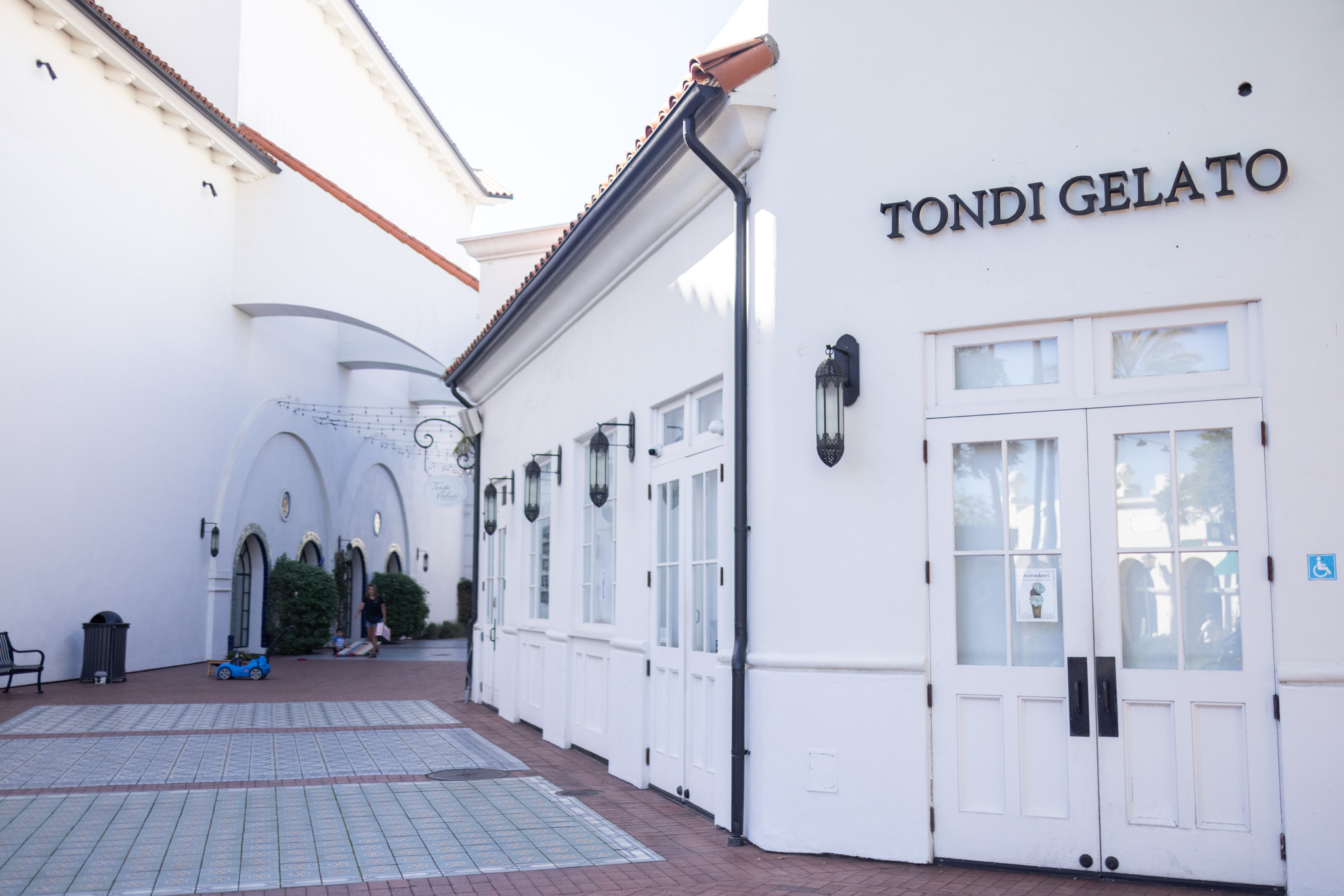
Next week, the Santa Barbara City Council is expected to vote on a deal for the proposed redevelopment of the Paseo Nuevo shopping mall, a proposal that includes the transfer of city-owned property underneath the mall to allow for the construction of 233 units of residential housing. The deal has been under intense scrutiny in the weeks leading up to the December 2 council meeting, with members of the city review boards questioning whether the city was giving away too much to the developer of the project, AllianceBernstein (AB Commercial).
The current version of the proposal comes after more than two years of delicate negotiations between the city and AB Commercial, which became the accidental owner of the majority of the mall after the previous leaseholder defaulted on a loan in 2022. It has already seen several design changes and layout updates (read our deep dive on the Paseo Nuevo redevelopment here), including the last-minute removal of a requirement for the developer to build a 80-unit affordable housing over a city-owned parking lot adjacent to the mall.
City Administrator Kelly McAdoo has been guiding the project through this final stretch, making public presentations and crafting the 125-page Disposition and Development Agreement, which outlines the plans and conditions for both the city and AB Commercial. The plan has been presented as the city’s best chance at bringing housing downtown and an important piece of the revitalization of the State Street area. It also may be the city’s only option, as McAdoo explained during an appearance on S.B. Newsmakers with Jerry Roberts on November 21.
She said negotiations with AB Commercial have been “complicated,” with the city’s ownership of the ground underneath the mall not carrying as much bargaining weight as many members of the public would assume. The city’s partial ownership is restricted by lease encumbrances, and the State Department of Finance officially ruled the land had zero value to the city due to the many layers of complications tied into the parcel (the estimated value of the city’s total contribution to the project is $32 million-$39 million).
In 2023, the city and AB Commercial revealed an early plan for redevelopment with up to 500 units of housing. This early plan had the same basic structure, with the city transferring the rights to its land in exchange for AB Commercial financing the development. If the plan penciled out, AB Commercial could make a return on its original investment and the city could expect an economic boost with hundreds of new residents downtown.
That original plan fell through when AB Commercial determined that building 500 units of housing over all parts of the mall would require retrofitting the entire foundation of the mall. The 500-unit proposal was scrapped, and in 2024 the team returned with a downscaled project, this time with the housing concentrated in two buildings: a 233 market-rate apartment building over the current Macy’s site and an 80-unit low-income affordable housing building to be built on a city parking lot across the street from the mall.
At the time, city administrative staff were hoping that AB Commercial would agree to a plan to work with a housing provider like the city Housing Authority to build the affordable units. If the developer paid for the partial demolition of the parking lot, the Housing Authority could fund the bulk of construction with low-income housing tax credits, allowing the project to bring more than double the required affordable housing.
But in the weeks before the city released the finalized agreement, the plan for the 80-units of affordable housing at City Parking Lot 2 became less concrete, going from a requirement written into the contract to an option that allows AB Commercial to choose whether or not to build.
According to the draft agreement, the developers have “sole discretion” to pursue the Lot 2 development. Operationally, this would mean that AB Commercial would only have to provide 24 low-income affordable units, which it could build inside the 233-unit building. If the developers wanted to build the 80-units at Lot 2, the tenants would then be moved over to the new affordable building.
McAdoo explained that the last-minute change came after much feedback about the plan for affordable housing.
“It was a response to what we heard,” she said. “There was a lot of critique about putting the lower income households in an alley, and there was a lot of critique about using Lot 2, and a lot of concerns about using part of the city’s parking lot to build the affordable housing units. So, we said, we clearly need some more time to think through this. So now there’s an option in the Disposition and Development Agreement.”
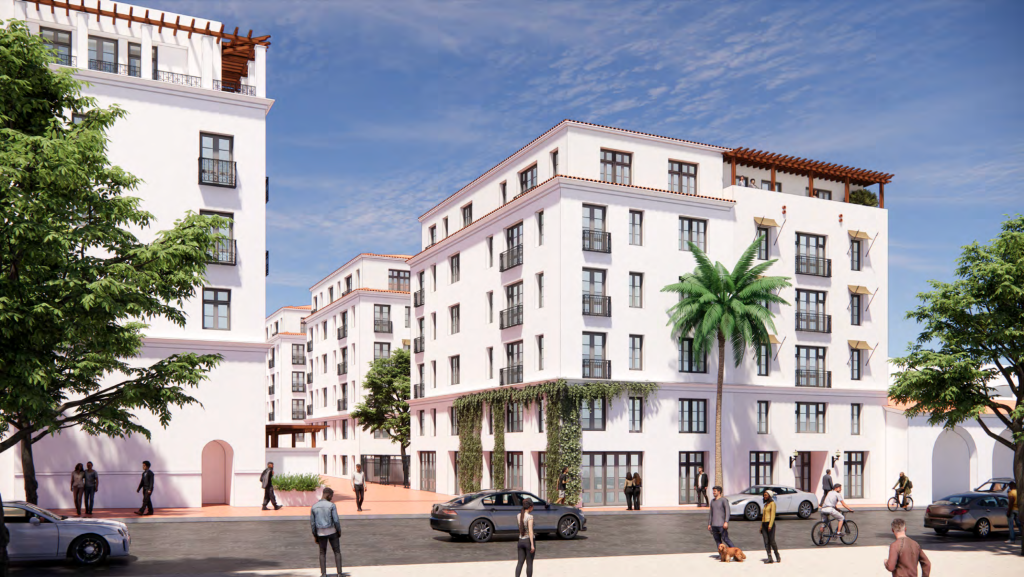
While the city may have lost out on a guarantee of 80 affordable units, city planning staff are still holding out hope that the City Council will approve the agreement. If the city agrees, the project will bring in at least 233 units and 24 units of affordable housing to an area that is in dire need of housing.
State Street Master Planner Tess Harris said the project is still “attractive” from the city’s standpoint. “[Downtown] is the space we want to concentrate people to be living in so that they can actually enjoy the concept of live-work-play that gets thrown around all the time,” Harris said.
There are financial risks to all parties involved, and both sides must agree to move forward. Some city councilmembers and review boardmembers have expressed doubts over the deal and asked whether the city could consider any viable alternatives. There are worries that any further delay would force AB Commercial to get cold feet and abandon any redevelopment plans.
“It’s a financial reality,“ McAdoo said. “If they have invested millions of dollars to this point in the architectural drawings, the engineering, the structural analysis, the work that has led to the project proposal, that is where it is. They basically have said, look … if we don’t get council approval, we’re not going to devote resources here. We’re going to turn it over to a distressed asset manager and it will sit until someone comes and offers us a reasonable price for the building.”
The council is expected to vote on the Disposition and Development Agreement on December 2. Approval of the agreement would not mean final approval of the project.
Related Posts





Premier Events
Fri, Mar 06
2:00 PM
Santa Barbara
Music & Meditation SB – Concert March 6, 2026

Sat, Mar 07
9:00 AM
Carpinteria
El Carro Park Cannabis Career Fair – Carpinteria

Sun, Mar 08
6:30 PM
Santa Barbara
6th Eco Hero Award Brock Dolman & Kate Lundquist

Fri, Mar 06
7:30 PM
Santa Barbara
An Evening with Steep Canyon Rangers

Fri, Mar 06
8:00 PM
Santa Ynez
Funk Band Kool & The Gang at Chumash

Mon, Mar 09
6:30 PM
Santa Barbara
Science Pub: Cyborg Jellies Exploring Our Oceans

Sat, Mar 28
All day
Santa Barbara
Coffee Culture Fest
Fri, Mar 06 2:00 PM
Santa Barbara
Music & Meditation SB – Concert March 6, 2026
Sat, Mar 07 9:00 AM
Carpinteria
El Carro Park Cannabis Career Fair – Carpinteria
Sun, Mar 08 6:30 PM
Santa Barbara
6th Eco Hero Award Brock Dolman & Kate Lundquist
Fri, Mar 06 7:30 PM
Santa Barbara
An Evening with Steep Canyon Rangers
Fri, Mar 06 8:00 PM
Santa Ynez
Funk Band Kool & The Gang at Chumash
Mon, Mar 09 6:30 PM
Santa Barbara
Science Pub: Cyborg Jellies Exploring Our Oceans
Sat, Mar 28 All day
Santa Barbara


You must be logged in to post a comment.