

This article was originally published in UCSB’s ‘The Current‘.
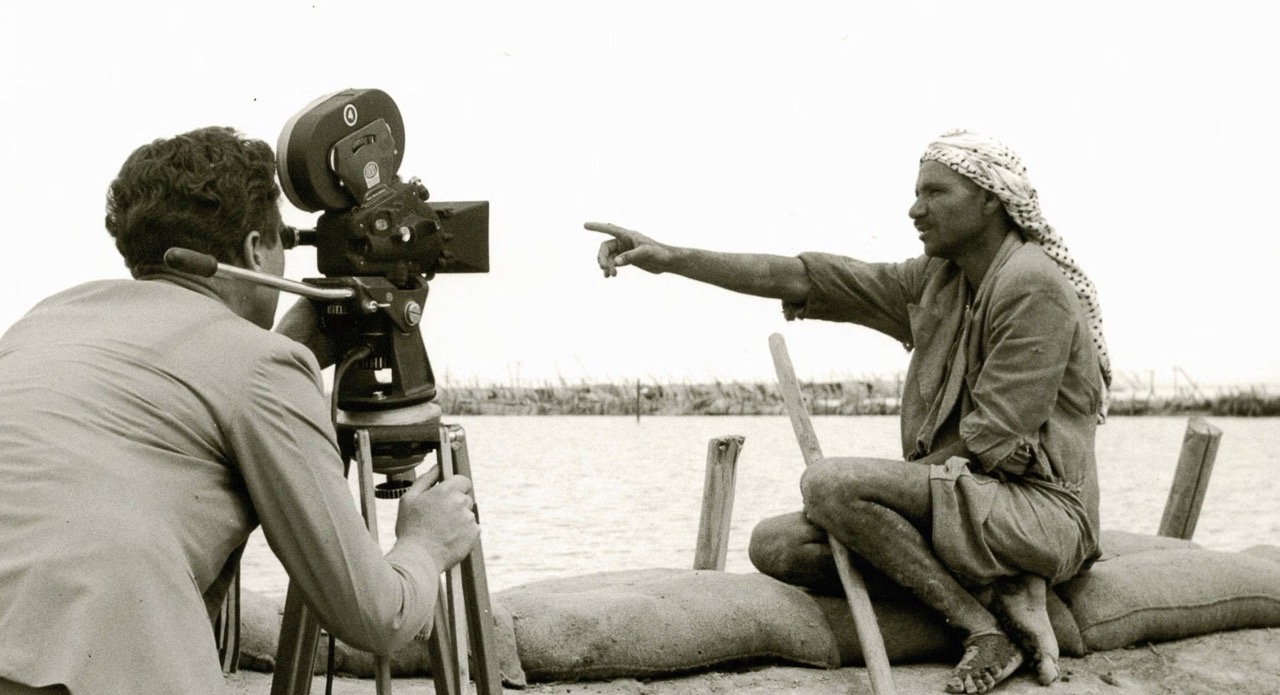
A new book by UC Santa Barbara’s Mona Damluji examines an unexpected intersection of culture and industry: the relationship between documentary filmmaking and the petroleum industry in the Middle East. “Pipeline Cinema: The Cultural Infrastructure of Oil Extraction in Iran and Iraq” (UC Press, 2025) traces how oil companies used film to shape public perception while inadvertently fostering vibrant cultural production.
“The book is a history that illuminates the relationship between the oil industry and the history of film in the early 20th century,” said Damluji, an assistant professor of film and media studies. Beginning with the Anglo-Persian Oil Company — the predecessor to British Petroleum (BP) — she demonstrates how the company’s efforts to control oil resources in Iran and Iraq were closely tied to the production and distribution of films.
These films were not merely promotional material, Damluji shows, but rather they formed part of a broader cultural infrastructure that extended from oil fields and pipelines to movie theaters and magazines. Oil companies funded film units, trained local filmmakers and screened documentaries across the region. The result was a complicated cultural landscape where corporate propaganda intersected with artistic expression.
“From very early on, resource extraction by foreign oil companies relied on the production and distribution of films as part of their operations and efforts to control oil in the region,” Damluji explained.
The project also became unexpectedly personal. Early in her research, Damluji discovered that her own great-grandfather had been part of this cultural ecosystem. A writer and critic, his work regularly appeared in Iraq Petroleum Magazine.
“I began my research with the assumption that this oil company existed entirely outside my own experience or reality as a critical scholar,” she said. “But when I discovered that my ancestor had participated in the cultural work of this extractive industry, as a food and travel writer no less, the vast distance I imagined to exist between me and my research subject collapsed significantly and challenged me to ask new questions.”
That discovery shifted the direction of her research, encouraging her to look beyond corporate archives to the individuals who created and circulated oil company media. Damluji eventually gained access to private materials belonging to a filmmaker who had worked for the Iraq Petroleum Company film unit, including letters and scripts that were not preserved in official archives.
“These letters revealed the personalities and the relationships and the politics of the people involved,” she said. They also offered insight into the diverse group of writers, cinematographers and artists she calls “oil’s cultural workers.”
One of the book’s central case studies focuses on Iraq in the 1950s, when the Iraq Petroleum Company began producing documentaries in Arabic for local audiences. Previously, oil companies had largely relied on British film crews who made films in the region but edited and screened them abroad. After Iran nationalized its oil industry in 1951, the company realized it needed to address audiences closer to home.
“They initiated a strategy to establish a film unit that relied on local talent and trained young Iraqi filmmakers to make sponsored films in Arabic for audiences inside the country,” Damluji said.
The result was a unique collaboration between corporate sponsors and the vibrant cultural scene of mid-century Baghdad. Artists, poets, photographers and musicians contributed to documentary film projects, bringing new stylistic approaches and storytelling techniques to what were often ostensibly corporate productions.
One example is a documentary about the catastrophic flooding of the Tigris River in Baghdad in the mid-1950s. The film chronicles rescue efforts and government responses, but it also features key contributions from prominent cultural figures. “This was a corporate sponsored film that also offered a much more humanistic lens on the Iraqi experience than had been seen before,” Damluji said. “It is an example of how Arab creative labor explored possibilities of artistic expression and storytelling within the bounds of the oil company’s cultural infrastructure.”
These documentaries were widely seen. Audiences encountered them in movie theaters before feature films, similar to newsreels shown in cinemas around the world at the time. Oil companies also screened them for workers in remote extraction sites and company settlements.
Yet Damluji argues that the films ultimately failed in their core mission: reshaping public opinion about the oil industry. Despite the companies’ efforts to portray oil as a force for modernization and prosperity, labor unrest and political movements continued to challenge foreign control of resources.
“The hubris of oil company executives is evident in the fact that they believed they could make beautiful films that would actually change public opinion in producing countries,” she said. “Yet the facts on the ground made it clear to people that foreign oil companies had outsized influence over their governments, suppressing worker uprisings and denying demands for very basic humane conditions.”
Political upheaval soon reshaped the industry. After Iraq’s 1958 revolution and the end of the British-backed monarchy, Damluji documents how the country established new state institutions for filmmaking and cultural production. Some filmmakers who had worked for oil company film units later played key roles in these national programs.
Meanwhile, the films themselves have taken on new significance decades later, she notes. As archives digitize old footage, many of these documentaries have resurfaced online, circulating widely among historians, filmmakers and members of the Iranian and Iraqi diasporas.
“These films are getting a second life,” Damluji said. Viewers share them on platforms like YouTube, often reflecting on the images of mid-century cities and landscapes that appear strikingly different from the region’s present-day realities.
For Damluji, that afterlife highlights the enduring importance of the histories she traces in “Pipeline Cinema.” Oil, she argues, has shaped not only economies and geopolitics but also cultural narratives and visual media.
“Recognizing the origins of oil culture in Iran and Iraq is central to a clearer understanding of the long histories of Western imperial intervention and efforts to control oil in the Middle East, which have always entailed attempts to control the story of oil,” she said.
“Pipeline Cinema” is available as a free open-access ebook through UC Press’s Luminos program.
Related Posts








Premier Events
Sat, Mar 28
7:15 PM
Santa Barbara
Santa Barbara Stargazing Tour
Sat, Apr 18
5:30 PM
Solvang
The Winemaker’s Table: An Evening of Rideau Reds

Wed, Mar 25
6:30 PM
Santa Barbara
Vigil for Lament, Solidarity and Peace

Thu, Mar 26
11:00 AM
Santa Barbara
Lunch and Learn at La Casa de Maria

Sat, Mar 28
All day
Santa Barbara
Coffee Culture Fest

Sat, Mar 28
11:00 AM
Santa Barbara
NO KINGS 3!

Mon, Mar 30
6:00 PM
Santa Barbara
Art4Grief Support Group 2nd 2-Week Session

Thu, Apr 02
2:00 PM
Santa Barbara
S.B. Rescue Mission Annual Easter Feast

Thu, Apr 02
5:00 PM
Santa Barbara
Exhibit Opening: The Santa Barbara Independent: ‘Covering 40 Years’

Sat, Apr 04
9:00 AM
Santa Barbara
Mesa Harmony Garden Spring Plant Sale

Sat, Apr 04
9:00 AM
Santa Barbara
Passport Fair, hosted by Congressman Salud Carbajal

Sun, Apr 05
10:00 AM
Santa Barbara
Easter Brunch at Brass Bear
Sat, Mar 28 7:15 PM
Santa Barbara
Santa Barbara Stargazing Tour
Sat, Apr 18 5:30 PM
Solvang
The Winemaker’s Table: An Evening of Rideau Reds
Wed, Mar 25 6:30 PM
Santa Barbara
Vigil for Lament, Solidarity and Peace
Thu, Mar 26 11:00 AM
Santa Barbara
Lunch and Learn at La Casa de Maria
Sat, Mar 28 All day
Santa Barbara
Coffee Culture Fest
Sat, Mar 28 11:00 AM
Santa Barbara
NO KINGS 3!
Mon, Mar 30 6:00 PM
Santa Barbara
Art4Grief Support Group 2nd 2-Week Session
Thu, Apr 02 2:00 PM
Santa Barbara
S.B. Rescue Mission Annual Easter Feast
Thu, Apr 02 5:00 PM
Santa Barbara
Exhibit Opening: The Santa Barbara Independent: ‘Covering 40 Years’
Sat, Apr 04 9:00 AM
Santa Barbara
Mesa Harmony Garden Spring Plant Sale
Sat, Apr 04 9:00 AM
Santa Barbara
Passport Fair, hosted by Congressman Salud Carbajal
Sun, Apr 05 10:00 AM
Santa Barbara

