

As if in a Dream: History, Fantasy, Future, the current exhibition inhabiting the McCormick Gallery of the Santa Barbara Museum of Art (SBMA), may be a classic case of creative, resourceful curatorial exhibition-crafting. The show applies a loose but liberally inclusive thematic container — pertaining to dreams, as expressed through and impressed upon the artistic impulse — to link a wide range of art mostly from the permanent collection vault, with a few borrowings from private collections.
It could be said that the stuff of dreams is part and parcel of artistic enterprise, whether in terms of direct influence or aspirational grounds — in visual art as well as in music, the dramatic and cinematic arts, and beyond. Before surrealism and magic realism lay claim to dreams and realms of the unconscious and subconscious mind in the 20th century, such ideas filtered through creative expression, all throughout art history.
As for the museum’s offering, what better place to start than with Henri Rousseau, instantly identifiable creator and tapper of dream-like scenes? In the art of Rousseau, a customs agent by day and thus with a degree of “outsider artist” cred, fantastical figments of imagination fed into largely natural or otherwise rustic scenes, in which animal and plant life appear as if in a parallel universe, close to the one we know, but in fact reality-adjacent.
His 1889 painting “Moonlight (Le Donjon),” a moonlit and fantasy-filtered image of a castle with a cozy house below, attains an idealized, picture-book status. We are drawn to imagine being in the scene, but are tempered by a sense of fictional detachment from it, thanks to Rousseau’s mysterious touch.
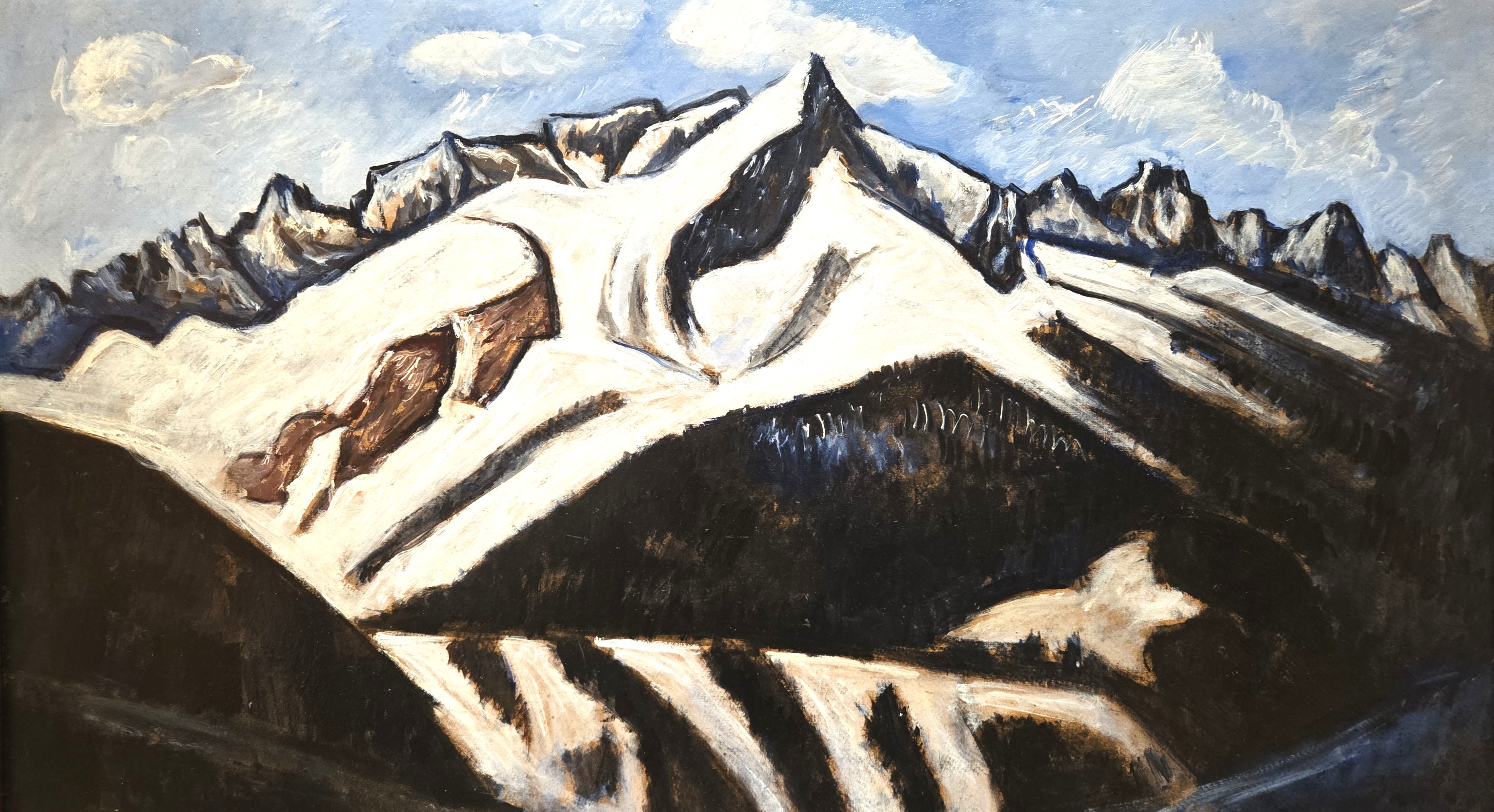
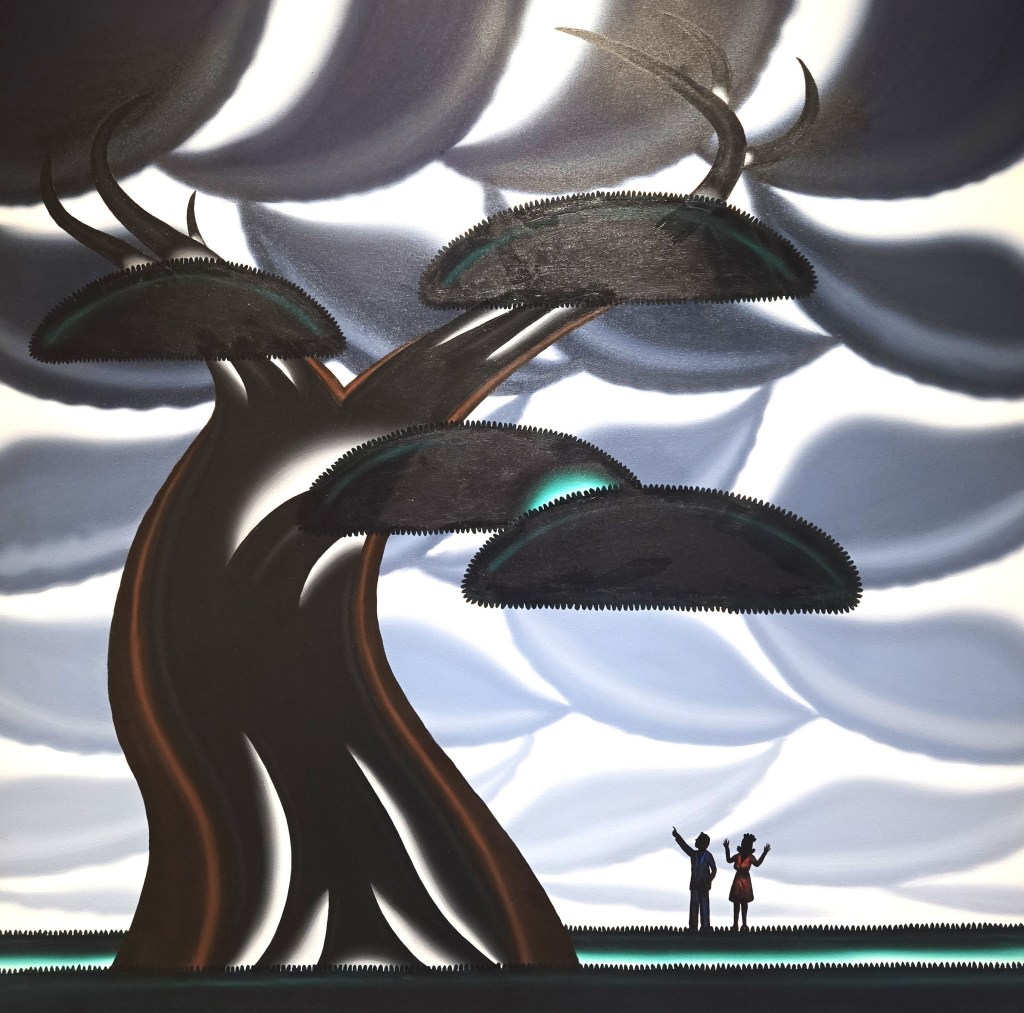
Some Rousseau-esque echoes or influences are detectable in Roger Brown’s “Bonsai #1 Driftwood,” an imaginary landscape study of a Seussian tree with Venus flytrap leafage. Carefully weighted and juggled volumes and forms dodge standard realism tradition, as seen in Rousseau’s work. Similarly, Marsden Hartley draws from memory and his mind’s eye with the semi-abstracted “Alpspitze Mittenwald Road,” painted in 1934. We see a mountain as a mistily conjured protagonist in the composition, typical of what the artist describes as “an image of the world in the mind.”
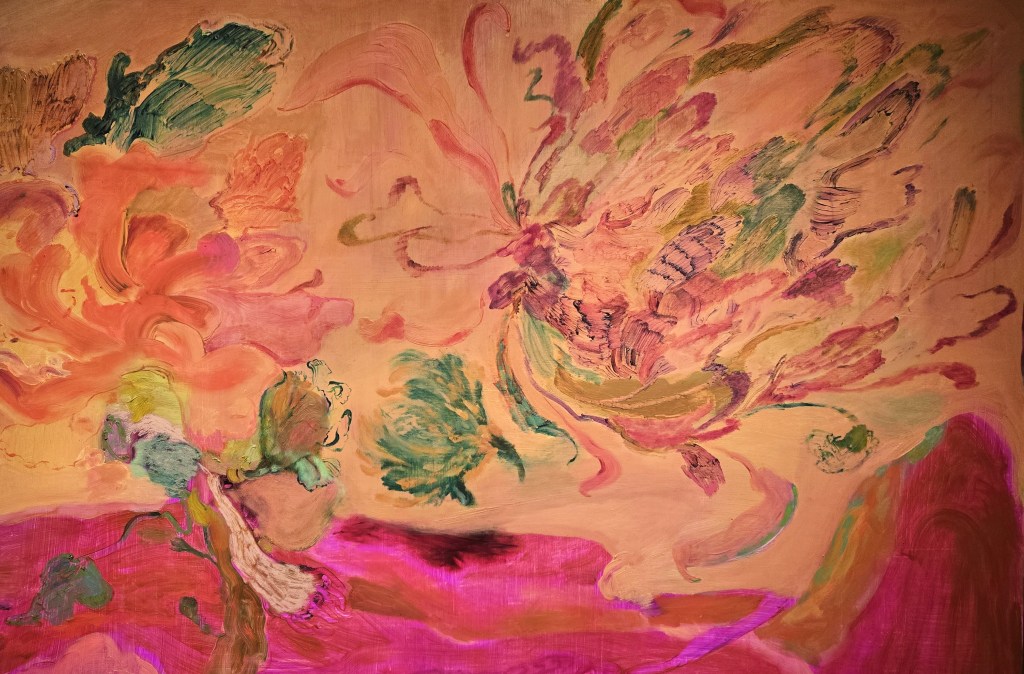
In the same area of the McCormick Gallery, two imposingly large and loudly hued — and yet somehow also enigmatic — canvases vie for our immediate attention. Jules de Balincourt, French-born, raised in SoCal and a Santa Barbaran for a time, supplies the strange and lucid dreamy “They Came to Get Lost,” buzzing with its image of a monumental canyon in seething reds and oranges, spotted with wee hikers in the spectral sprawl. Another wall is nearly consumed by Argentinian artist Patricia Iglesias Peco’s “Lavinia Mariposa,” a wild dance of color and fleeting forms, feeding off of the influence of Uruguayan writer Marosa di Giorgio’s novel Reina Amelia.
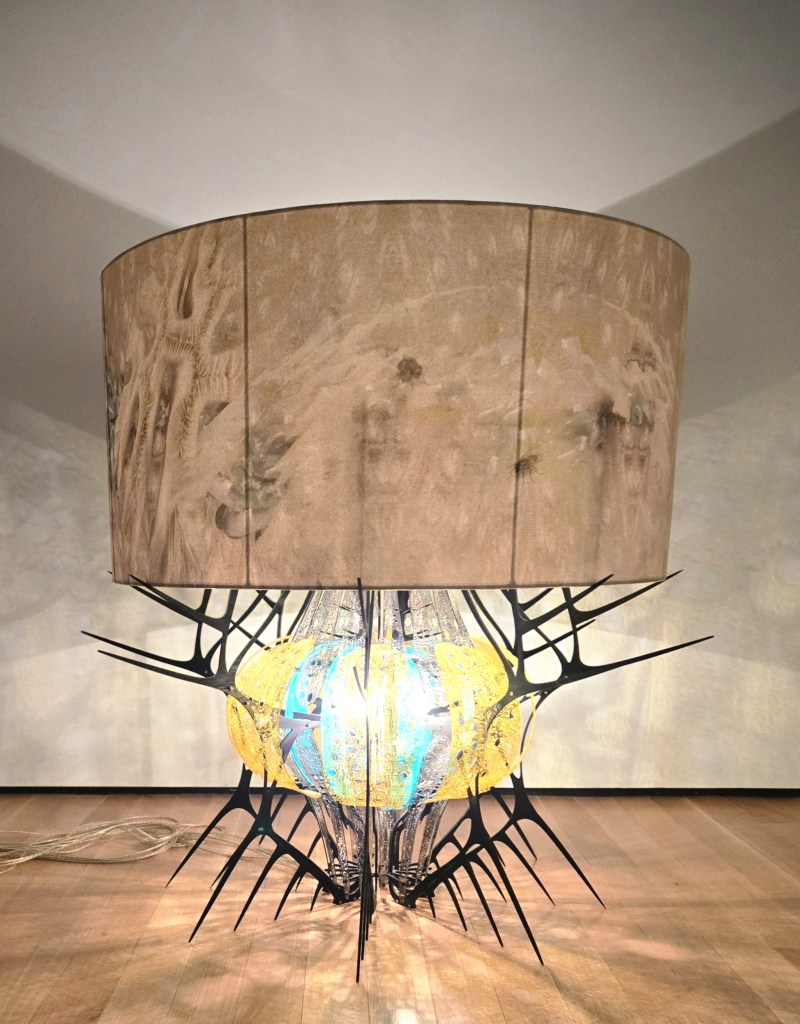
Three-dimensional art, of a nontraditional kind, also finds its way into the exhibition mix. With Jorge Pardo’s “Untitled (Sea Urchin),” a huge, irrational lamp construct evokes a common household fixture inspired by potentially dream-fed sourcing. Across the room, Max Hooper Schneider’s “Interterrestrial Arroyo” is a large, gangly seemingly undersea relic with a retro-apocalyptic feel. Tucked into the craggy mass are tiny screens beaming scenes of fiery destruction, suggesting eco-dread.
Another sea-related tumult takes place in Nigel Cooke’s jumbo painting “Shipwreck with Spectator,” juxtaposing 19th-century-style realism with post-modernist impulses, rendering natural forces as vehicles for abstraction. Leaping back a few centuries, and multiple art “isms,” cross-referencing layers of history and dream life essence is also reflected in the imagery of 19th-century artist Giovanni Paolo Panini, as with “Saint Paul Preaching Among the Ruins” — not exactly a historically or culturally correct scene.
Nods to homeland heritage become a central aim in paintings by Mexican artists Edward Chavez and Feliciano Béjar, the latter of which channels family memories.
Standing apart from its gallery mates in terms of style and approach, African American artist Howardena Pindell’s “Midsummer Sweden” adopts a kind of pattern-based logic, extending the influence of 19th-century pointillism (as seen in the blockbuster Impressionist show in this gallery last year). But she deploys the decidedly 20th-century tools of spray paint and stencils, made with a hole punch. Atmospheric and textural elements inform this reframing of her own memories of living in Sweden in the 1960s.

Multiple traces of dreams, histories, and memories, crisp and otherwise, circulate freely in this show, as channeled into art about interior states. A secondary lesson imparted here is that the SBMA’s august permanent collection is a fertile ground for curatorial adventuring.
As if in a Dream: History, Fantasy, Future is on view at Santa Barbara Museum of Art (1130 State St.) through January 3, 2027. Seesbma.net.
Related Posts
Premier Events
Fri, Oct 23
2:00 PM
Santa Barbara
Music & Meditation: Clarinetist Nancy Mathison & Pianist Antonio Artese

Tue, Oct 20
7:00 PM
Santa Barbara
Get Out the Vote Night @ SOHO, Music Performance by Loyal Defense Workers

Wed, Oct 21
6:30 PM
Santa Barbara
Teflon Comedy/Non-Schtick – Evening of Comedy

Thu, Oct 22
5:30 PM
Santa Barbara
Best Fest: A Celebration of the Best of Santa Barbara® Readers’ Poll 2026

Thu, Oct 22
6:00 PM
Santa Barbara
Chaucer’s Books Author Talk & Signing- Daniel M. Jaffe “Russian Silhouette: A Memoir of Activism and Identity”
Fri, Oct 23
5:30 PM
Solvang
Solvang Haunted House and Street Fair
Fri, Oct 23
7:00 PM
Santa Barbara
Beth Amine’s 20th Anniversary Wildcat Dance Variety Show
Fri, Oct 23
7:00 PM
Santa Barbara
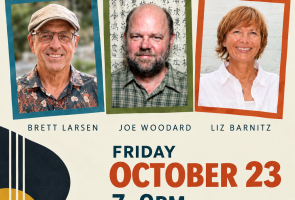
This & That Performs at Roy
Fri, Oct 23
9:00 PM
Santa Barbara
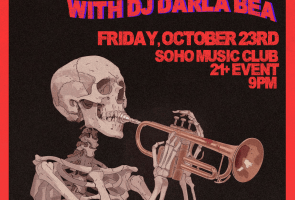
Casa de la Raza Fundraiser: Brasscals! with DJ Darla Bea
Sat, Oct 24
10:30 AM
Santa Barbara
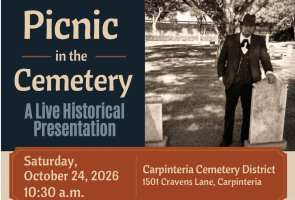
Picnic in the Cemetery: A Live Historical Event
Sat, Oct 24
11:00 AM
Goleta
2nd Annual Charger Cup to Benefit DP High Golfers
Fri, Oct 23 2:00 PM
Santa Barbara
Music & Meditation: Clarinetist Nancy Mathison & Pianist Antonio Artese
Tue, Oct 20 7:00 PM
Santa Barbara
Get Out the Vote Night @ SOHO, Music Performance by Loyal Defense Workers
Wed, Oct 21 6:30 PM
Santa Barbara
Teflon Comedy/Non-Schtick – Evening of Comedy
Thu, Oct 22 5:30 PM
Santa Barbara
Best Fest: A Celebration of the Best of Santa Barbara® Readers’ Poll 2026
Thu, Oct 22 6:00 PM
Santa Barbara
Chaucer’s Books Author Talk & Signing- Daniel M. Jaffe “Russian Silhouette: A Memoir of Activism and Identity”
Fri, Oct 23 5:30 PM
Solvang
Solvang Haunted House and Street Fair
Fri, Oct 23 7:00 PM
Santa Barbara
Beth Amine’s 20th Anniversary Wildcat Dance Variety Show
Fri, Oct 23 7:00 PM
Santa Barbara
This & That Performs at Roy
Fri, Oct 23 9:00 PM
Santa Barbara
Casa de la Raza Fundraiser: Brasscals! with DJ Darla Bea
Sat, Oct 24 10:30 AM
Santa Barbara
Picnic in the Cemetery: A Live Historical Event
Sat, Oct 24 11:00 AM
Goleta



You must be logged in to post a comment.