

Santa Barbara turned the page on the inaugural Santa Barbara Literary Festival over the weekend, as hundreds of people gathered in a variety of downtown venues to celebrate the power of the written word. With more than 60 events to choose from, I attended six, all of which were uniquely entertaining and edifying.
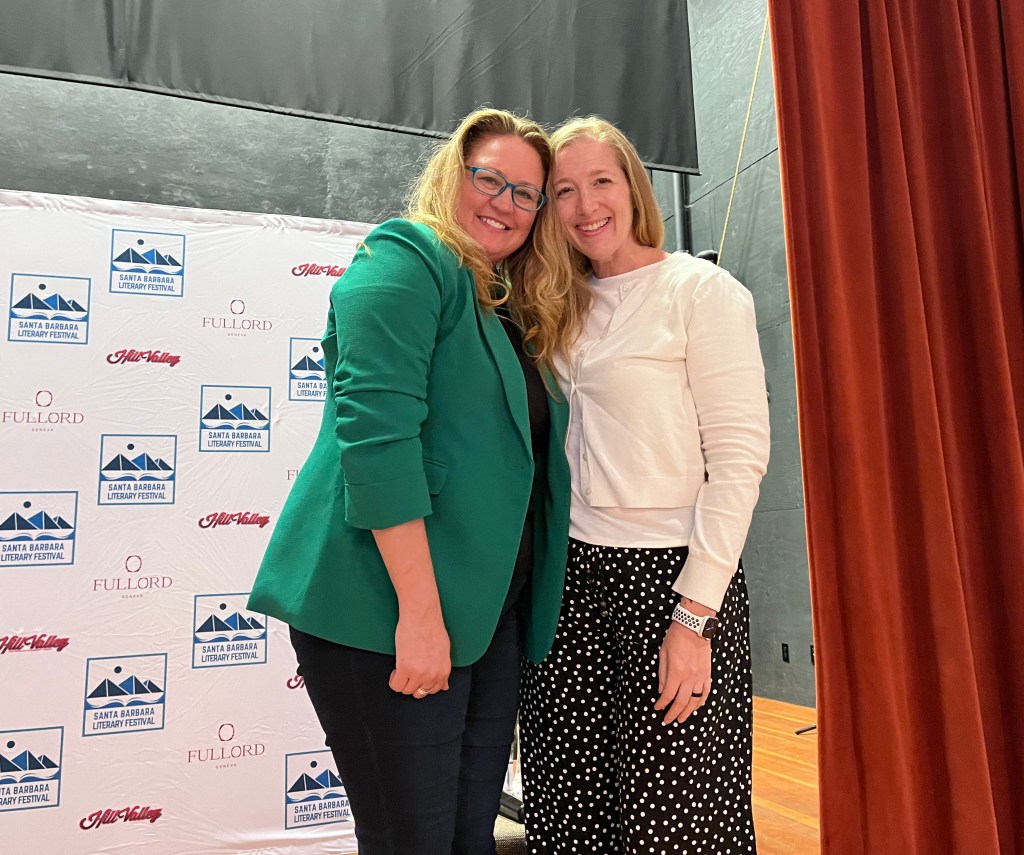
I started out Saturday morning at the Alhecama Theatre, with authors Heather Webb and Eliza Knight discussing “The Bold and the Beautiful,” highlighting women who break the rules and why we love these kinds of characters.
Asked how she chooses and develops her characters, Knight, the author of Confessions of a Grammar Queen, said, “It’s a really, really fun task of figuring out who you’re going to write about, whether you’re writing about a real person, or you’re creating a character inspired by real people, or just coming straight from your mind. So for me, it’s dependent on what I’m writing. When I was writing Confessions of a Grammar Queen, my character, Bernadette Swift, is based on a couple of real people in the publishing industry in the 1950s and 60s that I found to be incredibly bold, beautiful, and brave.”
Knight continued, “I really want a complex character. … I think it means creating a character who has so many different facets, right? Like everybody in real life has multiple parts of themselves that create who you are, and some parts are amazing and some parts are not amazing.”
“Human beings are paradoxical,” said Webb, whose newest book is The Hope Keeper, about the Hope Diamond. “For everything we are, we’re the opposite.”
Being a novelist, she continued, “allows you to, in a safe way, explore something that you would never do.”
“Part of our job as writers is to take risks,” said Knight.
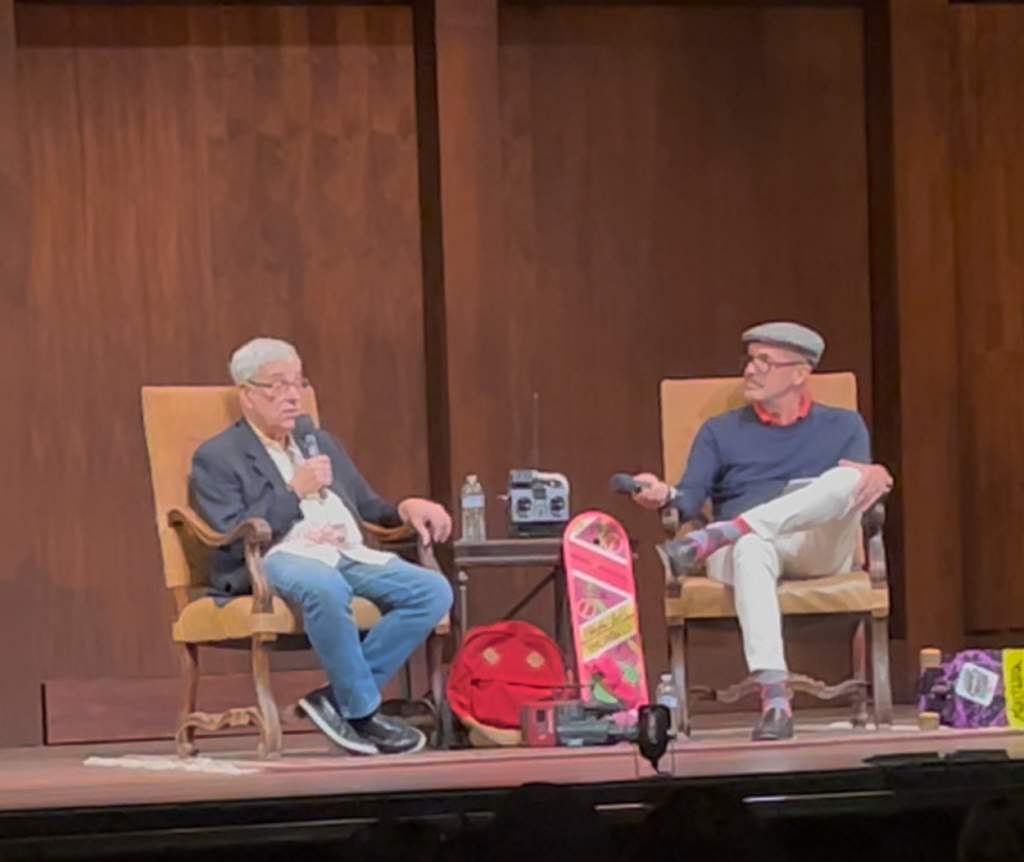
My next stop was the Lobero Theatre, where three DeLoreans outside told me I was in the right place for “The History of Back to the Future,” where screenwriter and producer Bob Gale gave us an inside look at the creation and evolution of one of the most beloved franchises in popular culture. Interviewed by actor Billy Zane, whose first film role was in Back to the Future, Gale led us through his early inspirations (as a USC student, he heard one of his literary heroes Ray Bradbury advise “trying to come up with an idea is like trying to behead the Medusa”), and how stumbling upon his dad’s high school yearbook seeded the idea for what ultimately became a time travel movie franchise and is now even a Broadway musical.
“There’s a universal curiosity about your parents when they were young,” said Gale, who in addition to Bradbury, cited William Shakespeare, Mark Twain, Mary Roach, and Eric Larsen as influences.
For more insights about his writing process and the development of the film, Gale and his writing partner Robert Zemeckis are publishing an annotated version of the original Back to the Future screenplay in October (preorder here).
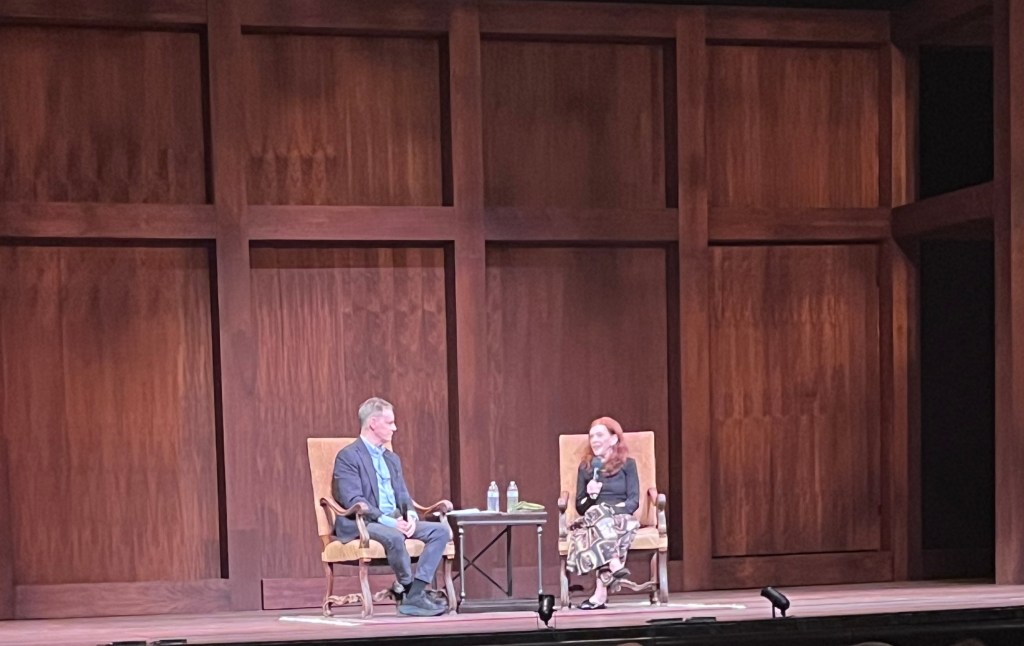
Susan Orlean spoke at the Lobero later that day, on “Joyride, curiosity, and craft.” Her new memoir, Joyride, about finding her creative calling and becoming a writer, took up the bulk of her entertaining conversation with W. Bruce Cameron, author of the bestseller A Dog’s Purpose.
“The story of my life is the story of my stories,” said Orlean. “You are your work, it is how you see the world. … Being a writer is almost the way I am in the world. It’s just kind of embedded in my life so completely.”
Her eclectic work, all nonfiction, includes The Orchid Thief and The Library Book, as well as Rin Tin Tin, Saturday Night, On Animals, The Bullfighter Checks Her Makeup, and My Kind of Place, among others. Of her broad range of topics, Orlean, who is also a longtime staff writer for The New Yorker, said, “Writing always feels new because you never build any equity. Writing is an excuse to do pretty much anything.”
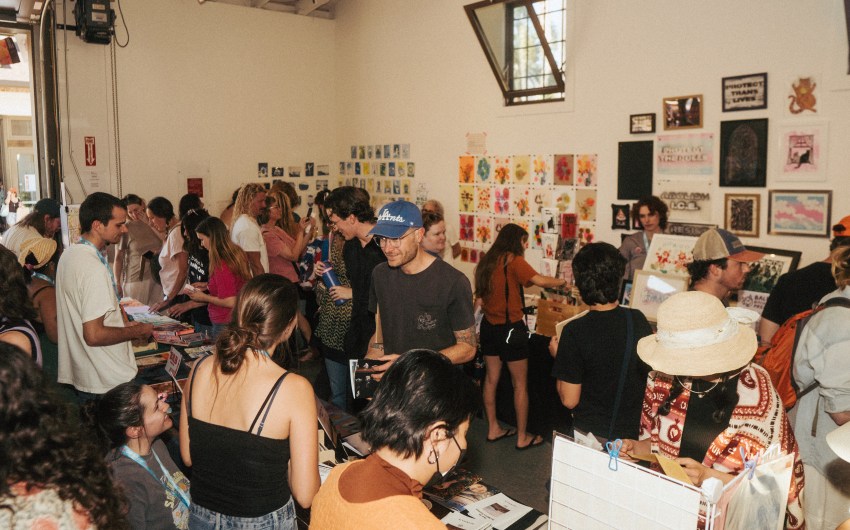
On Sunday, I made my way to Pico Adobe for the “Bespoke Print Panel and Faire,” which was the brainchild of Ninette Paloma, publisher of American Riviera Magazine and a former contributor to the Santa Barbara Independent. In addition to putting together the culinary panel the day before, she put together this panel and marketplace.
This event included a compelling international panel with Paloma alongside Oscar Arriola, director of ZINEmercado; Samuel Lopez-Barrantes, co-founder of Kingdom Anywhere; Alex Lukas, co-founder of Off Register: The Santa Barbara Art Book and Print Fair and a professor in the UCSB Art Department; Augusta Sagnelli, co-founder of Souvenir Magazine; Brandon Doman, founder of The Strangers Project, which is currently on view at Art & Soul Gallery; and Dez Alaniz, founder of Honey Boy Press.
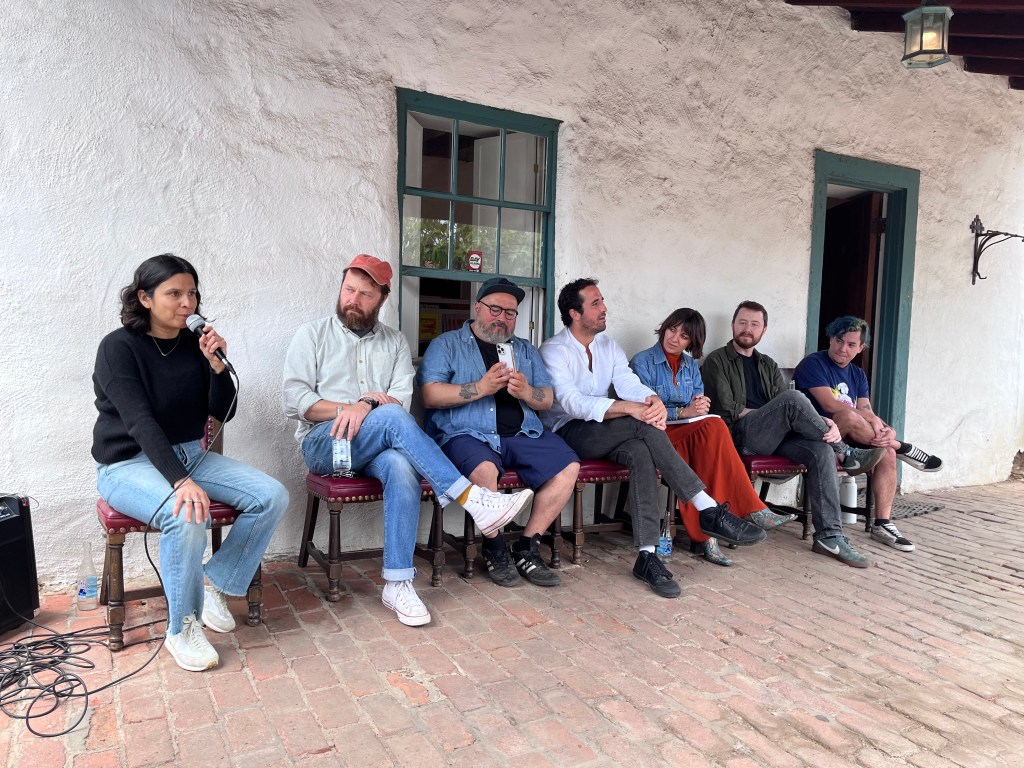
It was rewarding to see such a diverse variety of creators who are part of the growing movement bringing together art, design, and the printed word — especially in such a beautiful setting as the hidden gem of the Pico Adobe (part of the Presidio).
Next I ventured to the Karpeles Manuscript Library — for my first and probably last visit since it was recently sold — to hear Matthew Weiner and John Gatins talk about “Story, Structure, and Screenwriting.” While this was technically a screen-related talk, some of the content was equally relevant to writing for the page, as they talked about building compelling characters and using dialogue for a specific creative voice.
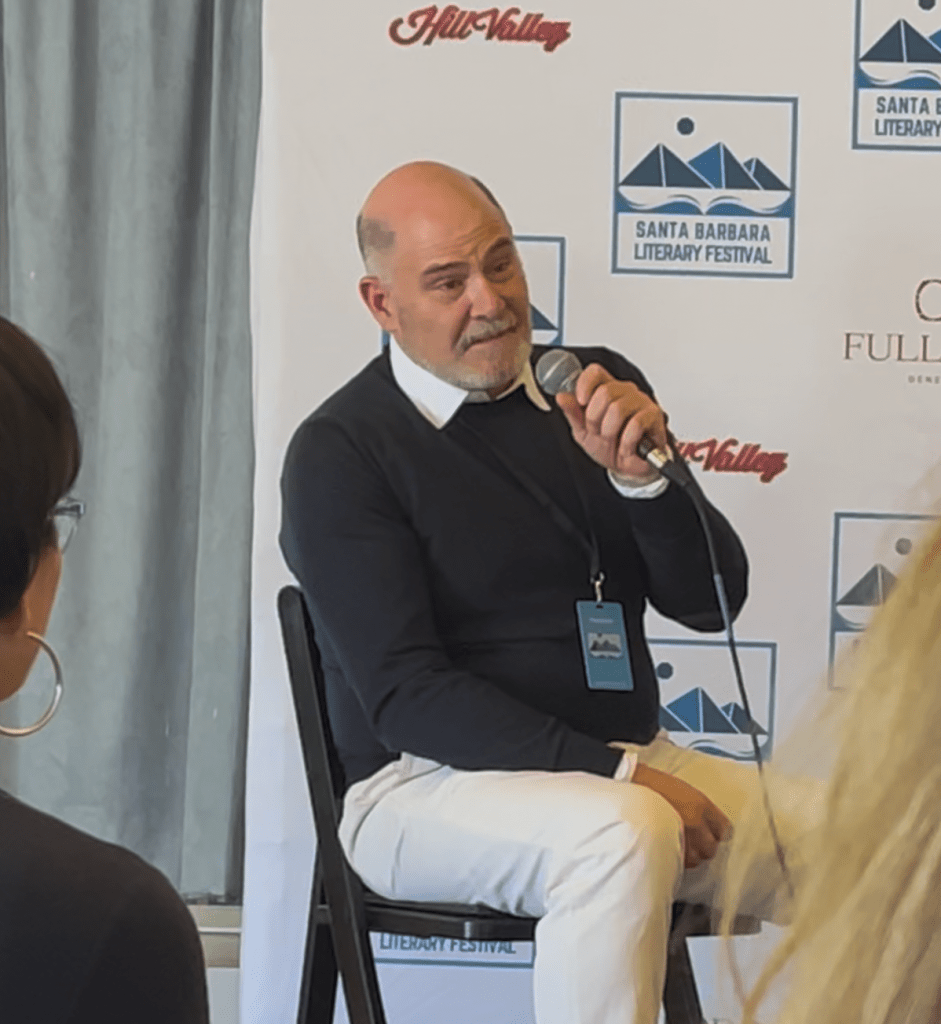
Weiner, who was the creator of Mad Men, talked a bit about his journey to creating that iconic series. “I didn’t like my job,” said the former sitcom writer (Becker, Andy Richter Controls the Universe). “And I tried to write my way out of it, because someone had told me once, ‘if you can write, you can write your way out of anything,’ which is true, by the way, I give that advice to anyone I can.”
In an unusual scenario, he managed to get a job in one-hour dramas (people don’t often go back and forth from comedy to drama in television), and he was hired by David Chase to work on The Sopranos. Moving from the West Coast to New York to work on that show was “like going to play for the Yankees,” said Weiner. “And my family’s totally cool with me being successful. They’re into it.”
Asked for some writing examples to learn from, Gatins, who is an actor as well as a writer (Flight, Real Steel), said, “I have a controversial opinion, which I think you get as much from watching something bad as you do something good. I really do.”
The AFI list of best films (see it here) is perfect, they both agreed.
I ended my Santa Barbara Literary Festival journey at the Unitarian Society, listening to Steven Rowley’s keynote, which focused primarily on the role of humor. “We are living in a time when headlines rarely let us exhale,” said the author of Lily and the Octopus, The Editor, and The Guncle, among other titles. “Humor is a mode of engagement with the truth,” he said.
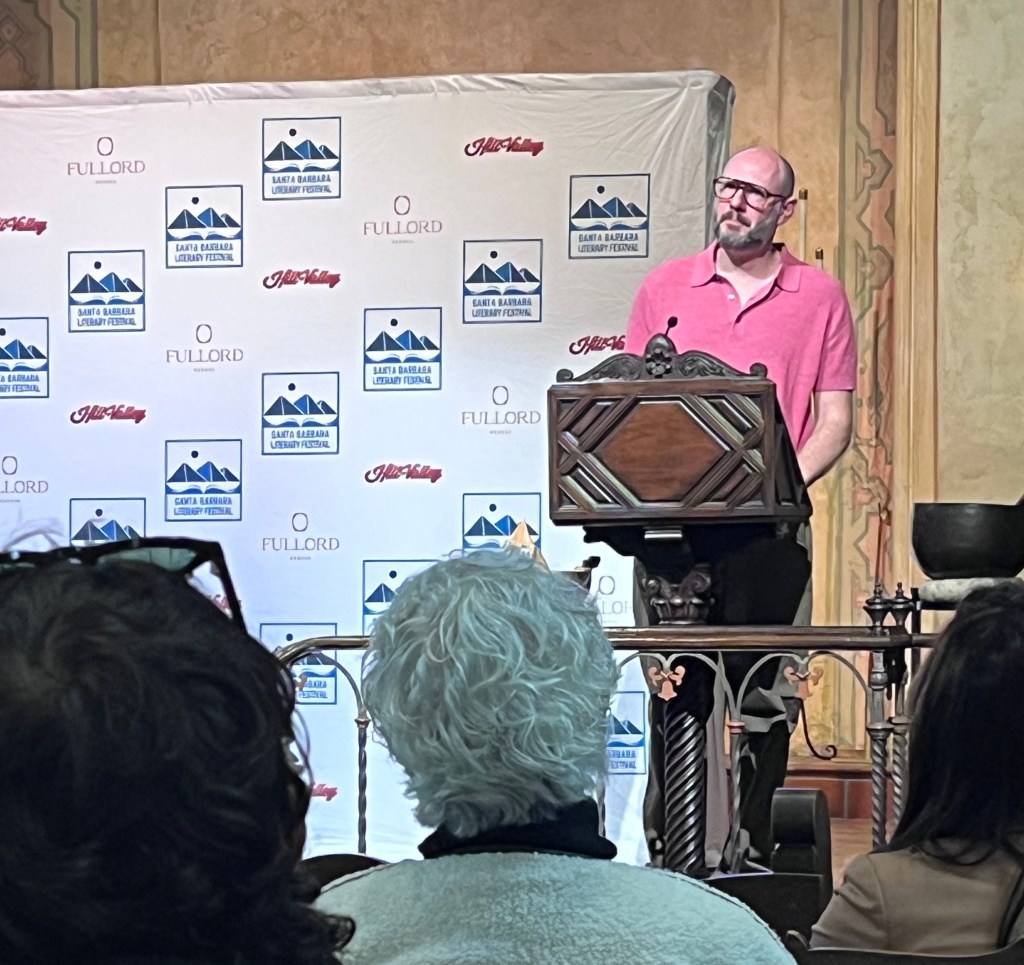
“Because humor doesn’t just make us laugh, it makes us see, and in dark times, clarity is a powerful thing. It is a powerful thing. When circumstances feel out of our control, we can start to feel powerless. Humor pushes back against that, because to find something funny is to interpret reality, not just absorb it. … You are not just reacting to the world as it’s happening to you. You are shaping how you perceive it, and that matters in fiction, yes, but particularly for those of us who are writing memoirs or work inspired by personal experience, it reminds us that even when we can’t control events, we still have some influence over our response, and that is powerful.”
He continued, “Humor doesn’t erase reality, it reframes it. Humor in difficult times gives us enough room to breathe. Humor is one of the best emotional strategies that we possess.”
He added, “Humor doesn’t just make us laugh, it makes us see.”
Anecdotally, both authors and festival-goers seemed happy with the first Santa Barbara Literary Festival. I was certainly impressed by the content and variety of offerings.
Jen Lemberger, co-owner of Chaucer’s Books, which had books available at each event, said, “It was absolutely great to be a part of the inaugural Santa Barbara Literary Festival. We are looking forward to contributing and being a part of these weekends in the future!”
The organizers have already put a save the date on the website, so we can look forward to the next Santa Barbara Literary Festival May 1-2, 2027.
Related Posts
Premier Events
Fri, Oct 23
2:00 PM
Santa Barbara
Music & Meditation: Clarinetist Nancy Mathison & Pianist Antonio Artese
Wed, Oct 21
6:30 PM
Santa Barbara
Teflon Comedy/Non-Schtick – Evening of Comedy
Thu, Oct 22
5:30 PM
Santa Barbara
Best Fest: A Celebration of the Best of Santa Barbara® Readers’ Poll 2026
Thu, Oct 22
6:00 PM
Santa Barbara
Chaucer’s Books Author Talk & Signing- Daniel M. Jaffe “Russian Silhouette: A Memoir of Activism and Identity”
Fri, Oct 23
5:30 PM
Solvang
Solvang Haunted House and Street Fair
Fri, Oct 23
7:00 PM
Santa Barbara
This & That Performs at Roy
Fri, Oct 23
7:00 PM
Santa Barbara
Beth Amine’s 20th Anniversary Wildcat Dance Variety Show
Fri, Oct 23
9:00 PM
Santa Barbara
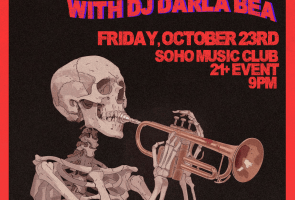
Casa de la Raza Fundraiser: Brasscals! with DJ Darla Bea
Sat, Oct 24
10:30 AM
Santa Barbara
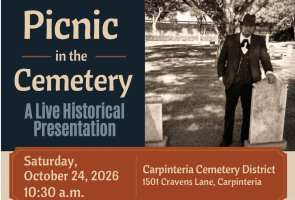
Picnic in the Cemetery: A Live Historical Event
Sat, Oct 24
11:00 AM
Goleta
2nd Annual Charger Cup to Benefit DP High Golfers
Sat, Oct 24
12:00 PM
Santa Barbara
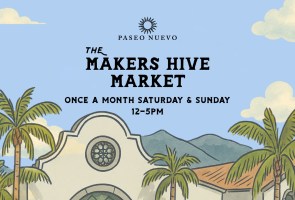
Makers Hive Market
Fri, Oct 23 2:00 PM
Santa Barbara
Music & Meditation: Clarinetist Nancy Mathison & Pianist Antonio Artese
Wed, Oct 21 6:30 PM
Santa Barbara
Teflon Comedy/Non-Schtick – Evening of Comedy
Thu, Oct 22 5:30 PM
Santa Barbara
Best Fest: A Celebration of the Best of Santa Barbara® Readers’ Poll 2026
Thu, Oct 22 6:00 PM
Santa Barbara
Chaucer’s Books Author Talk & Signing- Daniel M. Jaffe “Russian Silhouette: A Memoir of Activism and Identity”
Fri, Oct 23 5:30 PM
Solvang
Solvang Haunted House and Street Fair
Fri, Oct 23 7:00 PM
Santa Barbara
This & That Performs at Roy
Fri, Oct 23 7:00 PM
Santa Barbara
Beth Amine’s 20th Anniversary Wildcat Dance Variety Show
Fri, Oct 23 9:00 PM
Santa Barbara
Casa de la Raza Fundraiser: Brasscals! with DJ Darla Bea
Sat, Oct 24 10:30 AM
Santa Barbara
Picnic in the Cemetery: A Live Historical Event
Sat, Oct 24 11:00 AM
Goleta
2nd Annual Charger Cup to Benefit DP High Golfers
Sat, Oct 24 12:00 PM
Santa Barbara



You must be logged in to post a comment.