
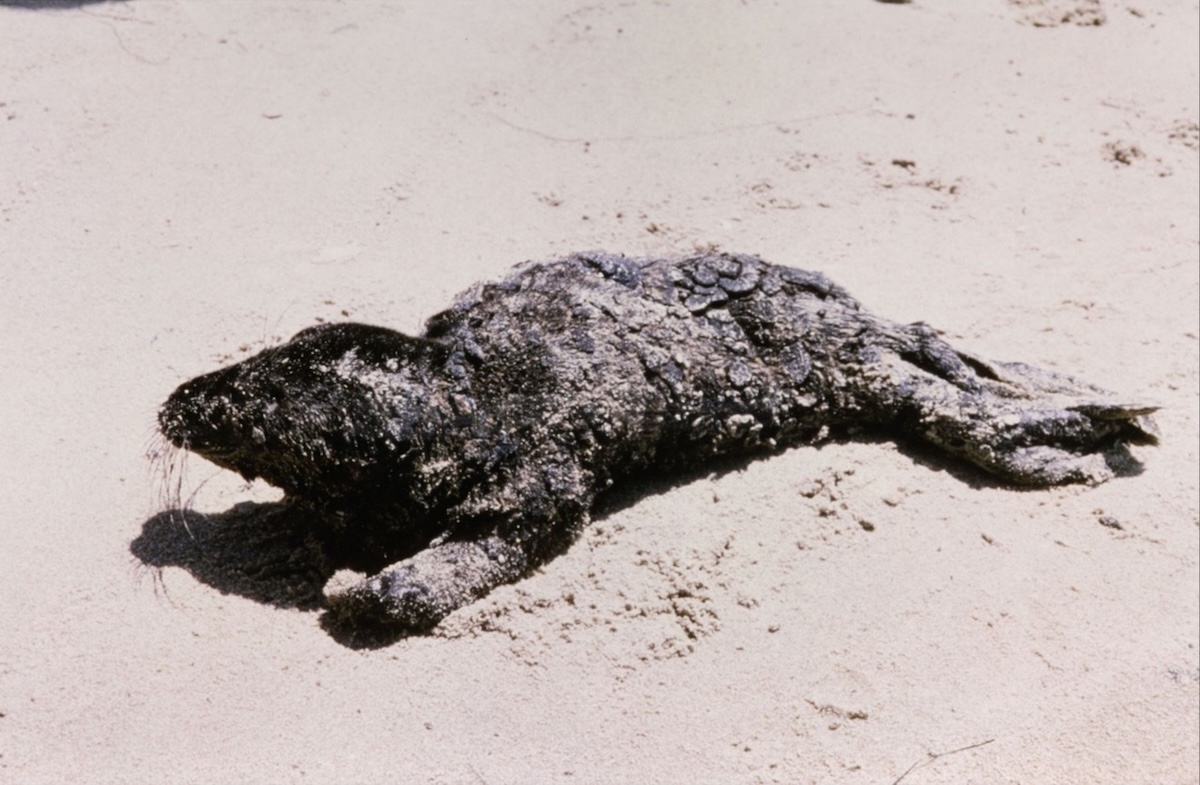
Get Oil Out!, a nonprofit also known as GOO!, formed within 24 hours of the oil spill six miles off the coast of Santa Barbara in 1969. Historical records and photos from its records — which were kept in a Santa Barbara garage — have a new home at the UC Santa Barbara Special Research Collections at Davidson Library. Among the 40 boxes of documents is a history of the origin of Santa Barbara’s Earth Day.
GOO!’s core membership started off with 1,500 politically, socially, and economically involved people locally and from surrounding areas. The nonprofit exists to this day, and its volunteers are dedicated to the protection of the Santa Barbara Channel and coastline through advocacy, education, and community engagement to foil new oil projects. The group’s mission has stayed true over the decades to preserving the natural environment, lessening fossil fuels, and supporting renewable energy sources.
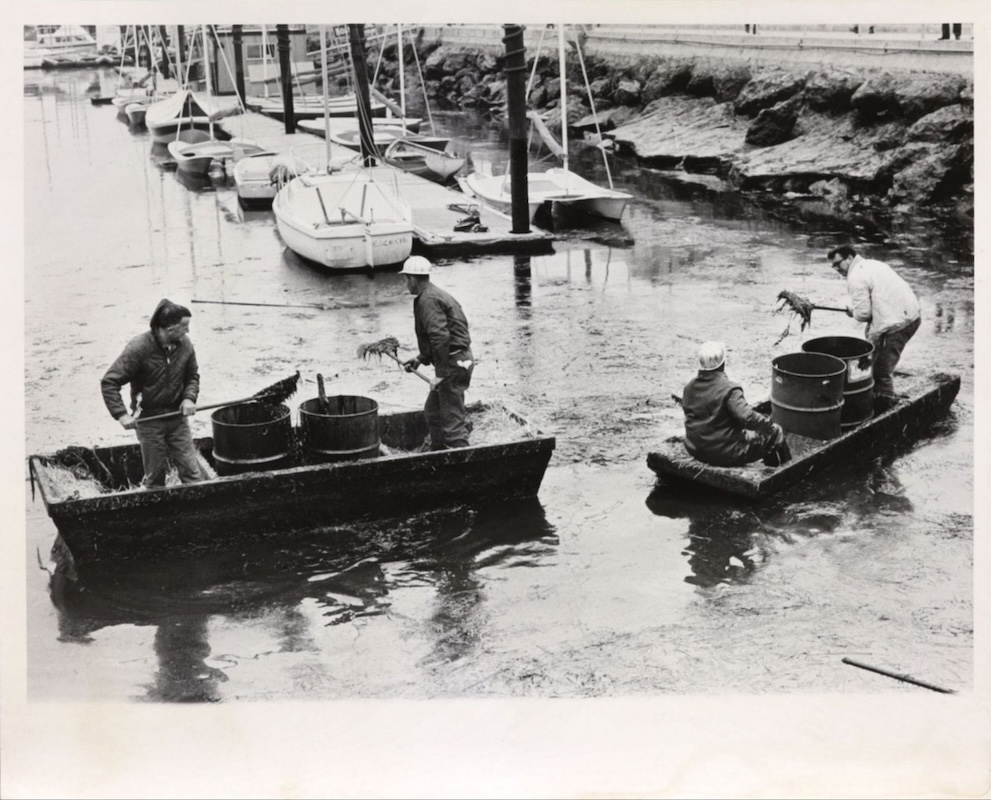
The infamous spill from Union Oil’s Platform A was the largest to take place in U.S. waters at the time. It covered 75 square miles of the ocean and killed thousands of birds and marine life, leaking 210,000 gallons of oil for days afterward. By the time the oil flow tapered off almost a year later, 3 million to 4 million gallons of oil leaked onto 30 miles of beaches along Santa Barbara, the Channel Islands, and Ventura.
Following the oil spill on January 28, 1969, activists mobilized to start protests. Senator Gaylord Nelson saw the oil spill from an airplane, and it gave him the idea for a national holiday called Earth Day. The following year, Americans attended Earth Day gatherings in April, including a one-block-long event organized by Santa Barbara’s Community Environmental Council, the same festival that continues today.
At the Earth Day Festival held this April, GOO! volunteers held down a table in Alameda Park, continuing to educate the public about oil drilling and its broad history. “A lot of young people do not know much about us,” said Carla Frisk, a boardmember with GOO! “I always say that we were the first organization that formed after the oil spill.”
The board currently consists of seven members, some who have been on it for longer than 10 years. The president, Michael T. Lyons, has been volunteering on and off for GOO! since the ’90s, with a strong desire to give back to the environment.
“We are a small group, and we do a lot of work,” said Lyons.
He has been keeping documents and photographs in his garage for years, which were donated to the UCSB archive as a safe place to store them and so the public could look at them.
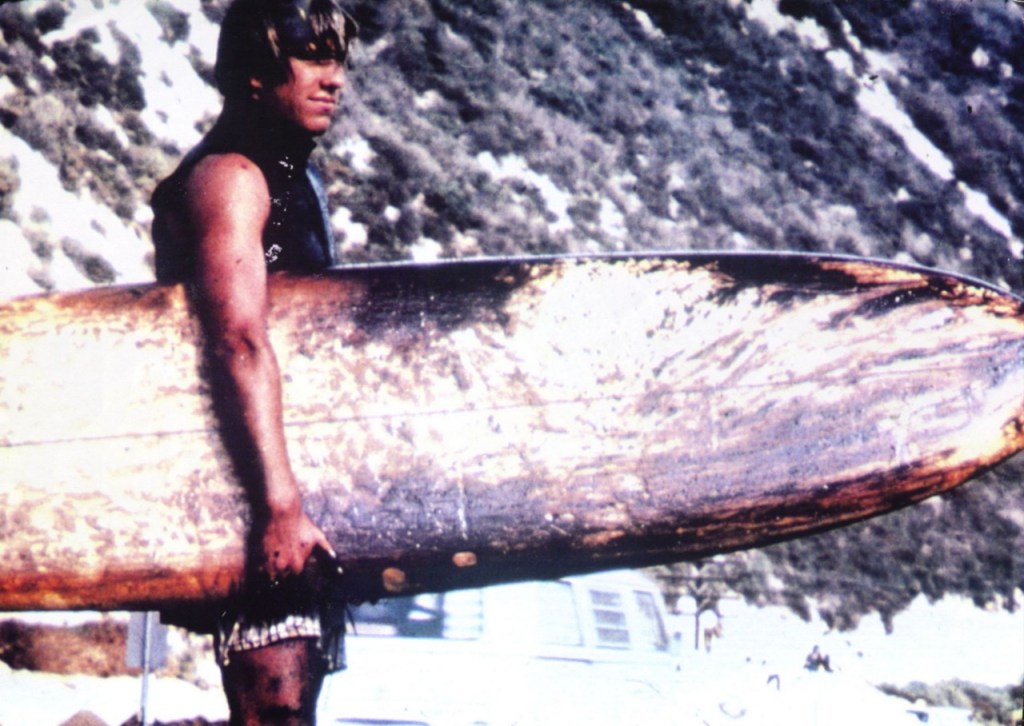
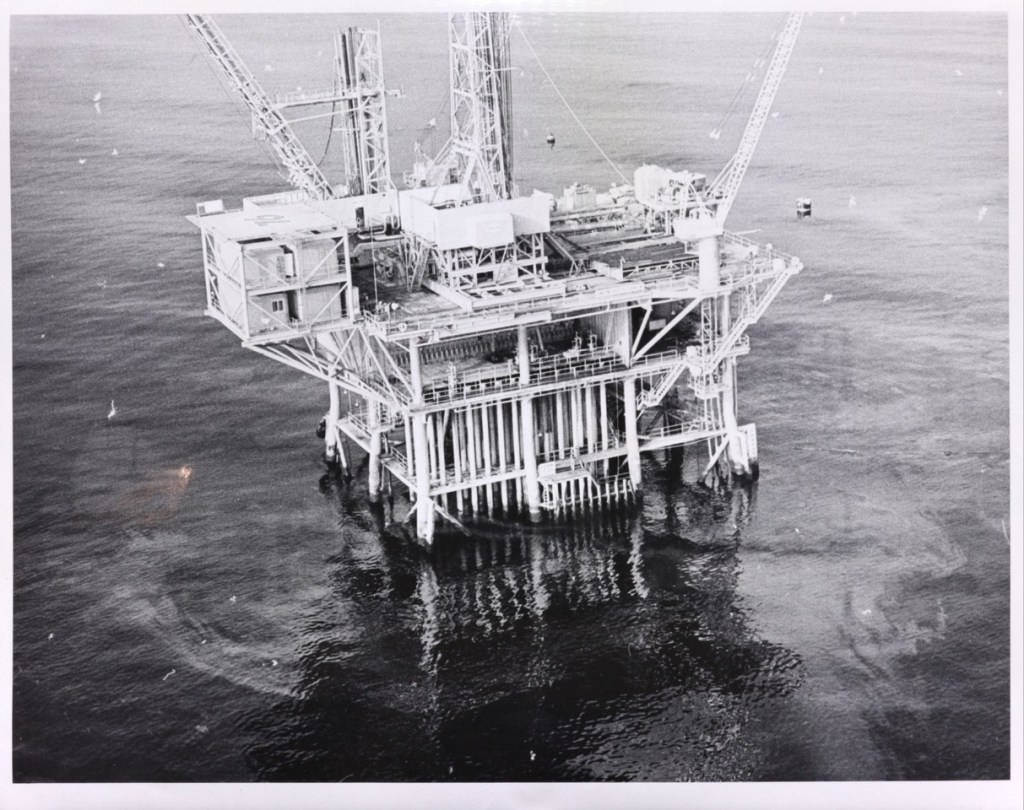
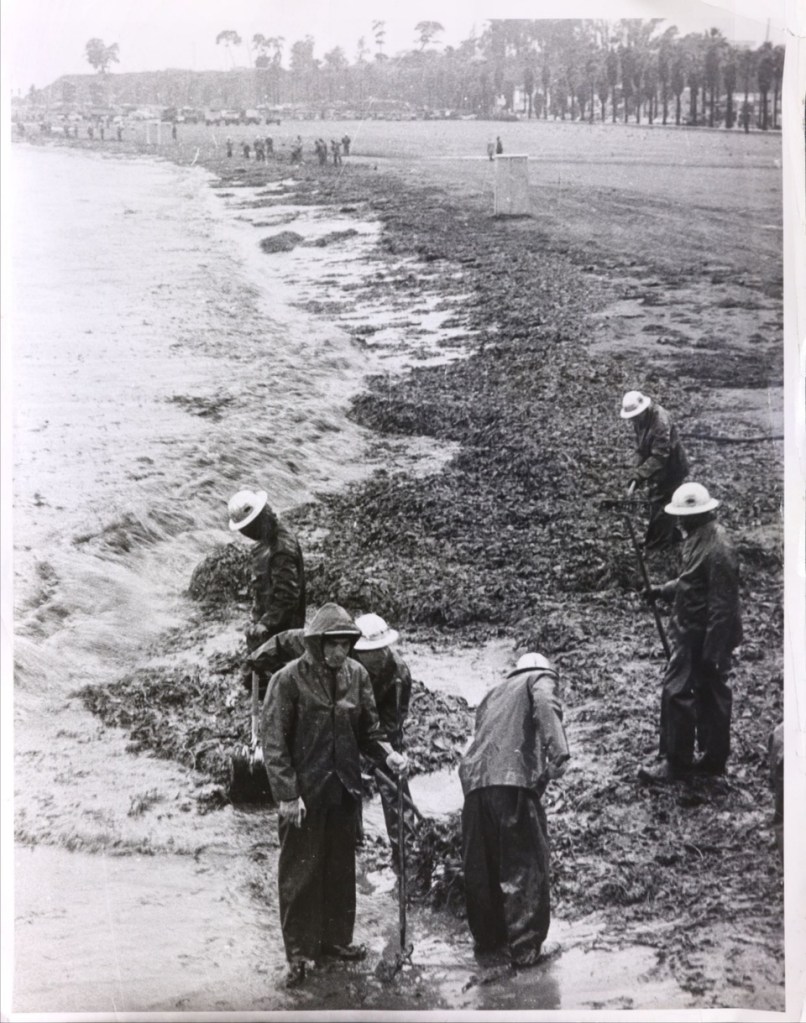
The collection is for research purposes by students and the general public, especially when looking in relation to oil spills or development in the Santa Barbara area, such as Sable resuming oil production off the coast. The collection offers research, educational materials — newsletters, agendas, newspaper articles, meeting agendas — and photographs of the aftermath of the oil spill.
Many boxes in the collection of documents hold articles showing the cleanup of the oil-soaked East Beach downtown, crude oil spilled in the Santa Barbara Channel, injured or dead animals, and the oil pooling by Platform A.
Among the nonprofit’s accolades was recognition from Congress in 1999 based on GOO!’s continuing service to the community, despite multiple setbacks, including financial ones.
GOO! works tightly with the Environmental Defense Center (EDC), which is the organization’s main law firm. Together, they are currently working against Sable Offshore’s plans to reopen pipelines that caused the 2015 Refugio spill.
Frisk said the organization also works with the Channel Keeper and Surfrider Foundation to support events, like the upcoming Surfrider’s Refugio Beach paddle out on May 17 to “say no to offshore oil drilling.”
The GOO! Archive collection is available to the public by appointment, located at UCSB Library Special Research Collection Reading Room (SBHC Mss 10), Monday-Friday from 9 a.m.-4 p.m.


You must be logged in to post a comment.