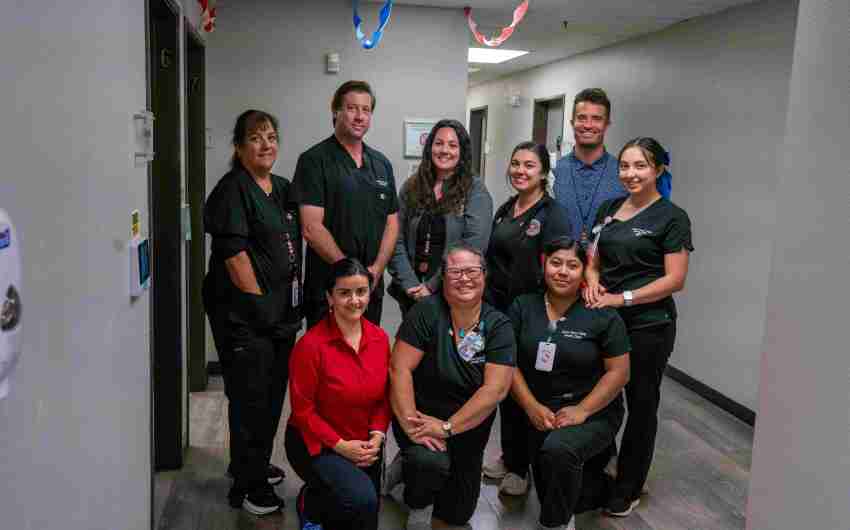
Here’s the good news: 15 nurses and other medical workers with the County Health Department won’t be getting laid off as projected just a month ago, thanks to some last-minute, expensive, and hard-fought fine print inserted into California’s budget. The state legislature voted for — and the governor signed — a bill that will delay for a year the ax that would otherwise have fallen in 2026 on federally qualified health clinics.
Here’s the bad news: 25,000 people in Santa Barbara County will lose their health insurance this year because last year’s HR 1 — otherwise known as Trump’s Big Beautiful Budget Bill — reduced subsidy required by many people as a way to keep their Affordable Care Act insurance remotely affordable. Next year, that number will be 50,000, said Marina Owen, chief executive of CenCal, the nonprofit agency that connects Medi-Cal recipients with health care providers in San Luis and Santa Barbara counties. Many more, she stated, will lose their insurance because of the recently added, deliberately onerous paperwork requiring recipients to frequently reapply and requalify to retain their insurance eligibility.
Next year, the federally qualified health clinics — think the county’s four public health clinics, the Santa Barbara Neighborhood Clinics, the American Indian Health Center — will remain reimbursed at the same rates they have been for primary care services. But for specialty care, Owen said, the county clinics will cease to provide many of the services they traditionally have. According to Owen, 3,000 children countywide require access to complex specialized medical care. Their existing health care is already too complicated and too expensive for many people to access.
Owen and other medical community leaders have spent the past 20 years cobbling together a patchwork quilt of reliable relationships to provide health care for those with limited means. The state budget includes $30 million for coordinated care to help people navigate the new and ever-changing system of treatment, but “I don’t know how they’re going to do that,” Owen said. “Are people here going have to call some offices up in San Francisco? Will they be open 24/7?”
Owen remembers how CenCal and Neighborhood Clinics nearly went out of business around 15 years ago. Major institutions such as Cottage Hospital stepped up, but the county had to face the prospect that their emergency rooms would be overrun with uninsured patients — whom hospitals cannot legally deny. That prospect looms once again, though now it seems more like an inevitability.
According to Owen, all the major hospitals in the county, the clinics, the county itself, CenCal, and the Santa Barbara Foundation have started holding all-hands-on-deck meetings to figure out a plausible Plan B. It’s unprecedented, she said. Two such meetings have been held thus far, with another soon on the horizon. At the first meeting, all the players got to know each other and got up to speed as to the enormity of the coming changes. The first order of business is helping people keep their insurance. After that, she said, “We have to find a new model. We’re looking at places like San Francisco and San Mateo, where they figured out ways for dealing with the uninsured. It’s all very sudden. We’ve got a lot of work to do.”