
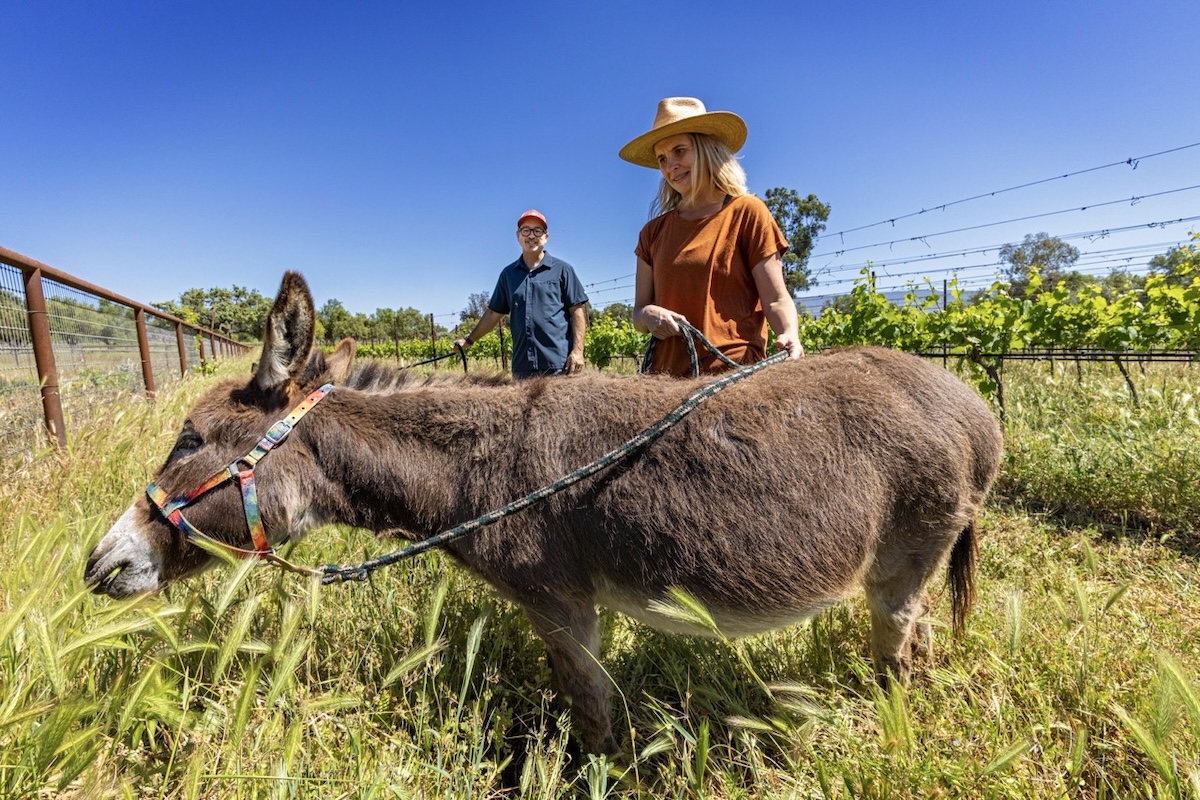
Listen up, wine country!
There’s $1 million in state funds just waiting to be paid to wineries and vineyards that plant pollinator-habitat gardens. Individual projects can be reimbursed up to $200,000, all for merely growing species that support native bees, butterflies, and other bugs, but you only have until the end of July to apply.
The money is being doled out by the Community Environmental Council (CEC) through a grant from the California Department of Food and Agriculture (CDFA). The CEC’s climate-smart agricultural program manager, Brian Sweeney, tells us more about the program below.
What does this program do?
The Pollinator Habitat Program is a CDFA initiative that helps farmers and ranchers establish pollinator habitat on working agricultural lands. The goal is to restore habitat for native bees, butterflies, and other beneficial insects while improving the long-term sustainability and resilience of California agriculture. In addition to supporting pollinators, these projects enhance biodiversity, improve soil health, increase carbon sequestration, support beneficial insects for integrated pest management, and strengthen agricultural productivity.

Why are vineyards being offered this funding?
Vineyards occupy thousands of acres across California and often have underutilized spaces — such as vineyard edges, roadways, drainage areas, and buffer strips — that can be transformed into high-quality pollinator habitat without affecting grape production. While wine grapes are primarily wind-pollinated or self-pollinated, vineyards benefit from healthy populations of beneficial insects that contribute to natural pest control and overall ecosystem health.
Establishing native flowering habitat can improve biodiversity, support integrated pest management, reduce erosion, improve soil health, enhance water infiltration, and create a more resilient farming system. These conservation practices also demonstrate environmental stewardship, something that many wineries and consumers increasingly value.
What sort of projects qualify?
Eligible projects generally establish or enhance pollinator habitat using USDA NRCS conservation practices. Examples include native hedgerows, flowering field borders, cover crops, conservation cover, windbreaks, riparian plantings, and habitat restoration areas designed to provide year-round forage and nesting habitat for pollinators and other beneficial species. Our team works directly with growers to determine eligibility, develop a project plan, prepare the application, and provide technical assistance throughout implementation. Growers don’t have to navigate the process alone.
What would a more extensive project entail?
Larger projects may include multiple conservation practices across an operation, such as installing miles of native hedgerows, converting field margins into pollinator habitat, restoring riparian corridors, establishing diverse native plant communities, and integrating habitat throughout a vineyard or ranch. Depending on the size and scope of the project, approved operations may qualify for up to $200,000 in reimbursement for eligible conservation practices. The objective is to create a long-term habitat that benefits both agriculture and the surrounding ecosystem.
If wineries aren’t ready right now, will there be more funds like this in the future?
While we certainly hope programs like this continue, future funding depends on state appropriations and CDFA program decisions, so we can’t guarantee another funding round. Because of that uncertainty, we strongly encourage interested growers and wineries to explore this opportunity now while funding remains available through our current project. Even if a grower isn’t ready to begin immediately, we’d still be happy to discuss ideas and help determine whether their operation could be a good fit for future conservation funding opportunities.
To apply, fill out this form here. If you have specific questions, email Sweeney by clicking here.








You must be logged in to post a comment.