

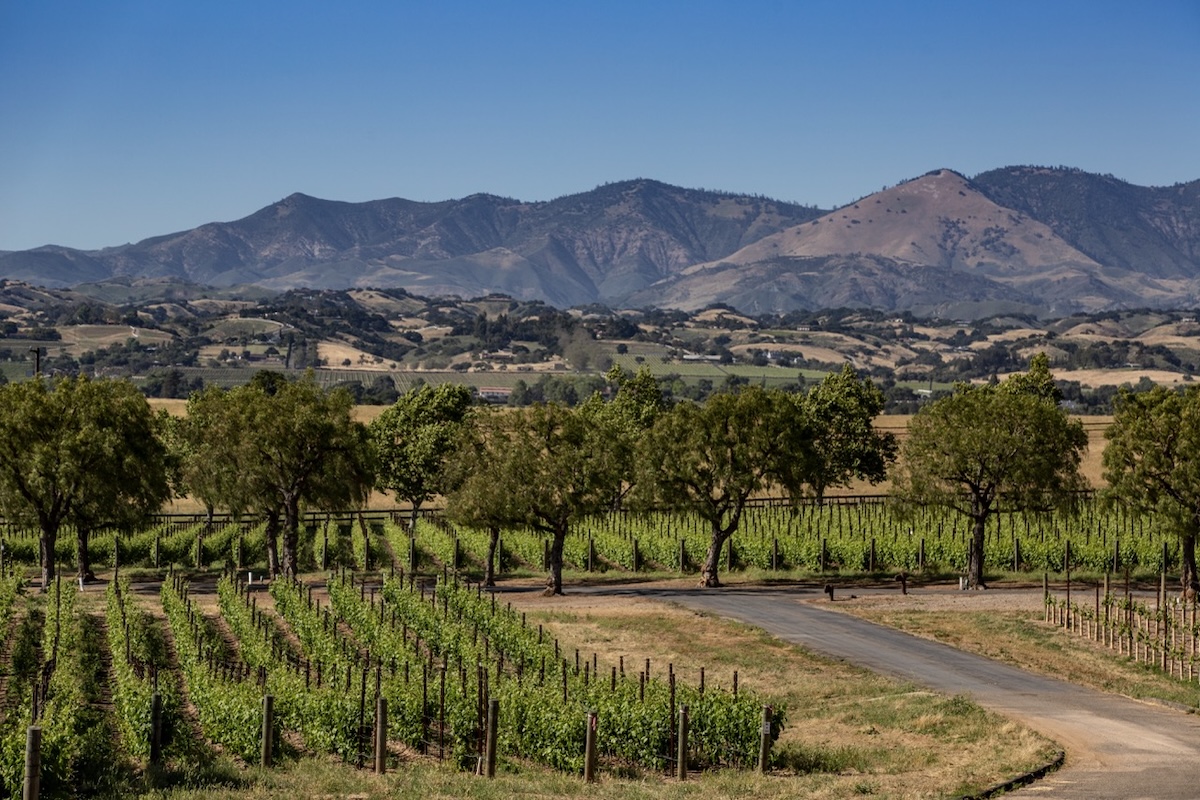
Keeping things fresh is always the challenge for historic estates such as the Gainey Vineyard, which, at 42 years old, is truly a Santa Ynez Valley landmark. Under the leadership of third-generation landowner Dan Gainey — whose grandfather bought the 1,800-acre ranch and whose dad planted the vines — the winery never stops pushing for new ideas and innovative approaches in both the cellar and vineyard.
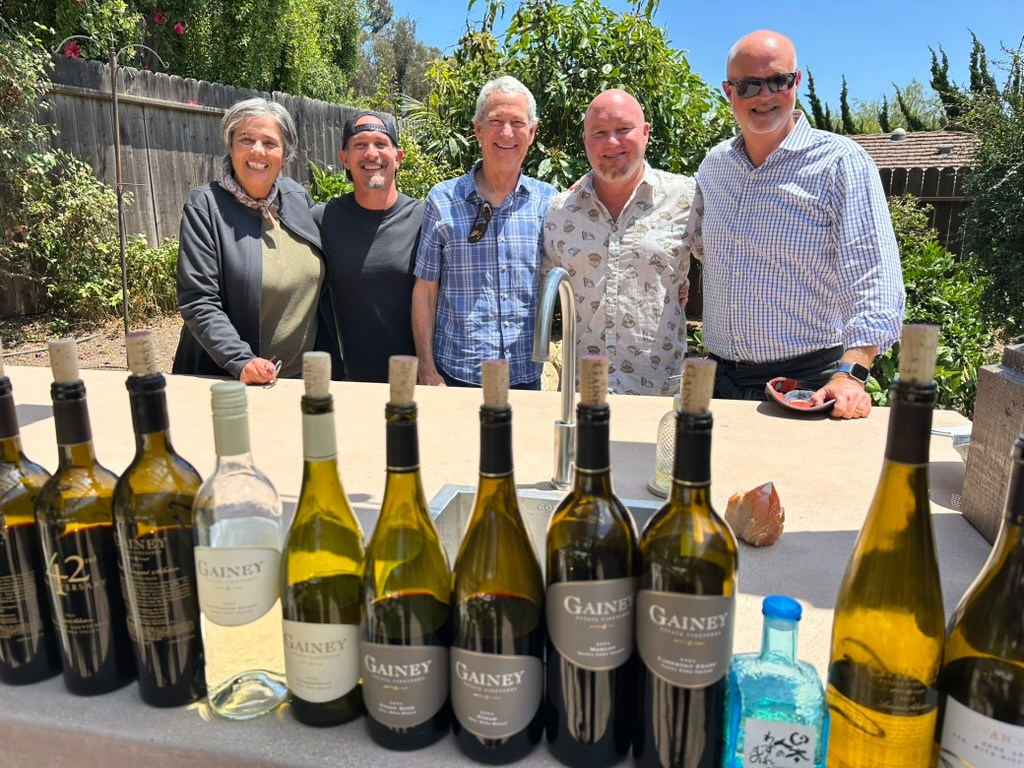
I’ve seen that quest up close, for Gainey and his team — winemaker Jeff LeBard, General Manager Stephen Janes, and our mutual friend, the writer and PR consultant Sao Anash — have come to my backyard for the past three summers to catch up and share a lunch of Sushi Teri takeout. We start each session with updates on what’s happening in the market and on the property — lots of replanting of older blocks right now — and then dive into tasting pretty much everything they’ve got.
When they came by last month, we tried 22 wines (and one of Sushi Teri’s sakes), including their Estate series (priced $24-$36), the Limited Selections ($36 to $180, if you include the Patrick’s Vineyard Cab), and the Evan’s Ranch lineup from their Sta. Rita Hills vineyard ($44-$120).
I’m continually impressed by how they maintain quality and typicity across so many varieties, from pinot and chard to merlot and cab franc to syrah and riesling and so on. That’s especially true on the more affordable Estate wines, as their $36 pinot easily competes for best in its price class. Throw in their annual mushroom lunch (I’ve been to a few) and many other special events, and I’m confident that Gainey’s wine club members are getting extreme bang for their buck.
I’m always drawn to shiny objects, so much of our conversation over the past three summers has centered on two new grapes for Gainey, which are also quite unique for Santa Barbara as a whole: sauvignon gris and petite sirah. The former came from Brander Vineyard, which is the first place I heard of the grape and the only other place I know of that grows it.
The petite sirah, meanwhile, was planted to be a blending agent, but it’s become a star on its own stage, one of but a handful of petite sirahs made in the Santa Ynez Valley. Other noteworthy examples are by Dovecote and Jaffurs — both from the Thompson Vineyard in Los Alamos — and Blair Fox, which is grown at his family’s property. The historic David Bruce Winery in the Santa Cruz Mountains achieved wide acclaim for its annual Santa Barbara County petite sirah bottling, although we don’t see much of that around here.
Sauvignon Gris Story
“We were looking to diversify our clonal selections,” explained LeBard on what led to the sauvignon gris. So they went to hang out with Fred Brander and Fabian Bravo at Brander Vineyard, which produces more sauv blanc than anyone around. “Have you ever heard of sauvignon gris?” asked Brander. They had not.
“We tasted it, and it was immediately an ‘aha’ moment,” said LeBard. “There’s a pithiness and spiciness to the wine. We know this could blend harmoniously with the sauv blanc.”
He later learned that, prior to the phylloxera scourge that decimated France’s vineyards in the 19th century, sauv gris may have been as widely planted as sauv blanc in both the Loire Valley and Bordeaux. But because it yields less, more growers planted sauv blanc when it was time to start over.
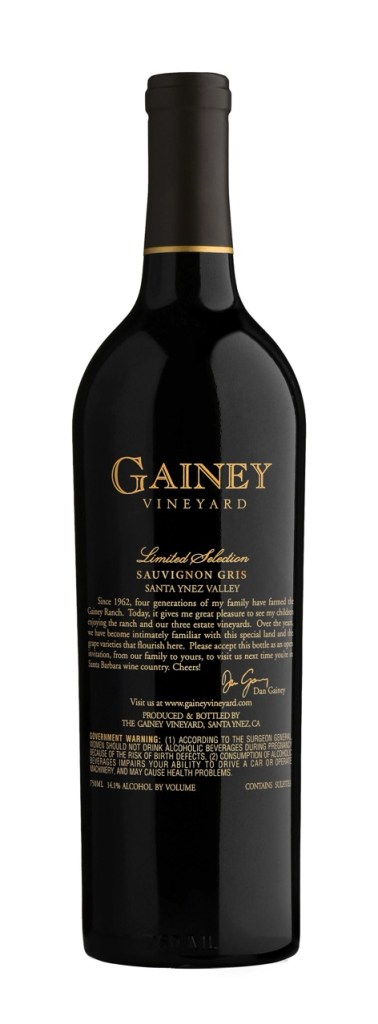
Gainey has since planted nearly four acres of sauv gris, and it very quickly found its way beyond being sauv blanc’s supporting cast and into a singular sauvignon gris bottling. I tried the first release with the 2024 last summer, of which they made 127 cases, and then the second release last month with the 2025, which is up to 388 cases. LeBard is subjecting the grapes to a “torture test” regime, experimenting with all types of fermentation and aging styles. And now sauv blanc also supports the sauv gris, with about 15 percent of the former in the latter’s 2025 bottling, which is $40.
“I’m just super jazzed on the spice profile,” said LeBard, who also likes the grape’s heavier weight on the palate. It sells out fast, so hurry if you’d like to get a taste.
Petite Sirah Goes Solo
The petite sirah story is similar. “We originally planted it as a blender,” said LeBard of the grape, which is dark, dense, tannic, and often fairly acidic. “It’s a Swiss army knife for red blends.” But then they really liked the results all alone and realized that their other wines didn’t really need the power boost that petite sirah would deliver. “Why not make petite sirah?” they wondered.
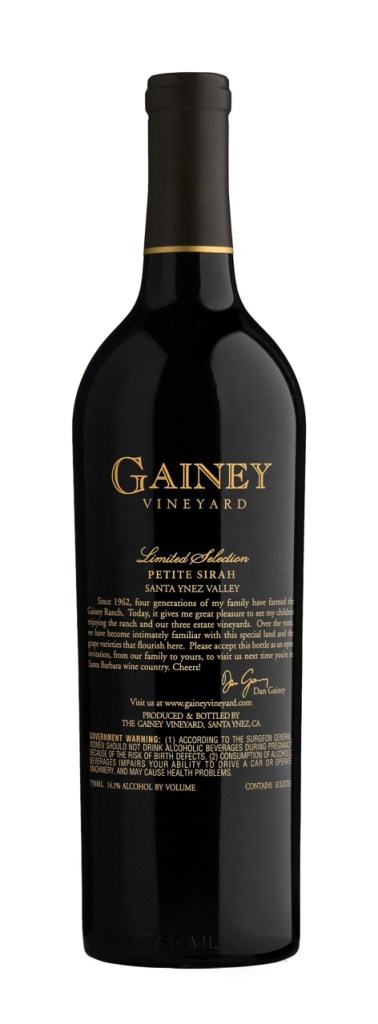
With more than two acres now planted, they released their first petite sirah in 2023, and we tried the 2024 last month. Like syrah grown in a cooler-than-usual climate, this petite sirah — which is typically grown in much hotter places such as Paso Robles, Lodi, and Napa — exhibits a lot of purple flower and blueberry qualities. While the many petite sirahs I taste from Paso Robles impress with sheer power, I tend to prefer these more nuanced Santa Barbara versions, which pair peppery spice with a more suave mouthfeel.
Most importantly, LeBard tames the variety’s imposing tannins, which can be monstrous in petite sirah. Or maybe petite sirah is just happier here, in a more comfortable climate.
“It’s very fun to work with,” he said. “It’s one of those wines that kinda makes itself.”
Try these and more of the latest Gainey Vineyard releases by visiting the estate in Santa Ynez at 3950 Highway 246. Call (805) 688-0558 and see gaineyvineyard.com.






You must be logged in to post a comment.