Like every single high-ranking hospital administrator in America, Cottage Health CFO Matt Morgan has good reason to stay awake nights worrying about the flood of newly uninsured patients — courtesy of Donald Trump’s HR 1, or Big Beautiful Budget Bill— seeking treatment for which they cannot pay. Being a chief financial officer, Morgan selects his words with care and is not given to histrionic rhetoric. “We’re not nervous,” he says, “so much as looking forward expectantly.”
There’s a whole lot coming down the pike for Morgan to be expectant about. Come January 1, 2027, Trump’s new and tougher eligibility requirements for Medicaid recipients will kick into gear. When that happens, Morgan said he expects the number of uninsured patients at Cottage — “self-paying” is the term of art — to increase by 300 to 500 percent. Right now, Morgan said, Cottage has about 4,000 to 5,000 self-paying patients.
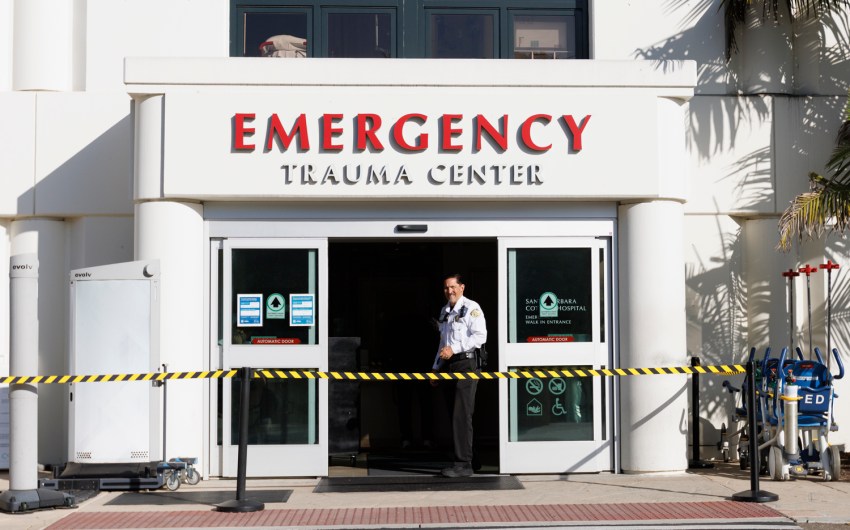
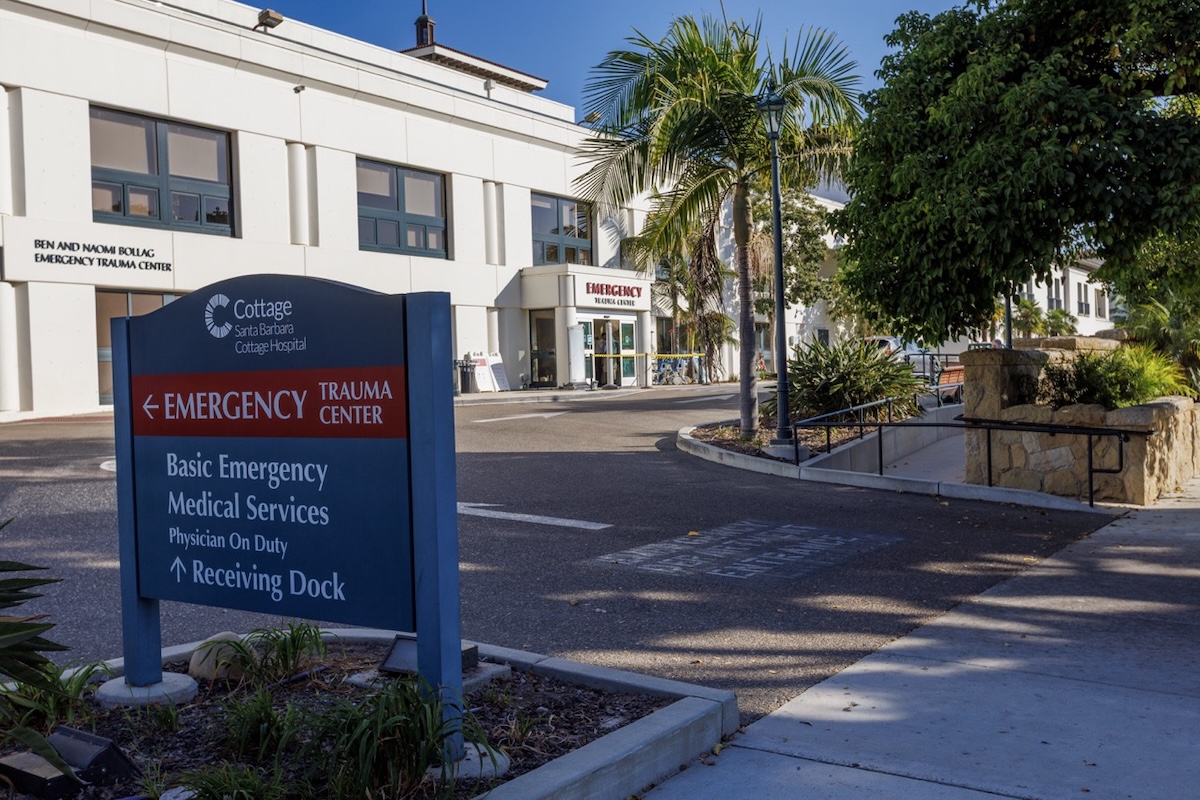
By law, hospitals are barred from refusing service to people in need because they can’t pay. As a last resort, people without insurance or means typically avail themselves of the nearest emergency room when medical challenges achieve critical mass.
“Emergency rooms,” Morgan stated, “that’s real.” And emergency rooms, he also noted, are the third most expensive part of any hospital.
The math does not look good. Right now, 25 percent of Cottage’s patients are insured by Medicaid, which provides government-funded insurance for working families and people on fixed incomes. Roughly one-third of all county residents are too. But provisions of HR 1 now require Medicaid beneficiaries to reapply and requalify every six months. That’s two times a year. And the requirements — for number of hours worked or volunteered, for example — have grown far more demanding. The likelihood of falling off the rolls, under HR 1, is significantly greater.
The way Morgan does the math, if all these worst-case scenarios play out as statistical models prepared by Cottage and CenCal indicate, Cottage Health could find itself providing $40 million worth of services for which it won’t be compensated.
“From where I sit, that’s a lot of money,” Morgan added.
That also may be the just the beginning. As a result of HR 1, the subsidies needed to keep many Affordable Care Act insurance policy holders enrolled were not included in Trump’s signature legislative achievement. At a time when commercial insurance premiums are increasing by up to 20 percent, many private insurance customers are falling away by the droves, allowing their policies to lapse and leaving themselves and their families exposed.
“If I look at the total business contracted with private insurance companies in the first seven months of the year,” Morgan said, “it’s down.”
He estimated the drop was by 4 percent. In total dollars, this drop in private insurance revenues is of serious concern. How serious? That depends. Maybe it could be folded into the $40 million Morgan referenced; it might also be another $40 million shortfall between revenues paid and services rendered.
HR 1 passed last summer along bitterly divided party lines amid much political turmoil acrimony. Social-safety-net programs — such as Medi-Cal and Medicaid — were effectively shredded by the tough new eligibility requirements in order to cut costs and allow for staggering tax breaks, most of which targeted the rich and the super wealthy.
According to Katy Bazylewicz, Cottage’s chief marketing officer and head of population health, Cottage is currently working closely with CenCal — which manages the sprawling network of medical professionals who treat Medi-Cal beneficiaries — and the Santa Barbara Family Service Agency to help people now on Medi-Cal stay on it. Given how daunting the new application requirements are, this will require a massive amount of hand holding, but that’s the plan. In addition, she and Morgan explained that Cottage will be working with the Santa Barbara Neighborhood Clinics to figure out some cost-sharing way the clinics can provide primary care to many of the patients who find themselves dispossessed of their Medi-Cal coverage. Such treatment is far cheaper and far more nuanced to actual need than ER treatment.
No one, Morgan said, will be turned away or denied treatment because lack of insurance or ability to pay. Cottage offers charity care, he said. A family of four making up to $165,000 qualifies. Patients do have to apply, however, for this assistance.
“This is how we do business,” Morgan said.
If the hospital spends more on such care than the kitty holds, Morgan said, the spigot will not be turned off. Unlike other hospitals, Cottage is on firm ground financially, and over the years, it has cultivated and nurtured an astonishingly generous donor base.
Cottage is hardly working on its own. As Morgan noted, HR 1 is front and center in the minds of all healthcare providers everywhere. In Santa Barbara County, Cottage, CenCal, the Neighborhood Clinics, Dignity Health, Lompoc Hospital, Sutter Health, the Indian Health Clinic, and the Santa Barbara County Department of Public Health have convened an ongoing health care summit; the idea, in short, is to rearrange the deck chairs of the Titanic before the iceberg hits.
In the meantime, prospective patients trying to better understand what options they have and what resources exist can call (805) 879-8963. As Cottage CFO Morgan noted, “We have resources.” As marketing czar Bazylewicz explained, “When they call, they’ll get someone who can connect them with those resources.”
Editor’s Note: This story was updated to say that insurance premiums are increasing by up to 20 percent, not 200 to 300 percent as originally reported.