
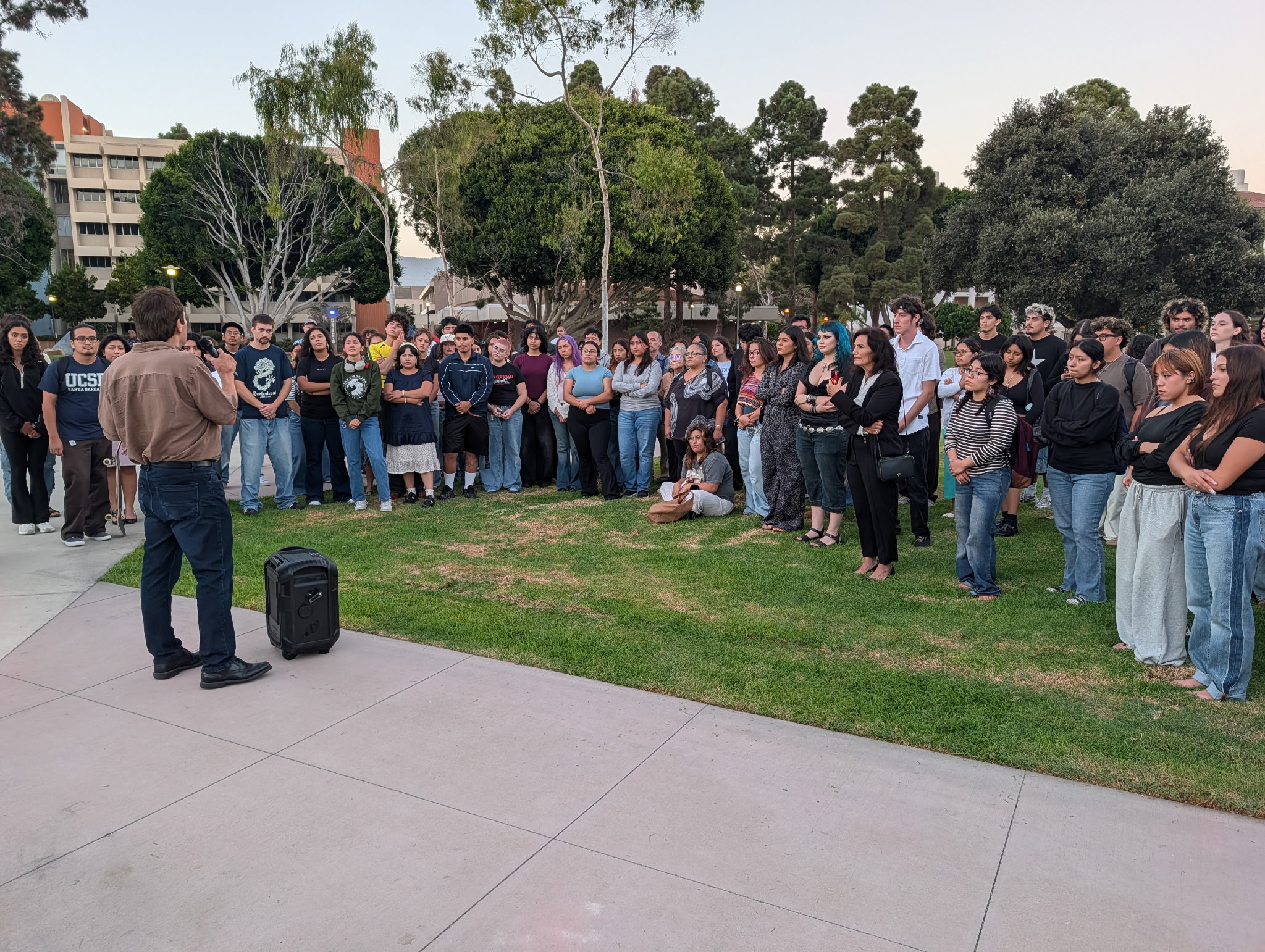
UC Santa Barbara’s El Centro Arnulfo Casillas resource center — a nondescript, two-story, wooden building almost directly in the middle of the campus — stands as a reminder of what was there long before there was a campus and a symbol of what happens when students come together to fight for something they love.
What started originally as an old barracks built by the Marine Corps Air Station before there was ever a university campus in Goleta, El Centro has since blossomed into the de facto home base for the thousands of UCSB students from Hispanic, Latino, or Indigenous backgrounds.
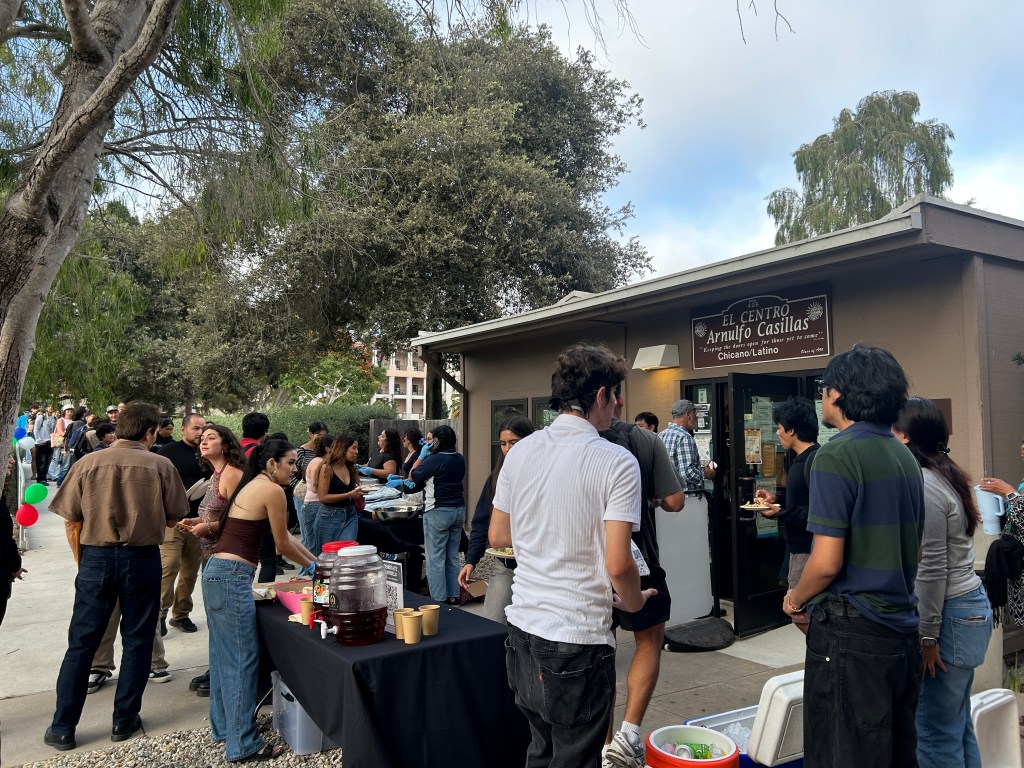
On October 1, the campus community came out to celebrate the recent renovations at El Centro, which brought some much-needed repairs, a new stairway, mechanical upgrades, and a new paint job as part of the latest push to keep the building and its resources strong for future generations of students.
El Centro’s story is tied to UCSB’s history of student activism, the Civil Rights era, and the Chicano movement, dating back to the late ’60s when Black and Brown students demanded that UCSB hire faculty and counselors of color, eventually leading to the university’s first Black and Chicano Studies Departments. After students helped draft the historic “Plan de Santa Barbara” — which outlined a pathway to higher education for Chicano students — UCSB’s first-ever Chicano Educational Opportunities Program (EOP) counselor William Villa helped open the doors to El Centro for the first time in January 1970.
Since then, El Centro has been the “home away from home,” for Hispanic and Latino students, according to current EOP Counselor Jimmy Ojeda Pedraza. The 1,500-square-foot building houses many of the university’s resources and programs, from the offices for EOP, Counseling and Psychological Services, and the Early Academic Outreach Program to decades’ worth of archive materials from campus groups such as El Congreso, MUJER, and Mesa Directiva.
“El Centro Arnulfo Casillas is more than just a building.… It is a crucial gathering space for community building, mentorship, and academic success for our students,” said Dr. Ralph Armbruster-Sandoval, co-chair of the El Centro Expansion Committee and chair of the UCSB Department of Chicana/o Studies. “It aims to be a space where all are welcome and treated with respect and dignity.”
The small building had been restored, repaired, and threatened with demolition several times over the past 50-plus years of its existence. A single-story trailer and annex was added onto the old barracks in 1977, and in 2018 the campus community came together to fight a proposed demolition that would have marked the end of El Centro.
At the time, a structural consultant had submitted a report finding that the building needed costly repairs, prompting the university to send an eviction notice to groups that shared the building. Students and El Centro alumni pushed back, leading to a decision to fund a nearly $900,000 reconstruction to bring the building up to modern standards.
The most recent upgrades were sparked by members of El Congreso, who published a letter in 2022 calling for then-chancellor Henry Yang to support the renovation and expansion of El Centro. Following the input from students, the university set aside $1 million toward the projects, $600,000 of which was used to fund the first phase of the upgrades that were finished just before the start of this term.
Architect Rosa Alvarado, who also worked on the previous renovations in 2018, said the recent work included small-but-important upgrades, including a new staircase outside the building, new electrical wiring, sound insulation, and a dumb-waiter lift that will allow student groups to transport materials much more easily.
Alvarado said she was grateful to be able to keep the building functional. She said that despite the challenges of an older structure, she understood the importance of El Centro to the students on campus. At the October 1 celebration, hundreds of students lined up in front of the center for free food and snacks, before gathering on the lawn for a few speeches and a performance by an Azteca dance group.
“What we have here with the engagement from the students, it’s tremendous,” Alvarado said.
Speakers included Arturo Casillas, brother of Arnulfo Casillas, the founder of UCSB’s El Congreso. Arturo spoke about his brother, whose consistent support for Chicano students on campus was repaid when students asked El Centro to be officially renamed El Centro Arnulfo Casillas when it was cemented as a permanent part of campus programming in 1994 after student groups fought another potential demolition with a hunger strike.
Jasmina Patchell, one of the current co-chairs of El Congreso, said the resource center means “too many things to too many people to fit under a single label.”
“This expansion is essential to preserving its legacy as a unique cultural hub and resource center,” Patchell said.“We are committed to working with campus administration to strengthen and grow El Centro’s current programming and ensure its success for the entire UCSB community and beyond. Countless people in this community carry cherished memories and deep ties with the people, spaces, and resources El Centro provides, and it would be a disservice to both the students and faculty who rely on this space not to expand it.”
After this phase of renovations, the El Centro Expansion Committee will continue to work with the university on a project proposal for additional expansion opportunities. These plans are still in the preliminary stages.
Related Posts
Premier Events
Wed, Oct 14
5:30 PM
Santa Barbara
Free Home Hardening & Firescaping Workshop
Fri, Oct 16
7:00 PM
Santa Barbara
Divine Within: A Sufi Exploration of Love & Unity
Sat, Oct 17
9:30 AM
Santa Barbara
Divine Within: A Sufi Exploration of Love & Unity
Sun, Oct 18
9:30 AM
Santa Barbara
Divine Within: A Sufi Exploration of Love & Unity
Fri, Nov 13
7:00 PM
Santa Barbara
Divine Within: A Sufi Exploration of Love & Unity
Sat, Nov 14
9:30 AM
Santa Barbara
Divine Within: A Sufi Exploration of Love & Unity
Sun, Nov 15
9:30 AM
Santa Barbara
Divine Within: A Sufi Exploration of Love & Unity
Fri, Dec 11
7:00 PM
Santa Barbara
Divine Within: A Sufi Exploration of Love & Unity
Sat, Dec 12
9:30 AM
Santa Barbara
Divine Within: A Sufi Exploration of Love & Unity
Sun, Dec 13
9:30 AM
Santa Barbara
Divine Within: A Sufi Exploration of Love & Unity
Wed, Oct 14 5:30 PM
Santa Barbara
Free Home Hardening & Firescaping Workshop
Fri, Oct 16 7:00 PM
Santa Barbara
Divine Within: A Sufi Exploration of Love & Unity
Sat, Oct 17 9:30 AM
Santa Barbara
Divine Within: A Sufi Exploration of Love & Unity
Sun, Oct 18 9:30 AM
Santa Barbara
Divine Within: A Sufi Exploration of Love & Unity
Fri, Nov 13 7:00 PM
Santa Barbara
Divine Within: A Sufi Exploration of Love & Unity
Sat, Nov 14 9:30 AM
Santa Barbara
Divine Within: A Sufi Exploration of Love & Unity
Sun, Nov 15 9:30 AM
Santa Barbara
Divine Within: A Sufi Exploration of Love & Unity
Fri, Dec 11 7:00 PM
Santa Barbara
Divine Within: A Sufi Exploration of Love & Unity
Sat, Dec 12 9:30 AM
Santa Barbara
Divine Within: A Sufi Exploration of Love & Unity
Sun, Dec 13 9:30 AM
Santa Barbara


You must be logged in to post a comment.