This article was originally published in UCSB’s ‘The Current‘.
Anxiety is high over this year’s El Niño. It’s breaking records, and hasn’t even peaked. So how does El Niño work? What might Southern Californians expect? And how can we prepare for a potentially rough winter? Climate, ocean and coastal-policy experts at UC Santa Barbara offer their perspective.
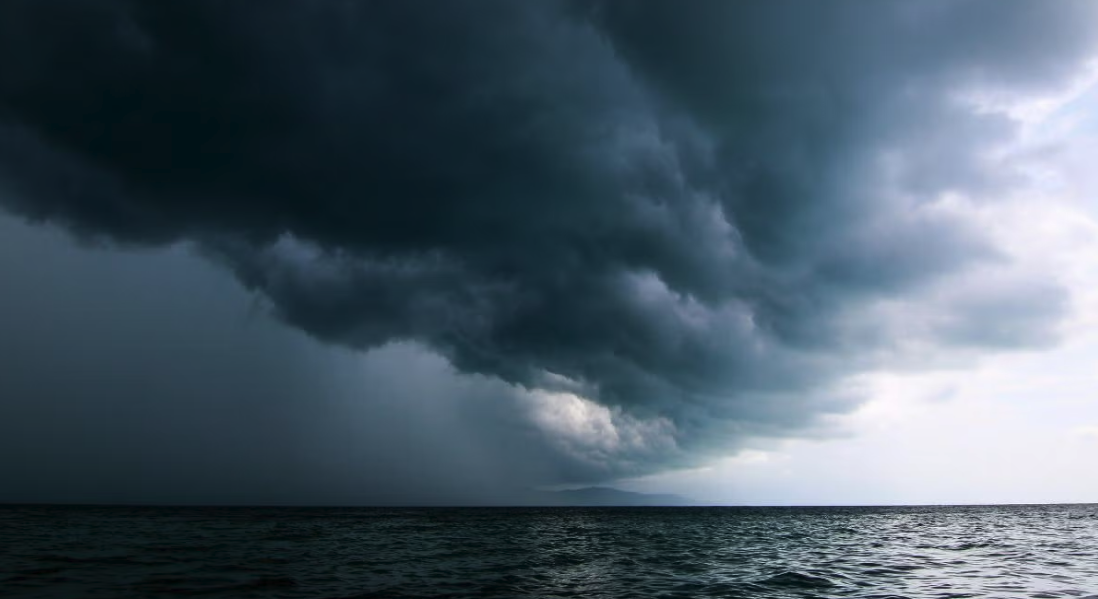
The El Niño Southern Oscillation is a natural fluctuation of sea surface temperatures in the Pacific Ocean. The cycle repeats itself every two to seven years, bringing warm water east from the tropical Pacific, toward the west coasts of North and South America for a year. Higher sea temperatures affect weather and ocean patterns, generally bringing strong storms to Southern California.
So far, 2026 appears to be a superlative year. “The latest forecast out of NOAA gives a 75 percent chance that this will be the biggest El Niño since at least 1950,” said Samantha Stevenson, a climate scientist who specializes on the El Niño Southern Oscillation and a professor at UCSB’s Bren School of Environmental Science & Management. In fact, a recent study by Stevenson found that the cycle itself has become more intense over the last 40 years than in the previous 1,000 years.
The threshold for El Niño is when surface temperatures in the tropical pacific are 0.5º Celsius higher than average for that time of year. Instruments show that the ocean surface is already 4º C higher at the equator. “And the subsurface temperatures are even higher,” Stevenson said. “It’s 10º Celsius warmer than normal along the equator.”
Warmer water breeds more intense storms, like Hurricane Polo south of Baja California. This leads to bigger swells and higher surf, important factors in coastal flooding and erosion.
Water also expands as it heats up, adding around 6 inches to the height of the ocean’s surface. This bulge of warm water travels eastward from the equatorial Pacific until reaching the west coasts of North and South America. “When it hits the boundary of the coast, then it splits,” said Stevenson. This sends a slow-moving Kelvin wave hugging the coastline as it travels up the coast of North America and down the coast of South America.
The Kelvin wave on its way to Southern California won’t show up as a tsunami, though. “Normal tides arrive as Kelvin waves,” explained Libe Washburn, a professor emeritus of geography who studies ocean circulation along the coast. “They’re just a different kind of Kelvin wave; they go a lot faster.”
This short-term rise in local sea level compounds the hazards posed by storm and surf, especially at the highest tides, or king tides. “When those things line up — king tides, big swell and elevated sea level due to thermal expansion — you can get more coastal flooding or coastal erosion of cliff faces and so forth,” Washburn said.
As for rain and flooding, El Niño plays out differently in the northern and the southern parts of the West Coast. The warming conditions tend to shift the jet stream south, which steers winter storms toward California and away from the typically damp Pacific Northwest. As a result, these storms still have a lot of moisture by the time they peel down the West Coast and hit Southern California.
Climate scientists expect a wetter winter this year, especially if the jet stream directs atmospheric rivers our way. That means potential flooding and debris flows. “Any low lying areas, beach-level homes and cliffs are going to see more potential damage,” said Charles Lester, director of UCSB’s Ocean and Coastal Policy Center.
Downtown Santa Barbara was built on the estuary of Mission Creek, while the airport sits on the partially filled Goleta Slough. These are areas that have seen flooding in the past and could see it again this winter. Meanwhile, areas along streams and rivers, or downhill from recent fire scars, have a heightened risk of landslides. Heavy flows and unstable soil poses a hazard farther inland, as well. Surging water breached part of the Los Angeles Aqueduct in 2023.
That said, sodden conditions may not arrive until later in the season. “It actually looks like the wetter conditions are predicted to peak in the spring in this area: February to April,” Stevenson said. Warmer weather, combined with more precipitation later in the year, is also bad for California’s snowpack, which evens out the state’s water resources by slowly releasing water over the course of spring, summer and fall.
In terms of preparing for El Niño’s impact, a wise course of action is to simply investigate what’s happened to your neighborhood in previous El Niños. “There is a track record,” Washburn said. “We’ve been through these before.”
Also, consider recent events — like fires, erosion or major construction. An area’s track record and current conditions combine to set the stage for what’s likely to play out over the next few months, the researchers agreed. Remembering this should help people develop a plan.
For instance, a section of Stevenson’s house almost flooded a couple winters back. “And so I had the landscaper out to install a sump pump in the yard to route water out to the street,” she said.
“Clean out your gutters, clean your drainages, get sandbags if you are prone to flooding,” Lester added. “We can’t know for sure what’s going to happen, but better safe than sorry.”
- Information specific to this year’s El Niño from the County of Santa Barbara
- Storm preparation information from the county Office of Public Works
- An El Niño toolkit from Listos California, an initiative of the Governor’s Office of Emergency Services
- Resources from UCSB’s emergency management office
The earlier you prepare, the better off you’ll be. “I started thinking about this over the summer,” Stevenson said, “because all the landscapers are going to be backed up.”
It’s an approach the researchers agree should apply more broadly. California, they say, needs to take systematic steps toward making our neighborhoods, cities and open spaces more resilient to the impacts of El Niño, which are amplified by underlying climate change. “We definitely need more long-term, societal planning and not just reactions to individual emergencies,” Lester said.
Related Posts

Premier Events
Sat, Oct 17
9:00 AM
Santa Barbara
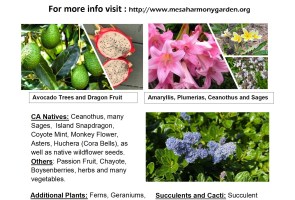
Mesa Harmony Garden Fall Plant Sale Continues…
Fri, Oct 23
2:00 PM
Santa Barbara
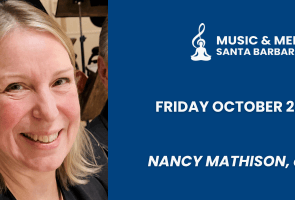
Music & Meditation: Clarinetist Nancy Mathison & Pianist Antonio Artese
Sat, Oct 24
9:00 AM
Santa Barbara
Mesa Harmony Garden Fall Plant Sale Continues…
Sun, Oct 18
9:00 AM
Santa Barbara
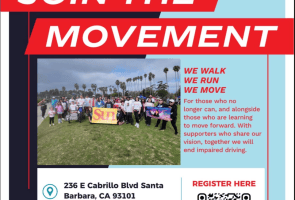
“Move with MADD” Santa Barbara 3K Community Walk & Fundraiser to Prevents Impaired Driving
Sun, Oct 18
11:00 AM
Santa Barbara
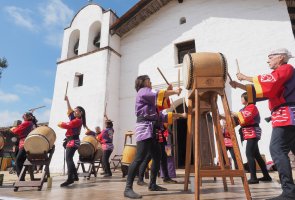
17th Annual Asian American Neighborhood Festival
Sun, Oct 18
1:00 PM
Santa Barbara
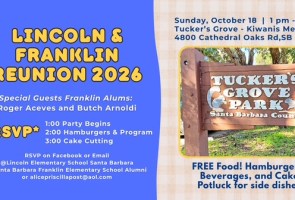
Lincoln Elementary School 150th All Year Reunion
Sun, Oct 18
3:00 PM
Santa Barbara
Seaworthy Author Talk -Will Sofrin
Sun, Oct 18
3:00 PM
Goleta
Free Concert Offers Journey Through Italian Music

Mon, Oct 19
7:00 PM
Santa Barbara
PFLAG Santa Barbara October Meeting: “Schools and Inclusive Practices – What creates a safe and inclusive school?”

Tue, Oct 20
7:00 PM
Santa Barbara
Get Out the Vote Night @ SOHO, Music Performance by Loyal Defense Workers

Wed, Oct 21
6:30 PM
Santa Barbara
Teflon Comedy/Non-Schtick – Evening of Comedy

Thu, Oct 22
5:30 PM
Santa Barbara
Best Fest: A Celebration of the Best of Santa Barbara® Readers’ Poll 2026
Sat, Oct 17 9:00 AM
Santa Barbara
Mesa Harmony Garden Fall Plant Sale Continues…
Fri, Oct 23 2:00 PM
Santa Barbara
Music & Meditation: Clarinetist Nancy Mathison & Pianist Antonio Artese
Sat, Oct 24 9:00 AM
Santa Barbara
Mesa Harmony Garden Fall Plant Sale Continues…
Sun, Oct 18 9:00 AM
Santa Barbara
“Move with MADD” Santa Barbara 3K Community Walk & Fundraiser to Prevents Impaired Driving
Sun, Oct 18 11:00 AM
Santa Barbara
17th Annual Asian American Neighborhood Festival
Sun, Oct 18 1:00 PM
Santa Barbara
Lincoln Elementary School 150th All Year Reunion
Sun, Oct 18 3:00 PM
Santa Barbara
Seaworthy Author Talk -Will Sofrin
Sun, Oct 18 3:00 PM
Goleta
Free Concert Offers Journey Through Italian Music

Mon, Oct 19 7:00 PM
Santa Barbara
PFLAG Santa Barbara October Meeting: “Schools and Inclusive Practices – What creates a safe and inclusive school?”
Tue, Oct 20 7:00 PM
Santa Barbara
Get Out the Vote Night @ SOHO, Music Performance by Loyal Defense Workers
Wed, Oct 21 6:30 PM
Santa Barbara
Teflon Comedy/Non-Schtick – Evening of Comedy
Thu, Oct 22 5:30 PM
Santa Barbara