This article was underwritten in part by the Mickey Flacks Journalism Fund for Social Justice, a proud, innovative supporter of local news. To make a contribution go to sbcan.org/journalism_fund.
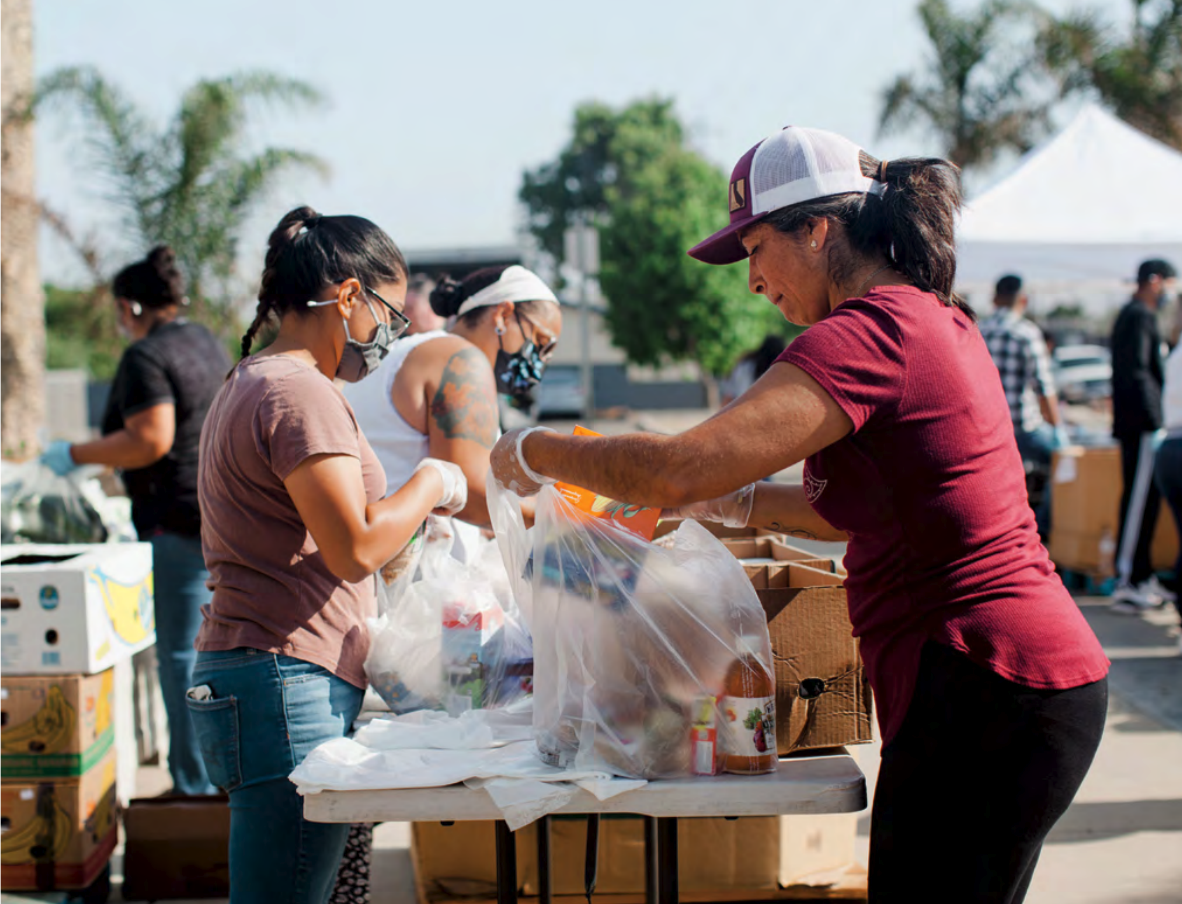
The federal government’s proposed change to SNAP could cause thousands of low-income people in Santa Barbara County to lose the approximately $7 per day that helps them buy groceries. Meanwhile, the county’s largest food insecurity nonprofit, Foodbank of Santa Barbara County, said more people are visiting food bank locations to feed their families.
SNAP, or the Supplemental Nutrition Assistance Program, formerly called food stamps, provides low-income people a small amount of funding for groceries, loaded on a benefits card. The federal limit for SNAP recipients is no more than 130 percent of the poverty line, which pencils out to about $43,000 per year for a family of four. You also can only have savings of up to $3,000.
But most U.S. states, including California, set their own income and asset limits through a policy called Broad Based Categorical Eligibility. Essentially, it allows the state to choose to raise the income limit to up to 200 percent of the poverty line; that’s $66,000 for a family of four in California.
“This flexibility helps ensure that working families and other low-income households can access food assistance even if they have modest savings or income slightly above traditional federal thresholds,” said Rachel Lipman, Assistant Director, Economic Assistance and Employment Services at the County’s Social Services Department.
Note that the net income limits — how much the household makes after applying allowable deductions, including childcare costs and some shelter costs — still needs to be below the poverty line.
It’s Broad Based Categorical Eligibility that the U.S. Department of Agriculture is considering eliminating. The USDA said the policy was a “loophole” that has “bloated the welfare rolls for decades,” according to reporting from Politico. The department said the rule change will reduce spending by $45 billion over the next three years.
Across the United States, an estimated 6.3 million people will lose assistance. The County’s Department of Social Services said that nationwide, an estimated 17.6 percent of SNAP recipients would lose eligibility for a total of about 9,000 people in Santa Barbara County. The department said that this is a preliminary estimate and the department has not yet been able to conduct a full analysis.
Broad Based Categorical Eligibility also allows people who are enrolled in another welfare program to qualify for SNAP. SNAP, in turn, opens the door for free school meals, summer EBT and WIC (Women-Infant-Children) benefits for low-income parents with babies. Eliminating the policy would require low-income people to apply for SNAP separately.
Laura Alcantar, director of marketing at Foodbank of Santa Barbara County, said eliminating Broad Based Categorical Eligibility creates an administrative burden on families and local governments alike.
The proposed SNAP rule change comes on the heels of recently passed restrictions to SNAP, extending the 20-hour-per-week work requirement to previously exempt groups, like foster youth, veterans, and parents with a child between the ages of 14 and 18.
Representative Salud Carbajal, whose district includes Santa Barbara County, said in a press release last week that he was outraged at the proposed rule change, especially on the heels of past cuts.
“It is just heartless to do this again to families who are already struggling under the Trump administration’s failed economic policies. I will continue to fight for Central Coast families and work to rollback these terrible cuts,” he said in the press release.
Foodbank’s Alcantar said the nonprofit is already seeing the impact of the recent eligibility changes, along with the impact of increased cost of living, through the growing number of people using Foodbank.
“We’re seeing more and more people turn to us,” she said, adding that the number of visitors to the food bank locations has increased by the thousands since the last fiscal year.
Acalantar said the Foodbank has built a local network for food assistance and donations, including working with local farmers. That doesn’t mean people can’t help make sure others stay fed: Alcantar said donations and volunteering are welcoming, as well as spreading the word.
On the federal level, the USDA has a comment period on the proposed rule change until December 10. People can comment here.
Related Posts


Premier Events

Thu, Nov 19
10:30 AM
Santa Barbara
Sunshine In a Jar, The Art of Making Meyer Lemon Marmalade

Mon, Nov 16
7:00 PM
Santa Barbara
Toast – The Best of Bread at the Arlington

Tue, Nov 17
7:00 PM
Santa Barbara
CWC Screening and Conversation: “Criminal Minds” James T. Clemente

Wed, Nov 18
12:00 PM
Santa Barbara
UCSB Son Jarocho

Wed, Nov 18
7:00 PM
Santa Barbara
Outside+ Showing of “Warren Miller’s Days Off”

Fri, Nov 20
11:00 AM
Santa Barbara
Santa Barbara Antique & Vintage Show

Sat, Nov 21
10:00 AM
Solvang
56th Annual Holiday Open House

Sat, Nov 21
10:00 AM
Santa Barbara
MOXI’s Seaside Sock Skating
Sat, Nov 21
11:00 AM
Santa Barbara
Santa Barbara Antique & Vintage Show
Sat, Nov 21
11:00 AM
Santa Barbara
Cassatt Reconsidered: Lecture with Mary G. Morton

Sat, Nov 21
7:30 PM
Santa Barbara
Juilliard String Quartet & Simone Dinnerstein
Thu, Nov 19 10:30 AM
Santa Barbara
Sunshine In a Jar, The Art of Making Meyer Lemon Marmalade
Mon, Nov 16 7:00 PM
Santa Barbara
Toast – The Best of Bread at the Arlington
Tue, Nov 17 7:00 PM
Santa Barbara
CWC Screening and Conversation: “Criminal Minds” James T. Clemente
Wed, Nov 18 12:00 PM
Santa Barbara
UCSB Son Jarocho
Wed, Nov 18 7:00 PM
Santa Barbara
Outside+ Showing of “Warren Miller’s Days Off”
Fri, Nov 20 11:00 AM
Santa Barbara
Santa Barbara Antique & Vintage Show
Sat, Nov 21 10:00 AM
Solvang
56th Annual Holiday Open House
Sat, Nov 21 10:00 AM
Santa Barbara
MOXI’s Seaside Sock Skating
Sat, Nov 21 11:00 AM
Santa Barbara
Santa Barbara Antique & Vintage Show
Sat, Nov 21 11:00 AM
Santa Barbara
Cassatt Reconsidered: Lecture with Mary G. Morton
Sat, Nov 21 7:30 PM
Santa Barbara