
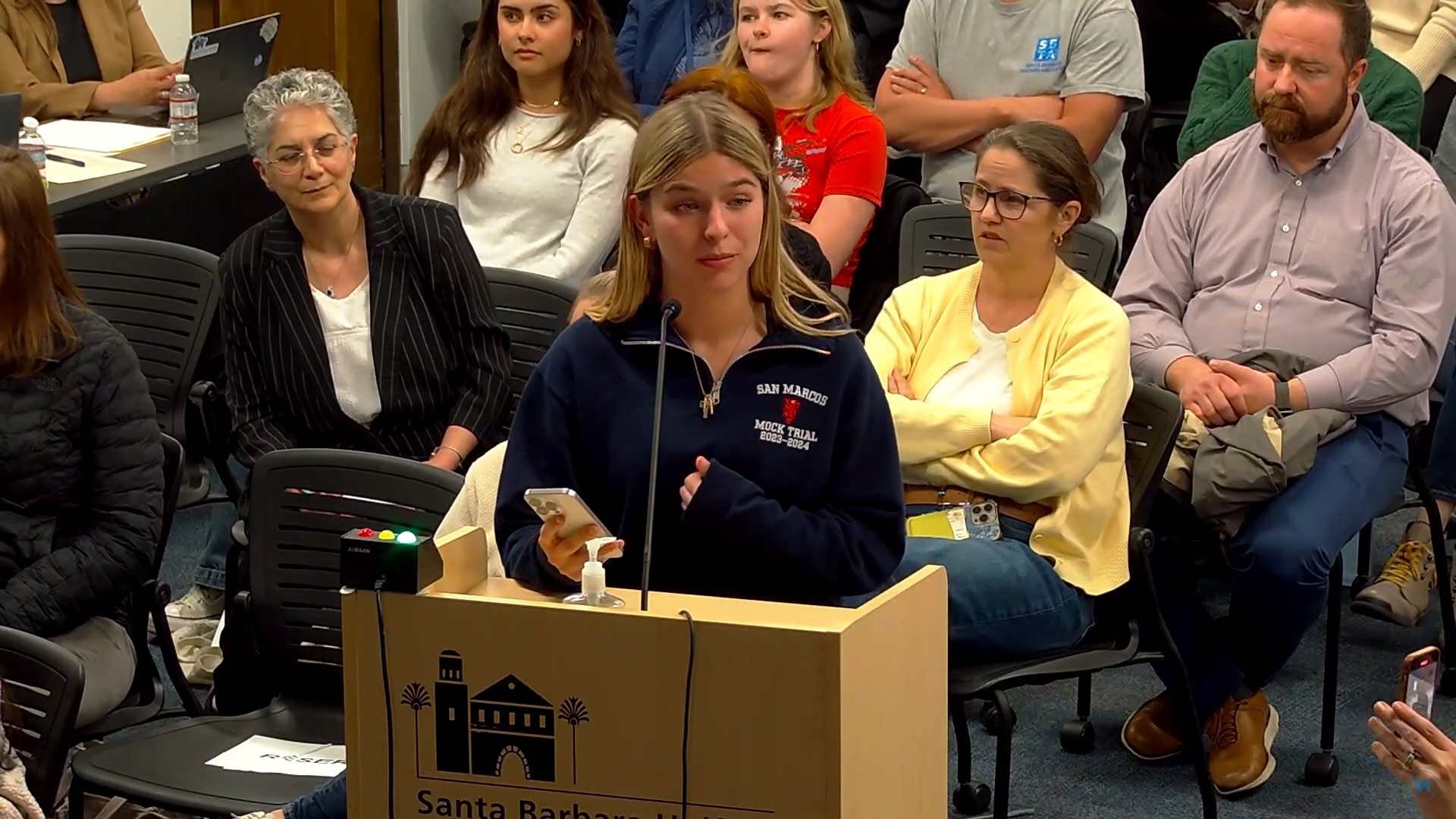
“Good evening” turned into “good morning” during public comment at the Santa Barbara Unified school board meeting on Tuesday. Teachers and students stuck around until 3 a.m. on Wednesday to protest the district’s proposed layoffs.
Tears were shed, poetry was read, and pizza was delivered. By the end of the night, students were sitting on the floor with blankets around their shoulders. It was a borderline sleepover for the many people who stayed, despite having school in the morning.
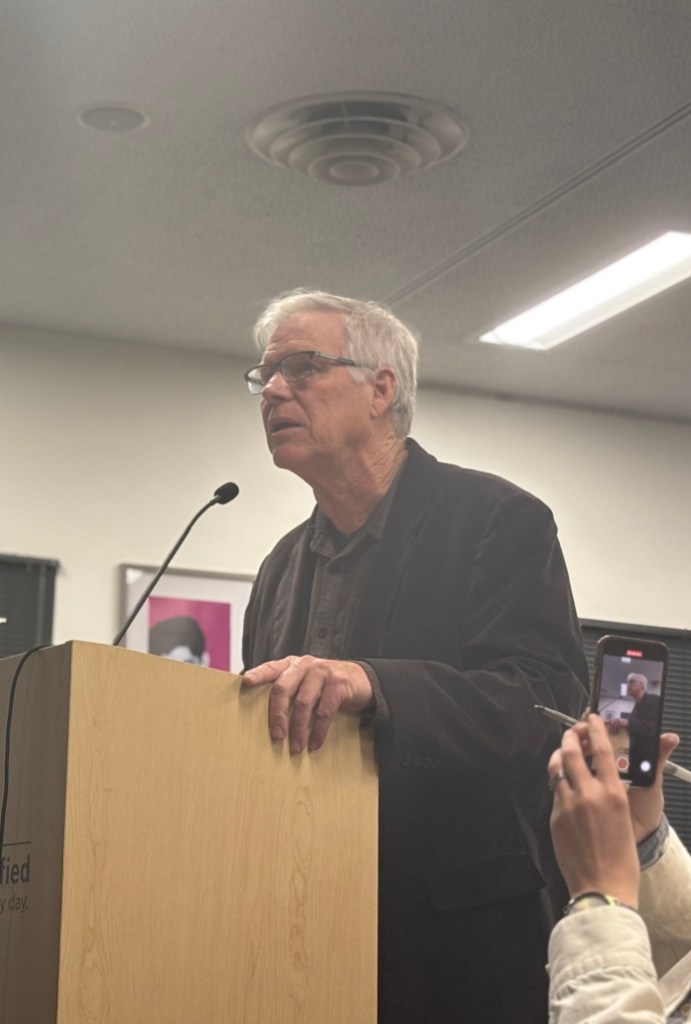
At 2:30 a.m. — eight hours after the meeting began — the board finally voted to send preliminary layoff notices to 85 teachers, including multiple arts and music positions.
Public comment lasted for three hours, as nearly 80 people signed up to speak and plead with the board to keep arts and music off the chopping block.
After much back and forth, the board did not remove these positions from the list but instead moved to prioritize the arts and cut other positions first.
Teachers came out to make emotional pleas to save their jobs, and students and parents were there to defend them.
“My child has become more cooperative and has shown greater leadership because of Ms. Pantages,” the San Marcos choir teacher, said parent Eric Weiss. “If you cut this position, we are out. … We will no longer be with the Santa Barbara Unified School District.”
Final layoff notices will not be issued until May 15, but school districts are required to send out precautionary notices by March. It casts a broad net, but it is likely that many of those positions will not end up being cut. The reductions are expected to save about $5.7 million.
According to the district, the proposed cut is not directly to music and the arts. Rather, it is proposing to reduce courses, which could lead to cuts in many subject areas. Right now, they do not know where the reductions will land.
Still, the board was split on the issue, voting 3-2 to send out the 85 preliminary notices. Members Gabe Escobedo, Rose Muñoz, and Sunita Beall voted in favor, and Celeste Kafri and Bill Banning voted against it.
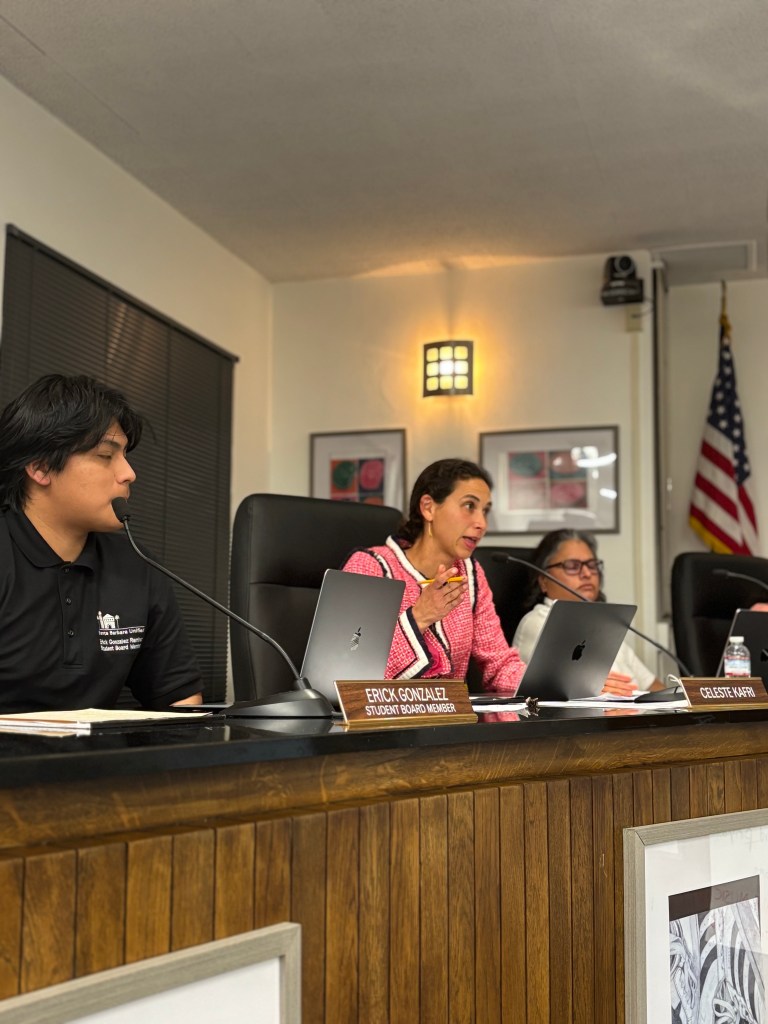
Kafri, the newest board member who joined in January, refused to toe the line. She questioned the proposed reductions, stood up for arts and music teachers, and suggested they make alternate cuts, such as to district management, to keep the cuts away from the classroom.
“I think we heard loud and clear that our community prioritizes the arts and music,” she said, prompting cheers from the full board room. “I think, without a doubt, we need to say we cannot cut arts electives or elementary specialists.”
Kafri — who has a master’s in business administration from UCLA and a certificate in education finance George University — even prepared and distributed a sheet showing her calculations from the district’s audited financials to support her case.
Her math shows that management costs have grown by almost 25 percent in the last two years, while enrollment has dropped by 15 percent. If looking at per-pupil spending, she added, site administration costs have increased 28 percent since 2022.
She said overhead spending has increased in every category since 2022, except food services, despite serving 1,834 fewer students.
“I think we need to be talking about where else we can cut,” Kafri said. “How do we impact students as little as possible?”
“Does it make sense to right-size management?” she asked. “It might. If we have fewer students, maybe we need fewer managers, and we need to have more investment in the arts.”
The board did, ultimately, vote to remove three and a half full-time-equivalent elementary school instructional specialists from the layoff list, as suggested by board president Escobedo. He also floated the idea of eliminating district-paid transportation for students for a zero period at Goleta Valley Junior High School to save a few more positions, but they did not vote on it on Tuesday.
The board’s final, split decision followed much discussion and disagreement between members, accompanied by murmurs and jeers from the audience.
Escobedo and Banning were concerned about the limited time they had to consider alternate cuts before the March 15 deadline. They also warned against taking the audited financials at face value.
Although Banning shared his appreciation for the arts— he played trumpet growing up and later worked as a music teacher — he was not sold on Kafri’s arguments. “We don’t know what lives inside the numbers that say ‘management,’” he said.
He and Escobedo both worried about the district’s financial stability should they not go through with the notices. The district is hard-pressed by the expiration of COVID-19 funding — which many districts are grappling with — increases in salaries, and pressure from the County Education Office to cut $9 million in expenses this year. “If we don’t get to the $9 million mark, we’ll be in real trouble,” Escobedo said.
Banning also reiterated that there will be fewer actual cuts than preliminary notices. “These layoffs are not going to turn out with a vast disappearance of teachers,” he said.
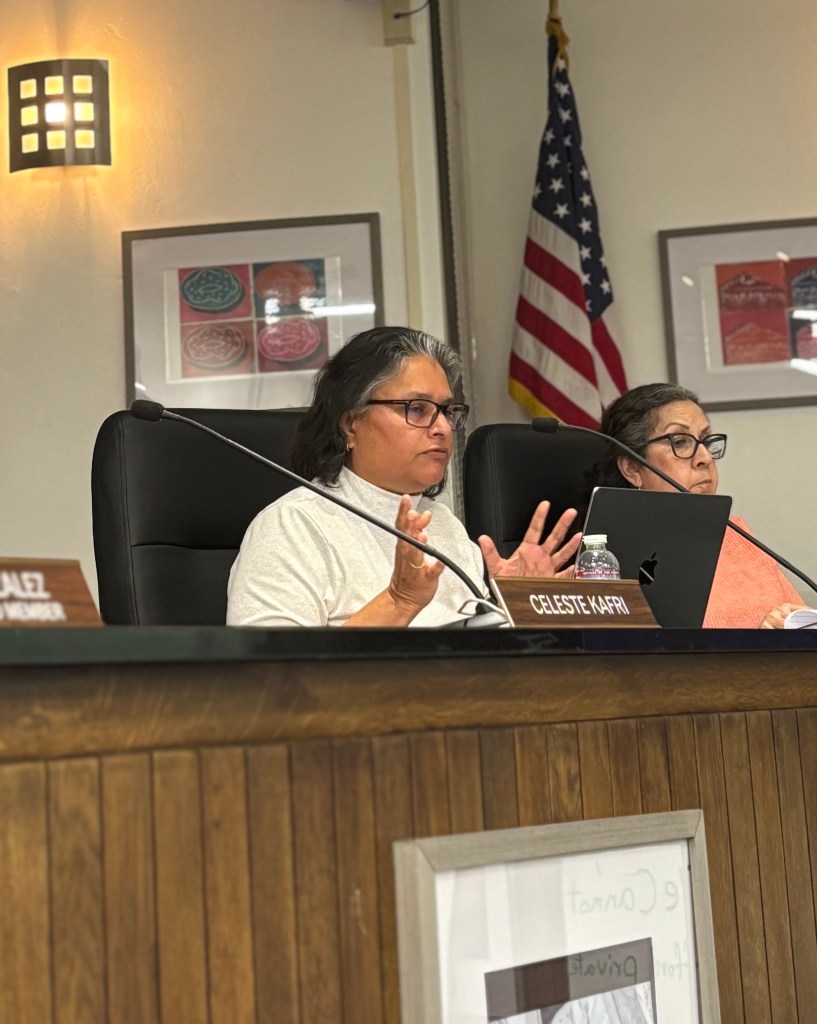
However, Beall, like Kafri, saw “dealbreakers” in the district’s proposal, and expressed frustration with the time pressure. She and Kafri both said they wanted to discuss the cuts a month ago. On Tuesday, they were shut down when they suggested a special meeting on Wednesday or Thursday this week for further discussion because of the last-minute timing.
Some programs, Beall said, are on a “razor’s edge.” However, she did recognize the importance of having a “healthy reserve” and acknowledged they’d have to make “tough decisions.”
“The most important thing to do is to not decimate our programs,” Beall said. “Any reductions should not be at the expense of art and music programs…. We need to not sacrifice the things that help student outcomes but also bring us joy.”
Before public comment, students crowded the hallway between the board room and overflow room doing homework. The board was going to begin with online commenters, but a music teacher recommended starting with students, since by that time it was already 9 p.m.
Many students noted the district’s mission statement and asked how they can be “prepared for a world that is yet to be created” if they don’t have access to the arts.
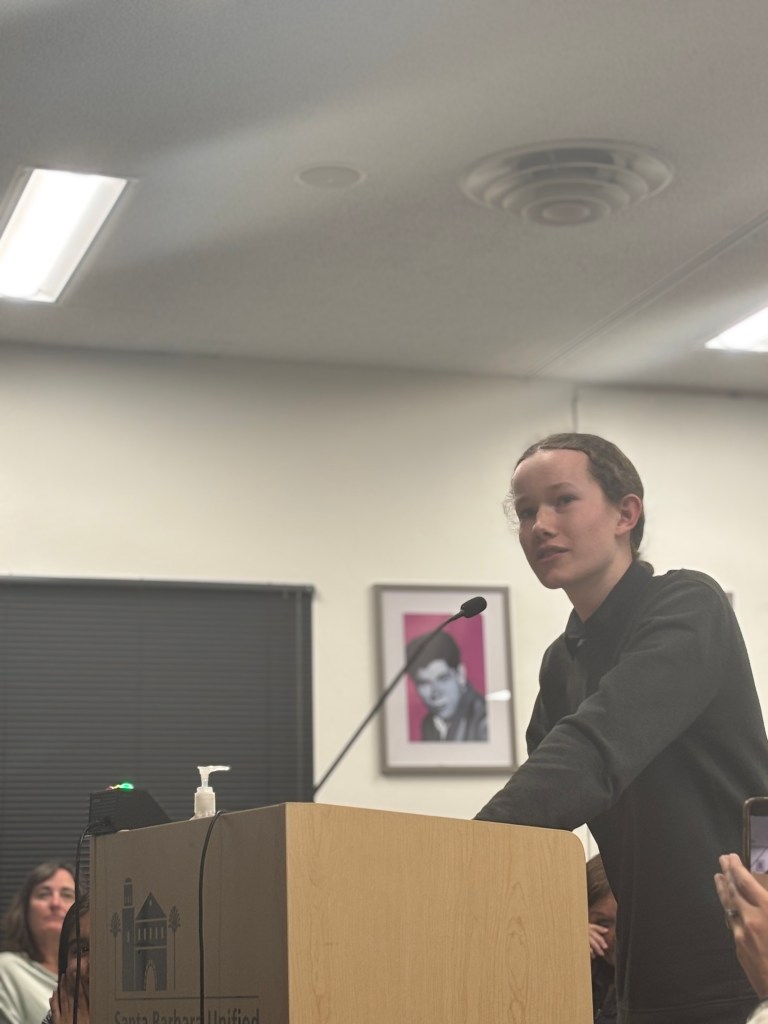
“I’m tired, y’all,” said Lucien Dempsey, 16, a sophomore at Santa Barbara High School. He said he had to wake up at 6 a.m. for his zero period jazz band. “Teachers are extremely important to the growth of students,” he told the board. “I believe students deserve that chance and deserve the ability to grow.”
San Marcos High School student Naomi Jane Voigt, the 2025 Santa Barbara Teen Star, said her family chose San Marcos specifically for the arts program. The arts have helped her academically and emotionally, she added.
“Music saved me, as it’s a form of therapy for many,” Voigt said.
“We are hurt, offended, and frustrated,” she continued. She mentioned that, as a singer, she has millions of streams on Spotify and 108,000 monthly listeners. “Without the arts programs, I would not have the confidence to express myself and share my art with the world.”
Dozens of teachers emphasized the importance of the arts as well, and said they’d like to keep their jobs.
Thomas Hokensen, who teaches in the district’s Bravo program, an after-school band program for 5th and 6th graders, said that 1,200 people signed an online petition against the reductions in force. “We had a whole discussion earlier about trying to get students up to grade level,” he said. “We do not need to see the mountain of evidence that shows that music and arts helps improve these scores and helps prepare students for the future.”
Stephen Hughes, the band director at La Colina Junior High, told the board that should the cuts go through, the teachers plan to protest. “We are not going to stop,” he said.
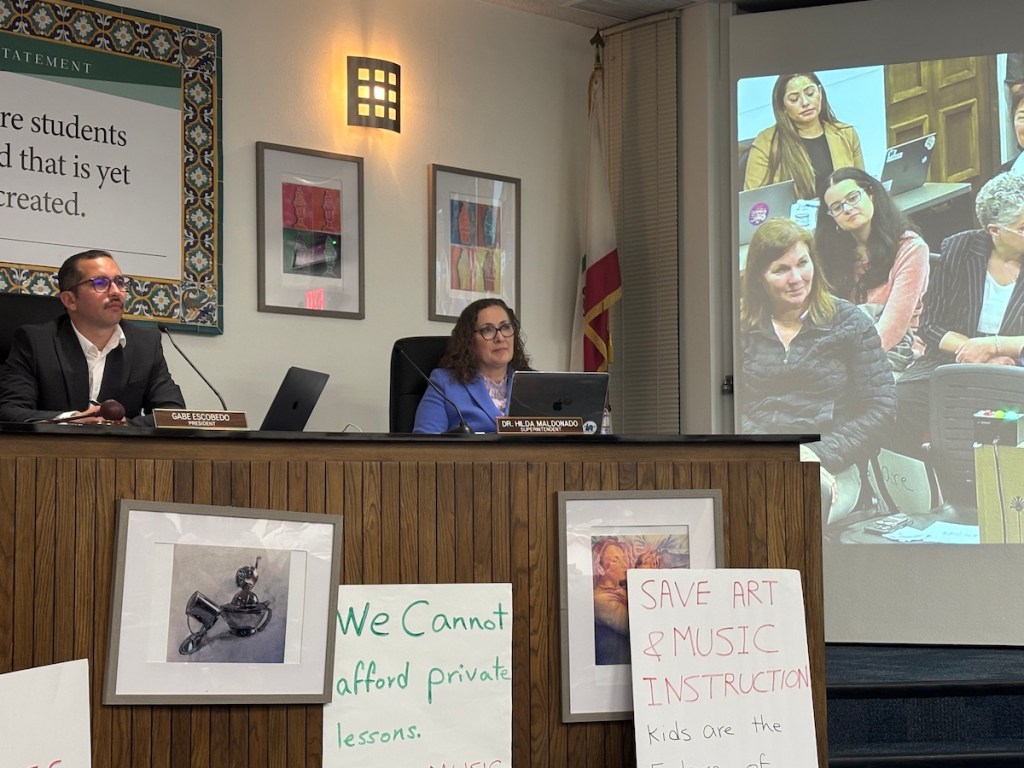
Superintendent Hilda Maldonado said in a statement that the district is “committed to navigating these challenges with transparency, compassion, and an unwavering focus on our students’ success and wellness.”
“Next year our district’s resources (people, time, and money) will be different but the goals to improve student outcomes and experiences will continue to be our ‘north star,’” she said.
Later in the night, the district voted unchallenged to give out nine precautionary layoff notices to classified employees, including staff outside the classroom and in the district office.
Related Posts




Premier Events

Sat, Oct 10
9:00 AM
Santa Barbara
Treble Clef Chorus Fall Treasure Sale
Tue, Oct 06
All day
Santa Barbara
New and Emerging Technologies in the Hands of Artists: Brave New Work 2.0

Tue, Oct 06
6:00 PM
Santa Barbara
Chaucer’s Books- Horror Stories with Joseph Fink

Wed, Oct 07
7:30 PM
Santa Barbara
Ensemble Theatre Company Presents: “Buyer & Cellar”

Wed, Oct 07
7:30 PM
Santa Barbara
The Theatre Group at SBCC Presents: “CLUE”

Thu, Oct 08
7:00 PM
Santa Barbara
“A Night of Blues” with Morganfield Burnett

Fri, Oct 09
7:00 PM
Santa Barbara
Paseo Nuevo Spooky Movie Nights

Sat, Oct 10
9:00 AM
Santa Barbara
SBNC 1st Annual Health & Wellness Fair

Sat, Oct 10
1:30 PM
Goleta
🌴 Another Day in Paradise at S.B’s Premier Ice Rink

Sun, Oct 11
7:00 AM
Ojai
Flamenco Guitarist Tony Ybarra

Sun, Oct 11
10:00 AM
Santa Barbara
18th Annual Domestic Violence Solutions Brunch
Sat, Oct 10 9:00 AM
Santa Barbara
Treble Clef Chorus Fall Treasure Sale
Tue, Oct 06 All day
Santa Barbara
New and Emerging Technologies in the Hands of Artists: Brave New Work 2.0
Tue, Oct 06 6:00 PM
Santa Barbara
Chaucer’s Books- Horror Stories with Joseph Fink
Wed, Oct 07 7:30 PM
Santa Barbara
Ensemble Theatre Company Presents: “Buyer & Cellar”
Wed, Oct 07 7:30 PM
Santa Barbara
The Theatre Group at SBCC Presents: “CLUE”
Thu, Oct 08 7:00 PM
Santa Barbara
“A Night of Blues” with Morganfield Burnett
Fri, Oct 09 7:00 PM
Santa Barbara
Paseo Nuevo Spooky Movie Nights
Sat, Oct 10 9:00 AM
Santa Barbara
SBNC 1st Annual Health & Wellness Fair
Sat, Oct 10 1:30 PM
Goleta
🌴 Another Day in Paradise at S.B’s Premier Ice Rink
Sun, Oct 11 7:00 AM
Ojai
Flamenco Guitarist Tony Ybarra
Sun, Oct 11 10:00 AM
Santa Barbara


You must be logged in to post a comment.