

Some of Santa Barbara’s long-established art spaces can be found in unexpected places, creating the friendliest sort of site-function disconnect. Most of us don’t go to the Santa Barbara Tennis Club to see art (present company excepted), but there in the lobby hangs the long-standing series of shows curated by artist Susan Tibbles.
In a perhaps more dramatic example, the governmental and civic business-as-usual atmosphere of the hulking County Administration Building on Anacapa Street also has long presented art exhibitions on its lobby floor, in an art space named for significant Santa Barbara figure Channing Peake. Degrees of local art history-making are, in fact, embedded in the current Channing Peake Gallery show, Form and Frame: Abstraction, Community and the Language of Art — which even includes a festive piece by Peake, the namesake artist himself.
This selection of art showcases holdings in a collection owned by the proverbial “you and me,” a growing collection owned by the city and fortified by generous gifts from, among others, the considerable collection of the late Santa Barbara–based architect Barry Berkus. Curated by the county’s Tom Pazderka and UCSB MFA graduate Lyra Purugganan, Form and Frame also manages to serve up a cross-sectional view of contemporary artists who have had an imprint on the local scene — and beyond, over the past half-century.
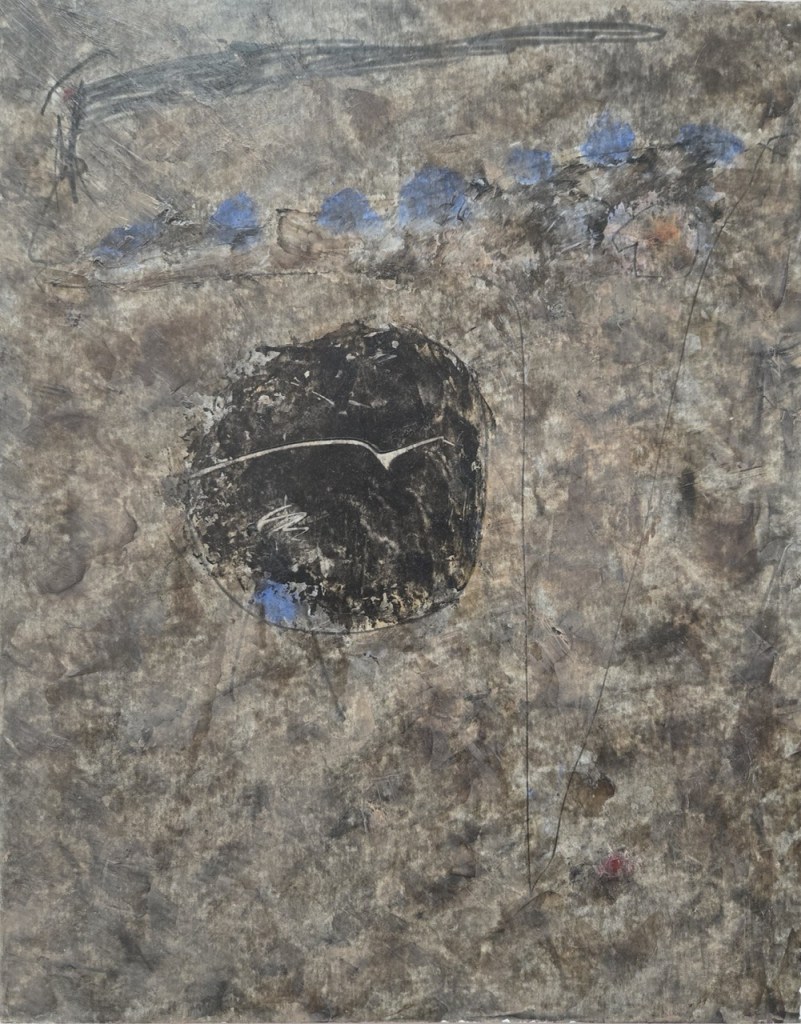
Hanging next to the sparkly and confetti-speckled abstract piece by Peake, fittingly named “Cosmic Pathway,” Mary Heebner does her aesthetic house blend of mythology, fluid abstract washes and palpable exotic paper, with “Indio Sketches: Daphne.” Across the room, Harry Reese, known for his book art and paper-making skill, fixes his painterly gaze on the muted, earthen abstract acrylic and graphite “_Lyric 2.”
Tibbles herself provides the tiniest jewel in the bunch, with her pint-sized assemblage “Trinket,” a non sequitur–ial work made of mink, velvet, and lace, embodying her keen knack for massaging the irrational art of assemblage. Next to her piece, Marie Schoeff shows art large and small, with “Wrap and Gowned,” variations on the concept of forms doubling as ambiguous energy or natural forces.
Photography weighs into the curatorial picture nicely, with Farshid Assassi’s alluring color image of modernist architecture, transformed into a study in geometric elegance.
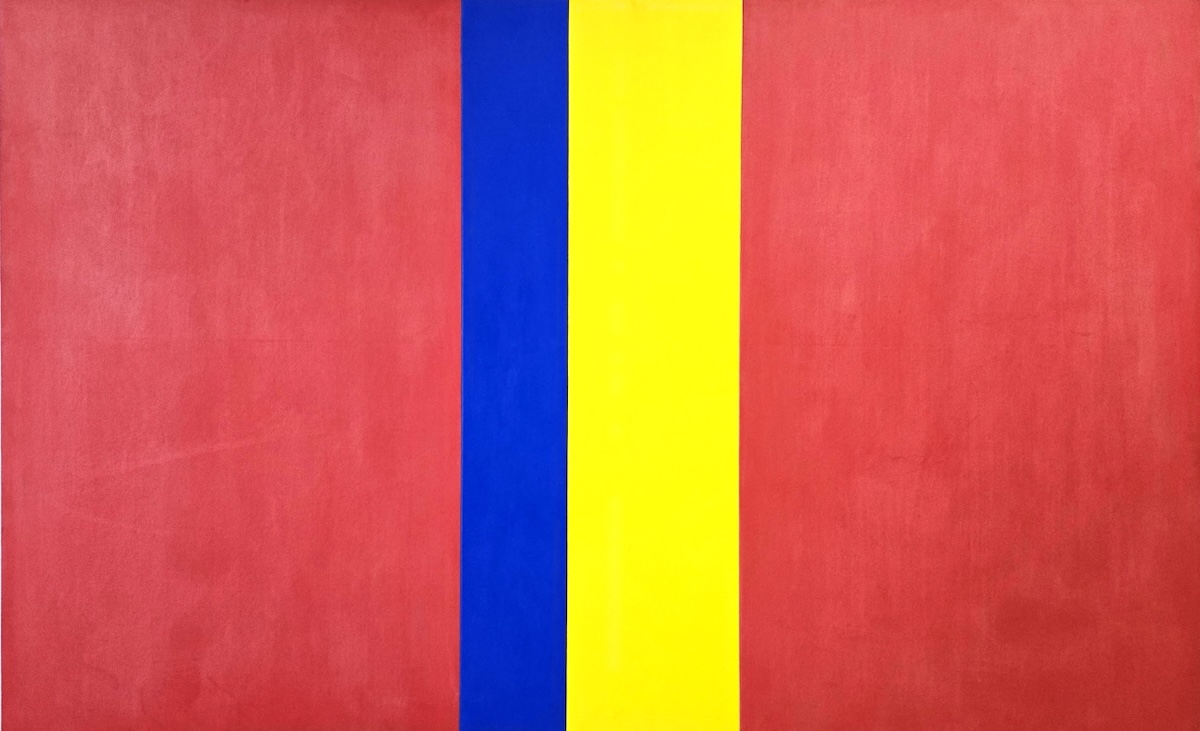
In other geometric news, one long gallery wall announces its starker formality — mixed with vivid color and lean line — and centered around the looming large painting by the late David Trowbridge, who taught at UCSB College of Creative Studies in the 1980s. Trowbridge’s minimalist but hardly retiring style states its case boldly here, in three bright colors but also a rigorous reductivist attitude. Flanking this eye-grabbing painting are more demure geometric notions by Margaret Hiroko Eejima.
In sharp contrast, the same wall also shows Margaret Dunlap’s more freewheeling and invitingly scattershot approach to abstraction in her kinetic 1975 painting.
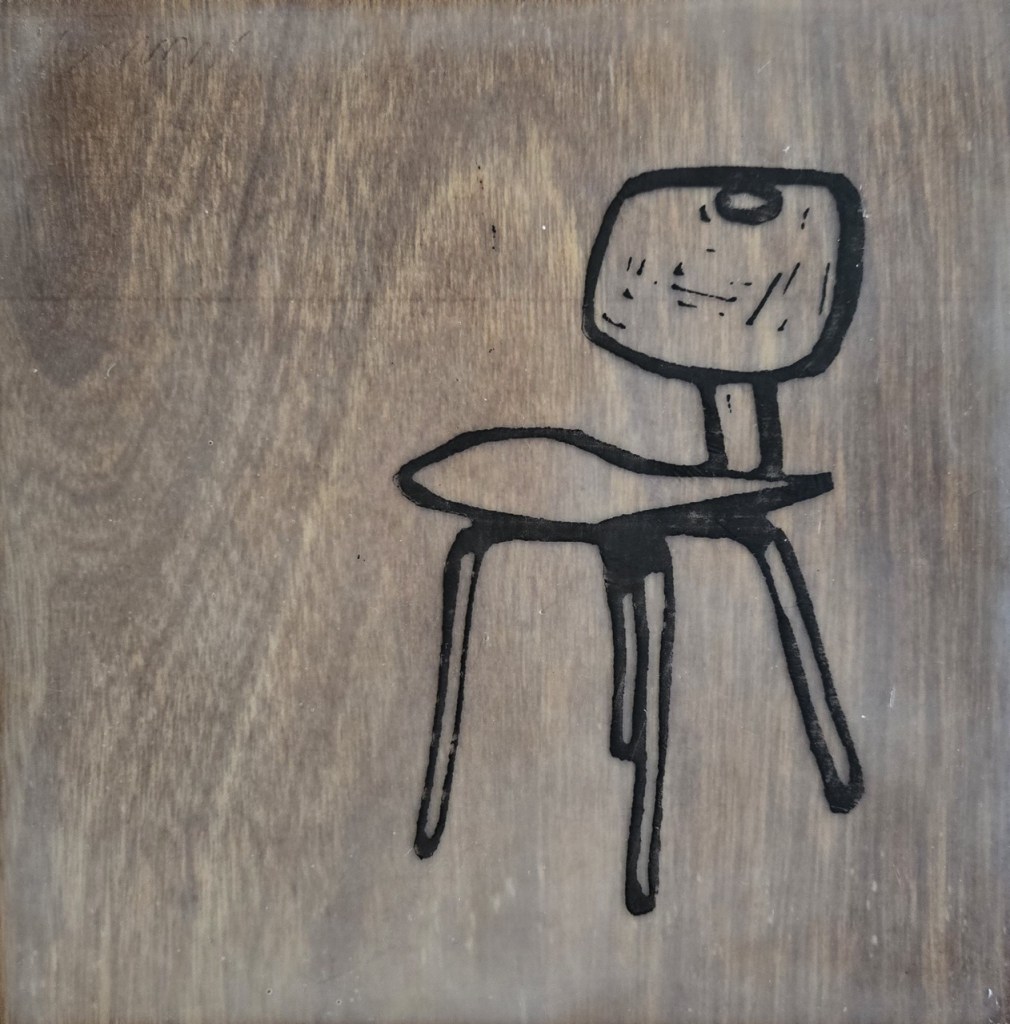
Some of the art here may stretch the definition of abstraction, without breaking it. Common objects become fodder less as depiction of said objects in the purer sense, but in deconstructed forms in, say, the precision-drawn “portraits” of Eejima’s ladder studies or Nicole Strasburg’s small, droll encaustic-on-board images of, well, “Chair Facing Right (and left).” (Strasburg’s winking pieces, created in 2022, are a departure from her typical land- and seascape art.)


Twisted — and bent — “objectness” is a central feature of the token sculpture in the show, Colin Gray’s witty and windswept chair sculpture, “Also Available in Green” (1985). It appears to be a loopy, surreal vision on visual impact, but is actually sittable (were that option available). The abstracting impulse takes on a detached perspective with these works.
If there is a short thematic story to be drawn from this collection-dipping enterprise, is that in art from here or “out there,” it may be that abstraction has been and continues to be a world subject to change, reinvention and subdivision.
A chair is not always a chair, and an abstraction is not always an intellectual riddle.
Form and Frame: Abstraction, Community, and the Language of Art is on view at the Channing Peake Gallery (105 E. Anapamu St.) and is open to the public Monday-Friday, 8 a.m.-5 p.m.



You must be logged in to post a comment.