
The “cloud” is not a cloud. It is warehouse-scale buildings — some the size of a dozen Costcos — packed with servers and cooling systems that run on constant electricity and water. California is home to roughly 288 data centers, including multiple smaller facilities in Santa Barbara. As the state races to accommodate artificial intelligence, a state oversight commission is warning that the cost of expanding that infrastructure should not fall on residential ratepayers.
On Wednesday, the bipartisan Little Hoover Commission adopted a sweeping report warning that the rapid expansion of data centers across the state must not drive up already sky-high utility bills for residential customers.
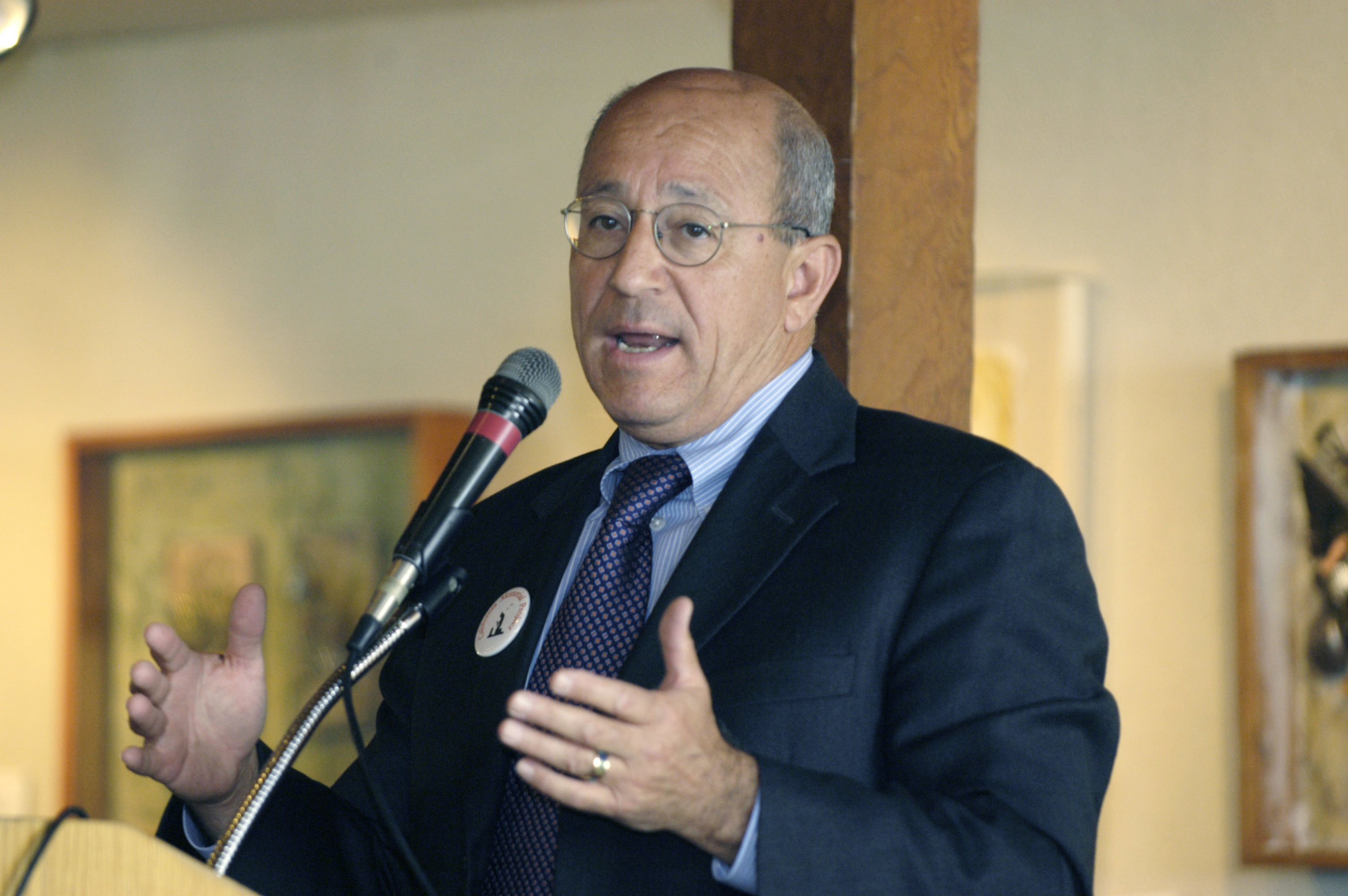
“The commissioners were all very consistent in recognizing that the greatest issue is protection of ratepayers,” said Pedro Nava, chair of the commission and former member of the California State Assembly representing Santa Barbara. “So that the costs associated with building out the infrastructure and providing energy to the data centers are not going to be borne by individual ratepayers, but should be borne by the developers and by the facility itself.”
California already has the second-highest electricity rates in the nation, Nava noted. “Hawai‘i is the only other state that pays more,” he said. “We want to protect ratepayers so that they are not harmed by the increased use of artificial intelligence.”
Data centers are not new to California, popping up like daisies beginning in the ’90s during the dot-com bubble. But the growth of artificial intelligence — which requires far more computing power than traditional internet services — is expected to significantly increase energy demand.
“There are a number of data centers that currently exist,” Nava said. “But with the development and growth of artificial intelligence, those data centers are going to require additional power, significant increases in electricity.”
They will also require more water, he said, in order to “help keep them cool because the AI power units within these buildings generate a lot more heat.”
Other environmental factors must be considered as well.
“The backup generators tend to be diesel,” Nava said. “Diesel generators are one of the poorest sources of energy because of how much they pollute,” he added.
Those concerns are not hypothetical. In Imperial County, developers have proposed multibillion-dollar data center complexes that would draw millions of gallons of Colorado River water daily and construct massive substations to power warehouse-scale facilities. The proposals have sparked legal disputes and environmental-justice concerns in one of the state’s poorest regions, where activists warn their communities risk becoming testing grounds for water- and energy-intensive projects.
Nava said such local impacts emphasize why California must move cautiously.
“There are critical issues that have to be evaluated before the state of California runs willy-nilly in embracing data centers as the answer to all of our problems,” he said.
At the heart of the commission’s report is cost allocation — specifically, who pays when utilities must build new infrastructure to serve large electricity users.
Utilities in California earn profits primarily on infrastructure investments. When PG&E or Southern California Edison buys electricity, the rate charged to customers equals what it costs to purchase from generating sources. “Where the utility makes its money is in building the infrastructure — the towers, the wires, the transformers,” Nava explained.
If AI facilities require new transmission lines or substations, he argued, those costs should not be socialized across residential customers. “That should be paid for by the business that receives the benefit,” Nava said.
The report also warns about “stranded assets” — infrastructure built to serve a large customer that later scales back or relocates.
“Why should ratepayers have to eat those costs?” Nava said.
The commission recommends stronger tariff structures for very large customers, financial safeguards to prevent cost shifting, and confidential access to facility-level electricity data to improve oversight.
Utilities, meanwhile, say artificial intelligence is not the only — or even primary — driver of load growth.
Southern California Edison expects some demand growth from AI but says transportation electrification and building electrification are currently larger contributors.
“We do expect to see some energy demand growth from the AI sector,” an SCE spokesperson said. “But we’re really seeing transportation and building electrification being larger drivers of demand growth.”
The utility added that it does not expect data center growth in its service territory to match that of emerging AI hubs elsewhere, such as the Bay Area and Los Angeles.
“Developers pay for what they need, and systemwide upgrades are shared and overseen by regulators,” the spokesperson said.
Nava, however, said framing the issue as optional misses the point, noting that AI is already threading its way into many aspects of society. “We’re going to find more and more that the data centers are not going to be optional,” he said. “I think it is already mandatory.”
Still, he emphasized that private companies stand to reap the largest financial gains.
“We understand that society as a whole is likely to benefit from the application of artificial intelligence,” Nava said. “We are also smart enough to understand that the primary beneficiaries of artificial intelligence are going to be the companies that develop it and sell it.”
“Since that is the case, it only makes sense that the cost that ratepayers would normally not have to pay for — building out the infrastructure, getting energy to these facilities — ought to be paid for by the companies that receive the greatest benefit.”
Lawmakers have already begun grappling with the issue. In May 2025, the State Senate approved Senate Bill 57, the Ratepayer and Technological Innovation Protection Act, which would require the Public Utilities Commission to establish a special tariff to ensure large electricity users — including data centers — bear the transmission costs associated with their projects.
The Little Hoover Commission’s report reinforces that approach, urging regulators to adopt policies that fully recover infrastructure costs from large-load customers while protecting residential ratepayers and California’s climate goals.
With the report now adopted, the commission will transmit its findings to the Governor’s Office and the Legislature and meet with lawmakers to encourage implementation.
“This isn’t one or the other,” Nava said of balancing electrification and AI demand. “All of it has to be considered.”
The cloud may feel invisible, but the servers powering artificial intelligence are anything but. The question, he suggested, is not whether AI will shape California’s future — but whether the cost of running the warehouses behind it will be distributed fairly.
Related Posts


Premier Events
Mon, Sep 14
6:30 PM
Santa Barbara
Science Pub: Fire – History, Science and Practice

Tue, Sep 15
10:00 AM
Santa Barbara
Volunteer Open House – S.B. Museum of Natural History and Sea Center

Tue, Sep 15
6:00 PM
Santa Barbara
Embroidered Brooch Workshop

Tue, Sep 15
6:00 PM
Santa Barbara
Chaucer’s Books Hosts Ellen O’Connell Whittet

Thu, Sep 17
5:30 PM
Santa Barbara
S.B. Independent: Santa Barbara City Council District 5 Forum

Thu, Sep 17
7:00 PM
Santa Barbara
Téka Brazilian Jazz at The Grand On State

Fri, Sep 18
All day
Solvang
Solvang Danish Days

Fri, Sep 18
12:00 AM
Santa Barbara
Yesterday: A Tribute to The Beatles at SOhO

Fri, Sep 18
7:00 PM
Carpinteria
West Coast Premier: “Gloria’s Old Haunt”
Sat, Sep 19
All day
Solvang
Solvang Danish Days
Mon, Sep 14 6:30 PM
Santa Barbara
Science Pub: Fire – History, Science and Practice
Tue, Sep 15 10:00 AM
Santa Barbara
Volunteer Open House – S.B. Museum of Natural History and Sea Center
Tue, Sep 15 6:00 PM
Santa Barbara
Embroidered Brooch Workshop
Tue, Sep 15 6:00 PM
Santa Barbara
Chaucer’s Books Hosts Ellen O’Connell Whittet
Thu, Sep 17 5:30 PM
Santa Barbara
S.B. Independent: Santa Barbara City Council District 5 Forum
Thu, Sep 17 7:00 PM
Santa Barbara
Téka Brazilian Jazz at The Grand On State
Fri, Sep 18 All day
Solvang
Solvang Danish Days
Fri, Sep 18 12:00 AM
Santa Barbara
Yesterday: A Tribute to The Beatles at SOhO
Fri, Sep 18 7:00 PM
Carpinteria
West Coast Premier: “Gloria’s Old Haunt”
Sat, Sep 19 All day
Solvang

