
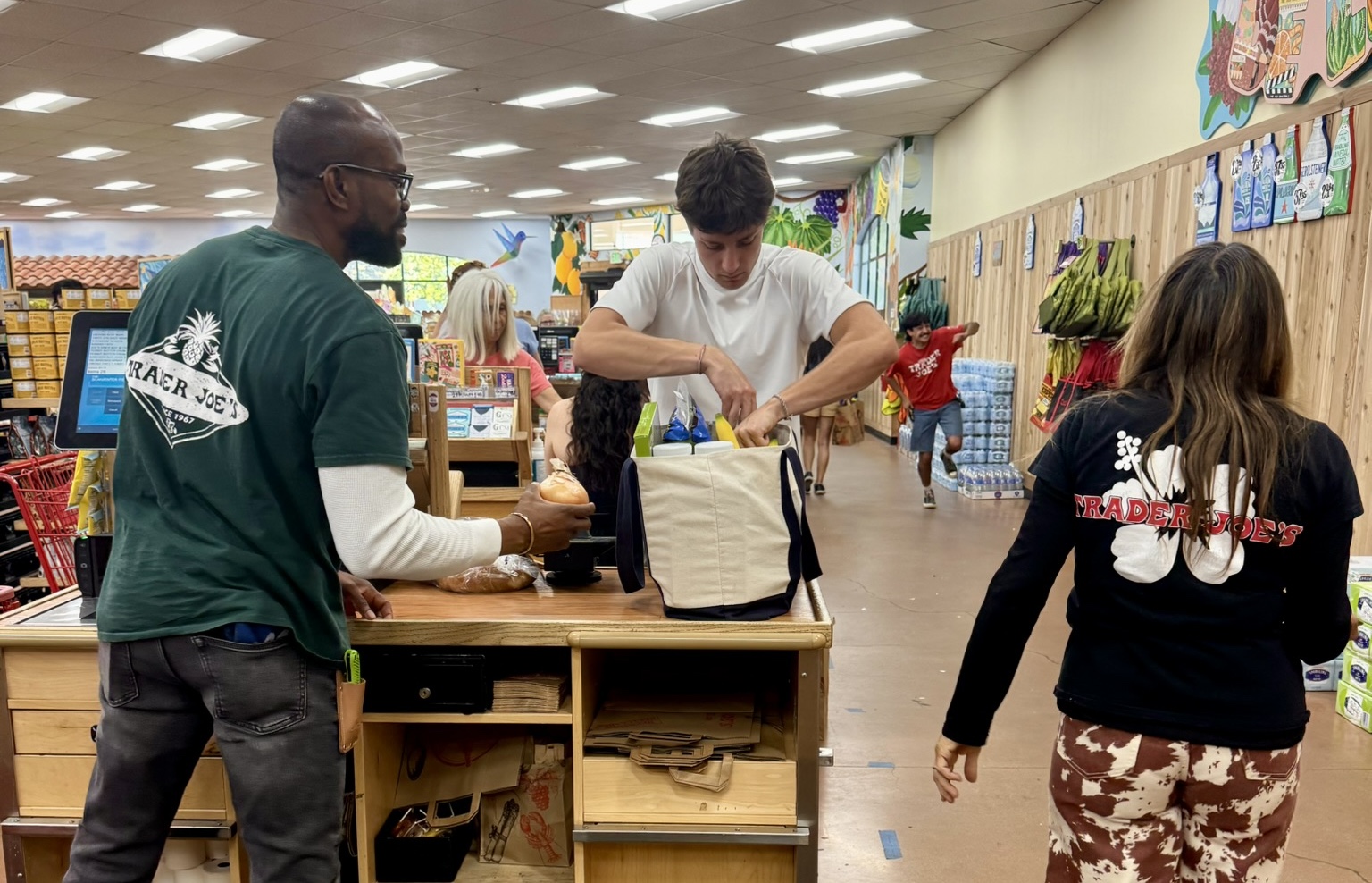
Trader Joe’s can feel like a cult. Most folks know the seasonal snacks by name — from Scandinavian Swimmers to Chili & Lime Rolled Corn Tortilla Chips. Walk in and workers greet you, smiling a little too widely, sometimes offering a sample. In the aisles, people stop and chat — do they know each other from their weekly grocery runs or because they play tennis together?
This Monrovia-born grocery store can be a marketplace or a civic common ground. And in February, it landed the top spot on Forbes’s 2026 list of America’s Best Large Employers, edging up from No. 2 the year prior. Alongside it are the usual Silicon Valley titans: Google, Apple, NVIDIA, and Salesforce.
According to Forbes, the grocery chain employs roughly 50,000 people nationwide — a far cry from its 1958 beginnings as a cluster of Southern California convenience stores. It has since grown to more than 450 locations, with a business model built on private-label goods, minimal advertising, and a grocery shopping experience that feels like an Easter egg hunt. The result: industry-leading sales per square foot and a fiercely loyal customer base.
“It’s such a positive vibe in there,” said Eric Friedman, a Santa Barbara city councilmember who has also worked at Trader Joe’s for nearly nine years. “They really encourage people to get to talk with each other, talk with the customers.”

Friedman started at the De la Vina Street store in August 2017 — just months before he was elected to City Council — and never left. He worked through the Thomas Fire, debris flows, and the COVID-19 pandemic, toggling between council chambers and checkout lines.
“It’s been an unexpected bonus,” he said, “just helping me understand the city.”
At Trader Joe’s, the job is physical, fast, and deliberately repetitive — stocking produce, unloading trucks, rotating through registers — but the culture leans on conversation. Workers are expected to know products, talk to customers, and, as Friedman put it, “go the extra mile.”
“It’s just a community gathering space,” Friedman said. “I’ve seen people come in who are friends that haven’t seen each other in a long time, and then they’re talking for half an hour just standing by the bananas.”
That sense of familiarity extends behind the scenes. Workers span age groups and ambitions, from university students to longtime employees approaching a decade with the company.
Claire Trask, who began working at Trader Joe’s her freshman year at the University of California, Santa Barbara, has now been there for about three and a half years. She credits TJ’s for allowing her to help pay for college and remain in Santa Barbara after graduation.
“I paid for my own tuition and living and needed a job that would support me and offer me flexibility,” she said.
Starting wages hover around $19 an hour, according to employee reports, with regular raises and periodic cost-of-living increases.
“I know a lot of people who can afford to live and stay in Santa Barbara because they work at Trader Joe’s,” she said.
The structure of the work itself is part of the draw. Employees rotate tasks throughout their shifts — stocking shelves one hour, running register the next — a system that breaks monotony and, in Trask’s case, leaves room for creativity.
“I’m on the sign team,” she said. “We make all the signs for the store, which are handmade.”
And then there’s the social spillover — friendships and relationships that extend beyond the store.
“I met my boyfriend at Trader Joe’s,” Trask said.
Friedman has his own catalog of stories: a coworker who heard his band’s song played on the radio for the first time after a closing shift; another who wrote a novel between night shifts and later held a book-signing at Chaucer’s Books, with coworkers in attendance.
“That’s what Trader Joe’s allows people to do,” Friedman said, “pursue their passions.”
The flexibility works across generations. Some employees are students. Others are parents — occasionally working alongside their own children. Friedman said his son’s first job was at Trader Joe’s, part of what he described as a workplace that “values family.”
For Friedman, the contrast between his two jobs is stark.
“When I go to Trader Joe’s, I’m there for the eight-hour shift, and I don’t take it home with me,” he said. “But when I’m there [at the City Council], I’m fully present.”
And sometimes, he added, the store offers a clearer read on the city than City Hall itself.
“You might have a stressful hearing,” he said. “And then you get into work the next morning … and people start mentioning something else that’s not even on my radar. I realize that’s what the public is really interested in.”
In a city where everyone seems to know someone who works at Trader Joe’s — and, more notably, likes working there — the line between employee and neighbor blurs.
“I try to remember at least one customer’s name by the end of a shift,” Friedman said. By the end of the year, he knows dozens.
Related Posts

Premier Events

Sat, Oct 03
9:00 AM
Goleta
Out of the Darkness Suicide Awareness Walk
Sat, Oct 03
10:00 AM
Santa Ynez
Chumash Intertribal Powwow Returns

Sat, Oct 03
10:00 AM
54th Santa Barbara Old -Time Fiddlers’ Festival

Sat, Oct 03
11:00 AM
Santa Barbara
OktoBEERfest at Dutch Garden Restaurant!
Sat, Oct 03
12:00 PM
Santa Barbara
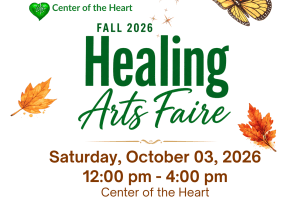
Reclaim Your Radiance Fall 2026 Healing Arts Faire

Sat, Oct 03
12:00 PM
Santa Barbara
CWC Docs: “SURFILMUSIC” (2026)

Sat, Oct 03
2:00 PM
Santa Barbara Public Library
S.B Voting Rights and Election Protection Forum: How You Can Get Involved

Sat, Oct 03
4:00 PM
Santa Barbara
42nd “Sips & Ships” Wine Tasting & Yacht Tour Fundraiser

Sun, Oct 04
11:00 AM
40th California Avocado Festival

Sun, Oct 04
1:30 PM
Goleta, CA
📚 Library Card Day
Sat, Oct 03 9:00 AM
Goleta
Out of the Darkness Suicide Awareness Walk
Sat, Oct 03 10:00 AM
Santa Ynez
Chumash Intertribal Powwow Returns
Sat, Oct 03 10:00 AM
54th Santa Barbara Old -Time Fiddlers’ Festival
Sat, Oct 03 11:00 AM
Santa Barbara
OktoBEERfest at Dutch Garden Restaurant!
Sat, Oct 03 12:00 PM
Santa Barbara
Reclaim Your Radiance Fall 2026 Healing Arts Faire
Sat, Oct 03 12:00 PM
Santa Barbara
CWC Docs: “SURFILMUSIC” (2026)
Sat, Oct 03 2:00 PM
Santa Barbara Public Library
S.B Voting Rights and Election Protection Forum: How You Can Get Involved
Sat, Oct 03 4:00 PM
Santa Barbara
42nd “Sips & Ships” Wine Tasting & Yacht Tour Fundraiser
Sun, Oct 04 11:00 AM
40th California Avocado Festival
Sun, Oct 04 1:30 PM
Goleta, CA


You must be logged in to post a comment.